
product trios
- AI Strategy (315)
- Generative AI (106)
- IT Leadership (33)
- Leadership (76)
- Product Management (344)
- Product Management Leadership (306)
- Uncategorized (32)
-
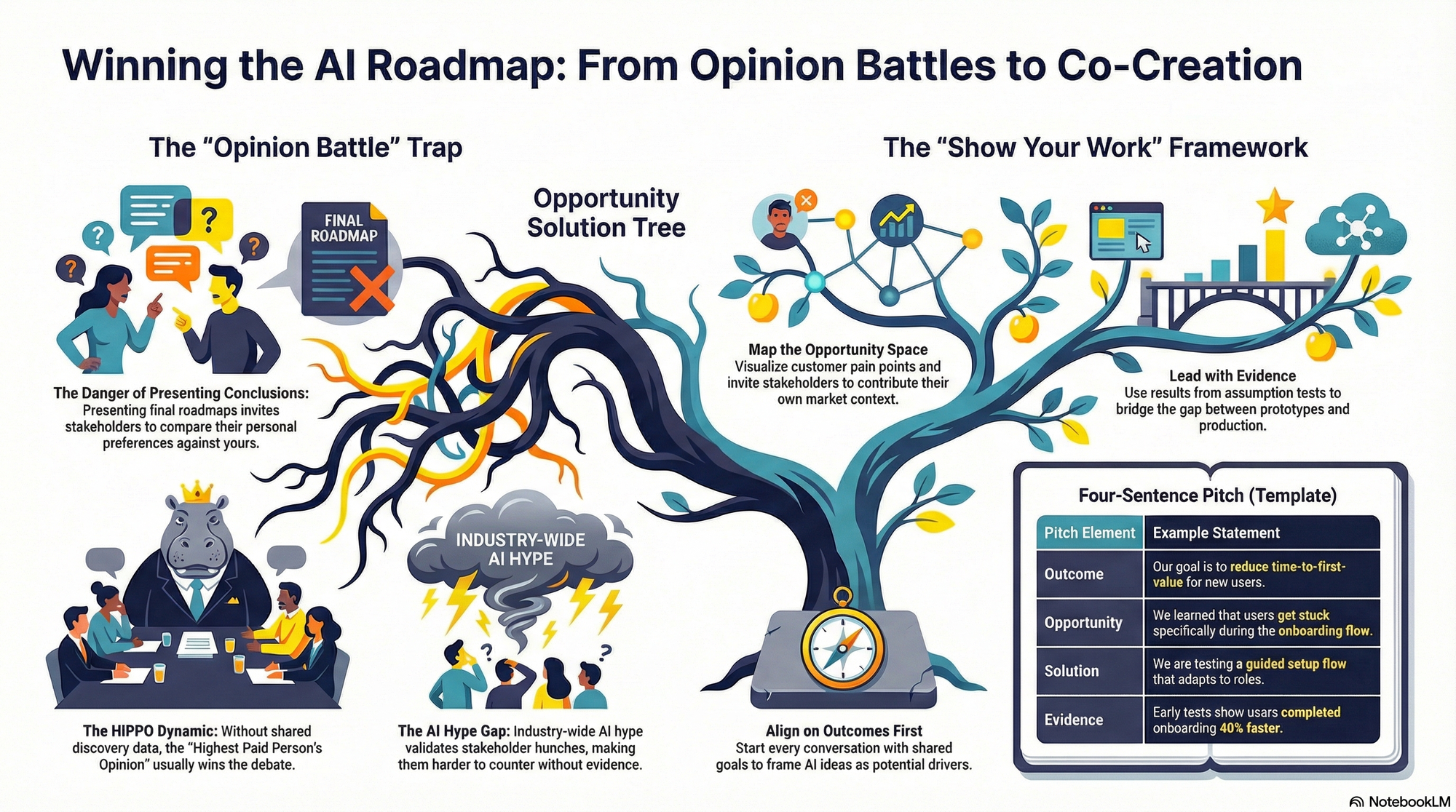
Stop Selling Your Roadmap: Win Stakeholder Trust by Showing Your Work, Not Conclusions
Racing to ship AI features is easy; shipping the right ones isn’t. In this playbook, I share how I win stakeholder trust by showing my work—walking…
-
Lost in the Woods: 5 Survival Patterns Every Product Leader Must Master Now
Feeling “lost in the woods” with your product strategy is more common than most leaders admit. I break down five survival patterns—freeze, chase shortcuts, follow the…
-
March CDH Book Club: Master Experience Mapping to Align Teams and Accelerate Discovery
Join me for March’s CDH Book Club as we dive into Chapter 4: Visualizing What You Already Know. We’ll practice experience mapping to unlock team alignment,…
-

Stop Blurring the Lines: Clear Product–Engineering Boundaries to Boost Quality and Prevent Burnout
Blurry lines between product and engineering lead to burnout, slow delivery, and quality problems. I share a practical model that restores clarity: product trios own the…
-

How to Run AI-Accelerated Product Discovery and Delivery
A practical model for using agents, analytics, prototypes, experiments, and guardrails to shorten product learning without weakening judgment.
-

Why “Figma Is Not the Source of Truth”: My Playbook for Design Leadership That Scales
I share a practical playbook for design leadership built around a simple truth: Figma is not the source of truth—customers are. You’ll learn how to align…
-

How to Build an AI-Native Product Development Workflow
A practical operating model for connecting customer evidence, product decisions, context engineering, evaluation, and delivery in one learning loop.
-

Stop Groupthink in Hiring: Proven Product-Led Tactics to Make Faster, Fairer Decisions
Hiring isn’t broken so much as it’s often badly designed. I unpack how AI-driven application volume, sprawling interview loops, and fuzzy criteria fuel groupthink and derail…
-
Stop Measuring Output, Start Driving Outcomes: My February CDH Book Club Guide
This February, I’m hosting a “Continuous Discovery Habits” book club focused on Chapter 3: Focusing on Outcomes Over Outputs. You’ll get a practical, first-principles guide with…
-

From Product Strategy to Adoption: The Solutions Engineering Loop
A practical operating model for turning field evidence into sharper roadmap decisions, measurable activation, and sustained customer adoption after launch.
-

Inside Product at Heart 2026: Bold Single-Track Vision, AI Everywhere, Deeper Connections
Product at Heart 2026 is making a bold shift to a single-track format—prioritizing tighter curation, shared context, and deeper learning. Petra Wille and Teresa Torres outline…
-
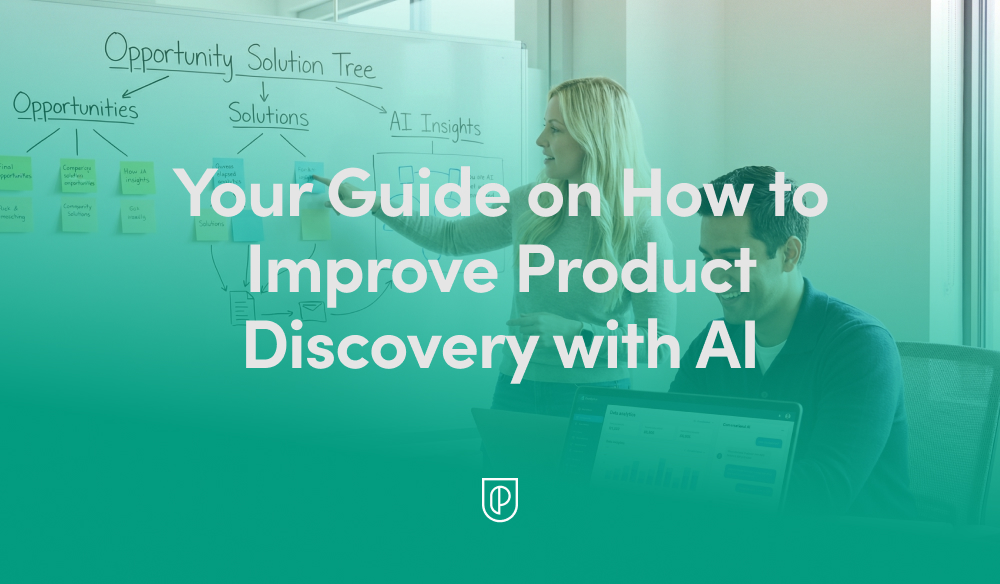
How I Harness AI to Supercharge Product Discovery for Faster Research, Prototyping, and Validation
AI has become my unfair advantage in product discovery, compressing weeks of research, prototyping, and validation into days. I synthesize interviews with LLMs, layer in Amplitude…
-

7 Proven Steps to Win Stakeholder Buy-In with Clarity, Data, and Lasting Trust
Buy-in is earned through a designed journey—not a single meeting. This first-person, 7-step playbook shows how to align on outcomes vs output OKRs, map stakeholders and…
-

How to Build a Continuous Discovery Habit That Survives Delivery
A practical operating system for making weekly customer contact, trio ownership, and evidence-based product decisions survive delivery pressure.
-

Inside Google’s Product Model: Hard-Won Lessons to Build Empowered, Outcome-Driven Teams
I’m examining how the product model manifests at Google and translating it into practical patterns you can use. I focus on empowered product teams, product trios,…
-

Outcome-Driven Go-to-Market: From Launch Plan to Growth Loop
A practical operating system for tying positioning, product behavior, cross-functional decisions, and enterprise proof to measurable growth.
-

How to Build Self-Service Analytics Teams Actually Trust
A practical operating model for giving product teams faster answers without sacrificing metric consistency, data quality, privacy, or analyst leverage.
-

AI vs. Human Judgment in Customer Interviews: The Hard‑Won Lessons That Changed My Mind
I’ve changed my stance on using AI for customer interview analysis and synthesis after six months of hands-on experiments. AI raises the floor for beginners, but…
-

From Output to Outcomes: How I Align Stakeholders Around a True Product Operating Model
Shifting to a true product operating model means moving from “shipping roadmaps of features (output)” to achieving “business results (outcomes).” In this first-person playbook, I share…
-
AI Product Owner in 2026: The High-Impact Role Every Team Needs to Win With AI
The AI Product Owner is the keystone role that converts AI strategy into measurable outcomes. I explain how it differs from traditional Product Management, the core…
Weekly digest
One email a week on AI products, enablement and hiring. No fluff.
Browse topics
- AI Strategy (315)
- Generative AI (106)
- IT Leadership (33)
- Leadership (76)
- Product Management (344)
- Product Management Leadership (306)
- Uncategorized (32)
Work with me
45-minute consultation on AI product strategy, GTM and PM hiring — no charge.