I’ve seen first-hand how quickly a company aligns when product data becomes everyone’s common language. To make that happen at scale, I rely on MCP prompts inside Pendo to turn raw behavioral signals into clear, cross-functional actions. When we give people precise questions to ask of the data, engineering, product, marketing, customer success, and sales move in lockstep—and outcomes follow.
Increase revenue, cut costs, and reduce risk with Pendo’s Software Experience Management platform. Optimize the entire software experience to drive adoption and improve engagement.
What follows are the 12 MCP prompts I use to help teams across the business make better, faster decisions from product analytics, in-app guides, and customer feedback. They’re battle-tested, easy to adapt to your stack, and intentionally written to drive product-led growth and clearer accountability.
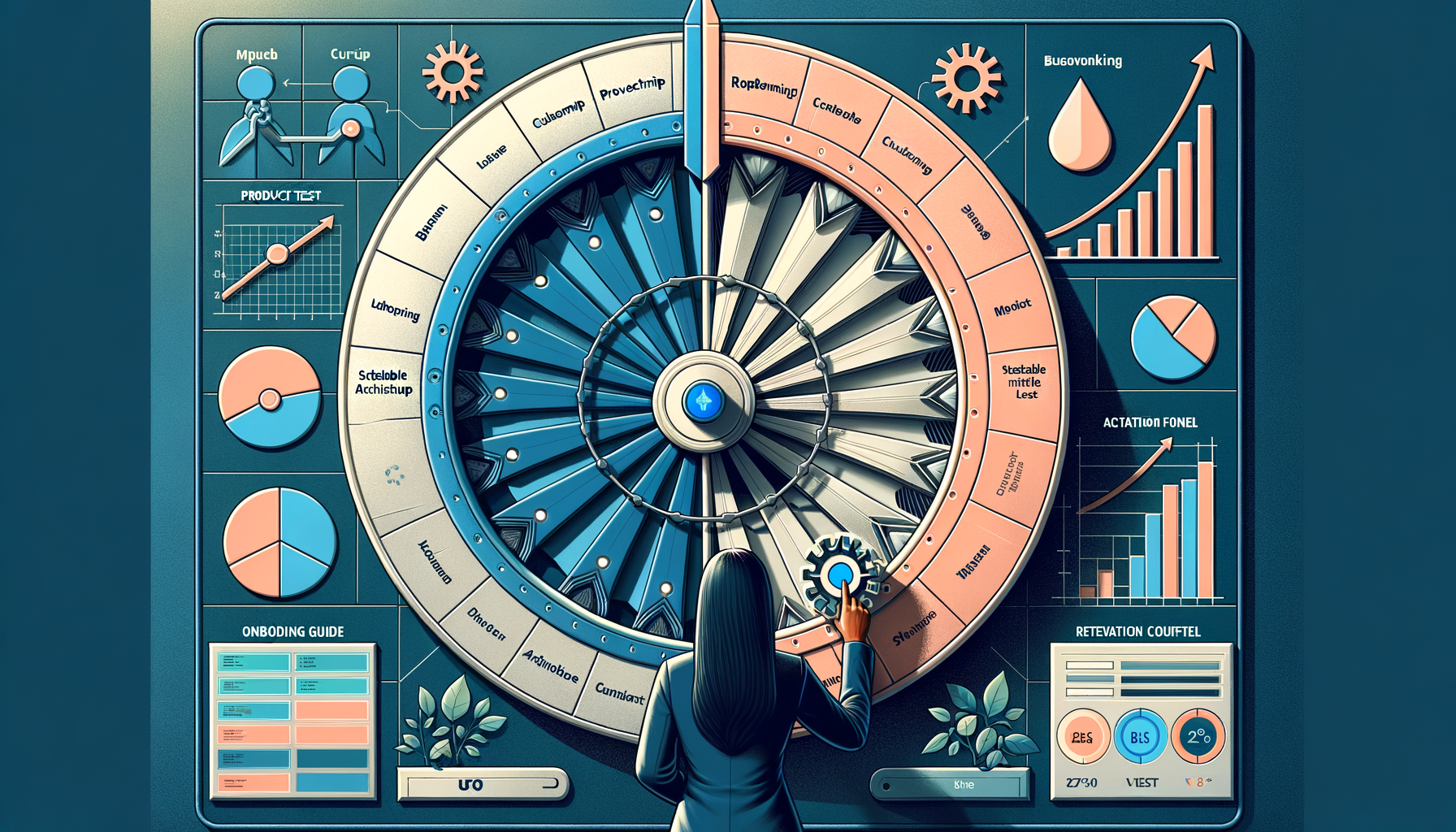
Prompt 1: Show me the activation funnel by segment (SMB, MM, ENT) for the last 90 days, highlight the biggest drop-off steps, and quantify which change would yield the largest absolute lift in activated users.
Prompt 2: Rank features by adoption velocity over the past 30 days, identify underutilized high-value features by persona, and recommend the top three in-app guide placements to increase engagement.
Prompt 3: Plot 30/60/90-day retention curves for new users by plan type and persona, flag statistically significant gaps, and suggest two experiments to improve week-two retention.
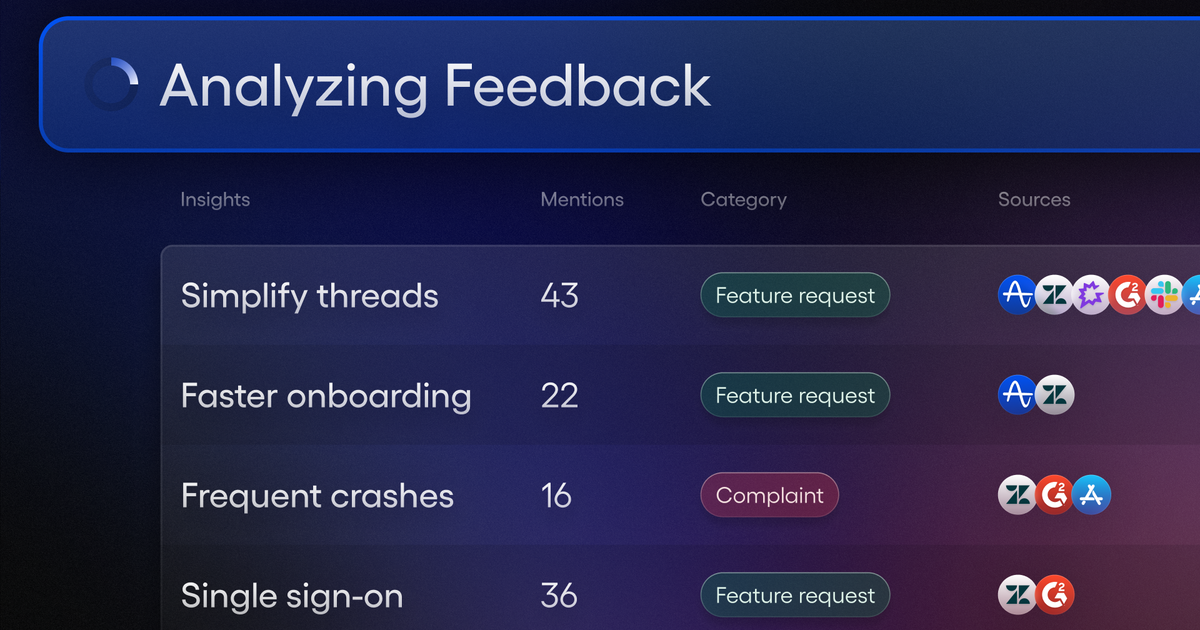
Prompt 4: Cluster qualitative feedback (NPS verbatims, support tickets, and in-app survey responses) by theme and feature, summarize the top friction points in one paragraph per theme, and propose fixes ordered by impact and effort.
Prompt 5: Analyze common user paths after onboarding, surface where users stall or loop, and recommend targeted product tours or tooltips to reduce time-to-first-value.
Prompt 6: Evaluate the impact of a specific in-app guide on activation rate using an A/B test, report lift with confidence intervals, and include the minimum detectable effect (MDE) assumptions used in the analysis.
Prompt 7: Identify accounts at churn risk based on declining feature usage, login frequency, and support sentiment; produce a prioritized list with the top three customer success plays for each account.
Prompt 8: Generate a weekly list of product-qualified leads (PQLs) based on usage thresholds, map them to opportunities in our CRM, and recommend the best follow-up message for sales based on feature interest.
Prompt 9: Analyze usage distribution across pricing tiers, highlight features driving upgrades, and suggest one packaging change and one in-app nudge to improve conversion to the next plan.
Prompt 10: Measure time-to-value by persona for a key action, compare pre/post tutorial launch, and quantify the impact of our in-app guides on reducing time-to-first-value.
Prompt 11: For our last three releases, summarize adoption, top feedback themes, and any regressions; recommend one quick win and one strategic bet for the next sprint.
Prompt 12: Produce a weekly executive summary with the top three product insights, the KPIs they influence, and clear owner-action pairs across Product, CS, and Marketing.
When teams start their day with these MCP prompts, product data stops being a report and becomes a decision engine. That’s how we drive adoption, run better experiments, reduce churn, and keep everyone focused on outcomes instead of opinions. If you adapt even a few of these prompts to your context, you’ll feel the shift—more clarity, tighter cycles, and a company moving as one.
“Continuous Discovery Habits” turns five this year, and I’m celebrating by reading the book together with you. Each month, I’m releasing an in-depth reading guide designed for empowered product teams and product trios—complete with the chapters we’ll read, a preview of the key concepts, short shareable videos, individual and team discussion prompts, team exercises you can run immediately, and additional reading to go deeper.
We’ll discuss each month’s reading in the comments, and we’ll gather quarterly for live calls. If you’re joining late, no problem—I’ll be monitoring comments throughout the year. Start with the current month or go back to January (https://www.producttalk.org/lets-read-continuous-discovery-habits-together-january-2026/). Jump in where it serves you best, ask for help, share what’s working, and connect with other readers any time.
If you want to participate, grab a copy of the book (https://amzn.to/3hGkNYT?ref=producttalk.org)—or dust off your old one—share the “Spread the Love” videos with your colleagues, set aside time to run the team exercises, and register for the community sessions. Let’s do this.
This Month’s Reading
Chapters: Chapter 3: Focusing on Outcomes Over Outputs
Estimated reading time: ~22 minutes
This chapter zeroes in on the critical difference between business outcomes and product outcomes—and why it matters which one your team is assigned; how to translate lagging business metrics into actionable product outcomes you can actually influence; why setting outcomes should be a two-way negotiation between leaders and product trios; when to start with a learning goal versus a performance goal; and five common anti-patterns that derail outcome-focused teams. Need a copy? Grab the book (https://amzn.to/3hGkNYT?ref=producttalk.org).
Share the Love with Friends and Colleagues
We learn best in community. I like to seed conversations across my org with short, high-signal content—especially when I’m shifting a culture from outputs to outcomes and sharpening OKRs. Use these short videos to bring peers into the conversation and invite them to read along:
“What’s an outcome?” (https://videos.producttalk.org/videos/ea9fdab71d1ee3c263/whats-an-outcome?ref=producttalk.org) — The real value of starting with an outcome. “Business outcomes vs. product outcomes” (https://videos.producttalk.org/videos/069fd5b5101ee2c78f/business-outcomes-vs-product-outcomes?ref=producttalk.org) — Why product teams need product outcomes, not business outcomes. “What’s the difference between OKRs and outcomes?” (https://videos.producttalk.org/videos/069fdab61919e4c38f/whats-the-difference-between-okrs-and-outcomes?ref=producttalk.org) — Any outcome can be represented as an OKR. “Understanding revenue model formulas” (https://videos.producttalk.org/videos/799fd5b5101ee2c4f0/understanding-revenue-model-formulas?ref=producttalk.org) — How to identify the business outcomes your company cares about. “Revisit your outcome every quarter” (https://videos.producttalk.org/videos/449fd5b4111ee0cfcd/revisit-your-outcome-every-quarter?ref=producttalk.org) — Don’t abandon your outcome, but do revisit how you measure it.
Reflect and Discuss What You Read
Reflection is the conversion rate optimizer for learning. When we pause to discuss what we’re reading, we retain more and apply it faster—especially in product discovery and product strategy work. This chapter challenges us to update our definition of success: away from features shipped and toward outcomes achieved. This month, I’m examining my own relationship with outcomes—where I’ve been rigorous, where I’ve drifted, and how I can help my teams strengthen day-to-day behaviors.
Individual Reflection
If your team isn’t working toward an outcome, look at the features or projects on your roadmap and ask: What impact are they supposed to have? If they succeed, what customer behavior or business result would change? If your team does have an outcome, consider whether it’s a business outcome, a product outcome, or a traction metric—and how that choice shapes your daily decisions and discovery cadence. Finally, think about the last time your team’s outcome changed: Was it a deliberate strategic shift, or did it feel like ping-ponging from one priority to the next?
Team Discussion
As a team, classify your current outcome: Is it a business outcome, a product outcome, or a traction metric? If it’s a business outcome, identify the leading customer behaviors that would signal momentum; if it’s a traction metric, broaden it to a product outcome that gives you more room to explore. Then, name which of the five anti-patterns (pursuing too many outcomes, ping-ponging, individual outcomes, outputs as outcomes, or tunnel vision) shows up for you and pick one concrete change. Finally, assess how outcomes are set: Are they handed down, or does your product trio co-create them? What would it take to make this a true two-way negotiation?
Put It Into Practice
Understanding the difference between business outcomes and product outcomes is table stakes. Translating one into the other is where product management leadership shows up. These exercises will help you connect company goals to customer behavior, avoid outcomes vs output OKRs traps, and increase your span of control over meaningful change.
Exercise: Map Your Revenue Model
Time: 30 minutes. Do this: Solo first, then share with your team. Start with this question: How does your company make money? Write out the formula for your revenue model. For example, a subscription business might be: Revenue = Number of Customers × Average Monthly Spend × Retention. Once you have the formula, identify each variable as a potential business outcome. Then, for each business outcome, brainstorm two to three product outcomes (customer behaviors or sentiments) that might be leading indicators. Which of these product outcomes is your team best positioned to influence?
Exercise: Audit Your Current Outcome
Time: 45 minutes. Do this: With your product trio. Take your team’s current outcome and run it through a quick diagnostic: Is it a business outcome, product outcome, or traction metric? If it’s a business outcome, what product outcomes might drive it? If it’s a traction metric, how might you broaden it to a product outcome? Is it a leading indicator or a lagging indicator? Can you measure progress weekly, or do you have to wait months? Is it within your team’s span of control? Based on your answers, draft a revised outcome that offers more actionable feedback while still connecting to business value, and prepare to discuss this with your product leader.
Go Deeper: Additional Reading
If you prefer an audio summary of this month’s reading, including the book chapter and the resources below, I’ve included an audio version at the end of this post for paid subscribers.
Related In-Depth Guide: Shifting from Outputs to Outcomes: Why It Matters and How to Get Started (https://www.producttalk.org/shifting-from-outputs-to-outcomes/).
Supplementary Reading: Empower Product Teams with Product Outcomes, Not Business Outcomes (https://www.producttalk.org/2020/05/product-outcomes/). Defining Product Outcomes: The 8 Most Common Mistakes You Should Avoid (https://www.producttalk.org/2022/12/defining-product-outcomes/). Understanding How Product Outcomes Connect to Revenue and Costs (https://www.producttalk.org/2023/04/connecting-product-outcomes-to-revenue-and-costs/). Product in Practice: Iterating to an Actionable Outcome at tails.com (https://www.producttalk.org/2020/08/actionable-outcomes/). Product in Practice: Iterating on Outcomes with Limited Data (https://www.producttalk.org/2023/12/iterating-on-outcomes-with-limited-data/). Measurable Outcomes – All Things Product with Teresa Torres and Petra Wille (https://www.producttalk.org/measurable-outcomes-all-things-product-podcast-with-teresa-torres-petra-wille/).
Other Voices: The Business Equation by Brett Bivens (https://venturedesktop.substack.com/p/the-business-equation?ref=producttalk.org). KPI Trees: How to Bridge the Gap Between Customer Behavior, Product Metrics, and Company Goals by Petra Wille and Shaun Russell (https://www.petra-wille.com/blog/kpi-trees-how-to-bridge-the-gap-between-customer-behavior-product-metrics-and-company-goals?ref=producttalk.org). Persistent Models vs. Point-In-Time Goals by John Cutler (https://cutlefish.substack.com/p/tbm-2553-persistent-models-vs-point?ref=producttalk.org). Is It Time to Ditch the Old SaaS Metrics? by Kyle Poyar (https://openviewpartners.com/blog/saas-metrics-plg/?ref=producttalk.org). How Engagement Metrics Can Be Misleading by Oleg Yakubenkov (https://gopractice.io/blog/how-engagement-metrics-can-be-misleading/?ref=producttalk.org). Subscription Churn Metrics and Benchmarks for Operators by Elena Verna (https://www.elenaverna.com/p/subscription-churn-benchmarks-and?ref=producttalk.org).
Related Courses: Business Fundamentals: Navigate Your Business Context with Confidence (https://learn.producttalk.org/course/business-fundamentals?utm_source=Product+Talk&utm_medium=cdh-book-club-february-2026).
Our Live Discussion Schedule
Our live discussion sessions are for paid subscribers and will not be recorded. Invitations will go out to Supporting Members and CDH Members (http://members.producttalk.org/?ref=producttalk.org) two weeks before each event—reserve time on your calendar now so you can participate fully and bring real examples from your team.
Wednesday, March 18, 2026: 9am–10am PDT and 4pm–5pm PDT. Tuesday, June 16, 2026: 9am–10am PDT and 4pm–5pm PDT. Thursday, September 17, 2026: 9am–10am PDT and 4pm–5pm PDT. Wednesday, December 16, 2026: 9am–10am PST and 4pm–5pm PST.
Audio Summary
Prefer to listen? I’ve included an audio summary—Stop Measuring Code Start Measuring Behavior—at the end of this post so you can review the main ideas on your commute or between meetings.
I’m excited to dive into outcomes with you this month. As a product leader, I’ve seen teams transform their product discovery, product roadmapping and sprint planning, and OKR quality when they anchor on clear product outcomes tied to business value. Let’s build that muscle together and make this a quarter where we stop measuring output and start driving outcomes.
I’ve watched AI adoption accelerate dramatically over the last year, and the momentum is undeniable. Teams everywhere are experimenting, piloting, and operationalizing AI—but the ways they’re doing it, and the outcomes they’re seeing, vary widely.
Our latest research shows that 82% of senior leaders invested in AI for customer service in 2025, and 87% plan to in 2026. That’s the new baseline. The differentiator now is depth—how far AI is embedded into core workflows, accountability, and measurement.
Teams with mature AI are almost twice as likely to achieve higher, more consistent support quality. Our survey shows 43% of advanced adopters citing this benefit compared with 24% of early deployments.
But while most teams are using AI, our 2026 “Customer Service Transformation Report” shows that this usage is not equal. A gap is opening up between teams that have deployed AI at a surface level and those that have integrated it deeply. I see this firsthand: shallow deployments answer FAQs; deep deployments redesign processes, policies, and teams.
Survey results highlight the AI deployment gap: nearly nine in ten organizations with mature AI see improved customer service metrics (87%), compared with 62% across all respondents, visualized with bold circles.
For this year’s report, we surveyed over 2,400 global customer service professionals across a range of industries to see how they’re using AI today, where it’s paying off, and what they’re betting on as they plan for 2026. The findings mirror my experience leading AI Strategy and AI workflows at scale.
As AI programs advance, measurement confidence surges. This chart shows how ROI tracking rises from 35% in exploring to 70% in mature deployments—evidence of a widening execution gap in customer service.
We found that for many teams, AI is still doing narrow work like answering simple questions or handling small parts of workflows. These teams are seeing benefits, but only a fraction of what’s possible. Meanwhile, a smaller group is pulling away. They’ve put AI at the core of their service operation, integrating it into critical workflows, giving it more responsibility, and continuously improving it over time. That’s the hallmark of mature deployment.
Customer service priorities are shifting fast. By 2026, improving CX tops the list at 58%, cost and efficiency climb, and quality moves to third as teams prepare to scale operations and evolve skills.
The difference in results and overall support experience – for both teams and customers – is significant. Here’s how I interpret the data and what I recommend to close the gap.
Survey insights from the 2026 customer service transformation report reveal how AI reshapes support roles: 45% of teams updated job descriptions and 40% ramped up AI training, while human agents focus more on complex escalations.
AI adoption is the norm, depth makes the difference. According to senior leaders, 82% of organizations invested in AI in 2025, with 87% planning to invest in the year ahead. Despite this widespread investment, only 10% of teams report having reached a mature level of deployment, where AI is fully integrated into operations and working at scale. In my playbook, maturity means end-to-end ownership of well-defined workflows, robust guardrails, and clear success criteria.
Early AI wins are fueling expansion beyond support. Survey results show 57% cite proven success, 49% aim for a unified customer experience, 33% need to scale without adding headcount, and 31% see demand from other teams.
Reaching this level of maturity is where AI’s real value lies. We found that 43% of teams with mature deployment report higher quality and consistency across support – nearly double the rate of those still in the exploration or initial deployment stages. That aligns with what I see when we move from point solutions to platform thinking and agentic AI patterns.
Leaders are racing ahead with real AI in support. Explore the 2026 Customer Service Transformation Report to see where deployment is stalling, benchmark your team, and get practical steps to scale automation that delights.
ROI becomes clearer with deeper integration. The economic benefits of AI tend to show up first in speed and throughput, and they show up fast. Across all respondents, 62% say their customer service metrics have improved since implementing AI. Most often, teams report their initial gains in efficiency and scale—faster responses, shorter handling times, and the ability to resolve more conversations with the same team—all driving lower cost per interaction.
But the deeper teams go with deployment, the more the results start to show in the metrics. We found that among teams that describe their AI deployment as mature, the cohort of respondents reporting improved metrics as a result of AI rises from 62% to 87%. What’s more, teams with more mature deployments are significantly more likely to say they can measure the return on their AI investment. My advice: instrument everything upfront, baseline rigorously, and use eval-driven development to iterate with confidence.
The bar has moved from ‘does it work?’ to ‘is it actually good?’ More than ever, teams are focused on improving customer experience and satisfaction, with 58% saying it’s the top priority for 2026. That number has more than doubled since last year, when just over a quarter (28%) of respondents cited it as a top priority. As AI assumes repetitive work, your people can shift from reactive triage to proactive journey design. Now is the time to invest in quality frameworks, prompt engineering standards, and LLMs for product managers to close the loop between product, ops, and CX.
Important support work now extends beyond the inbox. AI is reorganizing core customer service operations as it starts to take on a higher volume of work and more complex tasks. Even at the initial deployment stage, 16% of teams report spending less time handling support volume since implementing AI – and among teams who’ve reached maturity, that figure rises to 28%. I’ve seen new roles emerge—AI operations managers, conversation designers, and model evaluators—alongside upskilling for agents into higher-order troubleshooting and relationship building.
Support is creating the blueprint for AI deployment across the business. Support was the proving ground for AI, and our research suggests that businesses are now planning to expand its use to other areas based on the results it’s yielded so far. Fifty-two percent of respondents said that their organizations are actively planning to scale AI to departments like customer success, marketing, and sales in 2026. The two most cited driving forces behind this decision are the success support has seen with AI to date and a desire to create a unified customer experience. Treat your support stack as a reusable platform: shared services, governance, and reusable components accelerate adoption in adjacent functions.
Seize the opportunity to close the gap. Having or not having AI isn’t a question anymore. What you should be asking now is how close you are to mature deployment, where AI is capable of tackling nuanced, high-stakes work. Those who have reached this stage show that going deep is what unlocks real value. That’s the opportunity. Push AI to do more, bring it to more channels, use it to resolve the most complex queries, and close the gap before it becomes too wide to close.
This might seem daunting. But trying new things always is. What we’re experiencing now is a defining moment for customer service, and the teams that are leaning in are actively building the future. As this report shows, what works in customer service now will become the blueprint for how organizations transform the full customer journey with AI. If you want the benchmarks and the playbook to accelerate from pilots to production-grade outcomes, I recommend reviewing the full “2026 Customer Service Transformation Report.”
I stopped treating churn as a postmortem and started treating it as a forecasting problem. When we instrument our product, connect the dots across journeys, and embed those signals into our daily operations, churn becomes predictable—and preventable. This shift has been one of the most impactful product strategy moves my teams have made for product-led growth and retention analysis.
"Discover why and how CS teams can use digital analytics to take a proactive, predictive approach to churn, stopping it before it happens." That is exactly the mindset I bring to customer success and product collaboration: anticipate risk, intervene with precision, and demonstrate measurable impact.
The practical work starts with leading indicators. I look at user activation milestones, time-to-first-value, feature adoption depth, frequency and recency of key events, account-level coverage (are multiple users active or just one champion?), usage volatility, and friction signals like repeated errors or stalled onboarding. These behavioral inputs are stronger predictors of churn than survey sentiment alone.
From there, I create a churn risk score. Early on, a transparent rules-based model is usually enough to separate healthy from at-risk accounts. Over time, we can layer in supervised learning if the data supports it. I rely on Amplitude analytics, Pendo, or a unified analytics platform to tag events, build cohorts, and compute risk in near real time. This is where we consistently see the patterns that matter—especially around user activation and sustained adoption.
Signals without action won’t save a customer, so I connect the model to our systems of engagement. Through CRM integration, at-risk accounts trigger clear playbooks for CSMs and lifecycle marketers. Inside the product, in-app guides address gaps exactly where they occur—guiding users to the next best action, unblocking onboarding, or showcasing the value hidden behind underused features.
Because not every nudge works for every segment, we treat intervention design as a product problem and run A/B testing on copy, timing, channel, and offer. We test whether a contextual tooltip outperforms an email sequence, whether a short product tour beats a knowledge base link, and which incentives accelerate onboarding without cannibalizing expansion.
Operationally, this is a team sport. Product, CS, and marketing meet in product trios to review risk cohorts, prioritize root-cause fixes, and tune playbooks. We run a weekly risk review to turn insights into decisions, and we use monthly business reviews to connect leading indicators to lagging outcomes like retention, expansion, and NRR.
Measurement is non-negotiable. We pair retention analysis with qualitative feedback to understand whether our interventions truly change behavior. The goal is to close the loop: when a risk cluster improves, we codify the playbook; when a tactic underperforms, we learn, adjust, and try again. Over time, the organization builds a muscle for proactive, data-informed customer health management.
If you’re getting started, begin by instrumenting events tied to value moments, define a simple health score, and stand up a basic alerting workflow. Pilot one or two interventions, measure lift, and iterate. Within a single quarter, you’ll have enough signal to prioritize product improvements and scale the practices that reliably reduce risk.
Churn rarely surprises teams that listen to their data and respond in real time. With disciplined analytics, thoughtful in-product guidance, and tight alignment across CS and product, we can move from reacting to predicting—and keep more customers succeeding with far less effort.
Inspired by this post on Amplitude – Perspectives.
Customer feedback is the most reliable compass I have for product strategy and execution. Over the years leading product at HighLevel, I’ve built and refined a system that turns raw signals from users into clear, prioritized decisions our teams can confidently ship.
A practical guide to collecting and using product feedback in product management (from AI tools to early-stage tactics) for better product decisions.
My playbook starts with continuous discovery. I keep a steady flow of insights from sales calls, customer support threads, community forums, and in-product behavior so I can triangulate patterns rather than chase loud anecdotes. This mix of quantitative and qualitative data helps me separate urgent noise from strategically meaningful trends.
On the quantitative side, I rely on product analytics to ground the conversation. Amplitude analytics gives me activation, retention cohorts, and feature engagement, while controlled experiments and A/B testing validate whether an idea actually moves a target metric. Tying these signals to specific customer segments helps me see where product-led growth is working—and where it’s stalling.
For qualitative insight, I combine in-app guides and lightweight surveys (via tools like Pendo) with structured interviews and support escalations (often surfaced through platforms like Intercom). I map problems using the Kano Model to understand which requests are basic expectations, which are performance drivers, and which are potential delights. This keeps our roadmap focused on outcomes, not just outputs.
AI now accelerates the synthesis step. With LLMs for product managers in my AI product toolbox, I summarize interview transcripts, cluster themes across thousands of notes, and quantify sentiment without losing nuance. I still review raw artifacts to avoid hallucinations and preserve context, but AI reduces the time from signal to insight dramatically—freeing me to spend more energy on judgment and storytelling.
In early-stage contexts, I bias toward speed and proximity to users. I schedule founder- or PM-led discovery calls weekly, instrument product tours early, and launch scrappy in-product prompts to validate demand before over-investing. When data is sparse, I focus on high-signal channels (power users, churned customers with qualified use cases) and document crisp problem statements that connect directly to activation, retention analysis, and revenue outcomes.
Prioritization ties everything together. I translate insights into hypotheses aligned to outcomes vs output OKRs, then pressure-test them with feasibility and strategic fit. We run small, measurable experiments, track deltas in activation and retention, and adjust the product roadmapping and sprint planning cadence based on what the data and customers teach us.
This approach builds trust with stakeholders and creates empowered product teams. By grounding decisions in a transparent trail of feedback, analytics, and experiments, we reduce thrash, move faster, and—most importantly—ship product moments that customers value.
If you’re refining your own feedback engine, start by instrumenting the basics, set a weekly discovery rhythm, and let AI handle the heavy lifting on aggregation and synthesis. The compounding effect is real: better insights lead to better bets, which lead to better outcomes for your users and your business.
I see the strongest products emerge where customer outcomes, sales insight, and engineering rigor intersect. That’s precisely why I value the craft of solutions engineering—and why I’m excited to share how Chris Landon exemplifies it.
Chris is a seasoned professional with extensive experience in solutions engineering and sales consultancy. He's currently a senior solutions engineer.
From a product management leadership vantage point, this blend bridges discovery and go-to-market strategy, converts ambiguous requirements into crisp product positioning and value proposition, and ensures we’re solving the right problems for the right personas. The result is a tighter feedback loop between field reality and product intent—an essential ingredient for sustainable product-led growth.
In practice, senior solutions engineers partner closely with product trios, informing product roadmapping and sprint planning with field-tested evidence. In my experience, their input sharpens stakeholder management, de-risks complex integrations, and equips sales with narratives that reflect genuine customer outcomes rather than feature lists.
On the analytics side, the most effective partners help define decision-ready metrics across a unified analytics platform, enriching retention analysis with qualitative context from customer conversations and proofs of value. That closed loop turns demos and early deployments into high-signal inputs for learning, prioritization, and go-to-market strategy.
If you’re building a modern product organization, invest in this partnership. Clarify the value proposition together, test product-market hypotheses with real customers, and translate learnings into clear roadmaps. Leaders like Chris make that collaboration seamless—and the result is not just a stronger product, but a more resilient, customer-centered growth engine.
Inspired by this post on Amplitude – Perspectives.
Every year, I circle Pendomonium on my calendar because it reliably delivers the perfect blend of strategy, execution, and community. It’s where product leaders, builders, and operators compare notes on what actually moves activation, adoption, and retention—and where I pressure-test my roadmap and go-to-market assumptions against real-world data and peer experience.
Pendomonium is a product festival by Pendo in downtown Raleigh. Get answers to all your questions about the best product festival of the year.
From a product management leadership lens, the value is clear: Pendomonium is a concentrated learning loop for product-led growth. I come to deepen my craft around in-app guides, onboarding flows, user activation, and product tours—then translate those insights into roadmap bets and experiments my product trios can execute immediately.
Why attend? First, signal over noise: the sessions focus on measurable customer behavior and practical playbooks, not vague inspiration. Second, community: the hallway track and roundtables are some of the best conference networking moments in our field. Third, clarity: I leave with sharper product strategy, a prioritized backlog, and a short list of experiments to validate with customers.
If you’re a first-timer, arrive with intent. Define two or three outcomes you want—such as improving onboarding completion, increasing feature adoption, or tightening product roadmapping and sprint planning—and build your agenda around those goals. Star sessions on product discovery, product strategy, and hands-on Pendo use cases like in-app guides and product tours so your notes translate into immediate action.
Make the most of the community. Treat the hallway track like a scheduled session: set a goal to meet ten peers, bring a crisp introduction, and ask concrete questions such as, “What measurable behavior change did your in-app guide drive?” or “Which activation metric mattered most for your last launch?” Swap templates and dashboards, and follow up within 24 hours while context is fresh.
Logistics matter more than most people admit. Downtown Raleigh is walkable, but high-demand sessions fill quickly—arrive early, wear comfortable shoes, and keep a portable charger handy. Schedule buffer time between talks to debrief, review notes, and have serendipitous conversations with the Pendo team and practitioners who can deepen your approach.
Capture, then operationalize. I use a simple note structure: Insight → Hypothesis → Experiment → Metric. Turn session takeaways into tests (for example, variations of onboarding checklists or empty-state prompts) and define success criteria in advance. Align those experiments with your OKRs and use QBRs to review outcomes, ensuring what you learned at the festival translates into measurable product impact.
Post-event, run an internal readout within a week. Demo two applicable ideas, propose a 30-60-90 day experiment plan, and tie each initiative to a customer behavior metric such as time-to-value, daily active usage, or feature adoption. This is how Pendomonium goes from inspiring to invaluable—by turning insights into shippable, testable work that advances your strategy.
If this is your first Pendomonium, expect high energy, candid conversations, and a wealth of practical tactics you can apply immediately. I’ll be there comparing notes, learning from peers, and sharing what’s worked—and what hasn’t—in scaling product organizations. If you spot me in a session on activation or onboarding, come say hello.
Every quarter, I watch product teams move from gut feel to data-informed decisions—until instrumentation bottlenecks slow them to a crawl. That’s why I’ve become an advocate for codeless analytics: it removes the dependency on engineering sprints for basic event tracking and lets teams answer product questions in hours, not weeks.
We explain what codeless analytics are, why (and how) Pendo supports them, plus responses to the top three myths about low-code/no-code solutions.
Here’s how I frame it with my teams: codeless analytics enables product managers, designers, and customer success to tag features visually, track interactions, and analyze adoption without shipping code. The goal isn’t to replace engineered events; it’s to accelerate discovery, speed up iteration, and reduce context-switching for developers. In practice, this means cleaner prioritization, faster validation of hypotheses, and tighter product-led growth loops.
Why Pendo? In my experience, Pendo’s codeless model shortens the distance from question to insight. Visual tagging makes event setup accessible, in-app guides and product tours let us experiment with onboarding and activation, and governance controls ensure data remains trustworthy across teams. The result is a unified analytics approach where we reserve custom instrumentation for complex logic while using codeless tracking for everyday product questions.
Let’s address the top three myths I hear most often. Myth 1: “No-code is only for simple use cases.” In reality, most decisions we make weekly—feature adoption, path analysis, funnel drop-offs, and retention analysis—do not require custom code. Codeless analytics handles these well, and when we need deeper context (like server-side events), we complement it with engineered tracking. It’s a both/and, not an either/or.
Myth 2: “Codeless data isn’t accurate.” Accuracy comes from governance, not the method. I set clear standards: naming conventions, tagging reviews, ownership, and periodic audits. With disciplined process, codeless tracking yields consistent, decision-grade data. The added benefit is visibility—non-technical stakeholders can validate the instrumentation themselves, reducing misalignment.
Myth 3: “Engineers must instrument everything to scale.” Engineering time is precious; we should spend it on differentiated capabilities, not on routine click tracking. Codeless analytics scales by empowering product teams to self-serve, while engineering focuses on back-end, performance, and edge cases. When paired with a unified analytics platform and clear data contracts, this model scales cleanly across product lines.
For teams adopting this approach, I recommend a simple operating model: define your core product questions up front, tag features aligned to those questions, connect insights to in-app guides for experiments, and measure user activation and retention continuously. Whether you run Pendo alongside Amplitude analytics or within a broader unified analytics platform, the key is to keep the insight-to-action loop tight.
The future of product analytics is codeless because it puts insights where they belong—directly in the hands of the people designing the experience. When we remove bottlenecks, we learn faster, ship smarter, and drive measurable PLG impact. That’s how we turn product analytics from a reporting function into a competitive advantage.
Across my teams and portfolio, I’m watching AI fundamentally reshape product-led growth—from static funnels and one-off playbooks to adaptive, compounding growth loops that learn in real time. The shift isn’t just technological; it’s an operating model change that rewards continuous discovery, rigorous instrumentation, and outcome-driven product strategy.
"Learn how AI is transforming PLG with a new generation of growth loops that can turn your product into a self-optimizing platform." That line captures what I’ve been building toward: systems that sense user intent, decide the next best action, act contextually, and learn to improve the loop with every interaction.
Here’s the core pattern I rely on. First, sense: unify product analytics and behavioral signals (think Amplitude analytics, Pendo events, Intercom conversations) into a single, queryable, privacy-safe layer. Second, decide: apply AI Strategy—LLMs for product managers, rules, and retrieval—to segment users by intent and probability of success. Third, act: deliver in-app guides, product tours, tooltips, or personalized nudges that accelerate user activation and time-to-value. Finally, learn: run A/B testing with a clear minimum detectable effect (MDE), then feed outcomes back into the model for continuous optimization.
Activation is where the gains start compounding. With gen ai, I can auto-generate tailored onboarding checklists, dynamic walkthroughs, and contextual help that adapts to the user’s role, data maturity, and current friction points. We’ve moved from generic product tours to precision guidance that updates based on real-time behavior—often lifting first-week activation and shortening time-to-first-value without adding support load.
Experimentation is the governor that keeps speed and quality in balance. I instrument every growth loop end to end and pair eval-driven development with A/B testing to confirm incremental impact. Amplitude analytics gives me cohort views and path analysis; Pendo or Intercom can deliver in-app variants; a unified analytics platform closes the loop on retention analysis so I’m not optimizing for click-through at the expense of long-term value.
Retention and expansion are where AI shines as a compounding engine. Retrieval-first pipeline patterns allow instant, contextual support that deflects tickets and boosts perceived product competence. Agentic AI can orchestrate next-best actions—prompting power users toward advanced features, surfacing value moments, or timing expansion prompts when success signals appear. The result is a virtuous cycle: better guidance drives deeper adoption, which improves model accuracy, which unlocks more relevant guidance.
None of this works without guardrails. I bake in AI risk management from the start: strict data governance, privacy-by-design, human-in-the-loop review for high-impact actions, transparent user consent, and continuous drift monitoring. The goal is reliable automation that users trust—augmented by clear fail-safes when confidence drops.
Operationally, I anchor the work in empowered product teams and product trios, focus on outcomes vs output OKRs, and practice continuous discovery to validate problems and solutions before scaling. The baseline metrics I watch: activation rate, time-to-value, week-four retention, PQL/PQA conversion, expansion revenue, and support deflection—each tied to a specific growth loop hypothesis.
If you’re starting fresh, begin with the highest-leverage loop: user activation. Instrument your onboarding journey, define the critical path to value, ship two to three personalized interventions, and measure impact with a precommitted MDE. Scale what wins, drop what doesn’t, and iterate weekly. Once activation is compounding, extend the same approach to adoption depth, collaboration features, and expansion triggers.
In practical terms, AI-powered PLG is less about flashy features and more about disciplined feedback loops. Build the sensing fabric, keep the decision layer auditable, ship small actions quickly, and treat learning as the product. Do that, and your product doesn’t just grow—it becomes a self-optimizing platform.
I set out to create a lightweight, high-impact “Pendo Wrapped” experience for our users—and I did it in under 10 minutes with Pendo MCP. As a VP of Product Management, I’m constantly looking for fast, pragmatic ways to turn product insights into moments that drive engagement. This experiment was about transforming raw analytics into a concise, celebratory year‑in‑review that motivates customers to explore more value.
When I say “Pendo Wrapped,” I mean a simple, narrative-style summary of usage highlights: what got adopted, which moments mattered, and where value showed up most clearly. Framed well, that story reinforces product‑led growth by reminding users why they chose us, nudging them toward the next best action, and strengthening activation and retention without heavy development work.
My approach was straightforward: define a clear objective (celebrate milestones and prompt the next step), choose a focused set of metrics (adoption, engagement, and activation), and target relevant segments. Then I layered the narrative on top of existing analytics using in‑app guides and product tours to deliver the experience where it matters most—inside the product.
The reason it took minutes, not hours, is that Pendo MCP let me work with what we already had—segments, saved reports, and proven guide templates—so I could spend time on the story, not the scaffolding. No code, minimal configuration, and a crisp call to action made it feel polished without being heavy.
Increase revenue, cut costs, and reduce risk with Pendo’s Software Experience Management platform. Optimize the entire software experience to drive adoption and improve engagement.
If you want to replicate this quickly, start by selecting one user segment and three metrics that matter to them, write a two‑sentence narrative that connects those metrics to outcomes, and ship a short in‑app guide with a single, purposeful CTA. That’s enough to deliver a personalized year‑in‑review feel and spark immediate exploration—no new infrastructure required.
What surprised me most was how a small, story‑driven touch created outsized alignment across customers and internal teams. It turned analytics into advocacy, reminded our users of the value they’re already getting, and opened the door to deeper adoption. If you’re pursuing product‑led growth, a fast “Pendo Wrapped” is one of the highest‑leverage experiments you can run this week.
2026 is closer than it feels, and the signals are already clear. I’ve been synthesizing what I’m seeing across empowered product teams, boards, and cross-functional partners into a practical view of what matters next. A sharp look at product management trends for 2026. Not guesses, but signals from top product leaders shaping how PMs will actually work next.
In this analysis, I distill eleven shifts that are changing the craft—from outcomes vs output OKRs and continuous discovery to stronger product strategy and tighter product roadmapping and sprint planning. The throughline is simple: prioritize customer value, ship with focus, and measure what moves the business. These aren’t headline trends; they’re working patterns I’m seeing across high-performing organizations.
AI is no longer a side project—it’s part of the product manager’s core toolkit. Agentic AI, LLMs for product managers, and trustworthy AI workflows are accelerating discovery, sharpening problem framing, and enabling faster iteration. The best teams pair this with disciplined evaluation and experimentation, so insight compounds without sacrificing safety, privacy, or product quality.
Execution is getting crisper through product trios and stronger stakeholder management. When design, product, and engineering co-own discovery and delivery, teams reduce handoffs and increase clarity. That alignment translates into better prioritization, fewer context-switches, and a roadmap that reflects real trade-offs—not wish lists.
On growth, product-led growth remains a durable engine when it’s anchored in a compelling value proposition and instrumented end-to-end. Clear activation moments, in-app guides, and thoughtful product tours outperform brute-force acquisition. When we connect these motions back to product strategy and the roadmap, we create a repeatable loop that compounds adoption and retention.
Governance and trust are now table stakes. Privacy-by-design, data governance, and a pragmatic approach to regulatory compliance protect both users and velocity. Teams that build these practices into their operating model move faster because they avoid late-stage rework and maintain stakeholder confidence.
If you’re leading a product org—or aspiring to—this is your field guide to 2026. I’ll unpack where these shifts are strongest, how to apply them in your context, and the pitfalls to avoid. The aim is to give you clear language, concrete practices, and a sharper edge as you shape what your team builds next.
Support tickets are the rawest signal of product truth. Leading product teams at HighLevel, I’ve learned that the fastest way to build what customers value is to transform frontline conversations into a repeatable, data-driven system for discovery, prioritization, and execution.
What if your support and product teams could unlock CX insights to turn every ticket into strategic product intelligence? Explore how.
Here’s the operating system I rely on. First, I connect our support stack (think Intercom and our CRM integration) into a unified analytics platform so every conversation, tag, and resolution is queryable. I don’t just count tickets—I segment them by product area, customer segment, lifecycle stage, and revenue impact to reveal patterns that roadmaps can act on.
Next, we standardize a shared taxonomy. Agents apply concise, high-signal labels (problem type, severity, intent), and we augment that with AI-driven auto-tagging to reduce noise and improve recall. The result is trustworthy “voice of the customer” data that product managers and support leaders can both stand behind.
Prioritization then becomes rigorous and fair. I weight themes by severity, frequency, ARR exposure, and time-to-value, and tie them directly to outcomes vs output OKRs. Amplitude analytics helps me quantify impact—what’s breaking activation, what’s dragging conversion, what drives retention analysis—so the backlog reflects business outcomes, not opinions.
Discovery is continuous by design. Product trios (PM, design, engineering) run weekly reviews of the highest-signal themes, recruit users straight from recent tickets, and prototype solutions quickly. We validate ideas with A/B testing when appropriate and ship targeted in-app guides to reduce confusion before it becomes a ticket.
Crucially, we close the loop. When we release a fix or improvement, we notify affected customers and the agents who flagged the issue. We track downstream effects—ticket deflection, CSAT, feature adoption, and time-to-resolution—so everyone sees how customer support ai strategy accelerates product-led growth.
This approach also builds culture. Empowered product teams treat support as a strategic partner, not a cost center. Agents become co-creators of the roadmap, and PMs gain a steady stream of product discovery opportunities grounded in real user outcomes.
If you’re getting started, a simple 30-60-90 can help: in 30 days, unify the data and agree on taxonomy; in 60, instrument dashboards and adopt a weekly insights ritual; in 90, align priorities to OKRs, launch targeted fixes, and measure business impact. That’s how tickets turn into product truth—and how CX insights drive compounding wins.
Inspired by this post on Amplitude – Perspectives.