I’ve seen what happens when talented teams drift into silos: priorities splinter, timelines slip, and what looks like progress turns out to be motion without momentum. My job is to turn those walls into bridges—aligning product, engineering, design, and go-to-market around outcomes that matter to customers and the business.
For siloed teams, walls go up, and unnecessary work gets done. Learn the signs, the damage, and the way to break free from the illusion of work.
The signs show up early if you know where to look: duplicated efforts across squads, decision-making that bounces between functions, roadmap debates grounded in opinions rather than data, and “busy” sprints that ship outputs without measurable outcomes. These are classic stakeholder management breakdowns, often masked by perfect decks and full calendars.
The damage is real. Customers feel friction and inconsistency, product-market fit signals get missed, and we over-invest in features that don’t drive user activation or retention. Morale takes a hit as teams lose the thread of purpose. That’s the “illusion of work” in action—activity that crowds out impact.
Here’s how I build bridges. First, I organize around empowered product teams and product trios (product, design, engineering) who own customer outcomes, not just velocity. We practice first principles decision making, write decisions down, and align early with adjacent functions so there are no surprises when we move from product discovery to delivery.
Second, I anchor planning in outcomes vs output OKRs. We commit to a small set of measurable outcomes, then use QBRs vs OKRs cadences to inspect progress, cut scope that doesn’t move the needle, and recalibrate with clarity. This shifts the conversation from “What did we ship?” to “What changed for customers and the business?”
Third, I make impact measurable and visible. We instrument the funnel end to end, define a minimum detectable effect (MDE) for experiments, and use A/B testing to de-risk bets before we scale them. A unified analytics platform—with Amplitude analytics, Pendo, Intercom, and HubSpot tied back to our CRM integration—keeps everyone looking at the same truth so we can diagnose what’s working and what’s noise.
Fourth, I bring collaboration into the core rituals: transparent product roadmapping and sprint planning, weekly cross-functional reviews, and fast, lightweight artifacts that clarify hypotheses, success metrics, and trade-offs. By the time we launch, stakeholders already understand the why, the how, and the expected impact.
If parts of your organization feel stuck, start small: pick one shared outcome, form a cross-functional trio, define your leading indicators, and run one experiment with clear MDE and a two-week readout. The momentum you create will turn walls into bridges—and busywork into business results.
Will AI replace product managers, or simply transform their role? Discover what AI can and cannot do, plus insights from PMs on the future of work.
I’m asked this question in nearly every leadership meeting now, and my answer is consistent: AI won’t replace great product managers by 2035—but it will radically reshape how we operate. The PMs who thrive will pair sharp product judgment with an intentional AI Strategy and a practical AI product toolbox, unlocking speed, clarity, and scale without sacrificing vision.
Here’s what AI already does well for us today. With LLMs for product managers, I can synthesize customer feedback at scale, draft PRDs and acceptance criteria, transform notes into user stories, and even auto-generate experiment plans with a minimum detectable effect (MDE) calculation. When I connect these models to Amplitude analytics, Pendo, Intercom, and HubSpot through a unified analytics platform and CRM integration, I accelerate discovery, prioritize confidently, and tighten the loop between signal and action. CustomGPT workflows now handle routine backlog grooming, competitive landscaping, and early concept testing, freeing my team to focus on higher-order decisions.
By 2035, I expect agentic AI to operate as an execution co-pilot: autonomously scheduling A/B testing, launching targeted in-app guides and product tours, monitoring user activation and onboarding funnels, and raising anomalies via Agent Analytics long before a dashboard review. These systems will propose playbooks, draft UX writing and tooltip design, and recommend next-best actions—then wait for human approval when stakes are high. Think of it as the ultimate forward deployed engineer for operational work, working within clear guardrails.
What AI cannot do—and is unlikely to master soon—is the essence of product leadership. It won’t craft a resonant value proposition for a new segment, define points of parity vs. competitive differentiation, or set outcomes vs output OKRs that align messy stakeholder incentives. It won’t navigate board management, reconcile conflicting narratives from sales and engineering, or make ethically grounded trade-offs under uncertainty. That’s where privacy-by-design, data governance, and AI risk management converge with human judgment, context, and accountability.
As the tooling matures, the PM role will tilt from artifact production to decision quality. We’ll spend less time writing and more time deciding: which bets to place, which risks to accept, and where to concentrate our empowered product teams. Product discovery deepens, product positioning sharpens, and product roadmapping and sprint planning become faster and more adaptable—because the busywork is handled, not because the thinking is outsourced.
Practically, I’m evolving team design and rituals now. We operate as product trios, pair PMs with forward deployed engineers, and embed gen ai into daily workflows. We standardize prompts, set review thresholds, and instrument everything for observability. Our stakeholder management improves because we bring clearer narrative artifacts—and because we can test assumptions earlier and share evidence in real time.
If you’re building your own AI Strategy, start with three tracks. First, foundations: instrument data pipelines, establish data governance, and codify privacy-by-design. Second, acceleration: deploy CustomGPT workflows for research synthesis, PRD drafting, retention analysis, and experiment design, while keeping humans in the loop for decisions. Third, automation with guardrails: let agentic AI run low-risk playbooks (in-app guides, content suggestions, ops checks) and require human approval for anything customer-facing and irreversible.
Future-proofing your career is about skill stacking. Double down on first principles decision making, storytelling, and cross-functional influence, and pair that with hands-on fluency in gen ai, prompt engineering, model evaluation, and risk controls. Learn how to frame trade-offs, architect outcomes vs output OKRs, and translate strategy into experiments that AI can help execute. The combination—human judgment plus machine speed—is the new competitive advantage.
So, will AI replace product managers by 2035? No. It will transform average PMs into good ones and great PMs into force multipliers. The ones who lead will embrace AI as leverage, cultivate empowered product teams, and stay relentlessly focused on customer outcomes. The future belongs to product creators who can wield intelligent tools without surrendering accountability for the product’s direction and impact.
Over the past year, I’ve been shipping agentic AI into production and coaching product teams on what it really takes to make these systems trustworthy in the wild. One story that crystallizes the playbook comes from Trainline’s move to an agentic architecture for travel assistance—an approach that mirrors what I’ve seen work in high-stakes, real-time customer experiences.
Trainline—the world’s leading rail and coach platform—helps millions of travelers get from point A to point B. Now, they’re using AI to make every step of the journey smoother.
I studied how "David Eason (Principal Product Manager) Billie Bradley (Product Manager), and Matt Farrelly (Head of AI and Machine Learning)" approached the build of "Travel Assistant, an AI-powered travel companion that helps customers navigate disruptions, find real-time answers, and travel with confidence." Their work exemplifies the kind of end-to-end thinking required to move beyond demos into dependable, on-the-go assistance.
They share how they: Identified underserved traveler needs beyond ticketing; Built a fully agentic system from day one, combining orchestration, tools, and reasoning loops; Designed layered guardrails for safety, grounding, and human handoff; Expanded from 450 to 700,000 curated pages of information for retrieval; Developed LLM-as-judge evals and a custom user context simulator to measure quality in real-time; Balanced latency, UX, and reliability to make AI assistance feel trustworthy on the go.
I align strongly with their core takeaways: "AI assistants need both scalable reasoning and deep domain context to be useful." "Tool design and guardrails are as critical as prompt design in agent systems." "LLM-as-judge evals make it possible to measure open-ended systems without massive labeling costs." And perhaps most importantly, "Even legacy companies can move fast when they embrace experimentation and tight PM–engineering collaboration."
From an AI strategy perspective, starting "fully agentic" was the right call. When the problem space is dynamic—disruptions, route changes, fare conditions—reasoning loops and orchestration aren’t luxuries; they’re table stakes. Tool selection becomes product design: you need the right retrieval interfaces, constraint-aware planners, and API contracts that are resilient to partial failures. Layered guardrails for safety, grounding, and human handoff reduce hallucination risk while preserving responsiveness—critical when users are standing on a platform waiting for an answer.
The retrieval scale-up—"Expanded from 450 to 700,000 curated pages of information for retrieval"—is a classic inflection point. I’ve seen teams stall here when they treat content growth as a pure indexing problem. The winning move is curation and structure: normalize sources, encode policy-level constraints, and align retrieval chunks to decision boundaries the agent actually uses. That’s how you keep precision high while coverage explodes.
Evaluation is where most open-ended assistants fail quietly, which is why I was encouraged to see "Developed LLM-as-judge evals and a custom user context simulator to measure quality in real-time." In practice, LLM-as-judge gives you scalable, scenario-based scoring without prohibitive labeling, while a user context simulator surfaces regressions tied to persona, itinerary state, and device constraints. The combination closes the loop between model behavior, tool layer changes, and UX outcomes.
On product delivery, the decision to have the system "Balanced latency, UX, and reliability to make AI assistance feel trustworthy on the go" shows mature prioritization. For travel, trust accrues in seconds: fast-enough responses, graceful degradation when upstream data lags, and explicit handoff when confidence dips. This is where guardrails meet UX writing—clear, bounded language signals competence even when the system defers.
Finally, the organizational pattern matters. The teams that win in agentic AI are cross-functional, experimentation-driven, and ruthless about instrumentation. Tight PM–engineering collaboration, explicit safety thresholds, and an eval stack that mirrors real user journeys are what turn promising architectures into dependable products.
It’s a behind-the-scenes look at how an established company is embracing new AI architectures to serve customers at scale.
If you’re building agentic AI in production, borrow these moves: invest early in tool and guardrail design, scale retrieval with curation not just volume, adopt LLM-as-judge plus context simulation for continuous evaluation, and treat latency and reliability as core product requirements—not afterthoughts. That’s how you ship AI assistance that customers trust when it matters most.
I’m excited to share that we’re opening our next R&D hub in Berlin to support significant investment in our AI customer service platform, Intercom, and market-leading AI Agent, Fin. We intend to hire 100 people in Berlin over the year ahead across engineering, AI, data science, product, and design. This move reflects our AI Strategy, our commitment to product management leadership, and our focus on building enduring product-led growth.
We believe that in a short number of years, the vast majority of customer service will be done by AI. Fin is already the world’s best Customer Service Agent. At Pioneer, our recent summit for AI customer service leaders in NYC, we talked about how Fin will become a true end-to-end Customer Agent, extending far beyond service. We showcased how companies like WHOOP, Anthropic, and Lightspeed are already pushing Fin in ways that help them grow their business.
This market opportunity is massive and expanding at unprecedented pace. Our ambition is to earn our place as one of the most successful AI businesses during this wave of AI disruption, and we want more brilliant people on our team to pursue this as aggressively as possible. If you’re motivated by Generative AI, LLMs, and building real products that scale, you’ll find both challenge and impact here.
We are already on track to be one of the fastest growing private software companies. Fin is the primary contributor to this, and is months away from passing $100m in ARR. So far, more than 7000 businesses have transformed their customer service with Fin, including German companies like electricity provider Ostrom, smart home technology provider tado°, and grocery delivery company Flink, along with global leaders like Vanta, Clay, Lovable, and Miro.
Why Berlin? We’re drawn to the city’s rare blend of deep technical talent and rich creative culture—within a vibrant, globally connected ecosystem close to our R&D hubs in Dublin and London. It’s a place where top-tier engineers and designers thrive, and where ambitious builders from around the world want to relocate and create category-defining products.
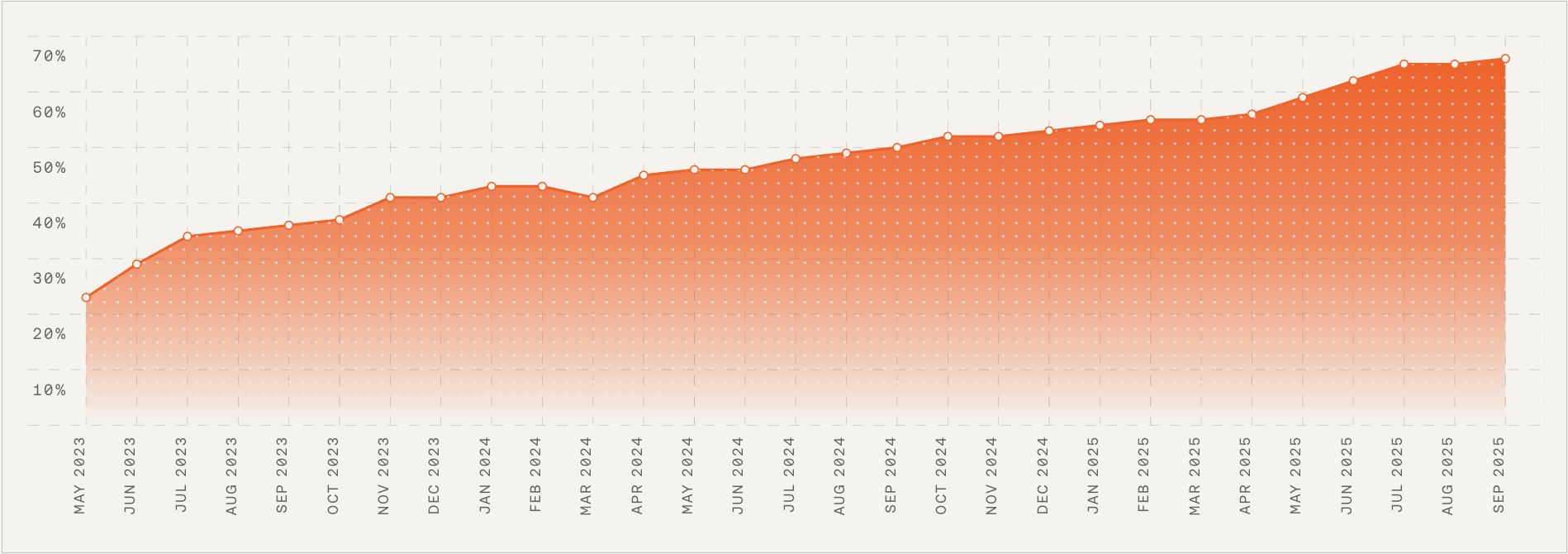
Momentum is building: this month-by-month chart shows a consistent rise from the mid-20s to nearly 70% between May 2023 and Sep 2025—signaling strong progress as we expand engineering, AI, and automation at our new Berlin R&D hub.
We needed a new location that would sustain the high ambition and standards held by our world-class AI teams in Dublin and London. Berlin has emerged as one of Europe’s hottest centers for AI talent, with a high density of AI-focused startups, applied research labs, and practitioners who bring exceptional literacy, optimism, and ambition. It’s the right accelerator for our AI hiring and a place to bring in brilliant minds to shape the future of our product and business.
While Intercom’s reach is global with our headquarters in San Francisco, our R&D leadership remains anchored in Dublin, where half of the executive team sits—making Berlin both geographically and strategically an ideal next location for our growth.
This isn’t our first time expanding our footprint; we previously bet on London and are delighted with how that’s been working. When we shared our Berlin news internally, the energy was palpable, with many teammates volunteering to help spin up the hub successfully—including colleagues who helped make London a big success, like Danny. That level of ownership and momentum is exactly what we aim to cultivate in Berlin.
We’re looking for people who thrive in a high-intensity, high-ambition, high-standards environment and want to help build one of the world’s best AI companies. For builders like that, the opportunity for impact, growth, and career progression is extraordinary. As with London and Dublin before it, the early Berlin cohort will have a disproportionate influence on team norms, culture, and long-term outcomes. We are in the middle of a huge disruptive wave with AI, and Fin is one of the leading examples of commercially successful AI applications. Joining Intercom is an opportunity to be part of this disruptive wave, and help us build out our vision for Fin becoming the world’s best Customer Agent.
On a minimalist stage, four speakers share insights on AI research, automation, and engineering as part of a panel tied to Berlin expansion and the launch of a new European R&D hub.
There are plenty of AI companies to join, but our technology and culture set us apart. Any AI product is only as good as the AI layer powering it. Ours is industry-leading, built by a highly talented, ambitious, and technical team of over 40 machine learning scientists, engineers, and designers in Europe who continuously optimize Fin’s performance through cutting-edge research, experimentation, and innovation. Fin’s average resolution rate increases 1% every month. That kind of steady, compounding improvement is exactly what great customer support AI strategy looks like in practice.
We also build in public and share our progress and learnings with the AI community at large. Recently, our Chief AI Officer Fergal Reid and SVP of Engineering Jordan Neill joined leaders from Cognition, Harvey, and Perplexity in San Francisco to share real lessons, challenges, and breakthroughs from building frontier AI products. Our AI team regularly publishes their insights on the AI research blog; from optimizing inference speed and availability, to building our own proprietary models that outperform general purpose models for CX.
Our AI group and the broader R&D org they operate within work at extraordinary scale and speed. We recognize that moving fast can’t be taken for granted—you must fight for it—and we’re doing just that, embracing the capabilities AI tooling brings us to achieve 2x the throughput. One example of this mindset in practice is us “Betting on the future of frontend at Intercom,” making a technology choice that optimizes for our teams’ ability to build high-quality product, fast.
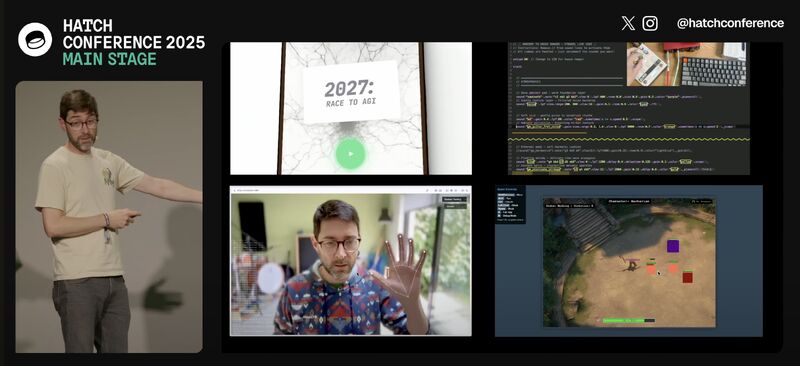
Our design and product teams are world-class and forward-thinking; they’re embracing AI to evolve how they work, as shared in our 3-point framework for AI-driven design and recently presented by Emmet Connolly, our SVP of Design, at this year’s Hatch conference in Berlin. As a product leader, I’m grateful to work alongside brilliant product and design thinkers—it gives me confidence that we’re solving the right problems, solving them well, and driving real impact.
From live demos to hands-on coding, this snapshot captures the momentum we're bringing to our Berlin R&D hub – AI experiments, hand-tracking prototypes, and simulation tools powering our next wave of engineering.
We plan to open our Berlin office space in December or January. To get the office started, we’re hiring Senior Product Engineers, Machine Learning Scientists, Product Managers, Senior Product Designers, Engineering Managers, and Data Scientists immediately. If your craft sits at the intersection of LLMs for product managers, agentic AI, and empowered product teams, you’ll be right at home.
You can learn more about our open roles, company, culture, and locations on our careers site, or feel free to reach out to me, Jordan, Fergal, or Brian directly on LinkedIn if you have any questions.
Some of our engineering team will also be at LeadDev Berlin on November 3rd—come say hi if you’re attending.
I’m looking forward to continuing to build Intercom as one of our generation’s best AI companies—and I’m excited for our expansion into Berlin to be a major contribution to that success.
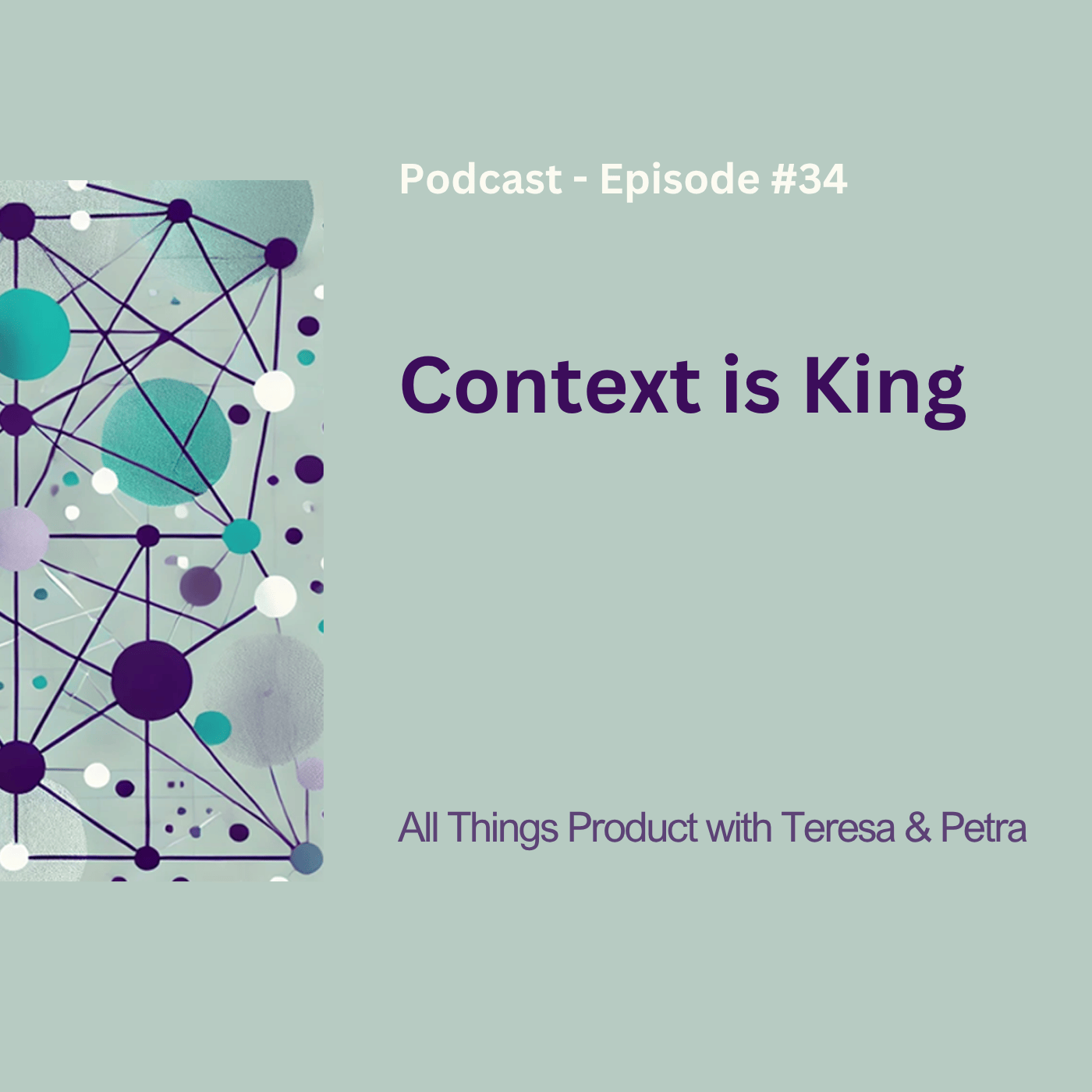
Context is king in AI-powered product work—and I felt that deeply while digging into “Context is King – All Things Product Podcast with Teresa Torres & Petra Wille.” The conversation affirmed a truth I see daily: AI becomes a powerful teammate only when we give it the right context, just as we do with empowered product teams. When we treat AI like a colleague joining mid-flight—without our company history, industry nuances, or strategy—we instantly unlock better outcomes.
Listen to this episode on: Spotify | Apple Podcasts
Here’s what stood out and how I’m applying it. First, most AI outputs fail without proper context. That’s not a model problem; it’s a leadership problem. Thinking of AI like onboarding a new intern is the right mental model—start with the minimum viable context, then iterate. Practical first steps matter: decision logs, clear success metrics, and structured documentation. The art is balancing enough context to guide performance without overloading the system. The parallels are striking: the way we create strategic context for product trios and teams is the same way we’ll empower agentic AI systems.
In my teams, we prepare for AI collaboration by operationalizing context. We keep decision logs to capture the why behind choices, use outcome-based success metrics (not just output), and maintain machine-readable documentation that LLMs for product managers can parse reliably. We define guardrails up front—constraints, customer segments, privacy-by-design considerations, and the non-goals that often trip up gen ai. This foundation turns AI from a novelty into a force multiplier for product discovery and product roadmapping and sprint planning.
I use a simple “context pack” to onboard AI agents and teammates alike: 1) business goals and outcomes, 2) constraints and guardrails, 3) canonical artifacts (like PRDs, journey maps, interview notes), 4) domain vocabulary and definitions, and 5) operating procedures (how we make decisions, when to escalate, what good looks like). Start small, then refine as the AI demonstrates capability. This mirrors great onboarding—and it works just as well for agentic AI as it does for humans.
Not all context is helpful. More isn’t better; the minimum effective context is. I resist the urge to dump our entire Confluence on an AI system. Instead, I progressively reveal relevant details—just like I would with a new PM on a complex problem space. This keeps signals high, noise low, and performance measurable against clear success metrics.
If your org isn’t adopting AI yet, don’t wait. You can become AI-ready now by documenting strategic intent, decision rationale, and definitions in structured, searchable, machine-readable ways. Treat this as core AI Strategy work that strengthens empowered product teams—regardless of tooling—while building your AI product toolbox for tomorrow.
For those who want to explore further, these resources and mentions are a strong complement to the episode’s themes.
Follow Teresa Torres: https://ProductTalk.org
Follow Petra Wille: https://Petra-Wille.com
Agentic AI
Teresa’s new podcast, Just Now Possible in Youtube, Apple Podcast, and Spotify
Petra’s Coaching Packages
ChatGPT
Henrik Kniberg’s talk at Product at Heart on treating AI agents like interns
Teresa’s webinars on how she built the Product Talk Interview Coach: Behind the Scenes: Building the Product Talk Interview Coach and How I Designed & Implemented Evals for Product Talk’s Interview Coach
Josh Seiden’s blog series about AI
Teresa’s new blog posts: 15 Ways to Use AI at Home (and Fill Your AI Product Toolbox) and 21 Ways to Use AI at Work (And Build Your AI Product Toolbox)
Petra's new blog post: Why Context, Not Just Data, Will Define AI-Ready Product Teams
Have thoughts on this episode or how you’re preparing your teams to collaborate with AI? Leave a comment below—let’s compare playbooks and level up together.
Data collaboration isn’t a tool you buy; it’s a culture you build. In my role leading product teams, I’ve learned that the fastest way to better decisions is aligning on a shared language of metrics and weaving insights into our daily rituals. When we do that well, momentum compounds—roadmaps clarify, stakeholder debates get healthier, and teams ship with confidence.
Break down data silos and align teams with Amplitude: define shared metrics, share insights in Slack, and build better habits together.
Here’s how I operationalize that guidance. First, we create a crisp measurement framework—one North Star metric supported by a few input metrics that map to customer value. We document definitions in a living “metrics glossary,” enforce data governance, and design a clean Amplitude taxonomy so events, properties, and user identities are consistent across the product. This is the foundation of a unified analytics platform that everyone can trust.
Next, we make insights unavoidable. Amplitude dashboards are curated by product trios and subscribed into Slack channels so context meets people where they work. I ask teams to pair charts with a one-paragraph narrative: what changed, why it likely changed, and what we’ll try next. This simple habit closes the loop between analysis and action—and it catalyzes product-led growth.
We institutionalize these behaviors in our operating cadence. Weekly insights reviews focus on outcomes vs output OKRs. Sprint planning starts with what the data says, not what we wish were true. In QBRs, we connect customer journeys to retention analysis and A/B testing results, making sure tests are designed with an appropriate minimum detectable effect (MDE). Empowered product teams own decisions; stakeholder management shifts from opinion trading to hypothesis testing.
A few pragmatic enablers make this stick: clean CRM integration to join product usage with lifecycle and segment data; privacy-by-design guardrails; clear ownership for instrumentation; and lightweight documentation that evolves with the product. I also encourage teams to ship in-app guides when we launch a feature so we can measure activation and iterate quickly based on Amplitude analytics.
The cultural side matters just as much. I celebrate learnings (even when metrics dip) and spotlight teams that translate insights into experiments quickly. Psychological safety unlocks better questions, and better questions unlock better products. Over time, this builds the high-trust environment required for durable, data-informed decision-making.
If you’re just getting started, pick one product surface and one customer journey. Define the shared metrics, wire up Amplitude, pipe key dashboards into Slack, and run a single, well-powered experiment. You’ll feel the difference in a sprint or two—and you’ll have a repeatable playbook to make data truly work together across your organization.
Inspired by this post on Amplitude – Best Practices.
AI has fundamentally changed how I lead design and testing, not by replacing craft, but by compounding it. When my teams pair generative models with time‑tested product management practices, we move faster, learn sooner, and ship with more confidence—without compromising privacy-by-design or quality. The result is a tighter loop from product discovery to product-market fit lessons.
Learn how Pendo’s product design team is using genAI and traditional tools to speed up design and development.
That single line captures my own operating model: blend genAI with established toolchains to accelerate, not shortcut. In practice, I treat AI as a force multiplier for product trios—PM, design, and engineering—so empowered product teams can explore broader solution spaces while staying anchored to outcomes vs output OKRs.
In discovery, genAI helps me synthesize qualitative inputs at scale—interviews, support threads, and in-app behaviors—into testable opportunity statements. I triangulate those insights with a unified analytics platform and Amplitude analytics to spot friction, then use in-app guides and product tours to target learning, recruit the right cohorts, and validate problems before we overbuild.
For prototyping, gen ai for product prototyping is a game-changer. I generate multiple UX writing variants, microcopy, and flows in minutes, then narrow the set using heuristics and stakeholder feedback. Before any A/B testing, we precompute the minimum detectable effect (MDE) and sample size, making sure our experiments are powered to detect meaningful differences, not noise.
In testing, I combine classic A/B testing with AI-assisted analysis to surface patterns faster. GenAI drafts experiment summaries, flags anomalous segments, and proposes follow-up tests, while my team makes the final calls. We deploy targeted in-app guides to onboard users into trials, monitor adoption via event telemetry, and iterate quickly until the value proposition is unmistakable.
Execution depends on rigor and guardrails. We codify AI risk management and data governance policies, keep humans-in-the-loop for critical judgments, and log model prompts and outputs for auditability. This lets us move with speed and integrity, aligning stakeholder management, product roadmapping and sprint planning, and go-to-market strategy around measurable outcomes.
The payoff is material: shorter cycle times, clearer value narratives, and stronger product-led growth curves. By fusing genAI with traditional practices, we preserve the craft of design while scaling our capacity to learn. That’s how we differentiate—through faster insight generation, smarter testing, and experiences that feel unmistakably intuitive.
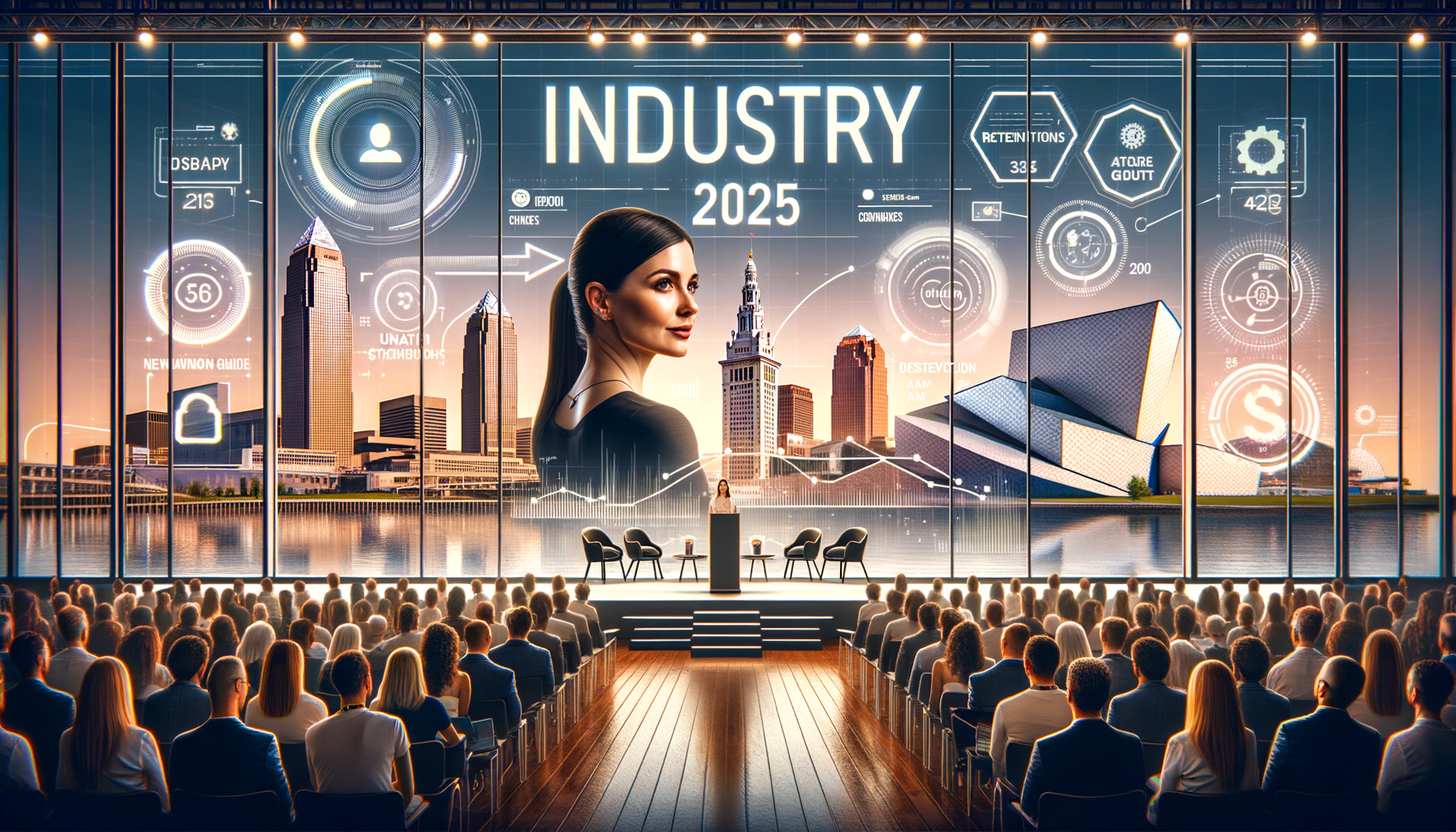
I’m gearing up for INDUSTRY 2025: The Product Conference in Cleveland, Ohio, and I can already feel the energy that comes when the brightest product minds gather. As someone who lives at the intersection of product management leadership, execution discipline, and customer-centric innovation, this event is where I refine my craft and pressure-test my roadmap against the best.
Join Pendo at INDUSTRY in Cleveland, Ohio.
Reason 1: Elevate strategy from outputs to outcomes. I’m looking forward to sharpening how we align outcomes vs output OKRs with product roadmapping and sprint planning. INDUSTRY consistently surfaces practical frameworks to translate vision into measurable value—exactly what empowered product teams need to prioritize with confidence and communicate trade-offs to stakeholders.
Reason 2: Deepen discovery with data that actually drives decisions. I plan to compare notes on product discovery techniques that blend qual and quant—pairing interviews with a unified analytics platform, retention analysis, and a clear minimum detectable effect (MDE) to validate signal. The bar keeps rising on evidence-based decisions, and I’m eager to bring back new ways to reduce bias while accelerating learning.
Reason 3: Double down on product-led growth. From onboarding to activation, I’m focused on refining in-app guides and product tours that meet users at the moment of need. INDUSTRY is a great place to trade patterns for scalable, context-aware experiences that convert, retain, and expand without adding friction—fueling a durable product-led growth motion.
Reason 4: Build a responsible, practical AI Strategy. The conversations around gen ai for product prototyping, agentic AI, data governance, and privacy-by-design are evolving fast. I’m excited to learn how teams are balancing speed with AI risk management—turning experimentation into real features while protecting customers and preserving trust.
Reason 5: Level up leadership and influence. Product management leadership is as much about people as it is about prioritization. I’m excited to trade tactics on stakeholder management, strengthening product trios, and growing ICs through the IC to manager transition. These are the muscles that turn strategy into momentum.
Between keynotes, hallway conversations, and hands-on sessions, I plan to leave Cleveland with fresh approaches to discovery, clearer OKR alignment, and new ideas to operationalize PLG at scale. If you’re passionate about building products that customers love—and businesses rely on—let’s connect and compare notes on what’s working now.
I’ll share my takeaways after the conference, including actionable frameworks, templates, and experiments to run with your teams the very next sprint. If you see me in a session on analytics, onboarding, or AI, say hello—I’m always up for a quick debrief and a few what-would-it-take questions.
The first five minutes a new user spends in a product set the trajectory for everything that follows. In my experience, that brief window determines activation, early retention, and ultimately whether product-led growth compounds—or stalls. That’s why I obsess over it, instrument it deeply, and treat it as the highest-leverage part of the product experience.
Learn how data-driven teams optimize the first 5 minutes of product experience to improve activation, retention, and growth—and how they do it with Amplitude.
Here’s the practical reason the first five minutes matter so much: users are deciding whether your value proposition translates into an immediate “aha moment.” If time-to-value is long or the path is confusing, activation rate drops, retention curves decay faster, and every subsequent dollar of acquisition becomes less efficient. When we design onboarding intentionally, we shorten the cognitive distance to that first success and build habits that sustain retention.
My playbook starts with measurement. I use Amplitude analytics as a unified analytics platform to instrument the first-run experience end to end, define a clear activation event, and track the user’s journey with funnels, cohorts, and retention analysis. That clarity lets me see where friction spikes, where users hesitate, and which paths correlate with long-term engagement. Without that visibility, changes to onboarding are guesses rather than decisions.
From there, I run disciplined A/B testing. We establish a minimum detectable effect (MDE) based on traffic and variance, and we prioritize experiments that reduce effort to reach the first outcome: simplifying sign-up, clarifying the primary CTA, or pre-seeding a workspace with smart defaults. When we can quantify impact on early activation and downstream retention cohorts, the team can make confident trade-offs and move faster.
Guidance within the product is just as important as the flow itself. Thoughtful UX writing, contextual tooltips, and concise in-app guides should highlight the one or two actions that create immediate value—not overwhelm with a product tour that tries to teach everything at once. The goal is a path to progress, not a lecture. When we pair minimal friction with timely cues, users self-propel to value.
I still remember watching session replays of new users pausing at a crowded first screen. That moment reshaped our approach: fewer choices, clearer hierarchy, and progressive disclosure. The result was a meaningful lift in activation and steadier retention curves. It reinforced a simple truth—when the first five minutes feel effortless, users stick around to explore everything else.
This is also an organizational discipline. Empowered product teams—PM, design, and engineering working as a product trio—align on outcomes vs output OKRs and treat the first five minutes as a shared responsibility. We close the loop with customer feedback, run rapid product discovery, and bring forward deployed engineers into research to shorten the distance between insight and iteration.
If you’re getting started, focus on five moves: instrument the first-run journey in Amplitude analytics; define and track a crisp activation event; analyze funnels and retention cohorts to locate friction; ship weekly A/B tests with a sensible MDE; and iterate your onboarding with lightweight product tours, tooltips, and in-app guides. Tie improvements to leading indicators of product-led growth so the impact is visible to stakeholders across go-to-market and product.
The obsession with the first five minutes isn’t dogma—it’s a commitment to user success. When we reduce friction, spotlight value, and measure what matters, activation climbs and retention compounds. And with the right analytics foundation, we can make those first few moments predictably great, not accidentally good.
Inspired by this post on Amplitude – Best Practices.
When AI transformation is your mandate at enterprise scale, clarity and pragmatism matter more than hype. My approach to prepare 11,000 employees for AI—with role-specific training, modular design, and human-AI collaboration for better results—rests on three commitments: deliver outcomes tied to real workflows, meet people where they are, and make adoption safer and faster than the status quo.
I start with role-specific training because context beats generic content every time. For product managers, we focus on prompt design for discovery, prioritization signals, and faster hypothesis validation. For engineers, we emphasize code generation quality, test coverage, and secure patterns. For sales and customer success, we build repeatable workflows for research, personalization, and objection handling. Tailoring instruction to each team’s daily work drives confidence, reduces friction, and accelerates time to value.
Modular design is how we scale without sacrificing quality. I break the curriculum into atomic learning units—micro-scenarios, checklists, and in-app guides—that can be remixed into learning paths by role, seniority, and region. This enables just-in-time onboarding, easier updates as gen AI evolves, and localized relevance without reinventing the core. Product tours and embedded nudges reinforce learning in the flow of work, ensuring people practice where the value actually occurs.
Human-AI collaboration is a deliberate practice, not a slogan. We codify co-pilot patterns, checkpoints, and RACI-like ownership so humans remain accountable for outcomes while AI accelerates inputs. Agentic AI is introduced behind guardrails: clear data governance, prompt libraries with approved patterns, verifiable sources, and audit trails. The result is speed and consistency, paired with the trust that leaders and regulators expect.
Change management is where strategy becomes reality. I partner with empowered product teams to co-create playbooks, nominate champions, and sequence rollouts by readiness and impact. We keep a tight feedback loop via office hours, internal communities, and role-based enablement so adoption feels like a product we improve, not a policy we enforce. This is product management leadership applied to culture, not just software.
Measurement keeps us honest. I tie every enablement track to business outcomes—cycle time, win rates, customer satisfaction, and quality—validated through A/B testing where feasible. We monitor adoption, satisfaction, and proficiency, then iterate the content and tooling. When teams see their KPIs move, AI stops being an experiment and becomes part of how we win.
If you’re standing up your AI strategy, start small and specific, ship value fast, and scale through modularity. Role-specific training, modular design, and human-AI collaboration aren’t slogans—they’re a repeatable system for building durable capability across the organization.
Inspired by this post on Amplitude – Perspectives.
I’ve learned the hard way that experiments stall when they’re treated like items to check off a backlog. Real impact shows up when experimentation becomes the way we think, plan, and decide—every day, across the entire product organization.
Successful experimentation isn't just about adopting new tools or running more tests. It’s about changing company culture.
At HighLevel, I anchor experimentation in outcomes, not output. We form product trios and empower product teams to own the problem, link work to outcomes vs output OKRs, and commit to fast learning loops. This isn’t about more activity; it’s about better decisions, tighter focus, and measurable customer value.
Our teams write crisp hypotheses, define decision rules up front, and set a minimum detectable effect (MDE) before any A/B testing begins. That small discipline prevents “result fishing,” speeds up decisions, and aligns everyone on what will constitute a real signal versus noise.
Tooling helps, but only when it serves the culture. We instrument experiences end-to-end, lean on Amplitude analytics within a unified analytics platform, and run retention analysis alongside acquisition metrics so we don’t celebrate shallow wins. The goal isn’t dashboards; it’s actionable insight that improves product-market fit lessons and informs the next iteration.
Rituals make the culture durable. We review experiments weekly, tie learnings back to OKRs during QBRs, and celebrate invalidated hypotheses as progress. That psychological safety turns “being wrong” into momentum, reinforcing product management leadership behaviors we want to scale.
We also invest in decision hygiene: clear problem statements, pre-registered success criteria, and simple templates that make it easy to do the right thing quickly. Over time, this reduces debate theater and increases the surface area for discovery—more time with customers, more signals, and more conviction in our bets.
If you’re starting from scratch, begin small: pick one critical journey, articulate a hypothesis, choose a primary metric and MDE, run a lean A/B test, decide ahead of time how you’ll act on outcomes, and close the loop publicly. Repeat that cadence until it becomes muscle memory. That’s how experiments stop being one-off projects and start compounding into product-led growth.
When experimentation is a culture, not a task, teams move faster, leaders make clearer tradeoffs, and customers feel the difference. That is the habit I continue to build—one hypothesis, one decision rule, and one learning loop at a time.
Inspired by this post on Amplitude – Perspectives.
For much of my career, I reflexively favored building experimentation tooling in-house. Over the last few years, I’ve changed my mind. The ecosystem has matured, the bar for statistical rigor has risen, and the opportunity cost of reinventing the wheel has become too high to ignore. Read why the industry has changed to more broadly embrace vendor solutions—and why that's a good thing for innovation.
The short version: buying core experimentation capabilities increasingly lets us learn faster, reduce risk, and focus scarce engineering cycles on true differentiation. I still believe in building when it creates competitive advantage, but I’ve seen too many teams burn time on “table stakes” infrastructure instead of delivering outcomes that matter.
When I evaluate build vs. buy, I start with two questions: Is this capability a point of parity or a source of competitive differentiation? And what is the real total cost of ownership over three years, including staffing, maintenance, on-call, compliance, roadmap drag, and delayed time-to-learning? Most experimentation platforms are now points of parity; the differentiation is how quickly and responsibly we learn, not whose statistics package we forked.
Modern experimentation isn’t just a split URL test. It demands identity resolution across devices, reliable bucketing, exposure logging at scale, edge delivery for flags, guardrail metrics, and rigorous methods like minimum detectable effect (MDE), CUPED, and sequential testing. Add privacy requirements, data governance, and auditability, and the platform burden grows beyond a “quick internal tool.” This is exactly where vendors have pulled ahead, baking in best practices we’d otherwise relearn the hard way.
There are still good reasons to build. If you operate under unique latency constraints (e.g., sub-20ms decisions at the edge), have non-negotiable regulatory boundaries, or your experimentation model is deeply coupled to proprietary ML systems, bespoke tooling can be justified. I’ve supported builds in those cases—but only with a clear plan for long-term ownership, documentation, and explicit trade-offs.
More often, buying is the sane default. Vendor solutions give us hardened SDKs, consistent flagging, proven stats engines, and integrations with analytics—freeing teams to spend their energy on high-quality hypotheses and better product discovery. Connecting experiment outcomes to a unified analytics platform (and tools like Amplitude analytics) helps us align on source-of-truth metrics, tighten feedback loops, and empower product trios to make confident, outcome-driven decisions.
A hybrid approach frequently wins: buy the platform core, then extend it. Build custom decisioning services where needed, enrich telemetry, and add domain-specific metrics on top. I’ve had success pairing vendor platforms with forward deployed engineers and thoughtful developer evangelism to create the best of both worlds—speed from the vendor, nuance from our domain.
If you’re considering a shift, here’s the adoption playbook I use:
– Define success upfront: decision latency targets, MDE guidance, guardrail metrics, governance needs, and privacy constraints.
– Run a time-boxed pilot with an A/A test and a handful of A/B testing use cases. Validate exposure logging, bucketing stability, and metric parity against your analytics stack.
– Align on outcomes vs output OKRs, so “more experiments” is never the goal; better decisions are.
– Establish data governance and metric definitions before full rollout. Treat metrics as a product, not a spreadsheet.
– Invest in enablement: in-app guides, product tours, and training for PMs, engineers, and analysts. Proactive stakeholder management is what separates a successful rollout from shelfware.
AI is accelerating this shift. Gen AI for product prototyping and agentic AI assistants can help generate hypotheses, auto-suggest experiment designs, and flag risky rollouts in real time. Pairing AI with a robust experimentation backbone improves both velocity and quality—without asking teams to become statisticians overnight.
My bottom line: the industry’s embrace of vendor experimentation platforms is not a retreat from craftsmanship—it’s a strategic allocation of talent. By buying where the market is excellent and building where our differentiation truly lives, we learn faster, reduce risk, and compound innovation. If you haven’t revisited your build vs. buy calculus recently, now is the time. Your customers don’t reward you for owning a stats engine; they reward you for shipping better outcomes, sooner.
Inspired by this post on Amplitude – Perspectives.