
Product Management
- AI Strategy (317)
- Generative AI (106)
- IT Leadership (33)
- Leadership (76)
- Product Management (344)
- Product Management Leadership (308)
- Uncategorized (32)
-

How I Used Claude Code to Run a Full Content Audit in Hours—and Uncovered Big SEO Wins
I put Claude Code to work on a full SEO content audit and was surprised by how quickly it produced credible, data-backed insights. By loading my…
-

February Fin Breakthroughs: Master complex workflows, natural voice, 2-minute Shopify, smarter ops
This February, we removed four major constraints holding AI agents back: complexity in automation, voice quality under pressure, Shopify setup friction, and helpdesk overhead. Procedures and…
-

Kill Your Darlings: Why I Sunset ‘Successful’ Products to Fuel Real Portfolio Growth
Letting go of “profitable but flatlining” products is one of the hardest calls we make as product leaders, yet it’s often the move that unlocks real…
-
Ship MVPs in Days, Not Months: My Proven Prompt Prototyping Playbook for Product Teams
Most MVPs fail because teams validate too slowly and ship on assumptions. I use a prototyping prompts playbook to turn ideas into briefs, flows, and test…
-

Behavioral Analytics That Crush Fraud: Spot Anomalies, Prioritize Risk, Act with Confidence
Fraud teams don’t need more alerts—they need clarity, speed, and confidence. Behavioral analytics delivers that by surfacing true anomalies, prioritizing risk by impact, and enabling fast,…
-
Prevent Strategy Drift: AI that flags ‘merge conflicts’ in product plans before a quarter derails
What if you could spot strategy misalignment the moment it starts—before it torpedoes a quarter? I break down how “GitHub for product management” can surface merge…
-
Real-Time Answers in Slack and Teams: How Amplitude’s Global Agent Elevates Product Decisions
Bringing Amplitude Global Agent into Slack and Microsoft Teams lets my teams ask questions in-channel and get source-backed analytics, charts, and recommended actions like A/B tests—no…
-
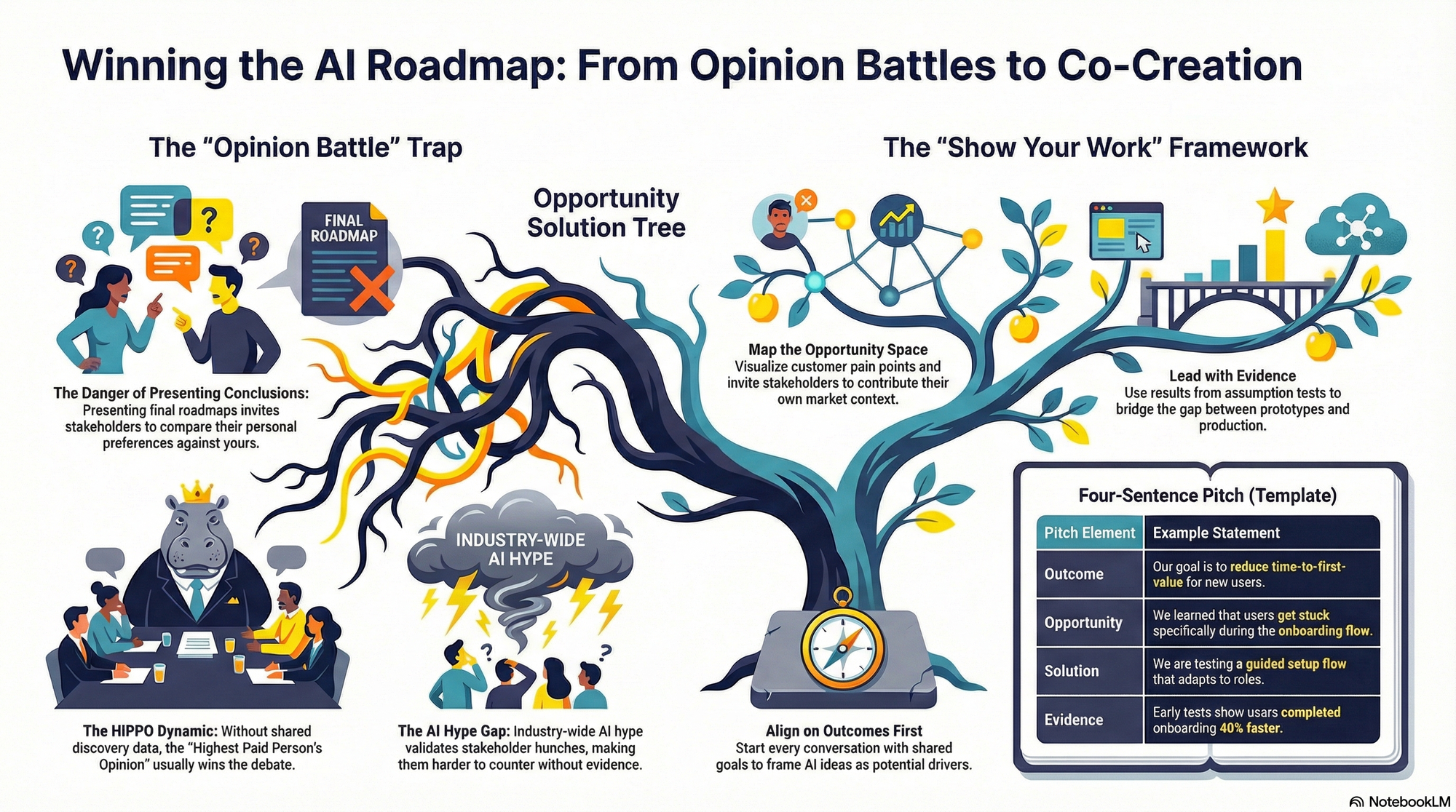
Stop Selling Your Roadmap: Win Stakeholder Trust by Showing Your Work, Not Conclusions
Racing to ship AI features is easy; shipping the right ones isn’t. In this playbook, I share how I win stakeholder trust by showing my work—walking…
-

From Chaos to Clarity: My Proven Playbook to Scale an Analytics Taxonomy That Sticks
Too many teams drown in scattered events and conflicting metrics. I share the playbook I use to scale an analytics taxonomy that actually lasts: start with…
-
Lost in the Woods: 5 Survival Patterns Every Product Leader Must Master Now
Feeling “lost in the woods” with your product strategy is more common than most leaders admit. I break down five survival patterns—freeze, chase shortcuts, follow the…
-
March CDH Book Club: Master Experience Mapping to Align Teams and Accelerate Discovery
Join me for March’s CDH Book Club as we dive into Chapter 4: Visualizing What You Already Know. We’ll practice experience mapping to unlock team alignment,…
-
Battle-Tested AI Agent Orchestration Patterns for Reliable, Observable, Product-Ready Systems
Reliable agentic AI isn’t luck—it’s architecture, instrumentation, and disciplined release practices. In this guide, I share the orchestration patterns my teams use to deliver dependable, observable…
-

Scaling Enterprise Sales from $0 to $3.5B: CRO Lessons, MEDDIC Mastery, and GTM Truths
Enterprise scale isn’t magic; it’s disciplined execution. Drawing lessons from Snowflake’s rise, I break down how the CRO role evolves from $10M to $1B+, why The…
-

12 Game-Changing Updates to Fin Procedures & Simulations for Complex Queries
I’m announcing 12 major upgrades to Fin’s Procedures and Simulations that help teams safely scale agentic AI for complex, multi-step customer workflows. Build Procedures faster with…
-

Stop Blurring the Lines: Clear Product–Engineering Boundaries to Boost Quality and Prevent Burnout
Blurry lines between product and engineering lead to burnout, slow delivery, and quality problems. I share a practical model that restores clarity: product trios own the…
-

Inside Partner Product Marketing: Lessons that Elevate Go-to-Market and Product-Led Growth
Partner product marketing is most powerful when it aligns product positioning, data-driven learning, and cross-functional execution. I share how I translate complex capabilities into outcome-led narratives…
-

How to Build AI-Ready Product Analytics and Experiments
A practical system for linking AI quality, user behavior, risk, cost, and controlled experiments to customer outcomes before you scale.
-

How to Run AI-Accelerated Product Discovery and Delivery
A practical model for using agents, analytics, prototypes, experiments, and guardrails to shorten product learning without weakening judgment.
-

An End-to-End AI Product Workflow From Discovery to Deployment
A practical workflow for turning customer evidence into a bounded AI use case, measurable evaluations, a guarded rollout, and a reliable production loop.
-
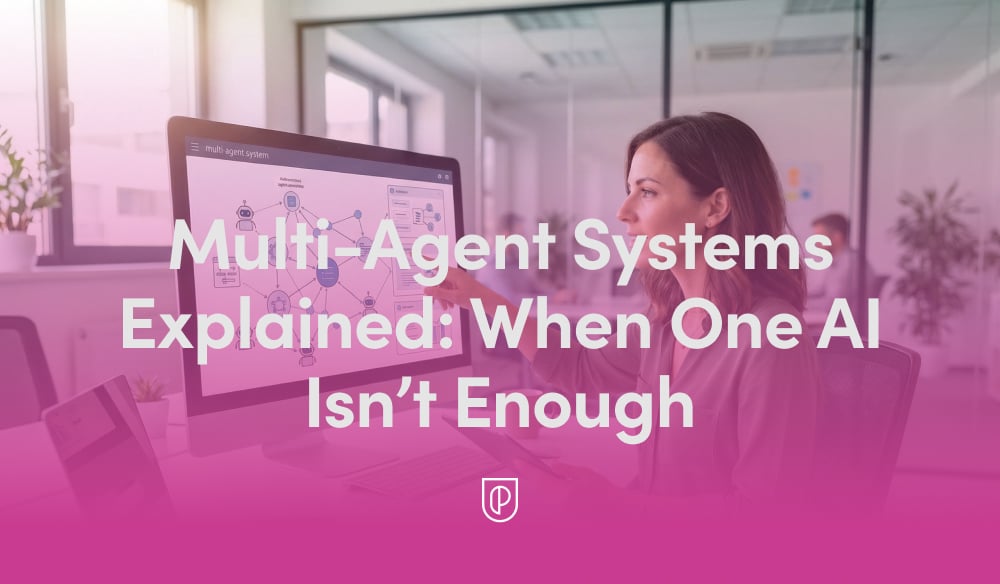
Multi‑Agent Systems Demystified: Why One AI Isn’t Enough—and How I Ship Faster With Many
Multi-agent systems turn a single clever model into a reliable product engine by coordinating specialized agents—planner, executor, and verifier—inside robust AI workflows. I use a retrieval-first…
Weekly digest
One email a week on AI products, enablement and hiring. No fluff.
Browse topics
- AI Strategy (317)
- Generative AI (106)
- IT Leadership (33)
- Leadership (76)
- Product Management (344)
- Product Management Leadership (308)
- Uncategorized (32)
Work with me
45-minute consultation on AI product strategy, GTM and PM hiring — no charge.