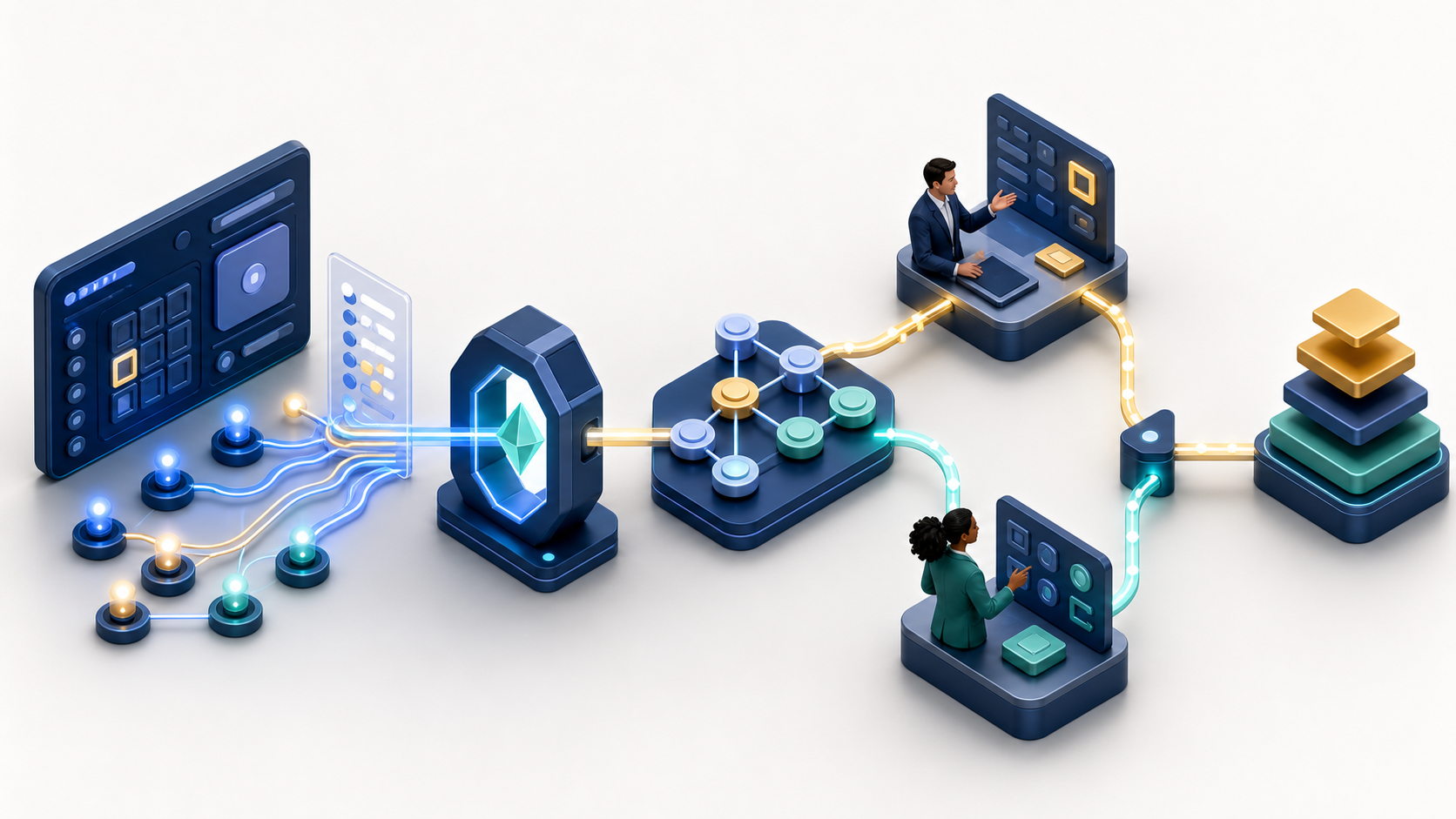
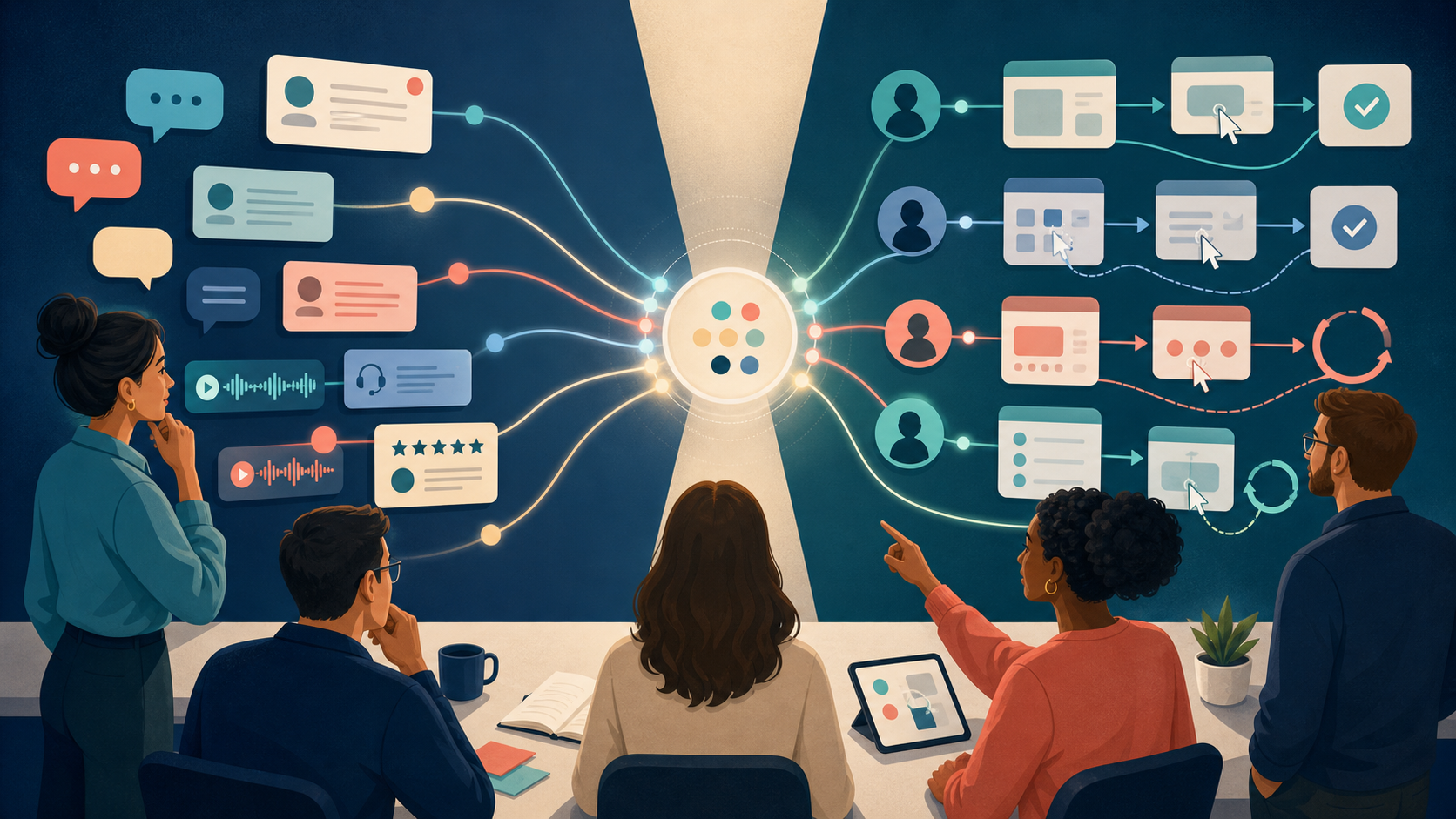
I’ve been looking for a pragmatic way to put product analytics where my teams already work—inside Slack and Microsoft Teams. The moment insights are one message away, cycle time shrinks, debates get crisper, and experiments move faster. That’s why I’m bringing Amplitude Global Agent into our daily decision flow to deliver instant, source-backed answers with visual clarity and actionable next steps.
Connect Amplitude Global Agent to Slack or Microsoft Teams to answer questions with source-backed analytics, charts, and recommended actions like A/B tests.
What excites me most is the shift from dashboards to dialogue. Instead of digging through reports, I can ask a focused question in Slack—“How did activation change week-over-week for our self-serve cohort?”—and get a chart in-channel, complete with recommendations that point me toward the next best move. This is Agent Analytics done right: faster insight loops, reduced context switching, and more confidence in the decisions we make every day.
From a product management perspective, this integration strengthens continuous discovery and aligns product trios around the same truth. Engineers, designers, and PMs see the same chart, discuss trade-offs in the same thread, and can agree on an action—often an A/B test—within minutes. It’s a lightweight but powerful way to support product-led growth and keep our roadmap tied to measurable outcomes.
In practice, the questions I ask the most look like this: “Which onboarding step causes the biggest drop-off this month?”, “Which channels drive the highest L28 activation rate?”, and “Where did retention improve after our pricing change?” In each case, the Agent returns charts we can share instantly with stakeholders, plus recommended actions like A/B test ideas to validate hypotheses quickly. The result is a reliable rhythm: ask, see, align, act.
Governance matters just as much as speed. We’re configuring strict permissions, role-based access, and purposeful channel placement so analytics land where they should—no broader, no narrower. We’re also leaning into clear query prompts and naming conventions for events and properties to help the Agent retrieve precisely what’s needed, every time. The aim is a high-signal, low-noise system that maintains trust while accelerating decisions.
To embed this into our operating cadence, I plug the Agent into three moments: daily standups (to scan activation, conversion, and incidents), weekly product reviews (to align on experiment status and next bets), and executive QBR prep (to pull clean, shareable charts fast). Because the insights arrive in Slack or Microsoft Teams, our conversations stay focused and traceable, and decisions get documented in the same place they were discussed.
We’ll measure impact with simple, telltale indicators: fewer ad-hoc analytics requests, faster time from question to decision, increased A/B test velocity, and clearer links between recommended actions and outcome metrics like activation and retention. My bar is straightforward—if this Agent can help one team make a better decision per day, it will more than pay for itself across the org.
If you’re considering a similar move, start small: connect one high-signal channel, curate a handful of common queries, and coach your team on good prompts. Within a week, you’ll feel the difference. When analytics become conversational, momentum follows—and your product strategy benefits from sharper, faster, and more transparent decision-making.
Inspired by this post on Amplitude – Best Practices.
I’m seeing the same pattern in product orgs everywhere—inside HighLevel and across my network: everyone is racing to add AI to the roadmap, and every stakeholder has a strong opinion about what to build next. Delivery has never been faster, which makes it dangerously easy to confuse speed with progress.
When we chase features without grounding in continuous discovery, we drift back into a feature factory. We ship more, but we ship the wrong things faster. The antidote is simple and hard at the same time: recommit to product discovery, validate with assumption testing, and let the evidence steer our AI Strategy—not the hype.
Of course, that only works if we can bring our stakeholders along. In the AI moment, it’s deceptively easy to get to a slick prototype and painfully hard to harden it for production. Early demos make almost any idea look promising. That’s precisely why stakeholder management must evolve from pitching solutions to showing our work.
In practice, stakeholder management is about alignment with the people who influence our product decisions—executives, sales, marketing, customer success, engineering leadership, and sometimes legal or finance. Some have veto power; others have input. Knowing who can block versus who can shape is crucial for where we spend our time. Even in empowered product trios, the best discovery can derail if we reveal only conclusions at the end.
I’ve tried every mapping framework—power-interest grids, RACI matrices—and they help. But the real challenge isn’t identifying stakeholders. It’s figuring out how to bring them along so that our product roadmapping and sprint planning decisions stick.
Identify who shapes your product decisions. This visual groups stakeholders into three tiers—those with veto power, key influencers, and audiences to inform—so teams can align, communicate, and reduce delivery risk.
Here’s the most common trap I see (and have fallen into): focusing stakeholder reviews on the roadmap, release plan, or prioritized backlog. That invites an opinion battle. And stakeholders have their own conclusions—usually shaped by the last customer call, a board meeting, or a market headline.
This is how the HiPPO dynamic gets created. HiPPO stands for the “Highest Paid Person’s Opinion,” and the saying goes, “The HiPPO always wins.” When we present conclusions without the journey, we set ourselves up to lose. In the gen ai rush, the chorus of “everyone is doing AI” makes that opinion even harder to counter.
So I don’t try to win opinion battles. I bring new information—fresh customer interviews, clear opportunity mapping, and results from assumption tests. The gap between what the market hypes and what customers actually need is often enormous. Our edge is evidence.
The strategy that consistently works for me is simple: show your work. If you’re practicing continuous discovery, your opportunity solution tree isn’t just a thinking tool—it’s your strongest stakeholder management asset. It helps you build confidence in your decisions, and it can help your stakeholders build the same confidence.
Avoid the stakeholder trap of selling conclusions. This visual shows how anchoring on solutions invites HiPPO battles—and how to shift the conversation by sharing discovery evidence, insights, and data.
Step 1 — Start with the outcome. I open every conversation by restating the shared goal and asking whether anything has changed. Anchoring on outcomes vs output OKRs reframes hot-button solution debates (like “we need an AI feature”) back to what will move the needle on the outcome we agreed to pursue.
Step 2 — Share the opportunity space. I show how we mapped customer needs, pain points, and desires. Then I ask, “What did we miss?” Stakeholders often surface opportunities we haven’t seen yet—signals from the field, market shifts, or partner feedback. I capture their input and commit to validating it in upcoming customer interviews.
Step 3 — Walk through prioritization. Using the tree’s structure, I explain why we prioritized one branch over another. Then I ask where they might have chosen differently. This turns debate into collaboration and lets me leverage their expertise without ceding the discovery framework.
Step 4 — Go deep on the target opportunity. Before we talk solutions, I make the customer’s problem vivid and real. Interview snapshots help stakeholders empathize and see what matters most. Once the opportunity is crisp, solution discussions become dramatically more objective.
Show your work, not just your conclusions. This infographic guides product teams through seven steps to build stakeholder confidence—align on outcomes, map opportunities, prioritize, test assumptions, and repeat.
Step 5 — Share solutions and invite theirs. I present our solution set and explicitly ask for additional ideas. If their suggestions diversify our set, we include them. Solution ideas are cheap; the opportunity is what matters. This is where product trios can benefit from leadership’s pattern recognition and industry context.
Step 6 — Share your assumption tests and results. I walk through our story maps, high-risk assumptions, and what we’ve learned so far. I invite stakeholders to add assumptions—this is where their knowledge shines. If we have data, we share it; if we’re pre-data, we share the plan to get it and ask for feedback.
Step 7 — Repeat. I don’t batch this into a big reveal. I keep a steady cadence and tailor depth to each audience: weekly for my manager, monthly highlights for marketing, and concise updates for executives. Continuous discovery pairs with continuous stakeholder management.
Showing your work doesn’t mean drowning people in detail. It means tailoring the signal to the audience. My rule of thumb is outcome, opportunity, solution, evidence—walk the lines of the tree at the right altitude for each stakeholder.
Show your work the right way for each stakeholder. Use a smart filter to turn discovery noise into clear signals—weekly journeys for your manager, focused monthly highlights for marketing, and a 30-second CEO pitch.
In a 30-second update with a CEO, it might sound like this:
“Our goal is to reduce time-to-first-value for new users. We’ve been interviewing customers and learned that onboarding is where most people get stuck—specifically, they don’t know which features to try first. We explored a few approaches and tested them. The most promising one is a guided setup flow that adapts based on the user’s role. In early tests, new users completed onboarding 40% faster.”
That pattern works across channels—Slack updates, monthly reviews, or quarterly planning. The format flexes, the structure doesn’t: outcome, opportunity, solution, evidence.
As you adopt this approach, watch for four anti-patterns that quietly erode trust.
Avoid the traps that erode stakeholder trust. This infographic guides product teams to show their work, welcome ideas, provide frequent updates, and prioritize results over ideology to build alignment and credibility.
Anti-pattern 1 — Telling instead of showing. The curse of knowledge makes our conclusions feel obvious to us and opaque to others. The fix: slow down, start at the top of the tree, walk the decisions, and let stakeholders reach the conclusion with you.
Anti-pattern 2 — Shooting down stakeholder ideas. As you build a library of validated assumptions, it’s easy to spot flaws in a suggestion and say “no” too quickly. Instead, place their idea within your discovery framework. If it maps to a different opportunity, say, “That idea has promise—we’ll consider it when we address that opportunity.” If it rests on risky assumptions, story map the idea together, list the assumptions, and share what you’ve already learned. People accept the evidence they help generate.
Anti-pattern 3 — Saving everything for a big reveal. Infrequent, comprehensive updates invite opinion battles because stakeholders have formed their own conclusions in the dark. Short, frequent updates build alignment as the work unfolds.
Anti-pattern 4 — Fighting the ideological war. Sometimes a more senior stakeholder will overrule you. Don’t turn it into a debate about how product decisions “should” be made. Focus on the decision at hand, do the best work within constraints, and let results—not ideology—prove the value of discovery over time.
Shift from selling to showing. This co-creation guide invites stakeholders into discovery, taps their expertise, and turns relationships from obstacles into partnerships for smarter product decisions.
Here’s the mindset shift that changes everything: stakeholder management is a co-creation opportunity. When we show our work with artifacts like an opportunity solution tree, experience maps, and interview snapshots, we’re not just communicating—we’re inviting collaboration. We’re leveraging stakeholders’ expertise, context, and connections to make better product decisions.
When stakeholders have walked the path with us, they don’t need to be sold on the destination. They become allies. Engagement stops being a status ritual and starts being real partnership—the kind that moves outcomes and builds durable trust.
Try this in your next review: don’t start with your roadmap. Start at the top of the tree. Reaffirm the outcome. Share the opportunity space. Explain your prioritization. Show what you’re learning. Invite contribution. You might be surprised how quickly alignment—and confidence—follow when you stop selling conclusions and start showing your work.
I’ve stepped into too many product reviews where teams argued over numbers that should have been obvious. Three names for the same “signup” event, properties scattered across tools, and no shared definitions—classic analytics chaos. As VP of Product Management at HighLevel, I’ve learned that scaling an analytics taxonomy isn’t just a data exercise; it’s a leadership mandate that unlocks decision velocity, alignment, and confident product bets.
Learn best practices our professional services team has compiled in helping customers move from scattered events to a scalable, user-friendly data structure.
Why does this matter so much? A robust taxonomy powers a unified analytics platform across Amplitude analytics, Pendo, and our CRM stack, reduces rework, and strengthens data governance. When events are clear and consistent, product-led growth accelerates: onboarding becomes measurable, activation is trackable, and retention analysis turns into a weekly ritual rather than a quarterly scramble.
I always start with outcomes, not events. We define a North Star metric and use driver trees to map how user behaviors ladder up to that outcome. Then we ground the plan in journey mapping: what signals mark activation, aha moments, and long-term engagement? This ensures our taxonomy mirrors real user intent, not just engineering convenience.
Next comes naming conventions and structure. We standardize on a readable, durable pattern (for example, actor_action_object), apply consistent property naming, and document required vs. optional properties. We version events deliberately, so we can evolve without breaking dashboards. Most importantly, we align events to product strategy—tracking less, but better.
Governance makes it scale. We establish a clear DRI for the tracking plan, a lightweight review process for changes, and a schema registry that serves as the single source of truth. Privacy-by-design is non-negotiable: we treat sensitive fields deliberately and audit access. Observability closes the loop—schema validations and alerts catch drift before it confuses teams.
Tooling and process turn good intentions into muscle memory. We keep the tracking plan “as code” in a repository, run CI/CD checks to validate events, and use feature flags to roll out new instrumentation safely. Pendo helps us annotate in-app experiences, while Amplitude provides the exploratory lens for cohorts, funnels, and retention. Together, these systems reduce guesswork and speed up discovery.
Migrations are where many teams stall, so I de-risk them with a clear, time-boxed plan. We audit the current event surface, map scattered events to the new taxonomy, and deprecate duplicates with guardrails. We communicate changes broadly, provide easy-to-scan documentation, and pair enablement sessions with hands-on examples from live dashboards. The goal is confidence, not just compliance.
We measure success like a product. Are we answering critical questions faster? Are duplicate events trending down? Are activation and retention questions easy to answer in under five minutes? When the taxonomy is working, stakeholders stop asking, “Do we trust this?” and start asking, “What should we build next?”
One of the most rewarding shifts I’ve seen: product trios moving from ad-hoc analyses to repeatable, weekly rituals. With crisp definitions, onboarding flows become testable, PLG motions are predictable, and leadership reviews focus on outcomes, not definitions. That’s the moment analytics transforms from a cost center into a growth engine.
If you’re staring at a wall of scattered events, start small: clarify outcomes, align your journey map, set conventions, and ship a minimum viable taxonomy to one critical flow. Iterate quickly. The compounding payoff—clarity, speed, and trust—will be obvious to every team you partner with.
When we do this well, analytics becomes a strategic asset. Our teams spend less time reconciling numbers and more time building what matters. That’s the real meaning of moving from chaos to clarity.
Inspired by this post on Amplitude – Best Practices.
Ever feel like your product team is “lost in the woods”? I’ve certainly been there—when strategy gets fuzzy, outcomes drift, or constraints aren’t clear. What helped me reframe the chaos was borrowing “lost person” patterns from search-and-rescue and mapping them to product strategy, product discovery, and team behaviors. The result is a practical playbook for product management leadership that keeps empowered product teams moving toward outcomes—not just outputs.
Listen to this episode on: Spotify | Apple Podcasts
Here are the five patterns I see most often—and how I turn each one into forward motion: settle in place (freeze), chase shortcuts, follow the first visible path, use your own navigation (intuition/taste), and retrace your steps. Each of these has a smart, minimal move that helps teams reorient fast without abandoning continuous discovery or product strategy discipline.
Settle in place (freeze). Sometimes the smartest move is to stop. When my team lacks context or authority, I pause delivery work and escalate instead of improvising fixes. This prevents thrash, protects focus, and creates the air cover we need to realign outcomes vs output OKRs.
Chase shortcuts. Shortcuts can be brilliant—or overconfident. I’ve learned to pressure-test whether the “road” is where we think it is before we commit. That means lightweight experiments, clear exit criteria, and the humility to pivot. Think about big bets like Spotify podcasts: compelling vision, but you still have to validate assumptions step by step.
Follow the first visible path. The obvious option isn’t always the best one. My job as a product leader is to make multiple paths visible before we choose. I lean on opportunity solution trees and KPI trees (or driver trees) to surface alternatives, align stakeholders, and keep empowered product teams focused on customer impact and product-market fit—not just the loudest idea.
Use your own navigation (intuition/taste). Judgment matters, especially for product trios making fast calls—but it’s not a replacement for evidence. When my “compass” conflicts with what we observe, I anchor back to customer interviews, rapid tests, and discovery loops. Intuition should guide where we look, while data validates how we proceed.
Retrace your steps. When we’re drifting, I go back to what used to work: principles, quality practices, and discovery habits as feedback loops. Returning to fundamentals—clear problem statements, crisp value propositions, and disciplined outcomes—rebuilds momentum fast.
Team prompt to try: If your team is “lost” right now, which pattern are you defaulting to—and what’s the smallest move you can make this week to get oriented (escalate, test a shortcut, map options, validate intuition with evidence, or retrace to a principle)? I use this question in weekly reviews to keep us grounded in continuous discovery and product strategy.
Resources & Links:
Follow Teresa Torres: https://ProductTalk.org
Follow Petra Wille: https://Petra-Wille.com
Mentioned in the episode:
Lost Person Behavior: A Search and Rescue Guide on Where to Look – for Land, Air and Water
Robert J. Koester
Examples referenced: Xerox, Nokia, Kodak, Volkswagen emissions scandal, Spotify podcasts, large-org tooling contexts like Oracle and SAP
Opportunity Solution Trees: Visualize Your Discovery to Stay Aligned and Drive Outcomes
KPI Trees: How to Bridge the Gap Between Customer Behavior, Product Metrics, and Company Goals
Let's Read Continuous Discovery Habits Together (January 2026) for Continuous Discovery Habits (and the idea of habits as feedback loops)
Shifting from Outputs to Outcomes: Why It Matters and How to Get Started
I’d love to hear how your team navigates these patterns. Which small move will you try this week? Leave a comment below and let’s compare notes on product discovery, stakeholder management, and product roadmapping that actually drives outcomes.
I’m thrilled to invite you to our March session of the CDH Book Club. Continuous Discovery Habits turns five this year. And to celebrate we are reading the book together. I’ve seen firsthand—leading product trios and empowered product teams—that sharpening our discovery habits is the fastest way to better outcomes vs output OKRs, tighter team alignment, and more confident product strategy.
Each month, I am releasing an in-depth reading guide that includes:
The chapters we will be reading
A preview of the most important concepts we'll be learning about
Short videos you can share with friends and colleagues to help spread the ideas
Individual and team discussion questions to help you absorb and engage with the reading
Team exercises to help you put the ideas into practice
Additional reading to help you go deeper on the core ideas
We’ll be discussing each month’s reading in the comment section and we’ll gather quarterly to discuss on a live call. I’ll be there to trade notes, compare experience maps, and share what’s working across product discovery practices.
Joining late? No problem. I monitor the comments on each reading guide throughout the year. Start with the current month or go back to January—whatever works for you. You can ask for help, share what’s working, and connect with other readers at any point.
If you want to participate, grab a copy of the book (or dig up your old copy), share the "Spread the Love" videos, reserve some time to do the team exercises, and register for the community sessions. Let’s do this!
This Month’s Reading
Chapters:
Chapter 4: Visualizing What You Already Know
Estimated reading time: ~14 minutes
This chapter will introduce you to:
Why starting individually—rather than as a group—is the fastest path to unlocking your team’s collective intelligence
How drawing (even badly) forces you to get specific in ways that words never will
The strategic choice of setting your experience map’s scope—too narrow and you miss opportunities, too broad and you lose focus
How diverse perspectives become your team’s secret weapon when you know how to synthesize them
Why your first experience map isn’t truth—it’s a hypothesis you’ll test and evolve with every customer conversation
Need a copy? Grab the book.
Share the Love with Friends and Colleagues
We learn best in community. Use the following short videos to share the key concepts from this chapter with friends and colleagues. Invite them to participate in the book club with you. In my teams, these quick hits help us align faster before we co-create an experience map or opportunity solution tree.
Visualize your thinking – To bring others along
Unlock team alignment – With visualizations
Reflect & Discuss What You Read
When we reflect and discuss what we read, we absorb more of the material. It helps us put what we learn into practice. Don’t skip this step. In my own practice, the real unlock came when I treated mapping as a living artifact that shapes customer interviews, not a one-off deliverable.
Most of us believe we work collaboratively, but we’ve never truly experienced what it means to build shared understanding from diverse perspectives. This chapter challenges you to get uncomfortable—to draw when you’d rather talk, to work alone before working together, and to see your maps as living documents rather than one-time deliverables.
Individual Reflection
Think about the last time your team tried to align on what you know about your customers. Did everyone start by creating their own perspective first, or did you jump straight into a group discussion? What happened as a result?
When was the last time you drew something at work? What stops you from using drawing as a thinking tool—is it discomfort with your drawing skills, lack of time, or something else?
Look at your current work. If you were to create an experience map right now, what scope would you choose? How does your desired outcome help you determine what to include and what to leave out?
Team Discussion
As a trio, each person should identify one unique perspective they bring to your team’s understanding of your customer. How might these different viewpoints create blind spots if you only relied on one person’s view?
When your team disagrees about what customers need or want, how do you typically resolve it? Do you debate until someone wins, defer to the most senior person, or test your different hypotheses?
Does your team have a current experience map? If so, when was the last time you updated it based on what you’re learning from customers? If not, what’s preventing you from creating one?
Put It Into Practice
Understanding why experience maps matter is different from actually creating one that drives your discovery work. These exercises will help you practice the discipline of starting individually, synthesizing diverse perspectives, and using your map to guide customer conversations. My suggestion: timebox, embrace imperfect drawings, and let the artifact lead your next interview script.
Exercise: Create Your Individual Experience Maps
Time: 20 minutes individually, 45–60 minutes with your team
Do this: Individually first, then share with your trio
Start by agreeing on the scope of your experience map based on your current outcome. Each member of your trio should then independently create their own experience map using pen and paper (or your favorite digital drawing tool).
Focus on drawing the customer’s experience, not your product’s features. Where do they get stuck? What goes wrong? How do they work around problems? Don’t worry about drawing well—boxes, arrows, and stick figures are perfectly fine.
Once everyone has created their individual maps, schedule time to share them with each other. As you explore each person’s perspective, ask questions to understand their thinking. Pay particular attention to the differences between maps—this is where the richest insights emerge.
Exercise: Co-Create Your Shared Experience Map
Time: 30 minutes with your team
Do this: With your product trio
Bring your individual experience maps together and work to synthesize them into a single shared map. Start by identifying all the unique nodes (distinct moments, actions, or events) across all three maps. Arrange them in a comprehensive flow.
Collapse similar nodes, but be careful not to overgeneralize. Add links to show relationships and flow between nodes—including loops, error cases, and abandonment points. Finally, add context about what customers are thinking, feeling, and doing at each step.
As you work, avoid getting bogged down in endless debate. If you disagree about details, draw out the difference rather than debating it. This often reveals you already agree or helps you pinpoint exactly where your understanding differs.
Remember: This map is your current hypothesis about your customer’s experience. Use it to guide your upcoming customer interviews and plan to evolve it based on what you learn.
Go Deeper: Additional Reading
If you prefer an audio summary of this month’s reading, including the book chapters and the following resources, I’ve included an audio version for paid subscribers at the bottom of this post.
Supplementary Reading
Why Drawing Maps Sharpens Your Thinking
Core Concept: Collaborative Decision-Making in a Product Trio
Other Voices
To Draw or Not to Draw: Is Traditional Sketching Still Relevant in the Digital Design Era? by Julia Ku
Journey-Mapping Approaches: 2 Critical Decisions to Make Before You Begin by Kate Kaplan
The Visual Language of Comic Books Can Improve Brain Health by Mary Widdicks
Mapping Your User’s Day with the User Clock Sketch by Ben Crothers
Our Live Discussion Schedule
Our live discussion sessions are for paid subscribers. Sessions are not recorded. Invitations will go out to Supporting Members and CDH Members two weeks before the scheduled event. But reserve the time on your calendar now.
Wednesday, March 18, 2026: 9am–10am PDT and 4pm–5pm PDT
Tuesday, June 16, 2026: 9am–10am PDT and 4pm–5pm PDT
Thursday, September 17, 2026: 9am–10am PDT and 4pm–5pm PDT
Wednesday, December 16, 2026: 9am–10am PST and 4pm–5pm PST
Audio Summary
This summary was produced by NotebookLM. The sources supplied were the book chapters as well as all of the additional reading.
Listen here: March — Draw the User Clock to Build Empathy (audio)
This article is part of the CDH Book Club celebrating the five-year anniversary of Continuous Discovery Habits. See all book club posts.
Shipping agentic AI into production is exhilarating—until a flaky output torpedoes trust. Over the past year, I’ve led teams at HighLevel to operationalize agents across customer-facing and internal workflows, and I’ve learned that reliability isn’t an afterthought; it’s an architecture. In this piece, I share the AI Agent Orchestration Patterns for Reliable Products that consistently deliver dependable outcomes at scale.
When we talk about orchestration, we’re talking about more than a single prompt. The shift is from monolithic calls to coordinated “agentic AI” where routers, planners, and specialists collaborate through structured “AI workflows.” In practice, I rely on a few canonical patterns: a planner–executor loop for multi-step tasks, a router–specialist setup for skill selection, and a “retrieval-first pipeline” that grounds generation with authoritative context before a single token is produced.
Reliability-by-design starts with typed inputs/outputs and strict validation. I standardize on JSON schemas, enforce tool/function signatures, and implement idempotency keys so retries don’t wreak havoc on downstream systems. Timeouts, circuit breakers, and backpressure protect the platform under load, while rate limiting and dead-letter queues keep failure modes contained. Most importantly, we engineer graceful degradation: agents “abstain” when uncertain, fall back to deterministic paths, and escalate to humans instead of guessing.
Safety is a first-class concern, not a bolt-on. Our “AI risk management” pipeline includes PII redaction, allow/deny lists for tools and data, and the principle of least privilege for every connector (yes, even the ChatGPT connector). We codify policy-as-code for repeatability and require human-in-the-loop approvals for sensitive or irreversible actions. In my experience, clear red lines and reversible defaults prevent the vast majority of regrettable outcomes.
Without strong “observability,” you’re flying blind. I instrument agents with an “Agent Analytics” layer that captures traces, spans, tool invocations, and token usage across the entire chain. The essential metrics are outcome quality (task success rate), latency (p50/p95), tool failure rates, cost per task, and user-level satisfaction signals. Cross-agent lineage allows us to pinpoint where a plan went awry and which tool or prompt introduced drift—vital for rapid remediation.
Quality improves fastest when it is measured relentlessly. I practice “eval-driven development” with golden datasets, rubric-based scoring, and risk-weighted sampling of edge cases. LLM-as-judge can help, but we always calibrate against human ratings and monitor agreement. In production, I blend online metrics with controlled “A/B testing” and plan experiments to hit a realistic minimum detectable effect (MDE). The result is a virtuous loop where prompt tweaks, tool changes, and retrieval adjustments are verified before wide rollout.
Agents need the same rigor we expect from any modern system. I gate releases through “CI/CD” with linting for prompts, schema checks for tools, and simulation runs for critical paths. “Feature flags” enable shadow and canary deployments so we can throttle exposure by segment or workflow. I also track reliability with “DORA metrics” and “deployment frequency,” and I partner closely with “SRE” for on-call coverage, runbooks, and incident postmortems tailored to agent failure modes.
Context is a resource to allocate, not a bottomless pit. Thoughtful “context window management” means curating retrieval, summarizing long-running threads, setting memory time-to-live, and constraining what the agent can see at any given step. I bias hard toward retrieval over recall, keep chunks small and semantically precise, and validate that the “retrieval-first pipeline” truly returns the right evidence—not just the nearest match.
In day-to-day product work, I lean on a compact playbook: a router that selects the best specialist; a planner that decomposes tasks and allocates tools; a deterministic guard that verifies preconditions; an execution loop with explicit budgets; and a fallback policy that prefers abstaining over hallucinating. Together, these patterns create an agent that behaves like a dependable teammate rather than a creative wildcard.
No architecture thrives without the right rituals. Product trios keep discovery continuous, while clear outcomes (not output) align teams on value instead of vanity. We map risks early, maintain a public quality dashboard, and rehearse failure recoveries so incidents never become improvisations. The cultural signal is simple: we celebrate root-cause clarity and safe iteration over heroics.
If you’re just starting, implement three patterns first: retrieval before generation, abstain-and-escalate for low confidence, and canary releases under feature flags. Instrument everything from day one, run a weekly eval review, and expand scope only when the data says you’re ready. With these habits, your agents will earn user trust—and keep it.
I’ve led product organizations through multiple growth chapters, and the pattern is always the same: the tighter the alignment between product, sales, and marketing, the faster you scale. Reflecting on the journey of Chris Degnan — the first sales hire at Snowflake who spent 11 years helping scale the company from zero to $3.5 billion in revenue as its CRO while partnering with four different CEOs — I’m struck by how consistently the fundamentals win. The playbook isn’t mysterious; it’s disciplined execution, ruthless clarity, and a go-to-market strategy that matures with each revenue stage.
At $10M ARR, the CRO role is hands-on and founder-adjacent. You’re close to the product, running point on key deals, pressure-testing messaging, and building credibility with early customers. By $1B+, the job is organization design: segmentation, international expansion, forecast accuracy, enablement, recruiting, and cross-functional orchestration. The shift is from deal quarterback to system architect — standing up repeatable, auditable processes that produce reliable outcomes across regions, segments, and industries.
Sales leaders who can’t sell the product themselves don’t last. Whether you sit in product management leadership or run the field, you need to master discovery, speak the customer’s language, and translate use cases into value. That also means getting fluent in solutions engineering — understanding integrations, data paths, security, and the operational realities buyers live with. I’ve found this hands-on competence to be the fastest way to earn trust internally and externally, and to keep product strategy grounded in market truth.
The MEDDIC methodology is the foundation for every durable sales org — and, frankly, a founder’s best insurance policy. MEDDIC forces alignment on qualification criteria, from Metrics to Economic Buyer to Decision Process and Identifying Pain. When product and sales both operate to this standard, roadmap bets improve, marketing targets sharpen, and win rates climb. It’s not paperwork; it’s pattern recognition at scale.
High-output CROs obsess over the right numbers. Pipeline coverage by segment and stage; conversion rates through each gate; sales cycle length by use case; average selling price and discount discipline; consumption predictability when you have consumption SaaS pricing; and post-sale expansion velocity. The art is deciding which two or three metrics are the organization’s true north at a given stage — then designing enablement, compensation, and operating cadence around them.
On operating cadence, the week in the life at scale is predictable for a reason. Forecast reviews that surface risk early. Deal reviews that coach to MEDDIC depth, not activity theater. Enablement blocks to uplevel managers and ICs. Recruiting time — always. Customer roadshows to refine value proposition and product positioning. And standing meetings with product, marketing, and finance to keep the GTM motion, roadmap, and unit economics in sync.
Compensation is a force multiplier or a silent saboteur. Keep it simple, consistent, and aligned to the current motion. Early on, weight new logo acquisition and land quality; as you mature, balance new business with expansion, multi-product adoption, and healthy consumption. Guardrails matter — cap over-discounting, reward multi-threading, and avoid plans that create end-of-quarter cliff behavior. The best plans reinforce the behaviors you want your culture to scale.
Technical CEOs often underestimate how much narrative, segmentation, and process discipline great GTM requires. The handoff from founder-led GTM to sales-led growth is where many teams stall. My rule: prove one repeatable motion in one segment before you add complexity. Codify the buyer’s journey, instrument the funnel, and make sure product strategy and enablement move in lockstep.
Culture sets the ceiling. You have to find the fakers, manage-uppers, and passengers quickly — people who look busy but don’t move pipeline, who talk big but avoid accountability, or who ride the momentum of others. The mantra that has saved me endless time: “When there’s doubt, there’s no doubt”. Move fast, but with humanity; be clear on expectations, coach hard, and when it’s not a fit, make the change before the team does it for you.
Feedback is the operating system of a high-performing org. Leaders at every level need to be coachable — on message discipline, on forecast rigor, on how they develop people. I’ve benefited from straight talkers who hold a high bar, and I try to pay that forward. The fastest way to raise organizational IQ is to institutionalize feedback loops across sales, product, and marketing — from post-mortems to win-loss analysis to field-sourced roadmap reviews.
What separates exceptional ICs from the rest? Hunger, intellectual honesty, and a builder’s mindset. They qualify hard, align to customer metrics early, multi-thread to power and value, and partner tightly with solutions engineering. They don’t hide from gaps; they surface them, and they know exactly what they need from product, marketing, and leadership to win.
Executive teams that scale share a few traits: crisp segmentation decisions, single-threaded ownership for outcomes, and healthy conflict that resolves into commitment. Dysfunction, by contrast, looks like metrics roulette, opaque decision-making, and a tolerance for exceptions that become precedent. Make the rules explicit and the exceptions rare.
Leaders like Frank Slootman have popularized intensity, speed, and focus — and there’s real power there when paired with clarity and data. The lesson I carry forward: move fast on people decisions, keep the message simple, and measure what matters. Equally important is knowing where that approach can backfire — when speed outruns learning, or when pressure erodes cross-functional trust. The best operators balance urgency with systems thinking.
Most AI companies will face a go-to-market reckoning. Model quality won’t save a weak motion. The winners will articulate a hard-nosed ROI, solve specific workflow pain, address data governance and security head-on, and show measurable lift — not demo dazzle. In other words, the same fundamentals apply; the stakes and scrutiny are just higher.
If you’re building or rebuilding your revenue engine, start here: define your ideal customer profile and segmentation with ruthless clarity; adopt MEDDIC and teach it across product and sales; align compensation to today’s motion; instrument the funnel and inspect it weekly; and cultivate a culture where feedback is fuel. Do that, and the path from $0 to $3.5B stops feeling like mythology — and starts looking like math.
Today, I’m excited to share 12 major updates to Fin’s Procedures and Simulations—the foundation that lets Fin handle complex work while keeping teams fully in control of the customer experience.
In my work building AI workflows with product and support leaders, I’ve seen how the right blend of natural language instructions, deterministic controls, and fully agentic behavior turns Fin into a reliable problem solver. Procedures make this blend possible by enabling Fin to act like a human—yet with the repeatability and governance of software. Simulations then let us test those complex Procedures at scale before they reach customers, so we can deploy with confidence.
Together, these capabilities make Fin self-manageable, transparent, and ready for genuinely complex work.
Here’s what’s new at a glance: we’ve made Procedures easier to build and maintain; enhanced deterministic controls for precision and policy compliance; expanded agentic behavior so Fin can adapt in real time; and delivered more powerful Simulations to validate end-to-end workflows before go-live.
Why did we build this? Many teams see early AI gains in speed, coverage, and cost to serve—but then hit a ceiling. They keep AI confined to simple automation and information retrieval, rather than setting it up to handle the nuanced, multi-step workflows they still trust to humans. We designed Procedures and Simulations to remove that ceiling, so teams can confidently set up, govern, and iterate on complex AI workflows without bottlenecks.
Follow the AI lifecycle as it cycles from Analyze to Train to Test to Deploy. This streamlined loop spotlights the TRAIN phase, underscoring faster iteration and feedback that power more capable procedures and realistic simulations.
We also heard that teams needed an easy way to connect data so Fin could reliably check customer status or eligibility and then take action. And they didn’t want to route through engineering every time they needed to create or amend logic for mid-conversation decisions. Procedures combines natural language instructions and intuitive data connector setups. You tell Fin in your own words how you want it to behave, and you’ll be guided through creating conditional steps so Fin will react consistently, with the option to add in any code snippets for circumstances where absolute precision is required. Once you build one Procedure, we believe you’ll want to build several, so Fin will constantly read the conversation it’s in to ensure it’s following the most relevant Procedure, and jump to a more relevant one if the user intent changes.
I know that taking something like this live the first time can feel like a leap of faith. That’s exactly why we built Simulations—to test Procedures comprehensively, uncover edge cases, and launch with confidence.
Reaching mature deployment takes a deliberate, ongoing commitment to training workflows, validating them before deployment, measuring performance in production, and refining them over time. At Intercom, we call this the Fin Flywheel: train, test, deploy, analyze. Procedures form the foundation of the train stage, and Simulations make the test stage reliable at scale. Together, they enable Fin to handle complex work, and teams to stay in control of it.
Procedures: Define exactly how Fin handles complex work. With Procedures, I can set Fin up to resolve complex, time-consuming queries that require multiple steps or business logic. Fin follows standard operating procedures and applies sound judgment—just like a seasoned teammate—so even complicated queries are resolved in controllable, predictable ways.
A snapshot of the Procedures builder in action, mapping a clear path for handling damaged food orders while letting teams train Fin on examples, target channels, quickly test updates, and publish with Set live.
Procedures combine three powerful elements. First, natural language instructions. You write a Procedure in plain language, just like documenting a process for a new teammate. You can paste in your existing SOPs, write from scratch, or let AI draft them for you, then iterate yourself.
What’s new: Draft Procedures with AI. Share an outline of your process and Fin drafts a complete Procedure using your conversation history, knowledge hub content, and relevant data. If additional context is needed, it prompts you with clarifying questions to make sure the Procedure is thorough and tailored to your use case, significantly reducing setup time. For example: if you’re creating a refund workflow, the system can draft conditional paths for eligibility, approval thresholds, and verification steps based on your historical cases and policies.
What’s new: Break complex workflows into Sub-procedures. Write a process once and reference it across multiple Procedures by breaking it down into reusable steps, called Sub-procedures. This makes workflows easier to read, faster to build, and simpler to maintain as things change.
Second, deterministic controls. Natural language is flexible, but some steps need to be exact. You can layer in deterministic controls where precision matters, starting with a fully natural language Procedure and introducing structure gradually where it adds value: conditional steps (branching logic) to handle decision points so Fin’s behavior is consistent and predictable; data connectors so Fin can pull information from your tools or take actions automatically; code snippets for when absolute accuracy is essential; and checkpoints to pause for approval or hand off to a teammate.
Fin demonstrates structured troubleshooting: a transaction dispute flow with eligibility checks, clear IF/ELSE steps, and quick Data Connector actions like freezing a card or pulling invoices, streamlining complex support tasks.
What’s new: Instruct Fin to read specific content from your knowledge hub. You can set clear rules for Fin to reference a specific policy or article from your knowledge hub in defined situations so Fin always surfaces the right context in a conversation.
What’s new: Explicit Procedure switching under defined conditions. You can set rules that deterministically trigger a switch to a different Procedure, for example, escalating to a complaints Procedure if specific risk signals are detected mid-conversation.
What’s new: Internal notes for human handoffs. When Fin hands off to a teammate, it can now include internal notes with relevant context so the person picking up the conversation knows exactly what happened and what needs to happen next.
Third, fully agentic behavior. Because real conversations rarely follow the happy path, Procedures let Fin reason through what’s happening and adapt—jumping to the right step or switching Procedures entirely if a customer changes their mind or the issue shifts.
Procedures and Simulations in action: Fin rehearses a food order damage scenario, confirming details and progressing through each trigger. Teams validate complex flows end to end as steps turn green and outcomes are tracked.
What’s new: Automatic Procedure switching. If a customer starts in a billing workflow but then asks about cancelling their subscription, Fin transitions to the relevant Procedure without forcing the customer to restart.
What’s new: Structured data extraction from uploaded files. Fin can now extract structured data directly from PDFs and images uploaded by customers—like invoices, forms, or receipts—and use that data within the conversation. Customers don’t have to copy and paste or repeat themselves.
As MONY Group put it:
“ If a customer starts down one path but their issue turns out to be something else entirely, Fin adapts seamlessly – no more getting stuck in loops or forcing customers into the wrong workflow. ”
Simulations help teams rehearse procedures and verify outcomes before going live. Run all tests or launch a new one to ensure Fin handles tricky customer scenarios—from damage confirmation to refunds and missing subscriptions.
The result is a conversation that feels fluid, but always follows your intended rules.
Making complexity easier to manage is just as important as unlocking new capabilities. Beyond the core updates, we’ve focused on creation, governance, and scale—while keeping ownership with your team.
What’s new: Improved instruction authoring. We’ve made it easier to write, edit, and structure Procedures, so building and updating them takes less time and requires less effort.
What’s new: Reporting on when Procedures trigger, resolve, or hand off. You can now track how Procedures are performing directly within the Procedures UI, seeing exactly when they trigger, when they resolve, and when they hand off to a teammate. This visibility helps you spot issues early and improve over time.
Customer stories from Raylo and Mony Group show how Fin now resolves payment issues and complex claims in-chat, checks account data via APIs, and lifts CSAT to about 94%, highlighting the impact of Procedures and Simulations.
Simulations: Test complex workflows at scale before they reach customers. Simulations let you validate how Procedures will perform before anything goes live, and continuously revalidate as things change. Deploying complex AI can feel uncertain; Simulations remove that uncertainty so you can launch with confidence and iterate safely.
You can simulate full conversations. For any Procedure, choose a user or customer segment and run a complete, multi-turn simulated conversation. You see every step Fin takes, how it applies your rules, reasons through decisions, and where it passes or fails—giving you the observability to debug and fix issues before they ever reach customers.
What’s new: Upload images for richer testing. Simulations now support image uploads, so you can test workflows that involve receipts, invoices, or forms—the same inputs your customers actually send.
What’s new: Clearer visibility into Fin’s reasoning. You can now see exactly how Fin is thinking through each step of a Simulation, making it easier to understand behavior, catch unexpected decisions, and refine Procedures with confidence.
You can also use AI to create, store, and rerun tests. Writing test coverage manually doesn’t scale. Fin’s AI Assistant generates Simulations directly from your Procedures, suggesting realistic edge cases like partial refund disputes, missing invoice uploads, or no subscription found, so you can expand coverage without expanding overhead. All the Simulations you create are stored in a central library. When a product changes, a policy updates, or a Procedure is edited, hit “run all” to instantly check whether anything has regressed. This applies the same rigor to AI automation that engineering teams bring to software testing.
What’s new: AI-suggested Simulations. You can now use AI to generate a full set of Simulations from any Procedure. The AI Assistant suggests realistic variations based on your workflow, so you can build comprehensive test coverage fast.
Customers are already seeing this in production. “Fin can now handle payment-related queries that were never possible before… The impact on CSAT and overall CX has been pretty shocking – the Payment Information procedure CSAT is sitting at ~94%, and CX score is significantly higher than our average.” – Raylo
“Procedures have fundamentally changed what we can achieve with Fin. Previously, complex processes like cashback claim investigations could only be handled through a static form on our website… Now, Fin can handle these sophisticated scenarios in real-time within the conversation itself. It checks account information via API calls, makes complex decisions, and guides customers through the entire claims process dynamically.” – MONY Group
Procedures and Simulations are available now. I’m eager to see how teams use these updates to scale agentic AI, deliver faster resolutions, and raise the bar for customer experience—without sacrificing control, compliance, or quality.
Where is the true boundary between product and engineering—and what happens when it gets blurry? I’ve led and coached teams through this question many times, and I’ve learned that clarity here isn’t just a nice-to-have; it’s foundational to quality, velocity, and team health.
I’ve seen well-intentioned product managers step in to “help” by taking ownership of bug triage, tech debt prioritization, or even system architecture. At first, it feels productive. Over time, it creates role confusion, slows decision-making, and burns out PMs—while paradoxically lowering engineering quality. The “CEO of the product” myth and legacy IT, project-based mindsets are usually at the root. Treating engineers as “order takers” breaks down in evergreen product environments.
The healthiest collaboration model is simple and disciplined: The product trio owns the “what”; engineering owns the “how”. Product managers are not people managers for engineers—and shouldn’t be accountable for engineering quality. Our job is to frame the problem, align on outcomes, and continuously discover value with customers—not to supervise technical execution.
If quality is a problem, the solution is escalating and fixing the system, not managing individual bugs. In practice, that means surfacing patterns and elevating them to engineering leadership, who can address root causes—staffing, skills, code health, CI/CD gaps, observability, or process design—rather than asking PMs to paper over issues with status updates. This keeps accountability where it belongs and reinforces outcomes vs output OKRs.
One high-leverage move is to remove unnecessary intermediaries. Removing the PM as a middleman creates better flow and clearer ownership. Create direct paths for stakeholders to get bug status without routing everything through product. Use dashboards, shared tools, or Slack channels instead of one-off updates. In my teams, shared Jira views, Slack incident channels, and status pages eliminated handoffs, improved stakeholder management, and gave engineers the space to solve problems end-to-end.
Strong engineering leadership is non-negotiable. What strong engineering leadership should own (and why that matters) is the technical system, quality guardrails, sustainable pace, and the practices that uphold them—incident management, code review rigor, test coverage, and SLOs with SRE. Skilled engineering teams naturally push back when boundaries are crossed—and that’s a good thing. It signals ownership, craft pride, and a pathway to durable execution.
When do I step in as product? Primarily to clarify desired outcomes, sequencing, and trade-offs—bringing customer and business context to the table. I structure product roadmapping and sprint planning around value slices and risks, not task lists. I align on decision rights early: architecture and tech debt strategies live with engineering; product strategy, positioning, and success metrics live with product; discovery and prioritization live with the product trio.
Here are the system-level moves I’ve found most effective: Escalate systemic quality issues to engineering leadership, not individual contributors. Advocate for real engineering leadership if your org expects product teams—not IT teams. Then reinforce a culture of continuous discovery so product, design, and engineering make better upstream decisions together. This is how empowered product teams ship higher-quality outcomes—without burning anyone out.
If you’ve ever found yourself acting as the middleman for bug status or being asked to “own” engineering decisions outside your expertise, you’re not alone. Reset the boundaries, make work visible, and double down on shared outcomes. In my experience, the moment we clarify roles and remove status theater, quality rises, cycle time improves, and everyone does the job they were hired to do—better.
I’ve learned that the most effective partner product marketing is less about decks and more about decisions. When I collaborate with partner product marketing managers, we translate complex capabilities from a unified analytics platform into crisp, outcome-led narratives that customers can act on. This is where product positioning and go-to-market strategy intersect to create momentum for product-led growth.
In my experience, the strongest partner product marketing managers operate like solution orchestrators. They align value propositions across partners, clarify the problem-solution fit, and articulate competitive differentiation without drowning teams in feature lists. By anchoring messaging in clear customer pains and measurable gains, they help everyone—from solutions engineering to sales—tell the same story with confidence.
My playbook starts with outcomes. We define the “why” in terms customers care about, then quantify it with retention analysis, user activation, and time-to-value. That evidence shapes positioning, enables tighter points of parity and differentiation, and ensures our value proposition resonates in market. The result is faster alignment and fewer cycles spent debating messaging without data.
Cross-functional execution makes or breaks the strategy. I partner closely with solutions engineering to validate solution patterns, and with sales to balance sales-led motions alongside product-led growth. Strong stakeholder management keeps discovery loops tight: we capture objections early, refine narratives quickly, and reduce friction across the funnel.
On the tactics side, I rely on A/B testing to de-risk bold messaging changes and to optimize in-app guides and product tours. We set a minimum detectable effect upfront, instrument journeys with Amplitude analytics, and iterate quickly. This gives the team statistical confidence while keeping speed high—especially when refining narratives for complex partner solutions.
Ultimately, great partner product marketing illuminates the shortest path from capability to customer value. When we pair disciplined positioning with data-driven learning, we strengthen our go-to-market strategy and build durable competitive advantage. That’s how we turn strong solutions into market-leading stories that win—and keep—customers.
Inspired by this post on Amplitude – Best Practices.
I ask one question before I green‑light any new AI feature: is our analytics truly AI‑ready? If the answer is no, we slow down, because nothing derails an AI roadmap faster than shipping features we can’t measure, iterate, or trust. Over time, I’ve learned that the right analytics foundation is the difference between a flashy demo and a durable, compounding product advantage.
"Product and engineering teams face new challenges when building AI-first products. A modern digital analytics platform offers solutions." I agree—and I’d add that the real win comes when model metrics and product outcomes live in one coherent system, so we can connect every improvement to customer value.
Here’s what “AI‑ready” analytics means in practice for me: a unified event taxonomy tied to clear user and account identities; consistent product analytics (activation, funnels, retention analysis, cohorts); ground‑truth labels and feedback signals for model evaluation; and a single source of truth that blends model telemetry with user behavior. When those pieces click, our AI Strategy turns from guessing to “eval‑driven development.”
Start with data governance and privacy‑by‑design. Define event names, properties, and versioning rules up front. Capture the context that AI needs—inputs, outputs, confidence scores, content types—without storing unnecessary PII. This discipline reduces rework, improves observability, and keeps auditors and customers confident in how we handle data.
Next, operationalize eval‑driven development. I run offline evaluations with representative datasets, then shadow mode in production, and finally controlled rollouts with A/B testing and feature flags. We set a minimum detectable effect so experiments are conclusive, and we include AI risk management metrics—like safety violations, fallback rates, and moderation triggers—alongside core product KPIs such as activation, task success, and time‑to‑value.
On the product analytics side, I rely on a unified analytics platform (e.g., Amplitude analytics or similar) to track adoption of AI features: who sees the feature, who tries it, who repeats it, and who retains because of it. Cohort analyses help me isolate lift among target segments; CRM integration connects usage to revenue; and pathing highlights where users need guidance. This is the engine of product‑led growth for AI capabilities.
Quality and observability complete the loop. I monitor latency, error rates, and cost per successful outcome, but I also watch human‑grounded proxies: thumbs up/down, edits after AI suggestions, and deflection and CSAT for support workflows. These signals feed back into prompt engineering, retrieval quality, and model selection—closing the gap between LLM behavior and customer value.
None of this works without strong cross‑functional rituals. Product trios align on success metrics before we write a line of code; continuous discovery validates user problems; and QBRs versus OKRs are reconciled so we invest in durable capabilities, not just quarterly spikes. When analytics and discovery move in lockstep, we ship fewer speculative features and more compounding improvements.
Finally, choose build versus buy intentionally. I buy a robust, scalable analytics substrate and only build the custom AI evals I need for proprietary use cases. With feature flags in CI/CD and automated schema checks, instrumentation becomes part of deployment frequency—not an afterthought. The result is a reliable runway to scale AI‑first products without losing speed, safety, or clarity.
If you want a quick readiness check: do you have a clean event schema, identity resolution, and governed properties; a measurable definition of activation for each AI feature; offline and online evals connected to business KPIs; guardrails and human feedback in the loop; and dashboards that team leaders actually use? If not, start there. The payoff is faster iteration, lower risk, and a clearer line from AI investment to customer outcomes.
Inspired by this post on Amplitude – Perspectives.
I’m sharing a focused set of insights on analytics, experimentation, and personalization designed to help teams ship smarter, reduce risk, and accelerate outcomes. Drawing on years of leading product teams, I translate complex data practices into practical playbooks you can apply immediately to improve user activation, conversion, and retention.
My approach starts with a strong measurement foundation. I lean on a unified analytics platform—often powered by tools like Amplitude analytics—to centralize product, marketing, and customer success signals. With clear event taxonomies, consistent governance, and trustworthy dashboards, teams gain a single source of truth to prioritize the right problems and sequence roadmap bets with confidence.
Experimentation turns insight into evidence. I emphasize A/B testing discipline, including minimum detectable effect (MDE), guardrail metrics, and pre-registered hypotheses. This repeatable system lifts decision quality, shortens feedback loops, and aligns cross-functional partners around what actually moves the needle, not what merely sounds promising.
Personalization compounds the value of experimentation by delivering the right value to the right segment at the right moment. Thoughtful in-app guides and product tours—rooted in behavioral signals—nudge users through friction points and increase the likelihood of early wins. The result is a more intuitive path to first value, stronger user activation, and healthier long-term engagement.
Retention is the ultimate scoreboard. I rely on retention analysis, cohorting, and leading-indicator metrics to connect feature usage to durable outcomes. When paired with product-led growth motions, teams can identify activation thresholds, build habit loops, and scale what works without overextending sales or support capacity.
If you’re getting started, begin with a crisp instrumentation plan, shared definitions, and a lightweight review ritual. Use continuous discovery practices, opportunity solution tree mapping, and driver trees to tie data signals to real user problems. From there, iterate: test small, learn fast, and scale what is proven. Over time, this system becomes a flywheel for product strategy—fewer debates, more evidence, better products.
In this series, I distill the frameworks, templates, and real-world lessons that have consistently improved outcomes for product teams: how to structure experiment backlogs, how to read funnel breakpoints, how to detect false positives quickly, and how to operationalize analytics for day-to-day decisions. Expect practical guidance you can copy, adapt, and run with immediately.
Inspired by this post on Amplitude – Perspectives.