
Tag: retention analysis

  • Unlock B2B Product Excellence: Essential Benchmarks to Outperform Your Tech Peers

    Unlock B2B Product Excellence: Essential Benchmarks to Outperform Your Tech Peers

    I rely on disciplined product benchmarks to turn strategic intent into measurable progress. In B2B technology, benchmarks give me and my team the clarity to prioritize what truly matters, align executives around shared outcomes, and course-correct before small gaps become growth-stalling problems.

    Discover exclusive data and strategies from our Product Benchmark Report. Compare the B2B technology industry’s performance across key product metrics.

    When I assess product health across a portfolio, I start with a core set of product benchmarks: activation rate, onboarding completion, time-to-first-value, weekly and monthly active accounts, feature adoption, cohort-based retention, expansion and contraction revenue, and support deflection. Together, these metrics show where the product creates value, where users get stuck, and which levers most efficiently drive product-led growth.

    Benchmarks are only powerful if they inspire action. I instrument reliable analytics (Amplitude analytics) to capture consistent event data, pair that with in-app guides and product tours (Pendo, Intercom) to test friction hypotheses, and run A/B testing to validate changes with statistical rigor. From there, I translate insights into outcomes-based OKRs, so roadmapping and sprint planning focus on the few bets most likely to move our key product metrics.

    I’ve seen this approach pay off repeatedly. When peer benchmarks revealed our user activation lagged, we simplified onboarding, clarified value propositions with sharper UX writing, and launched targeted in-app nudges. We didn’t just ship features—we improved the experience against a clear yardstick, and the subsequent lift in activation and early retention validated the strategy.

    Cross-functional alignment is critical. I partner with customer success to interpret retention analysis by segment, with marketing to ensure messaging supports time-to-value, and with engineering to keep quality and reliability high. While product metrics lead, I also keep an eye on complementary signals like incident management and DORA metrics to ensure we’re not trading speed for stability.

    If you’re leading a product organization, use benchmarks to calibrate ambition and create focus. Start by identifying the one or two metrics most predictive of long-term retention, set peer-informed targets, and iterate with continuous discovery. The result is a product strategy that is evidence-based, resilient to opinion cycles, and capable of compounding gains over time.

    Ultimately, benchmarks aren’t about vanity; they are about velocity. With a shared view of where you stand against the B2B technology industry, you can make sharper bets, accelerate product-market fit, and turn your roadmap into a reliable engine for growth and customer value.


    Inspired by this post on Amplitude – Perspectives.


    Book a consult png image
  • Automated Insights for Product Teams: Uncover Causal ‘Aha’ Moments in Minutes, Not Weeks

    Automated Insights for Product Teams: Uncover Causal ‘Aha’ Moments in Minutes, Not Weeks

    I’ve spent countless cycles guiding teams through the maze of dashboards, SQL pulls, and ad‑hoc analyses—only to watch truly meaningful patterns emerge far too late. Automated insights are the next frontier in product analytics: a shift from manual exploration to AI that proactively surfaces what matters most. When we let the system do the heavy lifting, we accelerate discovery, reduce bias, and give product trios the clarity to act.

    Finding causal connections in product data involves exhaustive searches and tests. We trained our AI to find “aha” moments in minutes instead of weeks.

    Here’s what that means in practice for product management: the platform continuously scans events, cohorts, and segments; prioritizes signals linked to activation, conversion, and retention; and highlights likely causes behind meaningful movements in your core KPIs. Instead of sifting through endless funnels and cohorts, I get ranked hypotheses I can validate with targeted A/B testing and minimum detectable effect (MDE) guardrails.

    This approach turns analytics into action. Automated insights reduce time-to-learning, tighten our discovery loops, and make continuous discovery tangible—especially when we’re aligning roadmaps, designing experiments, and refining onboarding. Whether you’re using tools like Amplitude analytics or instrumenting a unified analytics platform, the value is the same: faster, clearer paths to customer impact.

    I’ve seen teams unlock retention analysis breakthroughs by spotting counterintuitive patterns—like a specific feature combination or an overlooked step in onboarding—well before they would have surfaced through manual analysis. With AI workflows scanning the noise and elevating the signal, we can focus on decisions: ship or iterate, scale or sunset, double down or pivot. That’s empowered product teams in action.

    If you’re building for product-led growth, this is the leverage you’ve been waiting for. Automated insights transform how we prioritize, test, and communicate strategy—bringing us from gut feel and lagging indicators to explainable, causal narratives we can stand behind. The outcome is simple: more confident bets, less waste, and a faster path to durable product-market fit.


    Inspired by this post on Amplitude – Best Practices.


    Book a consult png image
  • Unlock Real-Time Product Insights: Amplitude + OpenAI MCP in ChatGPT, Without BI Bottlenecks

    Unlock Real-Time Product Insights: Amplitude + OpenAI MCP in ChatGPT, Without BI Bottlenecks

    I’ve been working to remove the friction between product questions and product answers. The most impactful step so far: connecting Amplitude analytics directly into ChatGPT via OpenAI’s MCP. This turns everyday conversations into decision-grade insights—no dashboards to hunt, no SQL to write, and no analytics queue to wait on.

    Connect Amplitude data directly to the tools your team uses every day. OpenAI’s MCP connector eliminates traditional barriers to product data.

    In practice, this means I can ask ChatGPT natural-language questions like, “Where are users dropping in our activation funnel this week?” or “Which cohorts are driving retention lift post-onboarding?” and get grounded answers from Amplitude—fast. It’s a step-change for product-led growth because the insights live where we already think and plan.

    Here’s how I apply it day to day: I’ll prompt ChatGPT to compare week-over-week activation for new SMB signups across regions, diagnose drop-offs by step, and summarize A/B testing outcomes with guardrails like minimum detectable effect considerations. When we’re shaping strategy, I’ll pull a retention analysis and cohort breakdown to inform bet sizing and roadmap tradeoffs—all without pulling the team into a BI bottleneck.

    Governance remains non-negotiable. I scope the MCP tools to a least-privilege data slice, apply privacy-by-design rules to exclude PII, and log every query for auditability. Clear data governance and AI risk management policies ensure we maintain trust while accelerating discovery. Tight context window management keeps prompts focused and reduces noise.

    Operationally, the setup is straightforward: define the MCP tool spec for Amplitude, map canonical events and metrics (activation, retention, conversion, and product-qualified lead stages), and test with a retrieval-first pipeline so responses reliably cite the right source of truth. We standardize metric definitions across product, growth, and customer success to avoid semantic drift.

    The impact on empowered product teams is immediate. Continuous discovery becomes a daily habit rather than a quarterly ritual; questions move from “I’ll get back to you” to “Let’s check right now.” For product managers working with LLMs, this is the connective tissue that makes ChatGPT a true ChatGPT connector for analytics—an on-demand, unified analytics platform that supports faster iteration and sharper decision-making.

    If you’ve been waiting to make analytics truly ambient, this is the moment. Start small with a single funnel or cohort, validate governance, and expand to your core lifecycle metrics. The payoff is a shared understanding of what’s working, what’s not, and where to focus next—delivered in the flow of work.


    Inspired by this post on Amplitude – Best Practices.


    Book a consult png image
  • Master the Kano Model: Prioritize Features That Delight and Drive Product-Led Growth

    Master the Kano Model: Prioritize Features That Delight and Drive Product-Led Growth

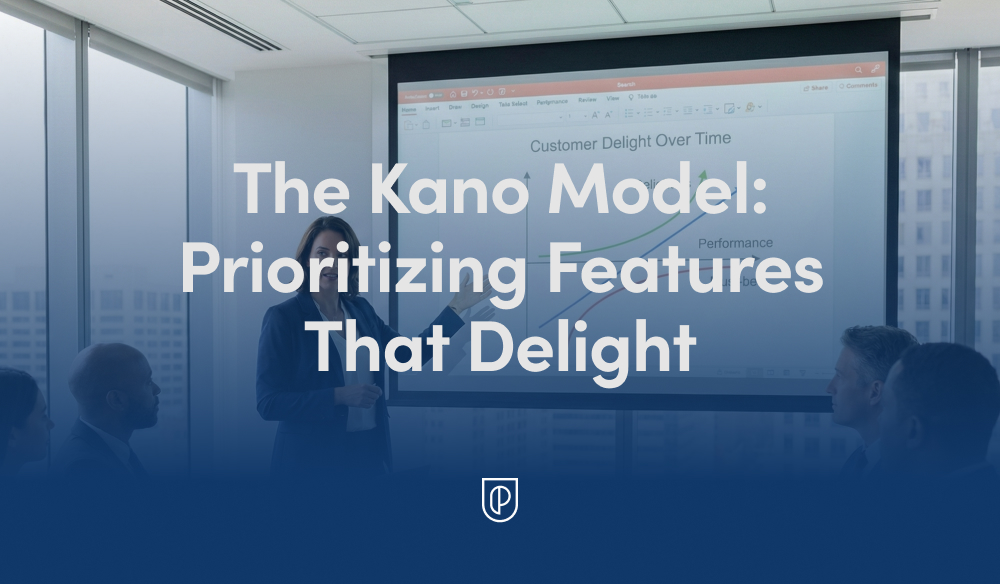
    When I sit down with our product trios to shape the next quarter’s roadmap, I rely on The Kano Model to cut through the noise and focus on what actually moves the needle for customers and the business. It gives me a rigorous, human-centered lens for separating baseline expectations from differentiators and sustained value creation.

    Learn how the Kano Model prioritizes the product features that matter by categorizing them into must-haves, satisfiers, and delighters.

    Here’s how I think about each category in practice. Must-haves are the non-negotiables—if they’re missing or broken, no amount of innovation will save the experience. Satisfiers scale linearly with user happiness; do them better, and customers feel the improvement immediately. Delighters surprise users with unexpected value that elevates the product’s perceived quality and creates memorable moments that fuel advocacy.

    In continuous discovery, I mix quantitative Kano surveys with qualitative interviews to validate which capabilities land in each bucket for specific segments. We ask both functional and dysfunctional questions (e.g., “How would you feel if this feature existed?” and “How would you feel if it didn’t?”) to avoid false positives and to distinguish true delighters from nice-to-haves. This approach de-risks assumptions and keeps our product discovery anchored in real customer voice.

    Translating insights into action starts with outcomes vs output OKRs. Must-haves protect core outcomes like reliability, trust, and activation. Satisfiers inform product roadmapping and sprint planning by tying investment to measurable improvements such as speed, accuracy, or completion rate. Delighters earn a deliberate share of the roadmap to strengthen competitive differentiation and to refresh our value proposition before market expectations shift.

    Kano also sharpens product-led growth motions. By aligning satisfiers with key activation steps and running retention analysis on cohorts exposed to delighters, we can see where excitement features become habit-forming behaviors. When a delighter consistently correlates with improved retention or expansion, it graduates into the backbone of our product positioning.

    Stakeholder management gets easier with a shared framework. I present the portfolio as a balanced mix: must-haves that protect reputation, satisfiers that demonstrate continuous improvement, and delighters that signal vision. This narrative connects short-term reliability with long-term strategy and helps leaders understand why some high-effort ideas are best sequenced behind critical must-haves or high-yield satisfiers.

    A quick caution: delighters decay. What delights today often becomes tomorrow’s must-have. I schedule periodic re-reads of our Kano results, especially after major releases or market shifts, to recalibrate where features sit. Combined with A/B testing and usage analytics, this habit prevents us from over-investing in fading differentiators and ensures our roadmap stays crisp and customer-centered.

    If your roadmap feels crowded or your team debates priorities without resolution, bring The Kano Model to your next planning session. It adds structure to product discovery, clarifies trade-offs, and helps us deliver a roadmap that not only works—but wins.


    Inspired by this post on Product School.


    Book a consult png image
  • Product Analytics for Everyone: Master Funnels, Retention, and Conversion to Drive Growth

    Product Analytics for Everyone: Master Funnels, Retention, and Conversion to Drive Growth

    Product analytics isn’t a specialist’s sport—it’s a team capability. In my role leading product teams, I’ve seen designers, engineers, marketers, and customer success partners uncover insights that shape strategy, accelerate product-led growth, and improve outcomes for customers. When we demystify the basics and bring analytics into everyday decisions, we build truly empowered product teams.

    Here’s the core promise of this approach: "Learn the product analytics fundamentals of funnels, retention, and conversion drivers so that anyone can confidently answer key product questions." That line has guided how I teach product managers to think—start with the essentials, tie them to real customer behaviors, and make the work repeatable across the organization.

    I start with funnels because they tell a story—the journey from discovery to value. A simple example: track the path from sign-up to user activation to the first value event. This reveals where onboarding succeeds or stalls, what friction blocks adoption, and which moments are ripe for optimization. With tools like Amplitude analytics or Pendo, we can break down conversions by segment, channel, or feature usage to isolate where improvements matter most.

    Next comes retention analysis, the clearest signal that we’re building something customers choose to return to. Cohort analysis shows who comes back and when; retention curves show where value compels a second, third, and tenth use. Tie retention to activation milestones and the outcomes customers achieve—not just logins—and you’ll quickly spot whether your product discovery assumptions hold up in the wild. A unified analytics platform makes these insights discoverable and repeatable across teams.

    Conversion drivers round out the picture. Once the funnel is clear and retention is stable, I look for the behaviors and experiences that predict success: feature combinations, time-to-value, message timing, or supportive content. Whether in Amplitude analytics or Pendo, correlating these drivers with outcomes lets us prioritize roadmaps with confidence. Pair this with continuous discovery—qualitative interviews, in-product feedback, and rapid experiments—and you’ll move from interesting data to decisive actions.

    This is how we build empowered product teams: by making analytics a daily habit rather than a quarterly report. We bring insights into roadmap reviews, design critiques, and sprint planning; we celebrate learning from experiments as much as shipping features; and we hold ourselves accountable to customer outcomes, not just output. When everyone can interpret funnels, discuss retention, and isolate conversion drivers, we make smarter bets faster.

    If you’re getting started, keep it simple. Define a clear activation metric, instrument the top of your funnel, and track a small number of cohorts. Share a weekly readout with highlights, surprises, and questions to investigate. Over time, stitch insights into narratives that drive product-led growth—and, most importantly, help customers achieve what they came for.

    Product analytics isn’t just for analysts. It’s a shared language for product discovery, onboarding excellence, user activation, and long-term retention. When we practice it together, we build better products and stronger teams.


    Inspired by this post on Amplitude – Best Practices.


    Book a consult png image
  • Enterprise Go-to-Market Mastery: How I Align Product, Positioning, and Analytics at Scale

    Enterprise Go-to-Market Mastery: How I Align Product, Positioning, and Analytics at Scale

    I build enterprise growth motions by grounding strategy in data and execution in crisp storytelling. When I partner with teams using Amplitude, I focus on architecting "go-to-market solutions for enterprise customers." That simple phrase clarifies the mandate: align product, marketing, and sales around measurable value, reduce buyer risk, and prove outcomes early and often.

    My go-to-market strategy begins with rigorous segmentation and an ideal customer profile, then translates into a living narrative: the value proposition, points of parity, and competitive differentiation that underpin product positioning. I pressure-test that narrative with real customer language, executive business cases, and use-case–level messaging so every stakeholder—from procurement to security to the economic buyer—hears their priorities reflected back with credibility.

    Execution is analytics-led. With Amplitude analytics as a unified analytics platform, I instrument the entire journey—from first touch to paid expansion—to expose activation, aha moments, and friction. I use A/B testing to validate in-app guides, product tours, and onboarding, and I track user activation and retention analysis to ensure product-led growth efforts compound over time. These signals inform sales enablement, content roadmaps, and launch plans so each asset moves a specific metric, not just a milestone.

    Operating cadence matters as much as the plan. I rely on empowered product teams and product trios to translate strategy into product roadmapping and sprint planning, ensuring every slice of the roadmap ties directly to market impact. Clear OKRs and QBRs keep the feedback loop tight, while field insights from enterprise pilots shape rapid iteration without losing strategic intent.

    Enterprise nuance is the difference-maker: longer cycles, multi-threaded buying committees, and higher switching costs demand precision. I design proofs of value that quantify outcomes early, align pricing and packaging with willingness to pay, and use customer evidence to de-risk decisions. The result is a scalable, repeatable system where positioning is consistent, the funnel is measurable, and revenue teams can predictably win with complex accounts.

    Ultimately, the work is about trust. When strategy, analytics, and storytelling lock together, customers see themselves in the product—and teams see themselves in the win. That is the heart of enterprise go-to-market done right.


    Inspired by this post on Amplitude – Perspectives.


    Book a consult png image
  • Unlocking the 7% Retention Rule: How Early Activation Fuels Compounding, Long-Term Growth

    Unlocking the 7% Retention Rule: How Early Activation Fuels Compounding, Long-Term Growth

    I’ve learned to spot durable growth early. When we launch something new, I look for one deceptively simple signal that predicts whether the product will compound or stall: the percentage of users who come back one week later. It’s a small number with big implications for product-led growth and retention analysis.

    Discover why 7% of users returning after one week signals long-term growth, and how early activation separates top-performing products from the rest.

    Why does this matter so much? A 7% day-7 retention floor tells me we’ve earned a second interaction from a meaningful slice of our cohort, not just a curiosity click. That’s the first hint of habit formation and repeatable value—evidence that onboarding, user activation, and the core value proposition are doing their job. When the curve holds at or above this threshold, growth investments tend to work harder because cohorts keep giving back.

    The lever behind that signal is early activation. I define the activation moment as the first time a new user experiences product value—sending a first campaign, integrating a CRM, or completing a workflow that solves their primary job. If we reduce time-to-activation and increase the activation rate, day-7 retention rises. This is where in-app guides, product tours, and thoughtful tooltip design shine: they remove friction without overwhelming the user.

    Instrumentation is non-negotiable. I set up event tracking and cohort analysis in tools like Amplitude analytics and Pendo, define a crisp activation event, and review retention curves by first-seen cohorts. We run A/B testing with a clear minimum detectable effect (MDE), validate improvements in activation and day-7 retention, and then double down. The objective is always outcomes over output: fewer features, more value delivered.

    Process matters as much as tooling. Product trios using continuous discovery keep us close to user problems, while empowered product teams move faster with context and clear outcomes vs output OKRs. When we connect these practices to a unified analytics view, it becomes obvious which changes move the 7% needle and which are noise.

    In practice, I’ve seen a launch turn the corner by clarifying the “aha” moment, cutting onboarding steps nearly in half, and swapping a generic walkthrough for contextual in-app guides. Activation jumped, day-7 retention crossed the threshold, and suddenly our PLG motion became efficient—paid acquisition started compounding instead of leaking.

    If you’re below 7%, start by tightening the activation definition, instrument the funnel, and remove the top three sources of friction. If you’re above 7%, stabilize it across segments, scale with targeted in-app guides, and keep iterating via A/B tests to protect that early win. Either way, the rule provides a clear, pragmatic checkpoint for product discovery and growth.

    The takeaway is simple: focus the team on earning the second visit. Nail early activation, then build repeatable systems that make the 7% retention rule your new baseline for confident, long-term growth.


    Inspired by this post on Amplitude – Perspectives.


    Book a consult png image
  • Stop the Leaky Bucket: Proven Moves to Turn User Growth into Durable Retention in 2025

    Stop the Leaky Bucket: Proven Moves to Turn User Growth into Durable Retention in 2025

    More signups are exhilarating—until the retention curve tells a colder truth. I’ve led launches where top-of-funnel spiked, only to watch active usage slide week over week. That’s the leaky bucket problem in action: acquisition outpaces activation, engagement, and retention, so net growth stalls.

    Losing users as fast as you acquire them? Get exclusive insights from our 2025 Product Benchmark Report on how to fix the leaky bucket problem and drive lasting growth.

    When I assess a product’s trajectory, I reframe the goal: our job isn’t to add users; it’s to create retained value. In product-led growth, durable growth comes from systematically increasing activation and Day 7/30 retention, not just traffic. That shift aligns teams on outcomes vs output and turns experiments into a compounding engine.

    Diagnosis comes first. I run a retention analysis by cohort in Amplitude analytics (and corroborate with Pendo for in-app behavior) to pinpoint where the flow breaks: sign-up, onboarding, first value, habit formation, or paywall. Then I define a crisp activation metric—what specific action within a time window predicts long-term engagement—and measure time-to-value for each segment.

    From there, we remove friction. Simplify onboarding, trim non-essential fields, and guide users to the “aha” with in-app guides, product tours, and contextual tooltips. Seed accounts with sample data, pre-built templates, and smart defaults so new users experience the core value in minutes, not days.

    We prove impact with disciplined experimentation. A/B testing with a clearly calculated minimum detectable effect (MDE) prevents false positives, while a continuous discovery cadence with product trios keeps us close to real customer problems. Every test is tied to leading indicators—activation rate, Day 1/7/30 retention, and weekly engaged usage—not vanity metrics.

    Activation does not live in product alone. Pricing and packaging, lifecycle messaging, and customer support all influence early habit formation. Align GTM and product on one retention-centric scorecard and instrument a unified analytics platform so every team sees the same truth.

    Once the core journey holds water, we layer in expansion: prompts that surface adjacent value at the right moment, educated upsells tied to outcomes, and permissions or collaboration features that invite team adoption. That’s how growth becomes efficient and compounding instead of brittle and expensive.

    If this resonates, you likely have more of a prioritization problem than a traffic problem. Fix activation, measure retention rigorously, and let acquisition follow. Patch the leaks, and growth stops being a hustle—and starts being a flywheel.


    Inspired by this post on Amplitude – Perspectives.

    Book a consult png image
  • Unify Your Analytics to Accelerate Growth: Cut Costs, Boost Clarity, and Decide in Real Time

    Unify Your Analytics to Accelerate Growth: Cut Costs, Boost Clarity, and Decide in Real Time

    I’ve led product teams through the pain of scattered dashboards and contradictory metrics, and I’ve seen how it slows decision velocity and quietly inflates costs. When insights are fragmented, roadmaps drift into opinions and meetings multiply. A unified analytics platform changes the conversation—from noise to signal, from lagging to leading indicators, and from guesswork to confident execution.

    "Escape fragmented tools with a unified analytics platform that accelerates growth, reduces costs, and empowers smarter, real-time decision-making."

    Here’s what “unified” means in practice: one source of truth that connects product usage, marketing attribution, sales pipeline, and customer support signals. With CRM integration, consistent event taxonomy, and retention analysis in place, every team works from the same playbook. Cohorts, funnels, and lifecycle metrics become part of daily rituals, and insights flow directly into product discovery and go-to-market decisions.

    The impact is tangible. Product-led growth becomes predictable because activation, engagement, and retention are measured the same way across functions. Experimentation accelerates as A/B testing cycles tighten and learning compounds. Outcomes vs output OKRs stay visible and honest, helping us prioritize what moves the needle. Costs come down as redundant tools are rationalized and manual data wrangling disappears. Most importantly, real-time decision-making replaces weekly retrospectives with timely action.

    My playbook for getting there is straightforward: start with a tool and data audit; define a clear north-star metric with a handful of leading indicators; standardize event names and properties; connect the data layer to your CRM for closed-loop visibility; instrument product tours and in-app guides to drive user activation; and institutionalize continuous discovery so every insight informs the roadmap and sprint planning.

    Governance and trust matter as much as dashboards. Invest in data governance and a clean tracking taxonomy so metrics are trusted across the organization. Document definitions, automate quality checks, and maintain privacy-by-design from the start. The goal isn’t more data—it’s better decisions, faster, with confidence.

    I’ve watched teams cut time-to-insight from days to minutes, reallocate budget from underperforming channels to winning ones, and ship with far greater conviction. When the organization rallies around a unified analytics platform, stakeholder debates shrink, velocity increases, and the value proposition to customers sharpens.

    If growth, cost savings, and smarter decision-making are on your agenda this quarter, commit to unifying your analytics. Start small, prove the value in one journey (like activation to retention), then scale. The moment you align your teams to a single source of truth is the moment your product strategy becomes unmistakably clear.


    Inspired by this post on Amplitude – Perspectives.


    Book a consult png image
  • Stop Chasing New Users: The Surprising ROI of Win-Back Campaigns That Actually Work

    Stop Chasing New Users: The Surprising ROI of Win-Back Campaigns That Actually Work

    Over the years, I’ve learned that the most overlooked growth lever isn’t a shiny new channel—it’s bringing back the customers we already earned. When I rebalanced budgets from top-of-funnel acquisition to reactivation, the payoff was faster, more predictable, and far more cost-efficient. Reactivation compounds because it’s built on trust, product familiarity, and data we already have.

    Discover why reactivating dormant users delivers better ROI than new acquisition. Learn how to identify and bring back at-risk users via targeted campaigns.

    Why does this work so well? Dormant users once saw enough value to sign up, activate, or even pay. The barriers to return are lower: familiarity reduces friction, time-to-value shrinks, and the cost to engage is a fraction of new-user CAC. In practice, I’ve seen win-back motions outperform new acquisition on payback time, expansion potential, and long-term retention—especially when we design the right triggers and messages.

    My approach starts with rigorous retention analysis. I define the behaviors that signal risk—declining frequency, shrinking session depth, stalled onboarding milestones, or missed “aha” moments—and map them to lifecycle stages. Using a unified analytics platform with CRM integration, I can see who’s drifting, when, and why. That clarity is the foundation for precision reactivation.

    On the tooling front, I lean on Amplitude analytics to surface cohorts and leading indicators, Pendo for in-app guides and nudges, and Intercom for lifecycle messaging and human-assisted outreach. The connective tissue is our CRM integration, which ensures we coordinate messages across email, in-app, and sales-assist without creating noise or duplication.

    Segmentation is where win-back campaigns gain power. I group users by their last successful use case, plan tier, activation depth, and the specific friction they hit. Cohorts often include “stalled onboarding,” “lapsed power users,” and “trial expired with partial success.” Each segment gets a distinct path back to value—never a one-size-fits-all blast.

    Targeted campaigns are then matched to the root cause. For stalled onboarding, I deploy product tours and in-app guides that remove a single key blocker. For lapsed power users, I emphasize newly shipped capabilities tied to their historical workflows. For price-sensitive cohorts, I test usage-based offers or limited-time boosts aligned to value realization, not discounting for its own sake. Every flow is A/B testing-driven and time-bound, with clear exit criteria.

    Measurement goes beyond “did they log in.” I track reactivation rate, feature adoption depth, time-to-value, and near-term expansion signals. Holdout groups validate lift, and we set guardrails so campaigns don’t cannibalize healthy cohorts. Over time, these learnings inform product roadmap decisions—what to simplify, what to sunset, and where to invest to prevent churn in the first place.

    Operationally, I embed win-back into product-led growth rhythms. Product, data, lifecycle marketing, and support align on weekly reviews, using shared dashboards to tune triggers and content. This creates a reliable growth engine that respects user intent and avoids the trap of overmessaging.

    Finally, trust matters. I build reactivation with privacy-by-design principles, transparent value propositions, and easy opt-outs. The goal isn’t to “get the login”—it’s to restore momentum toward outcomes the user cares about.

    If you’re feeling acquisition fatigue, shift a meaningful slice of budget and attention to reactivation. In my experience, it delivers faster wins, better unit economics, and a healthier product that keeps more of the customers you worked so hard to earn.


    Inspired by this post on Amplitude – Perspectives.


    Book a consult png image
  • A Product Strategist & Evangelist’s Playbook at Amplitude: Turning Analytics into Growth

    A Product Strategist & Evangelist’s Playbook at Amplitude: Turning Analytics into Growth

    I’ve long believed that the Product Strategist & Evangelist role is where analytics meets impact. When I work with teams using Amplitude, my focus is simple: turn product data into decisions that compound, and tell the story in a way that mobilizes people—customers, stakeholders, and empowered product teams alike.

    At its core, this role aligns product strategy with business outcomes. I anchor planning to outcomes vs output OKRs, partner closely with product trios, and run continuous discovery to ensure every roadmap item is tied to a measurable customer problem and value proposition. That discipline keeps us honest about what moves the needle.

    Analytics is the engine. I start with a clean event taxonomy, dependable instrumentation, and a self-serve insight layer in Amplitude analytics. From activation to retention analysis, I define a few sharp metrics that predict sustainable product-led growth—then I build dashboards the whole organization can trust and use.

    Experimentation is where insight becomes action. I operationalize A/B testing with clear hypotheses, guardrails for minimum detectable effect, and crisp success criteria. The goal is speed with rigor: learn fast, ship what works, and retire what doesn’t. Over time, this creates a culture where teams default to evidence rather than opinions.

    Evangelism turns analytics into momentum. I practice developer evangelism to meet practitioners where they are, and I translate complex findings into accessible narratives for executives and customer-facing teams. That means live walkthroughs, in-app guides, product tours, and field enablement that shows not just the what, but the why and the how.

    Under the hood, a unified analytics platform is essential. I pair it with pragmatic data governance and privacy-by-design so we can scale insights confidently. The result is a flywheel: reliable data, repeatable workflows, and reusable patterns that accelerate every subsequent initiative.

    On the go-to-market front, I connect product strategy to positioning, packaging, and enablement. The stories we tell in the market should mirror the value we measure in the product. That alignment makes launches sharper, sales motions clearer, and adoption smoother.

    In practice, my playbook is straightforward: clarify the North Star and adjacent metrics, stand up trustworthy pipelines and dashboards, institutionalize experimentation, and continuously translate insights for decision-makers. Done well, analytics stops being a report and becomes a system for growth.

    If you’re building or evolving this function, start small and intentional: instrument the few events that matter, ship one meaningful A/B test, and circulate a concise narrative on what you learned. Consistency beats complexity, and momentum compounds quickly when teams see their decisions move the metrics that matter.


    Inspired by this post on Amplitude – Perspectives.


    Book a consult png image
  • Slash Time to Value to Skyrocket Retention: A Proven Playbook for Faster Impact

    Slash Time to Value to Skyrocket Retention: A Proven Playbook for Faster Impact

    I’m relentlessly focused on time to value because it’s the fastest, most reliable lever I have to drive user retention and product-led growth. When new users experience an unmistakable win quickly, they stick around, explore deeper features, and become advocates. When they don’t, the best onboarding or marketing can’t save the experience.

    Accelerate retention by reducing time to value. Learn how faster product impact drives growth, reduces costs, and keeps users engaged in the long term.

    Here’s how I define it in practice: time to value (TTV) is the elapsed time between a user’s first meaningful interaction and the first moment they feel the product’s core value. That “aha” moment is not a vanity milestone; it’s a measurable behavior that correlates with long-term retention in your retention analysis and cohort curves.

    In my role leading product teams at HighLevel, I treat TTV as a leading indicator for retention and expansion. It shapes our product discovery, influences our value proposition, and anchors our outcomes vs output OKRs. If a roadmap item doesn’t shorten TTV or deepen recurring value, it rarely makes the cut.

    My playbook for reducing TTV starts by identifying the activation metric—what’s the smallest observable action that best predicts retention? For a messaging product it might be sending the first message to three contacts; for a workflow tool, publishing the first automated flow. Once this activation is clear, the job becomes simple: engineer the shortest, most delightful path to that outcome.

    Next, I eliminate onboarding friction. I default to progressive profiling instead of long forms, ship sensible defaults, preload sample data, and offer ready-to-use templates. I complement this with lightweight in-app guides, product tours, and well-timed tooltip design—just enough guidance to build momentum without overwhelming the user.

    To validate changes, I rely on rigorous experimentation. A/B testing with a defined minimum detectable effect ensures we’re not overfitting noise. I track activation rate, time to first value, feature adoption, and day 7/30 retention. If an experiment improves activation but hurts short-term retention, I dig into the “why” with session replays, targeted surveys, and follow-up interviews.

    This approach also reduces costs. Faster activation lowers support volume, decreases onboarding hand-holding, and shortens payback periods. On the GTM side, TTV-aligned messaging clarifies our value proposition, improving conversion quality and reducing churn from poorly qualified signups.

    Cross-functional alignment is essential. Product, design, engineering, and customer success must agree on the definition of value, the activation metric, and the telemetry required to measure progress. I use product trios to maintain discovery momentum and ensure decisions connect cleanly to measurable outcomes.

    A practical 30/60/90 plan helps teams move fast. In the first 30 days, define activation, instrument analytics, and map the current journey. By day 60, ship friction-killing improvements, launch in-app guides, and run your first A/B tests. By day 90, refine templates, tighten empty states, and codify wins into the onboarding system so improvements compound.

    The biggest pitfall I see is chasing more features instead of more value, faster. When we focus on shortening the path to a single compelling outcome—and proving it with data—retention follows. Users don’t need more; they need the right result sooner.

    If you’re serious about retention, make time to value your team’s most visible operating metric. Shine a bright light on it in weekly reviews, tie it to goals, and celebrate every step that helps users succeed faster. Do this consistently, and you’ll see growth accelerate, support costs drop, and engagement deepen in ways that are both measurable and enduring.


    Inspired by this post on Amplitude – Perspectives.


    Book a consult png image