
privacy-by-design
- AI Strategy (315)
- Generative AI (106)
- IT Leadership (33)
- Leadership (76)
- Product Management (344)
- Product Management Leadership (306)
- Uncategorized (32)
-

Win AI Search: Proven Playbook to Get Your Startup Recommended by ChatGPT & Perplexity
AI search is becoming the new homepage for startups, and the brands that win are the ones models can clearly identify, verify, and cite. In this…
-

Prototypes vs Products: How I De-risk Ideas Fast and Ship Reliable Value at Scale
Too many teams confuse prototypes with products—and pay for it later. I use prototypes to learn fast and reduce risk, and I treat products as promises…
-
AI at Home, Impact at Work: Experiments That Supercharged My Product Leadership
I reflect on a standout All Things Product conversation that reinforced how low-stakes AI experiments at home can dramatically improve how we build AI-powered products at…
-
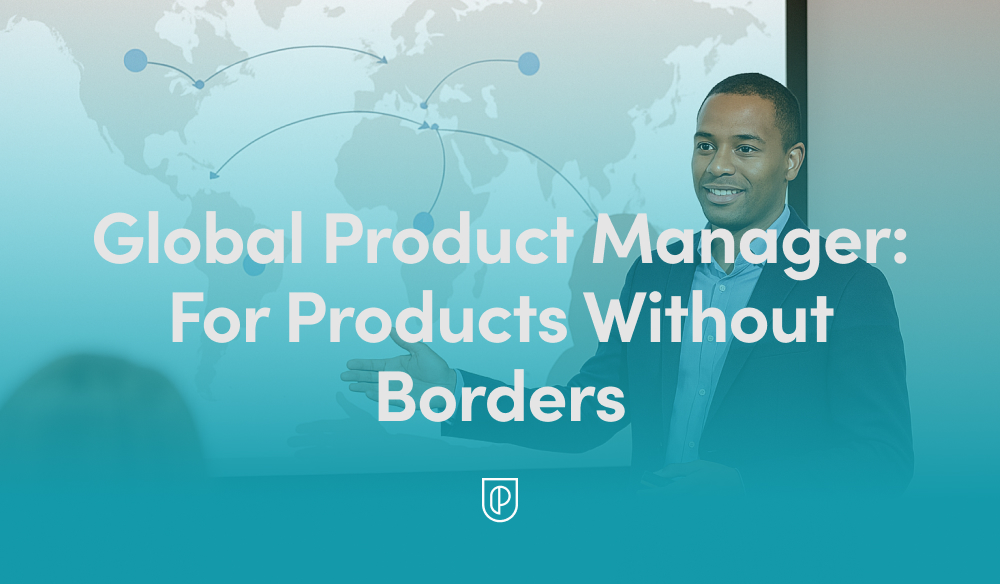
Global Product Manager Playbook: Build Borderless Products, Align Teams, Win Every Market
Building products without borders isn’t a launch plan—it’s a system. In this playbook, I share how a Global Product Manager aligns product strategy, localization, pricing, and…
-

Recruitment Impersonation Scams: A Playbook for Leaders
A practical playbook to help leaders make real jobs verifiable, triage impersonation reports, and guide candidates after data or money is exposed.
-

How to Build an AI-Powered SaaS Customer Lifecycle
A practical model for using AI across SaaS onboarding, support, retention, and expansion without fragmenting data, ownership, or trust.
-

Enterprise AI Foundations: An Operating Model That Scales
A practical blueprint for data, governance, evaluation, and decision rights that turns scattered AI pilots into a scalable enterprise capability.
-

How Product Leaders Can Prevent Recruitment Impersonation Fraud
A practical control system for verifying recruiters, limiting candidate data exposure, triaging scam reports, and protecting brand trust.
-

AI Risk Governance: An Operating Model for Cyber Defense
A practical operating model for classifying AI workflows, matching autonomy to risk, instrumenting defenses, and scaling safely in 90 days.
-

How to Prove AI Agent ROI Without Sacrificing Privacy
A practical framework for measuring AI agent value, total cost, and risk without turning product analytics into a privacy liability.
-

AI-Personalized Activation: A Practical Path to Retention
A practical system for personalizing the path to first value, proving downstream cohort lift, and scaling AI activation without eroding user trust.
-

Governed GenAI Delivery: A Practical Operating Model
A practical operating model for shipping GenAI with explicit risk ownership, evaluation gates, human review, controlled rollout, and rollback.
Weekly digest
One email a week on AI products, enablement and hiring. No fluff.
Browse topics
- AI Strategy (315)
- Generative AI (106)
- IT Leadership (33)
- Leadership (76)
- Product Management (344)
- Product Management Leadership (306)
- Uncategorized (32)
Work with me
45-minute consultation on AI product strategy, GTM and PM hiring — no charge.