Category: Product Management

  • 3 Powerful Ways AI Is Reshaping Cybersecurity—from Ruthless Attacks to Rapid Defense

    Every week, I watch the cybersecurity landscape bend under the pressure of AI. The pace isn’t linear—it’s compounding. What worked for IT teams last quarter often needs a rethink today, and the difference between merely coping and truly competing lies in how quickly we adapt our strategy, tooling, and operating rhythms.

    Learn the ways in which AI is transforming both cybersecurity offense and defense for IT teams.

    From my vantage point leading product strategy, I see three shifts that matter most right now: AI is supercharging attackers, accelerating defenders, and reshaping governance. Together, they redefine how we prioritize investments, measure risk, and align product and security roadmaps.

    First, AI has leveled up the offense. Large language models can industrialize social engineering—hyper-personalized spear-phishing at scale, deepfake voice notes that spoof executives, and highly convincing support chats that trick users into bypassing controls. Code-generation tools lower the barrier to crafting polymorphic malware and automating reconnaissance. The net effect is ruthless efficiency: more credible lures, faster campaigns, and broader reach with fewer human operators. I now assume adversaries have an AI co-pilot—and plan defenses accordingly.

    Second, AI is accelerating the defense. Modern detection and response stacks are moving beyond rules to behavioral analytics—correlating identity signals, endpoint telemetry, and network events to spot subtle anomalies that signature-based tools miss. Copilot-style assistants are augmenting SecOps by summarizing incidents, explaining probable root cause, and proposing next steps. The aim isn’t blind automation; it’s decision acceleration—shrinking mean time to detect and respond while reducing analyst toil. On the build side, AI-assisted code scanning and dependency analysis help teams shift security left, catching vulnerabilities earlier and turning secure defaults into muscle memory.

    Third, governance is being rewritten in real time. As AI models ingest sensitive data and generate code and content, data governance and privacy-by-design move from compliance checklists to active risk management. We’re formalizing AI risk management alongside traditional AppSec: model inventories, usage policies, red-teaming prompts, and guardrails against prompt injection and data leakage. Identity remains the control plane—zero trust principles, least privilege, and continuous verification become nonnegotiable. I’ve found that aligning security, product, and IT leadership on a single policy-as-code backbone prevents drift and keeps audits predictable.

    Practically, I guide teams to start with a crown-jewel inventory: What data and systems would materially impact customers, revenue, or brand if compromised? Map data flows, instrument comprehensive telemetry, and prioritize detection coverage where it matters most. Choose AI to augment before you automate—prove the loop with humans in the middle, then graduate to higher autonomy levels with clear rollback paths and audit logs.

    Culturally, this is a product problem as much as a security one. We bring empowered product teams and SecOps into the same room, set measurable objectives (signal-to-noise ratio, mean time to contain, escaped defect rate), and iterate with the same cadence we use for product features. When security outcomes are treated as customer outcomes, adoption soars and friction recedes.

    The takeaway: AI has tilted the field, but not inevitably against defenders. With a clear AI strategy, disciplined data governance, and pragmatic automation, IT leaders can turn reactive security into a proactive advantage—meeting attackers’ speed with speed, and outlasting them with better judgment.


    Inspired by this post on Pendo – Perspectives.


    Book a consult png image
  • The Real Reason Pendo Built Agent Analytics—and How It Drives Adoption, Revenue, and Trust

    The Real Reason Pendo Built Agent Analytics—and How It Drives Adoption, Revenue, and Trust

    I’ve learned the hard way that the toughest part of launching in-app agents and guided experiences isn’t the build—it’s proving, quickly and credibly, that they move the business. If I can’t quantify adoption, engagement, deflection, and time-to-value, stakeholder confidence erodes and iteration slows. That’s exactly why an Agent Analytics capability matters: it turns opaque interactions into measurable outcomes that product, customer success, and engineering can all act on.

    When I evaluate a capability like Agent Analytics, I anchor on a few questions. Which segments adopt the agent, and where does engagement drop? What fraction of issues are successfully deflected versus escalated? Which prompts, product tours, and in-app guides drive conversion and retention—and which add friction? How does agent usage correlate with onboarding completion, core feature activation, and long-term retention analysis? If I can answer those with a unified analytics platform, I can prioritize confidently.

    Increase revenue, cut costs, and reduce risk with Pendo’s Software Experience Management platform. Optimize the entire software experience to drive adoption and improve engagement.

    In practice, I map an outcomes-first measurement plan: define a north-star (e.g., activated accounts), articulate contributing metrics (guide completion rate, agent task success, session depth), then run targeted A/B testing on copy, timing, and placements. With the right analytics, I can compare cohorts exposed to in-app guides and product tours against a control, validate impact, and double down on the patterns that consistently improve adoption and stickiness.

    Cost and risk are just as important as growth. An effective Agent Analytics view helps me model support deflection, time-to-resolution, and escalation rates so I can quantify cost savings without sacrificing quality. On the risk side, I look for early-warning signals—low-confidence responses, repeated handoffs, or anomalous usage—so I can intervene before they turn into churn or brand concerns. The point isn’t vanity metrics; it’s operational clarity that enables responsible, scalable product-led growth.

    This also changes team dynamics. Product trios get a shared source of truth for decisions, engineering gains sharper specs informed by real behavior, and customer-facing teams can see which experiences reliably unlock value for each segment. Instead of debating opinions, we iterate on evidence—tightening the loop between product roadmapping and sprint planning, UX writing, and go-to-market strategy.

    My 90-day playbook looks like this: establish a baseline for adoption and engagement; instrument agent interactions end to end; ship two or three small, high-leverage experiments in onboarding and help experiences; and review results in weekly rituals. By day 90, I expect to see a clear line from agent engagement to activation and retention, along with a repeatable testing cadence that compounds learning.

    I’ve seen the same pattern across products and markets: once teams illuminate the black box of in-app assistance with rigorous, actionable analytics, customer confidence rises, onboarding accelerates, and roadmaps get sharper. If you’re evaluating Pendo or already running it, put Agent Analytics at the center of your measurement strategy—and let your data, not assumptions, guide the next iteration.


    Inspired by this post on Pendo – Perspectives.


    Book a consult png image
  • 5 powerful reasons I can’t wait for INDUSTRY 2025: The Product Conference to supercharge strategy

    5 powerful reasons I can’t wait for INDUSTRY 2025: The Product Conference to supercharge strategy

    I’m gearing up for INDUSTRY 2025: The Product Conference in Cleveland, Ohio, and I can already feel the energy that comes when the brightest product minds gather. As someone who lives at the intersection of product management leadership, execution discipline, and customer-centric innovation, this event is where I refine my craft and pressure-test my roadmap against the best.

    Join Pendo at INDUSTRY in Cleveland, Ohio.

    Reason 1: Elevate strategy from outputs to outcomes. I’m looking forward to sharpening how we align outcomes vs output OKRs with product roadmapping and sprint planning. INDUSTRY consistently surfaces practical frameworks to translate vision into measurable value—exactly what empowered product teams need to prioritize with confidence and communicate trade-offs to stakeholders.

    Reason 2: Deepen discovery with data that actually drives decisions. I plan to compare notes on product discovery techniques that blend qual and quant—pairing interviews with a unified analytics platform, retention analysis, and a clear minimum detectable effect (MDE) to validate signal. The bar keeps rising on evidence-based decisions, and I’m eager to bring back new ways to reduce bias while accelerating learning.

    Reason 3: Double down on product-led growth. From onboarding to activation, I’m focused on refining in-app guides and product tours that meet users at the moment of need. INDUSTRY is a great place to trade patterns for scalable, context-aware experiences that convert, retain, and expand without adding friction—fueling a durable product-led growth motion.

    Reason 4: Build a responsible, practical AI Strategy. The conversations around gen ai for product prototyping, agentic AI, data governance, and privacy-by-design are evolving fast. I’m excited to learn how teams are balancing speed with AI risk management—turning experimentation into real features while protecting customers and preserving trust.

    Reason 5: Level up leadership and influence. Product management leadership is as much about people as it is about prioritization. I’m excited to trade tactics on stakeholder management, strengthening product trios, and growing ICs through the IC to manager transition. These are the muscles that turn strategy into momentum.

    Between keynotes, hallway conversations, and hands-on sessions, I plan to leave Cleveland with fresh approaches to discovery, clearer OKR alignment, and new ideas to operationalize PLG at scale. If you’re passionate about building products that customers love—and businesses rely on—let’s connect and compare notes on what’s working now.

    I’ll share my takeaways after the conference, including actionable frameworks, templates, and experiments to run with your teams the very next sprint. If you see me in a session on analytics, onboarding, or AI, say hello—I’m always up for a quick debrief and a few what-would-it-take questions.


    Inspired by this post on Pendo – Perspectives.


    Book a consult png image
  • 4 Hidden AI Risks Every CIO Must Tackle Now—and a Proven Playbook to Mitigate Them

    4 Hidden AI Risks Every CIO Must Tackle Now—and a Proven Playbook to Mitigate Them

    Across enterprises, I’m watching AI sprint from lab experiments to business-critical workflows. That velocity is exciting—and it’s also where risk compounds. In my role partnering with CIOs and IT leadership, I’ve learned that winning with AI is as much about disciplined risk management as it is about breakthrough use cases.

    Learn about the risks that AI poses to IT teams, and how they can mitigate them.

    I frame the challenge as “4 AI risks for CIOs (and a guide to solve them)”: data governance and compliance, model reliability and bias, security and supply chain exposure, and operational cost/ROI drift. Below, I outline the risks I see most often and the concrete actions I take to de-risk them without slowing innovation.

    Risk 1: Data governance and compliance. The fastest way to stall an AI Strategy is to overlook consent, lineage, and access controls. I establish privacy-by-design from day one: data minimization, clear retention policies, role-based access control, and auditable logs for training, inference, and feedback loops. I also insist on defensible vendor reviews (DPA, SOC2/ISO, regional data residency), PII classification, and internal model cards that document sources, sensitivities, and acceptable-use constraints. This makes IT leadership comfortable scaling from prototype to production.

    Risk 2: Model reliability, hallucinations, and bias. AI that fabricates or skews output erodes trust and creates downstream risk. I operationalize quality with evaluation harnesses, golden datasets, human-in-the-loop review for high-impact actions, and red-teaming for safety. Retrieval-augmented generation with citations, content filters, and grounded prompts reduce error rates. To quantify progress, I define precision/recall targets and a minimum detectable effect (MDE) for experiments so we know when a change is truly better—not just different.

    Risk 3: Security and AI supply chain. New surface area invites prompt injection, data exfiltration, and compromised dependencies. I apply zero-trust principles: strict allow/deny lists for tools and connectors, secrets isolation, egress controls, sandboxed environments for agents, and output validation before execution. Every model and plugin goes through threat modeling, dependency scanning, and vendor security reviews. For agentic AI patterns, I gate high-risk actions behind explicit approvals and granular scopes.

    Risk 4: Operational cost and ROI drift. AI workloads can balloon with hidden inference costs, shadow IT, and duplicated platforms. I put governance around spend using consumption SaaS pricing guardrails, usage caps by environment, tagging by app/team, and a unified analytics platform to monitor latency, quality, and cost per transaction. This lets me reallocate budget toward the highest-impact use cases while sunsetting low-yield experiments.

    Your 90-day playbook. Days 0–30: Inventory AI use cases, classify data sensitivity, choose one or two critical business workflows, and stand up core guardrails (access, audit, red-teaming). Days 31–60: Pilot with a cross-functional product trio (PM, design, engineering), define OKRs, instrument evaluations, and enable human-in-the-loop. Days 61–90: Productionize the winning flow, set usage and spend policies, enable observability dashboards, and roll out training for frontline teams with clear escalation paths.

    The organizational layer matters as much as the technical one. I align stakeholders early, empower product trios to iterate quickly within boundaries, and deploy forward deployed engineers to embed with the business. This keeps trust high, reduces handoffs, and ensures that governance accelerates value rather than blocking it.

    Done well, these practices turn AI risk into a competitive moat. By pairing disciplined governance with pragmatic experimentation, we capture the upside of gen ai while protecting customers, teams, and the business. That’s how I’ve helped enterprises move from scattered pilots to measurable, scalable impact—safely.


    Inspired by this post on Pendo – Perspectives.


    Book a consult png image
  • Implementing Agentforce the Smart Way: My Proven Playbook for Salesforce Agentic Success

    Implementing Agentforce the Smart Way: My Proven Playbook for Salesforce Agentic Success

    Implementing Agentforce isn’t a feature rollout—it’s a strategic shift. In my role building AI-driven products, I treat Agentforce as its own product with clear outcomes, rigorous governance, and disciplined iteration. The objective is to create durable operational leverage inside Salesforce without compromising trust, data integrity, or customer experience.

    Learn the ways in which Pendo helps companies design and iterate on their agentic strategy for Salesforce.

    I start with product discovery. That means selecting the right use cases, defining the target user, and aligning on measurable outcomes rather than outputs. In practice, I prioritize use cases across sales, service, and marketing using an impact–effort–risk lens, then set crisp success metrics—response time, deflection rate, case resolution, win rate lift, and user adoption. This keeps everyone focused on value creation, not just model novelty.

    Next, I design the agentic system with guardrails. I specify agent roles, tools, and policies; define when to escalate to humans; and embed privacy-by-design and data governance from day one. I also build an evaluation harness with offline tests and live A/B testing, ensuring we have a minimum detectable effect that’s meaningful for the business. The goal is to measure outcomes reliably and course-correct quickly.

    When building the first slice, I scope narrow and ship fast. For example, start with a constrained service workflow—classify the case, propose a response, and take a safe action—with clear affordances in Salesforce so users understand what the agent did and why. I instrument the experience end-to-end and use Pendo for in-app guides, surveys, and behavioral analytics to reduce onboarding friction and capture real-time feedback at scale.

    Iteration is where value compounds. I run weekly reviews of conversations, error taxonomies, and edge cases; adjust prompts and tool access; and maintain a steady experiment cadence. We track outcomes vs output to avoid vanity metrics, and we document learnings to de-risk the next use case. This steady drumbeat builds credibility with stakeholders and confidence with frontline users.

    Change management is non-negotiable. I align leaders early, set expectations on what the agent can and cannot do, and define SLAs for humans-in-the-loop. I use product tours to teach new behavior, highlight quick wins, and establish transparent feedback channels. This combination of enablement and accountability accelerates adoption and creates a culture that embraces agentic AI responsibly.

    Finally, I scale thoughtfully. Once the first use case demonstrates value, I standardize patterns, unify analytics, and evolve governance as usage grows. I review risk regularly, align OKRs with the roadmap, and keep a tight feedback loop between product, ops, and go-to-market teams. Treating Agentforce as an evolving product—not a one-off project—maximizes impact while protecting the customer experience.


    Inspired by this post on Pendo – Perspectives.


    Book a consult png image
  • Our Pendo-Powered Playbook: Orchestrating a High-Impact Summer Release with Product-Led Growth

    Our Pendo-Powered Playbook: Orchestrating a High-Impact Summer Release with Product-Led Growth

    We set out to promote the Pendo Summer Release using the most authentic approach possible: we used Pendo to market Pendo. That decision anchored our strategy in product-led growth, letting us reach users in context, guide them through new capabilities, and measure impact in real time without adding friction or cost.

    Increase revenue, cut costs, and reduce risk with Pendo’s Software Experience Management platform. Optimize the entire software experience to drive adoption and improve engagement.

    Our objectives were clear: drive adoption of new features, accelerate onboarding for existing customers, and improve engagement across key workflows. We framed the work with outcomes vs output OKRs, clarified the value proposition for each persona, and aligned our product positioning to highlight points of parity and genuine differentiation.

    Execution centered on in-app guides, product tours, and purposeful tooltip design. We segmented by role, lifecycle stage, and behavior to keep messages timely and relevant, then layered in A/B testing with a defined minimum detectable effect (MDE) so we could learn fast without overexposing users. Product trios partnered closely with design and forward-deployed engineers to iterate quickly on copy, UX writing, and guide placement.

    On the measurement side, we instrumented clear goals and tracked conversions through the funnel, pairing event analytics with retention analysis to understand depth of usage, not just clicks. We captured qualitative signal through micro-surveys and in-context feedback, feeding insights back into product roadmapping and sprint planning to sharpen our next set of in-app experiments.

    Governance mattered as much as growth. We applied privacy-by-design principles, ensured strong data governance, and kept stakeholder management tight so each guide had a clear owner, sunset plan, and success criteria. That discipline helped us sustain momentum without cluttering the experience.

    The biggest lesson: when done thoughtfully, in-app education scales like a dedicated success team—at a fraction of the cost—while teaching you exactly where users find value. This Pendo-powered launch playbook now underpins our onboarding, cross-sell motions, and QBRs alike, giving us a repeatable way to promote releases, validate hypotheses, and deepen engagement with every iteration.


    Inspired by this post on Pendo – Perspectives.


    Book a consult png image
  • Inside Pendo’s Decision: Replacing the Website Chatbot With an AI Agent to Boost ROI

    Traditional website chatbots promised instant answers but rarely delivered the depth, context, and actionability modern buyers expect. After seeing patterns of high drop-off and shallow engagement, I stepped back and reframed the problem: We did not need another scripted bot—we needed an AI Agent capable of understanding intent, personalizing responses, and taking meaningful actions in the flow of discovery.

    That is why Pendo replaced the website chatbot with an AI Agent. From a product management lens, the decision hinged on three criteria: accelerate time-to-value for visitors, reduce operational overhead through automation, and improve the quality of demand captured at the top of the funnel. An agentic AI approach met all three.

    Increase revenue, cut costs, and reduce risk with Pendo’s Software Experience Management platform. Optimize the entire software experience to drive adoption and improve engagement.

    This statement crystallizes the business case. An AI Agent can translate product intent into measurable outcomes by connecting to knowledge sources, analytics, and workflows. Instead of handing off a prospect to a form or a static knowledge article, the agent can surface relevant guidance, qualify interest, book meetings, and even trigger product tours—closing the loop between marketing, product, and customer success.

    We anchored the implementation in data governance and privacy-by-design. That meant carefully curating training corpora, instituting role-based access controls, applying guardrails for sensitive topics, and designing graceful human-in-the-loop fallbacks. The result was not just a smarter front door, but a safer one—critical for regulated buyers and enterprise stakeholders.

    To validate impact, we ran disciplined A/B testing with a clearly defined minimum detectable effect across conversion, engagement depth, and time-to-response. We also monitored secondary signals such as escalation rate to human support, session quality, and downstream product adoption. Early signals showed more qualified conversations, fewer dead ends, and faster paths to value—exactly the outcomes a product-led growth motion requires.

    The experience uplift did not stop at the website. By aligning the agent with in-app guides and product tours, we created continuity from pre-signup exploration to onboarding and activation. Visitors received consistent, contextual help before and after they became users, which strengthened our product positioning and reduced friction across the journey.

    Operationally, the shift lowered the marginal cost of each high-quality interaction while improving reliability. Agent handoffs to sales or support became intentional rather than reactive, and insights from conversations fed directly into product discovery. That closed feedback loop informed roadmap decisions and sharpened our go-to-market strategy.

    If you are considering a similar move, start with a clear AI Strategy tied to measurable outcomes, a robust governance model, and a pragmatic rollout plan. Focus the agent on high-intent moments first, surround it with analytics and experimentation, and let the data guide expansion. The goal is not to replace humans—it is to elevate them by letting the AI Agent handle the repetitive, high-volume work so your teams can focus on complex, high-value interactions.


    Inspired by this post on Pendo – Perspectives.


    Book a consult png image
  • How Pendo Agent Analytics Protects Your Data—and Accelerates Adoption Without Compromise

    Protecting customer data while driving product-led growth is the needle I move every day. When I evaluate analytics agents for enterprise software, I look for platforms that make it easy to learn from behavior without exposing sensitive information. That is the promise behind Pendo Agent Analytics: actionable insight with strong guardrails, so teams can move fast without breaking trust.

    Increase revenue, cut costs, and reduce risk with Pendo’s Software Experience Management platform. Optimize the entire software experience to drive adoption and improve engagement.

    In practical terms, “protecting your data” starts with privacy-by-design: data minimization, clear event taxonomies, and opinionated defaults that discourage collecting anything you don’t need. I require role-based access controls, transparent governance workflows, and a unified analytics platform that helps product, engineering, security, and legal speak the same language. Those foundations enable confident experimentation—A/B testing, onboarding optimizations, and in-app guides—without creating new risk.

    My implementation playbook is straightforward. First, define a lightweight tracking schema aligned to outcomes (adoption, time-to-value, retention analysis), not vanity metrics. Second, keep payloads intentionally sparse and free of secrets—no tokens, no free-form text, no PII. Third, ship value quickly with curated product tours and tooltip design that guide users through high-intent moments. Finally, review events regularly with a cross-functional product trio to prune, consolidate, and govern.

    Security and data governance are not just checkboxes; they are operating disciplines. I partner with IT leadership to verify access policies, audit usage patterns, and ensure consent and data retention practices meet internal standards. This creates the right tension between speed and safety, so teams can optimize onboarding and in-app experiences while reducing operational risk.

    I also benchmark instrumentation approaches across tools—looking at Amplitude analytics, for example—to ensure our event taxonomy and governance model stays consistent across the stack. Consistency matters: it improves stakeholder management, accelerates product discovery, and keeps our outcomes vs output OKRs anchored to the same source of truth.

    The result is a healthier product loop: cleaner data, clearer insights, and faster iterations that meaningfully improve engagement. With disciplined governance and thoughtful design, Pendo Agent Analytics can inform what to build next while respecting user privacy—giving teams the confidence to learn at speed, and customers the confidence to keep trusting us.


    Inspired by this post on Pendo – Perspectives.


    Book a consult png image
  • Ultra‑Personalized AI Product Experiences: How I Push the Limits Without Crossing the Line

    Ultra‑Personalized AI Product Experiences: How I Push the Limits Without Crossing the Line

    Every week I meet teams eager to unleash AI-driven personalization across their products—and I share the same excitement. The promise is magnetic: experiences that feel tailor‑made, delivered at scale, and continuously optimized. Yet sustainable differentiation doesn’t come from turning every dial to eleven; it comes from clarity of intent, responsible design, and disciplined execution.

    AI has us on the verge of a new age of ultra-personalized digital product experiences. But don't swing too big too early.

    When I think about “how far is too far,” I anchor on user trust, explainability, and measurable value. If a personalization can’t be explained in a sentence, verified through A/B testing, or opted out of without friction, it’s a risk to both brand and product-market fit. The goal isn’t maximal personalization—it’s meaningful personalization that compounds retention and strengthens the value proposition.

    I start with product discovery basics: who are the core segments, what jobs-to-be-done matter most, and where does personalization remove friction or accelerate time-to-value? That focus informs pragmatic AI Strategy. Instead of boiling the ocean, I’ll select one high-traffic, high-intent flow and define the precise outcome we want to move. Then I set outcomes vs output OKRs and instrument the path so I can track lift, variance, and trade-offs in real time.

    Data governance is non-negotiable. Consent, transparency, and data minimization create the foundation for scalability. I document what signals power personalization, how long they persist, and who can access them. Strong governance isn’t a brake; it’s an enabler, letting us expand confidently without rework or reputational drag.

    From there, I validate with A/B testing and clear minimum detectable effect (MDE) thresholds. Holdouts, guardrail metrics, and cohort analyses keep me honest. I’ll use Amplitude analytics to examine funnel impacts, retention analysis, and segment-level effects—especially to ensure we’re not improving conversion while harming long‑term engagement or fairness for smaller segments.

    Early wins often come from onboarding and in-app guides. Personalizing the first five minutes—recommended next steps, contextual tooltips, or a tailored product tour—can deliver a step-change in activation with minimal risk. This is where product-led growth shines: relevant, timely nudges that shorten the path to the “aha” moment without feeling intrusive.

    As we scale, gen ai and agentic AI open new frontiers. I’ve had success with assistants that proactively summarize account health, suggest next actions, or auto-draft content using the customer’s tone. But I always ship with transparency (“Why am I seeing this?”), controls (easy snooze or opt-out), and fallbacks (graceful degradation if signals are sparse). The human is still the hero; AI should play the role of a reliable, explainable copilot.

    My implementation roadmap follows a crawl‑walk‑run arc. Crawl: rules‑based personalization in one journey; clear metrics and opt‑out. Walk: contextual recommendations using embeddings and feedback loops; continuous A/B testing. Run: agentic workflows that take multi‑step actions with approval gates and audit trails. Each phase is gated by evidence, not enthusiasm.

    Finally, I treat personalization as a living system. I review dashboards weekly, continuously prune features that add complexity without durable lift, and socialize learning across product trios and empowered product teams. When personalization stays grounded in outcomes, ethics, and craftsmanship, it stops feeling “creepy” and starts feeling inevitable.

    Personalization is not a stunt; it’s a capability. Build it with intention, measure with rigor, and earn the right to go deeper over time.


    Inspired by this post on Amplitude – Perspectives.


    Book a consult png image
  • Why Winning Product Teams Obsess Over the First 5 Minutes to Drive Retention and Growth

    Why Winning Product Teams Obsess Over the First 5 Minutes to Drive Retention and Growth

    The first five minutes a new user spends in a product set the trajectory for everything that follows. In my experience, that brief window determines activation, early retention, and ultimately whether product-led growth compounds—or stalls. That’s why I obsess over it, instrument it deeply, and treat it as the highest-leverage part of the product experience.

    Learn how data-driven teams optimize the first 5 minutes of product experience to improve activation, retention, and growth—and how they do it with Amplitude.

    Here’s the practical reason the first five minutes matter so much: users are deciding whether your value proposition translates into an immediate “aha moment.” If time-to-value is long or the path is confusing, activation rate drops, retention curves decay faster, and every subsequent dollar of acquisition becomes less efficient. When we design onboarding intentionally, we shorten the cognitive distance to that first success and build habits that sustain retention.

    My playbook starts with measurement. I use Amplitude analytics as a unified analytics platform to instrument the first-run experience end to end, define a clear activation event, and track the user’s journey with funnels, cohorts, and retention analysis. That clarity lets me see where friction spikes, where users hesitate, and which paths correlate with long-term engagement. Without that visibility, changes to onboarding are guesses rather than decisions.

    From there, I run disciplined A/B testing. We establish a minimum detectable effect (MDE) based on traffic and variance, and we prioritize experiments that reduce effort to reach the first outcome: simplifying sign-up, clarifying the primary CTA, or pre-seeding a workspace with smart defaults. When we can quantify impact on early activation and downstream retention cohorts, the team can make confident trade-offs and move faster.

    Guidance within the product is just as important as the flow itself. Thoughtful UX writing, contextual tooltips, and concise in-app guides should highlight the one or two actions that create immediate value—not overwhelm with a product tour that tries to teach everything at once. The goal is a path to progress, not a lecture. When we pair minimal friction with timely cues, users self-propel to value.

    I still remember watching session replays of new users pausing at a crowded first screen. That moment reshaped our approach: fewer choices, clearer hierarchy, and progressive disclosure. The result was a meaningful lift in activation and steadier retention curves. It reinforced a simple truth—when the first five minutes feel effortless, users stick around to explore everything else.

    This is also an organizational discipline. Empowered product teams—PM, design, and engineering working as a product trio—align on outcomes vs output OKRs and treat the first five minutes as a shared responsibility. We close the loop with customer feedback, run rapid product discovery, and bring forward deployed engineers into research to shorten the distance between insight and iteration.

    If you’re getting started, focus on five moves: instrument the first-run journey in Amplitude analytics; define and track a crisp activation event; analyze funnels and retention cohorts to locate friction; ship weekly A/B tests with a sensible MDE; and iterate your onboarding with lightweight product tours, tooltips, and in-app guides. Tie improvements to leading indicators of product-led growth so the impact is visible to stakeholders across go-to-market and product.

    The obsession with the first five minutes isn’t dogma—it’s a commitment to user success. When we reduce friction, spotlight value, and measure what matters, activation climbs and retention compounds. And with the right analytics foundation, we can make those first few moments predictably great, not accidentally good.


    Inspired by this post on Amplitude – Best Practices.


    Book a consult png image
  • Why Retention Wins: The Ultimate Product Strategy to Shape Your Roadmap and Ignite Growth

    Why Retention Wins: The Ultimate Product Strategy to Shape Your Roadmap and Ignite Growth

    I keep coming back to one simple truth in product management: Retention Is the Ultimate Product Strategy. When customers stay and expand, it signals that we are repeatedly solving real problems with a value proposition strong enough to withstand time, alternatives, and change.

    Retention reveals if your product delivers lasting value. Learn how top product leaders use it to guide strategy, shape roadmaps, and drive growth.

    At HighLevel, I treat retention as the clearest signal of product-market fit quality and the most reliable compass for product-led growth. I review retention weekly, cohort it by segment and plan, and tie it directly to value moments in onboarding and activation. If we can’t see where users succeed (or stall), we can’t shape a roadmap that consistently compounds value.

    Here is how I put retention at the center of product strategy. When cohorts are strong, I double down on the experiences and workflows that create habit loops and advocacy. When cohorts drop, I stop chasing surface-level outputs and run focused product discovery to clarify the value proposition, reduce time-to-first-value, and reset outcomes vs output OKRs so teams are solving for the right problems.

    I then translate retention insights into product roadmapping and sprint planning. Every roadmap theme must map to a retention driver: faster activation, deeper engagement, or expanded breadth of use. I use A/B testing to validate critical UX decisions, and I guard against false positives by aligning experiments to business outcomes tied to retention, not just clicks or vanity metrics.

    Instrumentation matters. I rely on Amplitude analytics to trace the path from first touch to recurring value, measuring drop-offs, leading indicators of habit formation, and usage cliffs by persona. With clean event data, I can connect improvements in onboarding to cohort lift and quantify what features actually move long-term retention, not just short-term engagement.

    Most retention gains come from the “boring but pivotal” basics: a frictionless onboarding flow, clear in-product guidance, and a crisp path to the first “aha” moment. I continually refine these with targeted improvements, then reinforce them with contextual education and lifecycle touchpoints that help customers unlock the next milestone of value.

    I also segment retention to find hidden opportunities. Different plans, industries, and team sizes have distinct activation thresholds and success criteria. By tailoring experiences and success metrics per segment, we avoid one-size-fits-all decisions and build for real-world diversity while still maintaining a coherent roadmap.

    Culturally, retention is how I keep product management leadership grounded. It forces ruthless prioritization, sharpens stakeholder conversations, and aligns teams on outcomes. When teams see their work reflected in month-over-month cohort lift, motivation rises—and so does our confidence in the strategy.

    If you’re looking to operationalize this approach, start with a baseline retention analysis, define your key value moments, align a handful of outcomes vs output OKRs to activation and engagement, instrument the journey in Amplitude analytics, and prioritize one or two onboarding improvements that shorten time-to-first-value. Ship, measure, and iterate. Over time, this creates a roadmap that writes itself from the evidence of durable customer value.


    Inspired by this post on Amplitude – Best Practices.


    Book a consult png image
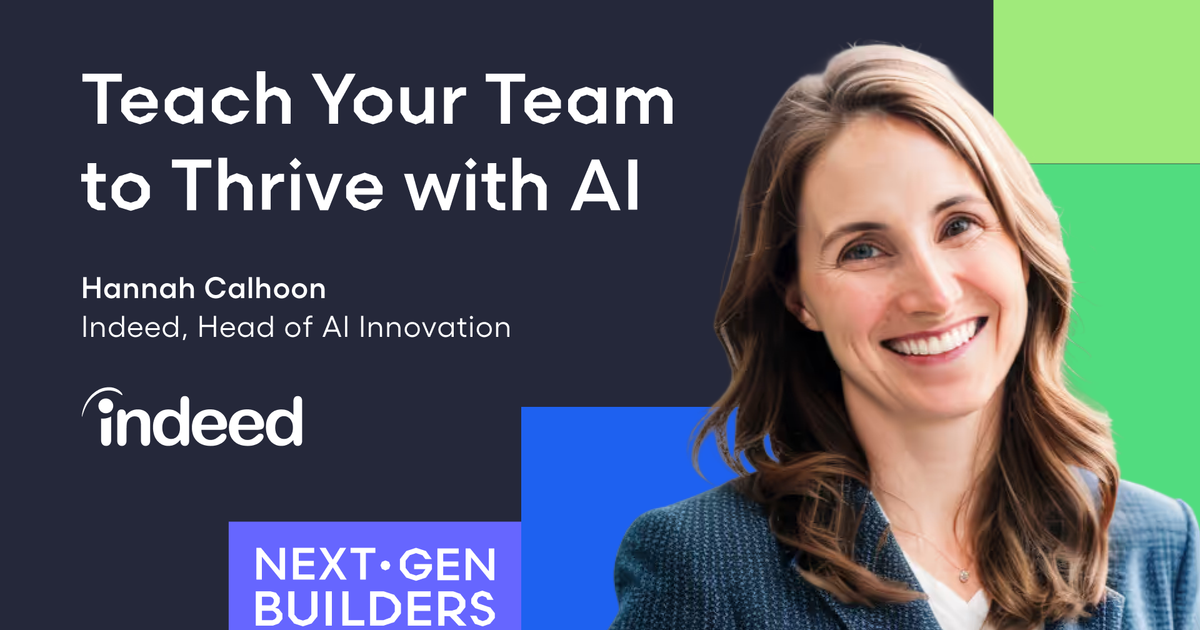
  • How I’m Readying 11,000 Employees for AI: Role-Specific Training and Human-AI Collaboration

    How I’m Readying 11,000 Employees for AI: Role-Specific Training and Human-AI Collaboration

    When AI transformation is your mandate at enterprise scale, clarity and pragmatism matter more than hype. My approach to prepare 11,000 employees for AI—with role-specific training, modular design, and human-AI collaboration for better results—rests on three commitments: deliver outcomes tied to real workflows, meet people where they are, and make adoption safer and faster than the status quo.

    I start with role-specific training because context beats generic content every time. For product managers, we focus on prompt design for discovery, prioritization signals, and faster hypothesis validation. For engineers, we emphasize code generation quality, test coverage, and secure patterns. For sales and customer success, we build repeatable workflows for research, personalization, and objection handling. Tailoring instruction to each team’s daily work drives confidence, reduces friction, and accelerates time to value.

    Modular design is how we scale without sacrificing quality. I break the curriculum into atomic learning units—micro-scenarios, checklists, and in-app guides—that can be remixed into learning paths by role, seniority, and region. This enables just-in-time onboarding, easier updates as gen AI evolves, and localized relevance without reinventing the core. Product tours and embedded nudges reinforce learning in the flow of work, ensuring people practice where the value actually occurs.

    Human-AI collaboration is a deliberate practice, not a slogan. We codify co-pilot patterns, checkpoints, and RACI-like ownership so humans remain accountable for outcomes while AI accelerates inputs. Agentic AI is introduced behind guardrails: clear data governance, prompt libraries with approved patterns, verifiable sources, and audit trails. The result is speed and consistency, paired with the trust that leaders and regulators expect.

    Change management is where strategy becomes reality. I partner with empowered product teams to co-create playbooks, nominate champions, and sequence rollouts by readiness and impact. We keep a tight feedback loop via office hours, internal communities, and role-based enablement so adoption feels like a product we improve, not a policy we enforce. This is product management leadership applied to culture, not just software.

    Measurement keeps us honest. I tie every enablement track to business outcomes—cycle time, win rates, customer satisfaction, and quality—validated through A/B testing where feasible. We monitor adoption, satisfaction, and proficiency, then iterate the content and tooling. When teams see their KPIs move, AI stops being an experiment and becomes part of how we win.

    If you’re standing up your AI strategy, start small and specific, ship value fast, and scale through modularity. Role-specific training, modular design, and human-AI collaboration aren’t slogans—they’re a repeatable system for building durable capability across the organization.


    Inspired by this post on Amplitude – Perspectives.


    Book a consult png image