Engagement starts with a single, repeatable moment: activation. Over the years, I’ve learned that when we obsess over activation, everything downstream—retention, expansion, and product-led growth—gets easier and more predictable. As I often remind my teams, "Discover how winning teams drive engagement by obsessing over activation. Learn to define, measure, and improve the moments that keep users coming back."
When I say activation, I mean the specific behavior that reliably predicts long-term value for a new user or account. In different products, the activation moment could be connecting a data source, inviting a teammate, sending the first campaign, or completing an initial automation. My first move is to define that moment precisely, set an activation threshold (for example, “within 7 days of signup”), and align the team around it as a primary outcome.
From there, I track three core metrics: activation rate (the percentage of new accounts that hit the activation threshold), time-to-activation (how quickly they get there), and early retention curves by cohort. Cohort-based retention analysis gives me the most honest read on whether our activation definition truly predicts stickiness or if we’re celebrating vanity milestones. Tools like Amplitude analytics and Pendo make it straightforward to instrument these events, segment users, and visualize the funnel from first touch to activation and beyond.
Instrumentation quality is non-negotiable. I map the activation journey into discrete events, add clear event properties (role, plan, channel, use case), and validate tracking end-to-end before I trust any dashboard. A strong unified analytics platform lets me slice activation by persona, acquisition source, and onboarding path, so we can see where friction lives and where momentum builds.
Improving activation is where design and data meet. I lean heavily on in-app guides, product tours, and contextual tooltips to reduce cognitive load at the exact moment a user needs help. We run A/B testing with a minimum detectable effect in mind, prioritize experiments that remove steps or shrink time-to-value, and iterate quickly based on user feedback gathered through continuous discovery. The goal is simple: shorten the distance from curiosity to value.
Onboarding is the frontline of activation. I favor progressive disclosure, crisp checklists tied to the activation moment, and “just-in-time” education rather than dumping documentation up front. Clear wayfinding—what to do next, why it matters, and how success is measured—pushes users toward that first “aha” moment with confidence.
Cross-functionally, I align activation to outcomes vs output OKRs so everyone—from product and design to marketing and customer success—pulls in the same direction. For example, lifecycle emails and in-app messaging should reinforce the same activation path that product guides inside the app. This harmony lowers friction, speeds time-to-activation, and compounds engagement.
As we scale, I keep a living experiment backlog focused on activation levers: simplifying setup, removing form fields, auto-detecting configurations, and pre-populating defaults. Each change gets measured against activation rate and time-to-activation, with guardrail metrics to protect quality and retention. Over multiple releases, these small wins stack into durable growth.
I’ve seen teams unlock double-digit improvements by treating activation as a product, not a project. When we define the right moment, instrument it well, and iteratively remove friction with data-informed design, engagement rises naturally—and sustainably. That’s the power of an activation-obsessed culture.
Inspired by this post on Amplitude – Best Practices.
I’ve spent the last year pressure-testing where marketing analytics is really headed, not just in slide decks but in the messy reality of product roadmaps, stakeholder management, and revenue targets. From my seat leading product teams and partnering closely with CMOs and growth leaders, I see 2026 as the year analytics stops being a rearview mirror and becomes a real-time operating system for growth.
Start 2026 off with a bang with exclusive insights and predictions from some of marketing analytics’ most influential voices. See what they have to say.
Prediction 1: The unified analytics platform becomes non-negotiable. Fragmented dashboards and manual spreadsheet reconciliation will give way to an integrated, privacy-by-design measurement layer that stitches product, marketing, and revenue data. Expect tighter CRM integration (think HubSpot), product analytics (Amplitude analytics, Pendo), and revenue systems in one source of truth. The practical upside: faster decision cycles, cleaner attribution, and a shared language for product-led growth.
Prediction 2: Gen ai and agentic AI move from novelty to necessity. Analysts and product managers will deploy AI Strategy playbooks that pair retrieval-first pipeline patterns with governance to answer open-ended questions and trigger actions safely. “Agent Analytics” will summarize trends, generate experiments, and draft stakeholder updates, while LLMs for product managers become standard tooling. The bar is explainability: every AI-assisted insight must show its lineage and assumptions.
Prediction 3: Experiments scale, rigor deepens. We’ll treat A/B testing as a system, not an event—standardizing guardrails like minimum detectable effect (MDE), pre-registration, and sequential testing where appropriate. As teams embrace continuous discovery, we’ll graduate from single-page tests to multi-surface learning agendas spanning pricing, onboarding, and lifecycle activation. The goal isn’t more tests; it’s faster time-to-learning with lower decision risk.
Prediction 4: Causality beats correlation in measurement. Last-click and naive attribution will yield to incrementality testing, holdouts, and lightweight MMM for channels that don’t click. Retention analysis gains prominence as the north star for sustainable growth, linking value proposition clarity to user activation and downstream LTV. Outcomes vs output OKRs will force teams to track what truly moves customer behavior.
Prediction 5: Activation loops go real-time. Unified analytics will trigger in-product nudges, product tours, and contextual in-app guides the moment a signal crosses a threshold. This closes the loop between insight and action, shrinking the distance from analysis to impact. Teams that instrument these loops well will win on speed and compounding effects.
Prediction 6: Governance becomes a growth enabler. Data governance and privacy-by-design aren’t just compliance—they’re a competitive advantage. Clear definitions, consent-aware pipelines, and transparent AI risk management will increase trust in insights, accelerate deployment, and reduce rework. When stakeholders trust the data, they make bolder, faster decisions.
Prediction 7: Go-to-market precision improves. With cleaner signal and shared context, we’ll price with confidence (SaaS pricing and, in many cases, consumption SaaS pricing), sharpen product positioning, and focus spend where incrementality is provable. Expect fewer vanity metrics, more revenue-linked scorecards, and tighter integration between product roadmapping and sprint planning and growth experiments.
What to do now: 1) Audit your stack for a unified analytics platform and eliminate redundant tools. 2) Invest in first-party instrumentation and CRM integration to future-proof measurement. 3) Operationalize experimentation: document MDE, power, and decision rules. 4) Deploy gen ai responsibly with clear governance and retrieval-first context. 5) Build activation loops that turn insights into targeted in-app actions. Teams that execute on these fundamentals in 2025 will set the pace in 2026.
Inspired by this post on Amplitude – Best Practices.
I love when a bold platform bet translates into tangible product impact. Watching a team commit to a unified analytics platform and then operationalize it across the business is a master class in strategic focus and change management. That’s exactly what this story captures—and why it resonates with my own experience leading complex analytics migrations.
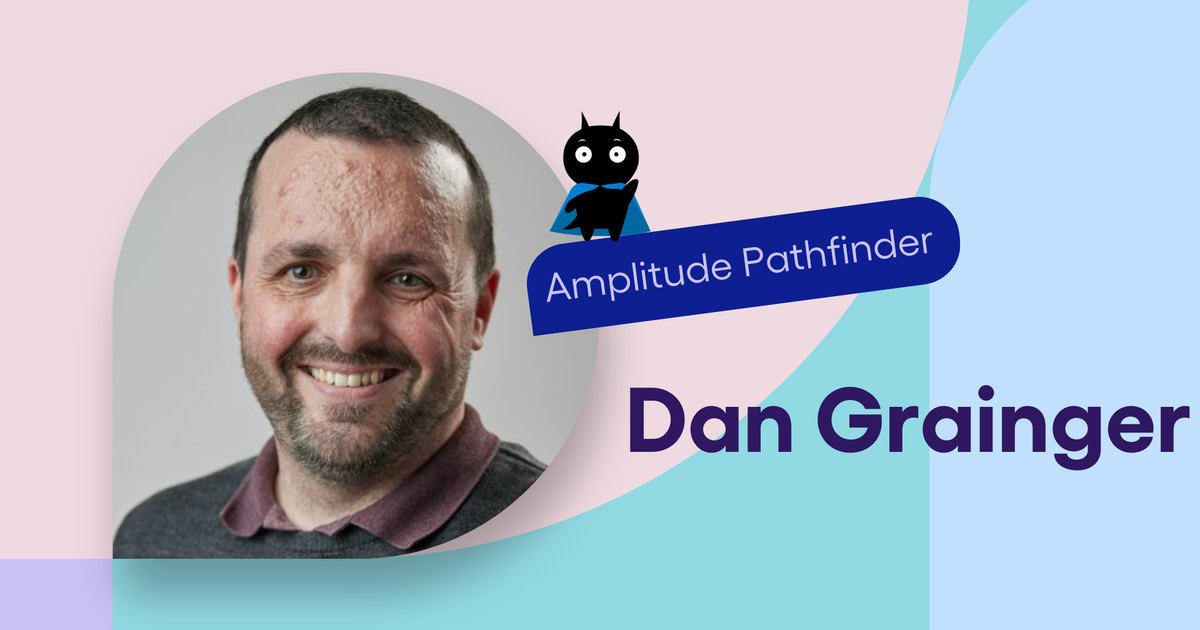
Learn how Dan Grainger led Haven's migration to Amplitude, focusing on user-friendly analytics and data governance for non-technical teams.
That single sentence distills what matters most: if analytics aren’t accessible to non-technical teams, you won’t get the adoption needed to drive outcomes. “User-friendly analytics” isn’t window dressing; it’s the linchpin for empowered product teams and true product-led growth. When teams can ask and answer their own questions—without waiting on analysts—velocity and quality of decision-making improve immediately.
From a product management lens, two elements stand out. First, the choice of Amplitude analytics as the central system of insight—consolidating scattered tools into a unified analytics platform—creates one source of truth for activation, adoption, and retention analysis. Second, a rigorous approach to data governance ensures that trust in the data scales alongside usage, especially for non-technical stakeholders who need clarity, not caveats.
Execution matters. In my playbook, these transformations succeed when you treat them as product initiatives, not IT projects. I partner early with stakeholder management champions, form product trios to define the measurement plan, and use in-app guides, product tours, and targeted onboarding to drive behavior change. The goal is simple: shorten time-to-insight for frontline teams while keeping the instrumentation robust and consistent.
Data governance is the quiet force multiplier. Clear tracking plans, consistent event taxonomies, role-based access, and privacy-by-design guardrails prevent entropy. When everyone speaks the same analytics language, you avoid “metric du jour” debates and keep the focus on outcomes vs output OKRs. That’s where scalable impact comes from.
Measurement closes the loop. I’ve found that when non-technical teams can self-serve retention analysis, funnel drop-off, and user activation patterns, they start running continuous discovery by default—asking better questions, testing smarter hypotheses, and accelerating learning cycles. Amplitude’s strength is not just visualizing what happened, but making it easy to connect behavior to outcomes teams care about.
The broader leadership lesson is straightforward: choose a platform that your broadest set of contributors can and will use daily, invest early in governance, and build enablement into your rollout plan. That’s how a migration becomes a multiplier. When the right platform meets the right operating model, the win is less about a tool and more about a learning culture that compounding value over time.
If your analytics stack feels fragmented or underused, this is your nudge. Align on a unified analytics platform, meet teams where they are with user-friendly analytics, and let governance do the heavy lifting behind the scenes. The payoff—in speed, alignment, and smarter bets—comes faster than most teams expect.
Inspired by this post on Amplitude – Best Practices.
AI doesn’t fail because the model is bad, it fails because ownership is missing.
When someone truly owns your AI, everything changes. Resolution and automation rates climb, the system self-improves, and the customer experience transforms in ways a dashboard alone will never show you.
This is part three of our five-part series on customer service planning for 2026. We’ll be sharing all five editions on our blog and on LinkedIn.
If you’d rather have them emailed to you directly as they’re published, drop your details here.
Last week, we introduced the four roles that make AI actually work in a support organization. These roles are already showing up inside the teams who are scaling AI the fastest, and this week, we get closer to the ground.
Here’s what these roles look like in practice — what they do, how they work, and why your AI performance will inevitably drift without them.
AI operations lead — owns AI performance, every day. I think of this person as the air-traffic controller for our AI Agent. I treat the AI as a living system that needs ongoing supervision, evaluation, and tuning. This role is accountable for what leaders care about most: quality, reliability, and continuous improvement.
The AI ops lead sees the whole picture: conversation quality, missing knowledge, flawed assumptions, unexpected failures, new opportunities for automation, and the subtle signals that the system is beginning to drift. In practice, that vigilance is the difference between steady gains and slow decline.
Day-to-day, here’s what I expect from this role.
1. Reviews AI conversations and surfaces performance patterns. The AI ops lead monitors the AI Agent’s behavior — the tone shift after a product launch, a sudden dip in resolution for a specific intent, or conversation clusters revealing new customer behavior. They scan for anomalies, trends, and early warnings, with an emphasis on what’s happening right now, not last week. Without this intentional ownership, I’ve watched a 2% dip turn into a 10% drop in days.
2. Prioritizes fixes and improvements. Once patterns emerge, they triage fixes like a product team handles bugs. Missing or incorrect content? They route it to the knowledge manager. Behavioral issues? They adjust guidance and guardrails. Action or system issues? They partner with the automation specialist. This connective tissue turns individual fixes into compounding improvements.
3. Defines and maintains AI guardrails. Leaders everywhere worry about AI doing things it shouldn’t. This role answers that fear by establishing clarification logic, escalation rules, “never answer” policies, and safety boundaries. The goal is predictable behavior that protects customer trust — an essential pillar of any AI Strategy and AI risk management practice.
4. Aligns reporting with leadership. The AI ops lead reports on resolution rate, CX Score, CSAT, automation coverage, and hours saved — making the economic impact visible. That visibility is a foundational step in any credible customer support ai strategy.
Why this role exists now. AI systems are dynamic and require constant tuning. A small dip in quality quickly becomes an operational issue, and no existing role naturally owns that. When someone does, teams feel the benefit almost immediately.
Knowledge manager — builds and maintains the structured knowledge AI depends on. I hear the same thing from leaders again and again: AI is only as good as the content you give it. This role is rapidly evolving from classic knowledge management into knowledge strategy — part content designer, part systems thinker, part information architect. Their job is to build the knowledge scaffolding that lets AI answer accurately, consistently, and safely.
Here’s how the knowledge manager creates leverage.
1. Writes, maintains, and improves support knowledge — continuously. After every product change, they update articles, remove duplication, resolve contradictions, and pay down “knowledge debt” that quietly erodes accuracy. The upkeep is shaped by AI performance; when patterns expose gaps, they fix the source.
2. Structures knowledge for AI, not for browsing. Traditional help centers are for humans skimming pages. AI needs clean intent signals, crisp formatting, and clearly structured language. The knowledge manager designs that structure as intentionally as the content itself.
3. Works hand-in-hand with AI ops. Many performance issues stem from missing or unclear knowledge. When the AI ops lead surfaces recurring misunderstandings or low-resolution categories, the knowledge manager resolves the root cause at the source.
4. Ensures accuracy and compliance at scale. As AI handles more sensitive situations, the knowledge manager safeguards correctness, currency, and compliance — critical for data governance and regulatory alignment.
5. Develops a cross-functional knowledge strategy. The role creates a canonical, cross-functional source of truth that product, engineering, product marketing, go-to-market, and support (AI and human) can all rely on.
Why this role exists now. This is one of the highest-leverage positions in an AI-first support org. Teams like Rocket Money and Anthropic are hiring knowledge managers because AI accuracy depends on the quality of knowledge feeding it. Without this role, resolution rate caps out early and never climbs.
Conversation designer — designs how the AI speaks, clarifies, and interacts. AI isn’t just a tool customers use; it’s a representative they interact with. Tone, clarity, pacing, and conversational structure matter, especially in voice. Every word affects perceived expertise, trustworthiness, and brand. The conversation designer ensures the AI feels human-friendly without pretending to be human — the sweet spot that builds trust without misleading customers.
In my experience, staffing conversation design early accelerates results. It changes not only how we tune AI, but how we understand the end-to-end customer experience.
Here’s what great conversation design looks like.
1. Shapes the AI’s tone, voice, and communication style. This role refines phrasing, tunes politeness, adjusts how confusion is handled, and shapes micro-interactions that determine whether customers feel cared for or dismissed. On voice channels, natural cadence is make-or-break.
2. Designs flows for high-value conversations. They design how the AI clarifies intent, branches, communicates uncertainty, verifies details, escalates, hands off, and returns to the main thread without feeling mechanical — treating customer experience as a product with language as the interface.
3. Translates procedures and complex workflows into natural language and logic. As AI runs structured procedures and actions, this role becomes a conversational system architect, translating SOPs into conditional logic with exceptions and fallbacks. For example, in Intercom, our conversation designer uses Simulations to run simulated conversations to see where the AI Agent gets confused, over-confident, or awkward, and refine flows until the interaction feels effortless end-to-end.
4. Ensures transitions to humans feel smooth and respectful. Handoffs should provide clear context to the human agent and maintain continuity so customers never feel dropped.
Why this role exists now. As AI becomes the primary interface, conversation design directly influences trust, brand perception, and operational outcomes. It’s a core competency for any Generative AI and LLMs for product managers program.
Support automation specialist — builds the backend actions that allow AI to do real work. If the conversation designer shapes expression, this role shapes capability. They transform AI from an answering machine into an outcome engine by bridging AI and the systems it must safely and deterministically act on.
Support teams increasingly expect AI to do what a human would do: refund a charge, adjust a subscription, verify an identity, update an account setting, or pull relevant data. That expectation creates a new technical role at the edge of support, ops, and engineering.
What I rely on this specialist to deliver.
1. Creates and maintains backend workflows the AI executes. This includes building and maintaining: Fin Tasks. Fin Procedures with embedded steps. Action flows that call internal and external APIs. Automations that span billing systems, user identity layers, CRM objects, subscription entitlements, refund tools, and more. They ensure the AI can act compliantly and predictably — the playbooks that turn intent into action.
2. Owns the integrations required for advanced automation. Many problems require data elsewhere — billing platforms, internal databases, systems of record. The specialist ensures the AI can retrieve, validate, and use that information safely, often partnering closely on CRM integration and internal services.
3. Partners closely with product and engineering. Some workflows require new endpoints, permission layers, safety gates, or deterministic fallbacks. This role drives those changes across the stack.
4. Ensures reliability and safety at every step. Guardrails, validation logic, exception handling, safe execution paths — all are essential. They confirm that the AI has access to the correct data, the action matches policy, edge cases are accounted for, risky flows have deterministic constraints, and every action is auditable and reversible.
Why this role exists now. Customers don’t want answers, they want outcomes. AI can now deliver those outcomes, but only with the right backend scaffolding. This role modernizes operational architecture and unlocks end-to-end automation.
How these roles work together — the new operating loop. These roles aren’t silos; they’re interdependent parts of one system. The AI ops lead identifies patterns and performance gaps. The knowledge manager resolves inaccuracies or missing content. The conversation designer improves clarity, tone, and flow. The automation specialist expands the system’s ability to take action. Each improvement compounds the next, moving you from early automation to transformational resolution rates through continuous refinement.
This loop is what separates teams that plateau early from teams that scale AI into a reliable, high-performing system — the essence of a durable AI Strategy.
How to get started (even if you can’t hire all four roles today). Most teams phase into this model: assign partial ownership, formalize responsibilities, then specialize as AI volume grows. Here’s the progression I recommend.
Phase 1: Assign ownership. Give each role’s core responsibilities to someone who can devote five to 10 hours weekly. Early on, support ops, enablement, senior ICs, and technically inclined teammates can anchor the work.
Phase 2: Formalize the responsibilities. As AI resolves more queries, optimization becomes core operational work. Formalizing ownership prevents performance drift and knowledge debt.
Phase 3: Specialize and hire. Once AI handles 50–70% of incoming volume, these responsibilities become full-time roles. Investing in specialization becomes essential infrastructure for the next scale stage.
The bottom line. AI changes the shape of your support team. These four roles — AI operations lead, knowledge manager, conversation designer, and support automation specialist — form the backbone of the AI-first support organization. They bring order to a constantly changing environment and enable AI to deliver the outcomes leaders and customers expect heading into 2026.
Next week, we’ll continue the 2026 planning series with a deep dive into org design models for AI-first support teams — how to structure people, workflows, and accountability in a world where AI resolves most conversations before a human ever sees them.
To follow along with the series and have each new edition emailed to you directly, drop your details here.
I recently revisited a topic I once pushed back on: using AI to analyze (and maybe even synthesize) customer interviews. After six months of real-world experiments and countless conversations with seasoned product leaders, I’ve evolved my perspective. There is meaningful value here—but only when we’re clear about where AI helps and where it quietly erodes the hard-won customer understanding that powers great product decisions.
If you want to experience the conversation that sparked this reflection, you can listen to the episode on Spotify or Apple Podcast, and watch the discussion here: YouTube. It’s a candid, practical exploration of AI’s role in continuous discovery, and it mirrors what I’m seeing on the ground with product trios and empowered product teams.
Here’s the crux: AI raises the floor for beginners but accelerates experts even more. That matches my experience—early-career PMs get structure, momentum, and a confidence boost, while experienced interviewers can move faster without sacrificing nuance. But there’s a catch. If your interviewing skills aren’t solid yet, AI can create a veneer of insight that masks shallow understanding. In other words, it can help you go wrong more efficiently.
The conversation makes an important distinction between analysis and synthesis. Analysis is about extracting signals from the interview. Synthesis is about building meaning—connecting patterns, weighing contradictions, and deciding what to do next. AI can speed up the former with summaries and highlights. The latter—true synthesis—still demands expert judgment, context, and empathy.
One line from the episode stuck with me: your unpolished interview skills matter more than any shiny new AI workflow. I’ve felt that firsthand. When interview quality is uneven, dropping transcripts into an LLM won’t save you. You still need to synthesize every interview individually so the signals remain traceable and credible. That discipline keeps teams aligned, prevents overfitting to noise, and builds the organizational memory that fuels better bets.
We also explored the operational reality most teams face: interviews pile up. Backlogs grow. Leaders want speed. This is where “expert + AI” shines. With the right prompts, templates, and context, tools like ChatGPT and Claude can help transform raw transcripts into structured artifacts you can trust—provided a strong interviewer sets the frame and makes the calls. That balance preserves both velocity and quality.
What changed my mind most was the evidence from experiments—running sets of interviews through different LLMs and comparing outcomes. The patterns were consistent: beginner + AI is usually better than nothing, but the real performance gains come from expert + AI. When experts guide the process, AI becomes an accelerant rather than a crutch.
A favorite story in the episode takes a detour into building a gaming PC—an unexpected but perfect metaphor for AI’s limits. You can get great step-by-step guidance from a model, but when context shifts or edge cases appear, expertise is what keeps you from making expensive mistakes. Customer interviews are like that. Empathy comes from human interaction; AI can’t replace the experience of talking directly to your customers.
My practical guidance for teams integrating AI into continuous discovery: start with interviewing fundamentals, separate analysis from synthesis, and standardize how you capture single-interview learnings. If you need a tight template for this, refer to “The Interview Snapshot: How to Synthesize and Share What You Learned from a Single Customer Interview.” Use AI for summaries, clustering, and draft artifacts—but have an expert finalize the narratives, evaluate trade-offs, and document assumptions.
If you’re scaling this across an organization, invest in training first, then in workflows. Build a lightweight operating system for discovery: consistent interview guides, “story-based” techniques, and a shared library of prompts. Consider resources like “The Interview Coach,” as well as practical write-ups such as “Customer Interview Analysis: Where AI Helps and Hurts.” These help teams avoid common pitfalls and make better use of AI in high-judgment moments.
My bottom line: AI isn’t magic. It can help, but only if your interviews are strong and you provide the right context. Customer understanding is a competitive moat; outsourcing it entirely will cost you in the long run. Use AI to accelerate—not replace—the human judgment that makes product discovery work.
Resources and links worth exploring: ChatGPT, Claude, The Interview Snapshot: How to Synthesize and Share What You Learned from a Single Customer Interview, The Interview Coach, and Customer Interview Analysis: Where AI Helps and Hurts.
I’d love to hear how your team is using AI in discovery. What’s working, what’s risky, and where do you draw the line between automation and judgment? Share your experiences in the comments—our community learns faster when we compare notes.
When I push our organization to adopt the product operating model, I’m emphasizing a foundational shift—from “shipping roadmaps of features (output)” to solving real customer and business problems, measured by “business results (outcomes)”. That’s the difference between activity and impact, and it’s the only way to build durable value at scale.
This change inevitably reaches beyond the product organization. It reshapes how company stakeholders in Sales, Marketing, Customer Success, Finance, Legal, Security, and Operations engage with product teams, and it reframes what they expect from us. Instead of asking, “When will feature X ship?” they learn to ask, “How will we move the outcome that matters?”
In practice, the product operating model is a contract: product teams commit to outcomes, and stakeholders commit to partnership. That partnership means we co-own the problem, align on evidence, and share accountability for results. The reward is clarity—everyone sees how their work ladders to strategy and why the sequence of work makes sense.
Here’s how I align stakeholders around this model. First, I ground everything in outcomes vs output OKRs. We replace feature roadmaps with a clear strategy, prioritized problems, and measurable objectives. Our product roadmapping and sprint planning then serve the objectives—not the other way around—so capacity is allocated to the highest-leverage bets.
Second, I build empowered product teams around product trios (product, design, engineering). We practice continuous discovery with stakeholders: we share opportunity trees, test riskiest assumptions early, and bring partners into research when it informs go-to-market strategy, pricing, or enablement. This keeps us honest and avoids late-stage surprises.
Third, I establish operating rhythms that make outcomes visible. Monthly stakeholder reviews focus on progress toward objectives and what we’re learning—not status theater. Quarterly, we connect OKRs to business performance so leaders can see the throughline from discovery and delivery to pipeline, retention, or margin. If priorities shift, we renegotiate objectives explicitly.
Fourth, I define metrics that stakeholders trust. We use a balanced set of leading indicators (activation, engagement, cycle time) and lagging indicators (revenue, retention, unit economics). We socialize definitions early so no one debates the scoreboard mid-game. The result: faster decisions and less “data whiplash.”
Fifth, I invest in change management. Moving from outputs to outcomes can feel threatening if your success has historically been measured by launch volume or roadmap commitments. I address this head-on with training, transparent comms, and clear decision rights. The message is simple: outcomes create more autonomy for empowered product teams and more predictability for stakeholders.
At HighLevel, this approach has been especially powerful when cross-functional dependencies are high. For example, when we set an objective to improve user activation for a new CRM integration, we didn’t promise a bundle of features. We committed to a measurable lift in activation and a shorter time-to-value, co-owned with Customer Success and Marketing. That alignment unlocked smarter experiments, tighter enablement, and a more credible launch narrative.
The anti-patterns are predictable: treating OKRs as a renaming of the roadmap, equating discovery with indecision, or isolating product decisions from go-to-market strategy. The cure is equally consistent: bring stakeholders into discovery, attach every bet to an objective, and show progress with evidence—not just demos.
Ultimately, the product operating model is a leadership choice. It asks us to trade certainty theater for learning velocity, and feature checklists for business impact. When stakeholders see that shift pay off—in faster cycles, clearer priorities, and results that matter—support for the model moves from compliance to conviction.
In my role leading product teams, the AI product roadmap isn’t just a plan—it’s the operating system for how we discover value, prioritize with rigor, and ship with confidence. The pace has changed, the stakes are higher, and the best product managers are now orchestrating AI capabilities, data, and customer insight in near-real time.
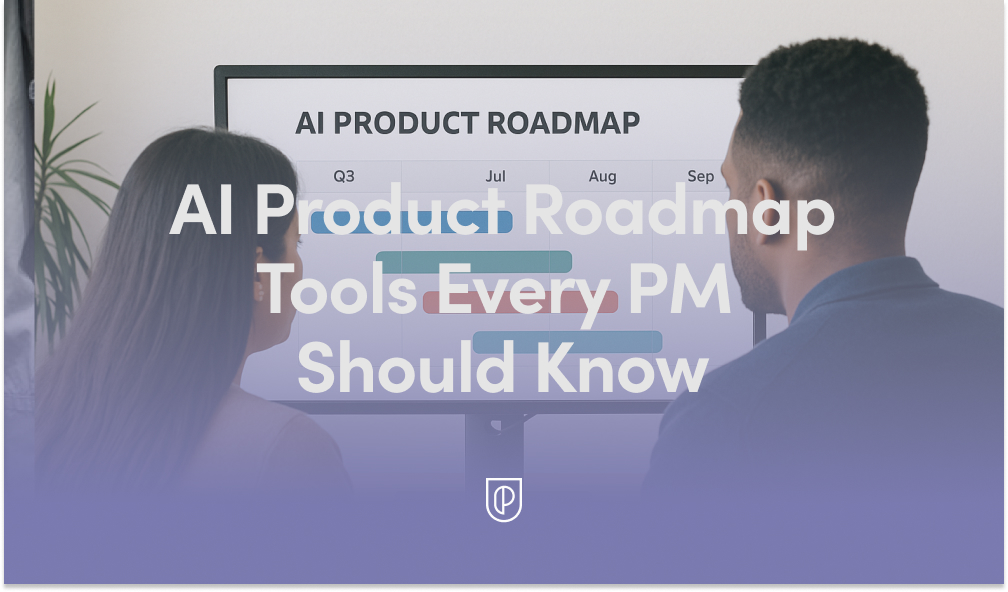
Master the evolving art of the AI product roadmap. Prioritize smarter, turn data into direction and insight into action, only much faster.
When I say “AI product roadmap,” I’m talking about a living system that blends strategy, discovery, and delivery. It’s less about dates and more about outcomes, risk reduction, and sequencing learning. In practice, that means combining AI Strategy with product roadmapping and sprint planning, then validating each bet with real customer signals.
For prioritization, I anchor on outcomes vs output OKRs and connect them to measurable signals across the funnel. Continuous discovery keeps insights flowing, while a unified approach to analytics and retention analysis tells me where the lift is. This lets me rank initiatives not just by impact and effort, but by how quickly we can learn, iterate, and compound value.
On discovery, product trios are non-negotiable. We prototype early with gen ai and LLMs for product managers to accelerate concept validation and reduce ambiguity. When customers can co-create through in-app guides or lightweight product tours, we turn vague needs into crisp problem statements and testable hypotheses far faster.
On delivery, I pair tight feedback loops with experimentation. A deliberate cadence of A/B testing and strong instrumentation ensures we’re learning every sprint, not just launching. The goal is to de-risk decisions quickly, keep momentum high, and translate signals into roadmap movement without thrash.
Under the hood, the AI stack matters. I rely on a retrieval-first pipeline to ground models in trusted data, and I’m intentional about privacy-by-design and data governance from day one. As agentic AI patterns emerge, I put evaluation workflows in place so we can ship confidently—and safely—without slowing down innovation.
Finally, alignment is the multiplier. Clear narrative roadmaps tied to customer outcomes help stakeholders see trade-offs, while crisp interfaces with go-to-market and CRM integration close the loop from roadmap to revenue. When everyone can trace a line from AI strategy to shipped value, prioritization becomes easier and trust grows.
If you’re feeling the acceleration, you’re not alone. With the right AI product toolbox—rooted in discovery, grounded in data, and delivered through tight feedback loops—you can move faster, learn smarter, and build products your customers can’t live without.