Tag: user activation

  • From Tickets to Topline: How We Turned Support into a Consultative, AI-Powered Growth Engine

    From Tickets to Topline: How We Turned Support into a Consultative, AI-Powered Growth Engine

    By the end of 2024, we were already all-in on Fin, and our customer support organization was deep in its own transformation. Resolution rates were strong, efficiency was improving, and for the first time, something new was emerging: capacity.

    That newfound capacity wasn’t just a relief; it was a strategic opening. As we became less reactive day to day, I saw how support’s unique vantage point—rooted in customer needs and aligned with company goals—could evolve into a consultative function that actively drives value for customers and the business.

    This is the story of how we built consultative support. I’ll walk you through how we got started, the results we achieved, and the lessons I’d carry forward if I were doing it again from scratch.

    We didn’t begin from zero. A few years earlier, we partnered closely with research and data science to drive product adoption. In a project we called “next best step,” we tested offering proactive guidance inside already-established conversations. It worked well, and as Fin accelerated how we worked, we realized we were ready to push into broader, more ambitious opportunities.

    Instead of dictating a solution from the top, I opened the floor. We hosted a support town hall and asked the team to share concrete ways support could directly drive company outcomes. The conversation was electric—practical, creative, and grounded in real customer moments.

    Right there, we spun up campaign concepts. One idea was an always-on in-product banner offering a call with a member of our team to help customers set Fin up to the best of its ability. Another was the “Fin upsell campaign,” where, once a customer had a positive interaction with Fin and clicked the “that helped” button, a tailored message would share details about our own success with Fin and invite the customer to book a call to learn more and ask questions.

    The energy from that session made one thing obvious: the team already knew how to help customers extract more value from the product. They just needed focus, permission, and a clear path to act.

    We started small on purpose. I recruited a group of volunteers who dedicated part of their week to exploring new, proactive ways to support customers. We kept the group tight for two reasons: first, even with Fin freeing up significant capacity, we still had to deliver excellent day-to-day support; second, this was an experiment, and we weren’t going to overhaul a 100+ person organization without proof.

    One of our first campaigns focused on proactive engagement with self-serve customers—those without a dedicated sales or success touchpoint. Our goal was to give this group direct access to teammates with first-hand experience in AI transformation and help them see the value they could get from Fin.

    Early use cases included guiding customers through Fin trials, working with mature customers on optimization to get more out of Fin, and proactively identifying high-potential accounts that looked ready for Fin. None of this required a new team or a big budget—just attention and intention.

    To make consultative support stick, we trained for a mindset shift. I encouraged the team to move beyond solving the immediate issue and instead probe deeper to understand each customer’s unique context. We leaned on our sales and success peers to refine our outreach—learning how to time our messages, frame value succinctly, and meet customers at the right moment rather than waiting for them to come to us.

    To validate our approach, we needed data—not vibes. We built a simple but rigorous comparison: accounts we engaged with versus accounts we reached out to but didn’t hear back from. Over a six month period, we tracked feature adoption, Fin usage, and expansion revenue across both groups.

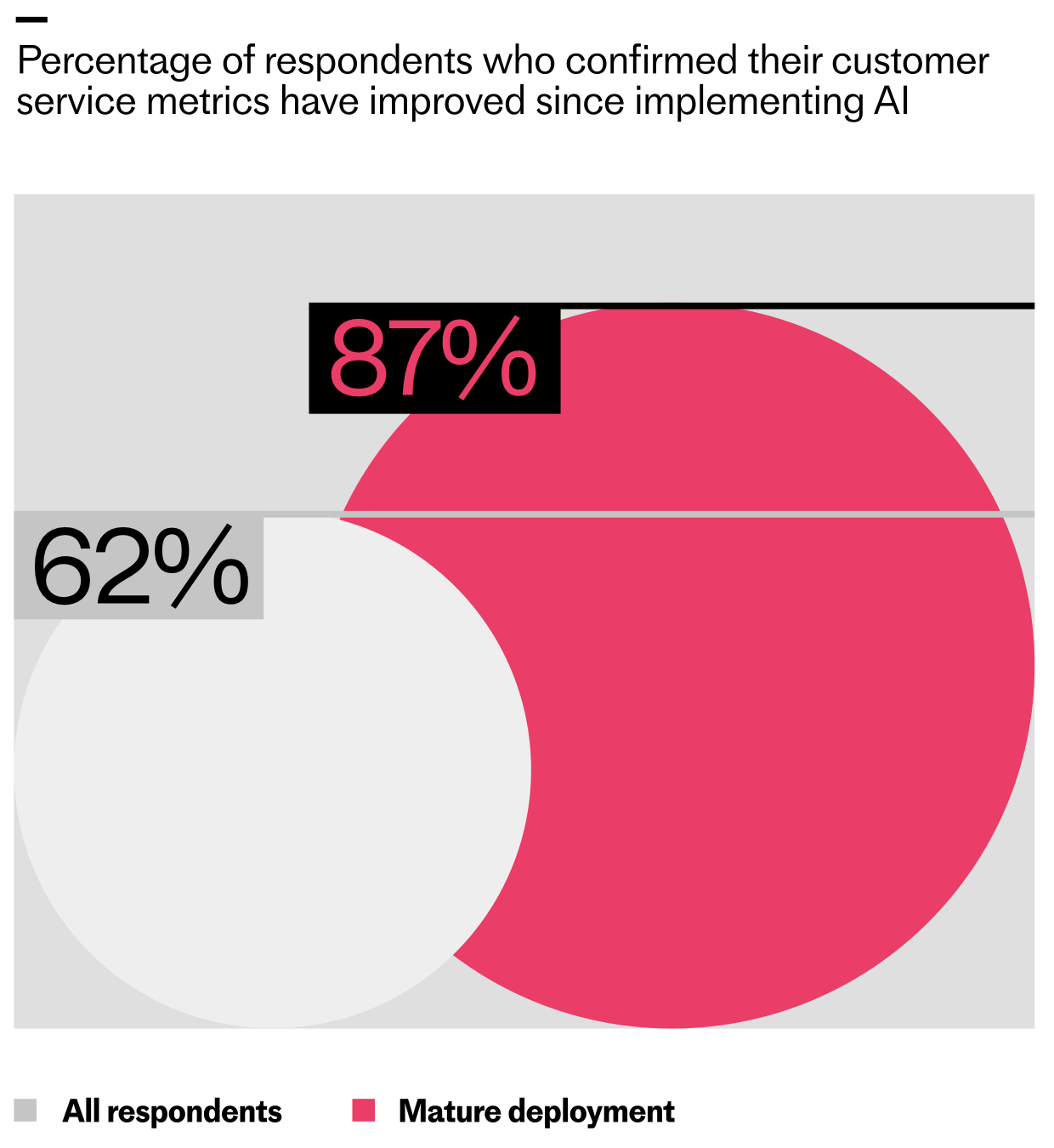
    The result was clear: engaged accounts grew roughly twice as fast in both usage and expansion.

    To further prove the value of proactive support, we also tracked direct Fin resolutions generated after consultative interactions, resolution and automation rate improvements across engaged accounts, and influenced expansion ARR across everything we worked on over the year.

    Seeing those numbers was a turning point. This wasn’t a side project anymore—it was a repeatable motion with measurable business impact.

    As results became visible, partnerships multiplied. Self-serve engineering teams saw the value of well-timed human touchpoints. Customer lifecycle marketing tapped us to handle responses to their campaigns. Product teams began partnering with us to identify high-impact engagement opportunities. We also deepened our collaboration with digital, scale, and high-touch success teams—stepping in where they lacked capacity and offering deep technical guidance to help customers get the best from the platform.

    What began as simple outreach matured into targeted, strategic initiatives tied directly to company goals.

    Within a year, our volunteer crew grew to ~16 teammates across regions—curious, motivated, and eager to try new things. We continued expanding the consultative support function and took on new projects end to end. Most recently, we assumed ownership of the new “sales assist” team to drive self-serve trial conversions and help new customers get the most from their first experience.

    Here are the practices that mattered most in making consultative support real and durable:

    Start with your team, not a strategy doc. The best ideas came from the people closest to customers. That town hall shaped our initial direction more than any top-down plan could have.

    Don’t scale before you’ve proved it. A small, motivated group moved faster, learned quicker, and produced clearer results than a broad rollout. When you need organizational buy-in, a rigorous proof point beats a promising concept.

    Train for a different mindset. Consultative work requires curiosity, commercial awareness, and the ability to hold broader context—not just product knowledge. Invest deliberately in coaching and frameworks that strengthen these muscles.

    Measure against a control group. Without a control, you have a story. With it, you have a business case—and that’s what unlocks resources, headcount, and prioritization.

    Lean into being different. It’s helpful to take cues from sales and success, but you don’t have to operate exactly like them. There’s real power in support’s distinct perspective and tone.

    Building this consultative support function fundamentally changed how we think about our remit. Support is no longer just there to respond; it now drives adoption, influences retention, generates expansion revenue, and, for many self-serve customers, serves as the primary human touchpoint.

    In an AI-first world, where Fin handles all of the transactional work, this kind of work becomes even more important. Because the question for support leaders is no longer “how do we handle more tickets?” but rather, “how do we use support to grow the business?”


    Inspired by this post on The Intercom Blog.


    Book a consult png image
  • Jumpstart Your Analytics Mastery: The Amplitude Quickstart Series for Faster, Smarter Insights

    Jumpstart Your Analytics Mastery: The Amplitude Quickstart Series for Faster, Smarter Insights

    I’m excited to share a resource I recommend to every product and growth team I mentor: the Amplitude Quickstart Series. It’s a concise, approachable way to build confidence in “Amplitude analytics” and turn behavioral data into decisions that actually move the needle.

    Discover user-friendly videos that walk you through Amplitude’s most essential products and features.

    In my role leading product teams, I’ve seen how a clear, opinionated path through a “unified analytics platform” reduces time-to-insight from weeks to days. The Quickstart format makes it easy for product managers, analysts, and marketers to align on a common language for “behavioral analytics,” so we spend less time debating definitions and more time shipping value.

    What I appreciate most is how quickly these lessons translate into outcomes: crisper instrumentation practices, cleaner dashboards, and sharper questions that drive “product-led growth.” That foundation accelerates “user activation,” improves “retention analysis,” and ultimately leads to better prioritization and stronger roadmap bets.

    My recommended workflow: watch the entire series once to map the mental model, then revisit each segment as you operationalize it. Pair the guidance with a lightweight tracking plan, establish clear event naming conventions, and document your first key use cases (e.g., activation funnel, onboarding drop-off, core feature adoption). This cadence helps teams institutionalize good habits without over-engineering.

    For cross-functional leaders, the series is also a powerful alignment tool. Ask product, data, design, and customer success to watch the same modules, then run a joint working session to define success metrics and accountability. When everyone sees the same “north-star” dashboards, decision-making speeds up and the quality of trade-offs improves.

    As your practice matures, amplify the impact by pairing insights with action: connect findings to experiments, “feature flags,” and iterative product tours; complement quantitative patterns with “session replay” for richer context. This closed-loop approach helps you move from reporting to repeatable, insight-to-execution cycles.

    If you’re new to Amplitude or scaling a growing practice, this Quickstart Series is the shortest path I know from curiosity to competence. Watch it, implement one improvement per week, and share progress broadly—momentum compounds.


    Inspired by this post on Amplitude – Best Practices.


    Book a consult png image
  • Stop Silent Churn: The 8 Best SaaS Prediction Tools for 2026 (Features + Use Cases)

    Stop Silent Churn: The 8 Best SaaS Prediction Tools for 2026 (Features + Use Cases)

    Churn isn’t just a retention problem—it’s a product, go-to-market, and strategy signal that shows up everywhere in the customer journey. Over the past few years, I’ve evaluated and implemented churn prediction tools across high-growth SaaS environments, and the difference between reactive firefighting and proactive, data-driven retention is night and day.

    Compare the top 8 churn prediction tools for SaaS teams. Features, use cases, and how each stacks up, so you can act before customers quietly leave.

    When I assess churn prediction tools for product-led growth, I start with a simple question: will this help my team see risk early enough—and clearly enough—to intervene with precision? The best platforms combine behavioral analytics, retention analysis, and anomaly detection to surface leading indicators before Net Recurring Revenue (NRR) takes a hit.

    First, signal coverage matters. Strong churn models draw from product usage events, CRM integration, support tickets, billing health, and even session replay to capture real-world behavior. I look for native connectors to systems like Intercom, Pendo, and Amplitude analytics, plus flexible ingestion for custom events. Without comprehensive signals, even the smartest models will miss critical moments such as stalled onboarding, shrinking active seats, or feature disengagement.

    Second, I require transparent risk scoring and clear drivers. Black-box scores erode trust with Customer Success and Product teams; explainability builds alignment. Tools that expose driver trees, cohort-based retention analysis, and segment lift help me translate insights into prioritized experiments. When possible, I tie predicted churn segments to A/B testing with a thoughtful minimum detectable effect (MDE) so we can quantify impact quickly and avoid overfitting to noise.

    Third, actionability is non-negotiable. Predictions must trigger targeted AI workflows, in-app guides, and product tours—not just dashboards. My ideal setup routes high-risk cohorts to tailored journeys (e.g., an onboarding rescue path) while notifying the right owner in CRM and Customer Success. Playbooks should be easy to operationalize, measurable, and reversible if the signals change.

    Fourth, I evaluate platform scalability, data governance, and privacy-by-design. Enterprise readiness means clear role-based access, auditability, robust SLAs, and an architecture that can evolve into a unified analytics platform as the product and data footprint grows. I also weigh total cost of ownership, implementation time, and maintenance burden against expected gains in NRR and expansion.

    In my experience, the winning tools are the ones that make it simple to connect predictions to outcomes: reduce onboarding drop-off, increase user activation, prevent seat contraction, and accelerate expansion. They align Product, Customer Success, and Growth around shared metrics, shorten time-to-value, and make proactive retention part of the operating rhythm—not a last-ditch effort at renewal.

    In this 2026 comparison, I’ll outline how each tool handles data breadth, model quality, explainability, and workflow automation. I’ll also share implementation checklists and decision criteria so you can choose the right fit for your stage, stack, and motion—whether you’re primarily product-led growth, sales-led, or hybrid.

    If you’ve ever felt like customers “quietly leave” despite solid top-of-funnel metrics, this guide will help you turn churn signals into concrete actions—and convert at-risk accounts into durable advocates.


    Inspired by this post on Pendo – Perspectives.


    Book a consult png image
  • Unlocking Session Replay at Scale: How Amplitude Elevates UX, Observability, and Trust

    Unlocking Session Replay at Scale: How Amplitude Elevates UX, Observability, and Trust

    I build products to translate noisy interaction data into clear, actionable decisions. Few capabilities deliver that clarity like session replay. It closes the gap between what analytics tells us and what users actually experience, empowering product, design, and SRE teams to learn faster, resolve issues sooner, and improve customer trust.

    Lew Gordon is a Senior Staff Engineer at Amplitude focusing on Session Replay. He was formerly an engineer at Twilio.

    In my practice, session replay complements Amplitude analytics and behavioral analytics by adding rich context to the unified analytics platform—turning charts into stories we can act on. When I can see the precise clicks, hesitations, and error states behind a spike or a drop, prioritization becomes straightforward and the path to product-market fit becomes easier to navigate.

    Operationally, replay deepens observability. I correlate console errors, network traces, and layout shifts with user intent, then tie those signals to Web Vitals, performance budgets, and SRE workflows. The result is a tighter feedback loop from incident to insight—one that shortens mean time to resolution and raises the bar on reliability without guesswork.

    Privacy-by-design is non-negotiable. I start with strong data governance: selective capture and redaction, explicit consent and retention policies, role-based access, and environment-aware sampling. These controls keep sensitive data protected while still providing the fidelity product and engineering need to diagnose issues and improve experiences responsibly.

    Strategically, I deploy replay where it moves the needle most: onboarding and activation moments, high-friction conversion flows, and critical paths with outsized revenue or trust impact. I track signals like rage clicks, dead clicks, scroll depth, and error states to inform product strategy and reduce UX debt, while linking improvements to activation and retention analysis, time to resolution, and DORA metrics.

    At scale, success requires platform scalability: efficient indexing, low-latency retrieval, and smooth playback across browsers and devices—all while maintaining tight CPU, memory, and bandwidth budgets. When integrated with CI/CD and experimentation, replay becomes a force multiplier for continuous discovery and confident, rapid iteration.

    My takeaway: session replay is not just a debugging tool—it’s a shared language across product, engineering, and design. With the right guardrails and operating model, it elevates decision quality, accelerates learning, and builds the trust customers feel with every interaction.


    Inspired by this post on Amplitude – Best Practices.


    Book a consult png image
  • The Surprising Eval Signal That Tripled Retention: How I Connected AI Evals to Product KPIs

    The Surprising Eval Signal That Tripled Retention: How I Connected AI Evals to Product KPIs

    Our retention curve had flattened even as activation ticked up, and that disconnect told me we were missing a leading indicator buried in our AI agent telemetry. I set out to connect our AI evals directly to product retention, not as an academic exercise, but as the basis for focused roadmap bets and stronger product-led growth.

    "Learn how we used Agent Analytics to discover an eval signal that predicts 3X higher user retention."

    Connecting AI evals to retention analysis is deceptively hard. Evals often live in ad-hoc notebooks while behavioral analytics and cohort retention live elsewhere. IDs drift. Signals are noisy. Teams gravitate to fast output over outcome clarity. I leaned into eval-driven development to close that gap and make our AI workflows accountable to business results.

    We began with crisp hypotheses: for example, that higher semantic accuracy and lower escalation rates would correlate with repeat usage. We enumerated a concise eval taxonomy—accuracy, containment, safety, latency, and UX friction—and used Agent Analytics to compute per-user and per-tenant features on a daily cadence. That gave us a reliable, unified analytics platform for AI-specific signal generation.

    Next, we joined those features to our product telemetry in Amplitude analytics using clean user and account identifiers. With that foundation, we created weekly and monthly cohorts, ran retention analysis, and used driver trees alongside simple logistic models to control for plan type, segment, region, and acquisition channel. The goal wasn’t perfection—it was directional clarity strong enough to inform product strategy.

    One eval metric separated itself from the pack. When users hit a specific threshold early in their journey, the model predicted 3X higher user retention compared to peers who didn’t. I still remember overlaying that signal on our cohort chart—the lift was impossible to unsee, and it immediately reframed our activation and onboarding priorities.

    From there, we operationalized. We built in-app guides that nudged new users toward the eval threshold, added a health score to customer success workflows, and put feature flags on model changes until they improved the eval. We validated the effect size with A/B testing and set up anomaly detection to catch regressions before they touched real users.

    If you want a repeatable playbook: define your north-star retention window, shortlist 3–5 eval candidates tied to real user value, ensure rock-solid identifiers across systems, compute daily features in Agent Analytics, model uplift against retention cohorts in Amplitude analytics, then translate the winning signal into onboarding nudges, product tours, and success playbooks. Track second-order outcomes too—support tickets, NPS, and Net Recurring Revenue (NRR)—so you don’t optimize a proxy at the expense of experience.

    I also learned what to avoid. Watch for sample-size traps and label leakage, and remember that segment mix can masquerade as model improvement. Use minimum detectable effect (MDE) calculations to size experiments, add risk scoring to gate launches, and keep a tight feedback loop between product, data science, and customer success.

    The payoff is far more than a tidy dashboard. By grounding our AI strategy in behavioral analytics and measurable retention lift, we turned an abstract eval into a concrete growth lever—and gave our product teams the confidence to move faster with clarity.


    Inspired by this post on Amplitude – Perspectives.


    Book a consult png image
  • Mastering Product Marketing with Amplitude Analytics: Proven Playbooks for Sustainable Growth

    Mastering Product Marketing with Amplitude Analytics: Proven Playbooks for Sustainable Growth

    I’m continually refining how we use analytics to elevate product marketing, and this collection brings together my most effective playbooks for driving measurable growth with Amplitude Analytics. If you’re focused on product-led growth, you’ll find pragmatic guidance on translating behavioral analytics into sharper positioning, stronger activation, and durable retention.

    In my day-to-day work, I connect product strategy with go-to-market strategy by grounding every narrative in real user behavior. That means using event data to validate our value proposition, mapping journeys to uncover friction, and aligning product positioning with the moments that actually matter in-app. The outcome is a marketing engine that mirrors how customers discover, adopt, and expand within the product.

    Activation and retention are where outcomes are won or lost. I detail how to set leading indicators for user activation, instrument key behaviors, and run retention analysis that distinguishes healthy engagement from noisy usage. You’ll see how I turn cohort insights into precise messaging, targeted onboarding, and experiments that compound over time.

    Cross-functional execution is essential, so I share ways to operationalize a unified analytics platform across product, marketing, and customer success. With shared metrics, product trios can move faster from product discovery to launch, and marketing can scale campaigns that reflect what’s truly driving adoption. This tight loop reduces guesswork and increases our hit rate on both features and narratives.

    If you’re building a modern product marketing function, these essays and guides will help you move from intuition-led storytelling to evidence-backed strategy. Dive in to learn how I connect behavioral analytics to positioning, packaging, and roadmap choices—so every campaign and release ladders up to meaningful customer outcomes and sustainable growth.


    Inspired by this post on Amplitude – Perspectives.


    Book a consult png image
  • Unlock Instant Product Analytics with Amplitude Wizard CLI—One Command, Zero Friction

    Unlock Instant Product Analytics with Amplitude Wizard CLI—One Command, Zero Friction

    I’ve long believed that the fastest path to high-quality product decisions is eliminating friction between code and insight. That’s why the Amplitude Wizard CLI immediately grabbed my attention: it streamlines setup right where work happens—inside the codebase—so teams can start learning from real user behavior sooner.

    Read about the new easiest way to set up Amplitude, the Wizard CLI: a one-command path to a fully instrumented Amplitude project, without leaving your terminal.

    In practice, setting up analytics from the codebase means instrumentation travels with your source control, peer reviews, and CI/CD checks. This “docs-as-code” approach improves accuracy, preserves intent through pull requests, and keeps event definitions auditable over time. The result is cleaner behavioral analytics and fewer production surprises.

    Developers benefit from staying in the terminal—no context switching, no brittle copy-paste steps. The workflow plugs into CI/CD, scales across environments, and supports observability from day one. For onboarding new engineers, a single command lowers cognitive load and standardizes how events are captured and named, which reduces drift as teams grow.

    For product leaders, the payoff is speed and confidence. With Amplitude analytics instrumented in minutes, we can analyze behavioral analytics sooner, validate activation and retention hypotheses, and accelerate product-led growth. Because the setup aligns to a unified analytics platform, insights flow consistently across teams, and decisions reach parity with how quickly we ship.

    My recommended rollout is simple: start in a feature branch, run the Wizard CLI, review the generated changes in a PR, and align naming with your event taxonomy. Gate merges with lightweight review from analytics owners, then promote via CI/CD. This keeps quality high without slowing delivery—and it makes the analytics layer as versionable and testable as the application itself.

    If you’re aiming to cut time-to-first-insight, reduce setup risk, and empower engineers to own analytics instrumentation, the Wizard CLI is a pragmatic upgrade. One command, clear governance, and measurable impact on how quickly your team learns—exactly what effective product management demands.


    Inspired by this post on Amplitude – Best Practices.


    Book a consult png image
  • Making (Great) Data Flow Effortless in Amplitude to Unlock Faster Activation and Product-Led Growth

    Making (Great) Data Flow Effortless in Amplitude to Unlock Faster Activation and Product-Led Growth

    On the Amplitude growth team, the mission is clear: make it easier than ever to get (great) data flowing in Amplitude. That focus resonates deeply with me because, in my experience leading product organizations, nothing accelerates value creation faster than clean, trustworthy behavioral data reaching the right people at the right moment.

    When Amplitude analytics is fueled by high-quality event streams, product teams can move from guesswork to precision. With consistent, enriched signals, behavioral analytics becomes a daily superpower—shortening time-to-first-insight, sharpening user activation strategies, and aligning everyone on outcomes. This is the foundation of a unified analytics platform that actually drives product-led growth.

    “Great” data isn’t accidental; it’s designed. It starts with a clear tracking plan, human-readable event names, and strict schema validation. It continues with robust data governance, CI/CD-friendly instrumentation, and docs-as-code so analytics definitions don’t drift. When teams instrument once and trust forever, they reduce thrash, avoid rework, and build a durable decision-making muscle across product, engineering, and customer success.

    The payoff shows up where it matters: onboarding becomes clearer, user activation improves, and experiments become more conclusive. With in-app guides and thoughtful product tours reinforced by reliable event data, I can see where users hesitate, why they drop, and which nudges actually help them succeed. That makes it easier to prioritize the highest-leverage changes and to communicate impact credibly to stakeholders.

    I’ve repeatedly seen teams cut weeks of analysis down to days once they standardize event taxonomies, automate QA for instrumentation, and establish lightweight governance. The result is a smoother path to retention analysis, faster iteration on activation milestones, and a culture that treats data as a first-class product—not an afterthought.

    Ultimately, making it effortless to get (great) data flowing in Amplitude is about dignity for the end user and leverage for the business. It’s how we turn curiosity into clarity, align teams around measurable outcomes, and scale product-led growth with confidence.


    Inspired by this post on Amplitude – Best Practices.


    Book a consult png image
  • Net Recurring Revenue Mastery: How Elite CS Teams Drive Expansion, Retention, and Growth

    Net Recurring Revenue Mastery: How Elite CS Teams Drive Expansion, Retention, and Growth

    Net Recurring Revenue (NRR) is the clearest signal of whether our product, pricing, and customer success motions are compounding value or quietly leaking it. When I review our dashboard, NRR tells me—in one number—how well we retain, expand, and engage customers. It’s the difference between linear progress and durable, compounding growth.

    At its core, NRR answers a simple question: did revenue from our existing customers grow or shrink this period? The standard way I frame it is: NRR = (Starting MRR + Expansion – Contraction – Churn) / Starting MRR. Expansion reflects upsells, cross-sells, and increased usage; contraction and churn capture downgrades and departures. Great teams don’t just watch this number—they engineer it.

    The teams that consistently outperform treat NRR as an outcome of intentional design across the entire customer journey. They align product-led growth with customer success, weaving onboarding, user activation, in-app guides, and lifecycle messaging into one coherent system. They make adoption the star of the show, not an afterthought tucked beneath quarterly targets.

    To scale that system efficiently, I lean on platforms that streamline in-app guidance and rich behavioral analytics. The promise is crisp and concrete: “Increase revenue, cut costs, and reduce risk with Pendo’s Software Experience Management platform. Optimize the entire software experience to drive adoption and improve engagement.” When the experience is instrumented end to end, expansion opportunities show up as patterns, not surprises.

    Retention analysis is where the signal gets sharp. I segment cohorts by plan, size, and use case; map their journey; and run driver trees that connect leading indicators (activation depth, feature breadth, time-to-value) to the lagging outcome (NRR). This turns hunches into hypotheses and gives customer success managers a prioritized playbook, not a long wish list.

    Onboarding is the first and most powerful NRR lever. The faster a customer experiences their first win, the more likely they are to adopt core features, invite teammates, and expand. I use in-app guides, product tours, and contextual tooltips to pave the path to value—always grounded in clear jobs-to-be-done, not generic walkthroughs. The goal is simple: remove friction, celebrate progress, and make the next best action obvious.

    Operating cadence matters as much as tooling. I separate the rhythms: QBRs for strategic alignment and expansion planning; OKRs for cross-functional execution and accountability. QBRs anchor the conversation in outcomes and value realized; OKRs ensure product, marketing, and CS move in lockstep to close the gaps those QBRs reveal.

    Pricing and packaging complete the loop. When the value proposition is clear and plans are aligned to outcomes customers care about, expansion feels natural—more capability for more value. Usage insights guide which features to gate, which to bundle, and where to price to maximize retention while unlocking healthy upsell paths.

    None of this works without tight product–CS collaboration. My teams practice continuous discovery—customer interviews, win/loss insights, and in-product feedback—so we improve the experience where it truly matters. Journey mapping turns those insights into experiments, and experiments turn into polished features once the data speaks.

    I build an NRR driver tree into our weekly reviews. Each branch (activation, adoption, multi-seat expansion, downgrade prevention, reactivation) has a clear owner, a measurable hypothesis, and a time-bound experiment. A/B testing guides what we ship broadly, and we define success upfront to avoid moving goalposts after the fact.

    I’ve seen NRR climb meaningfully in a single quarter when we pair rigorous retention analysis with targeted onboarding improvements and value-based packaging. The lift rarely comes from one big bet; it’s the compounding effect of many small, well-instrumented decisions.

    Here’s the 90-day play I return to: first, baseline NRR by segment and identify the top three drivers of expansion and the top three causes of contraction. Next, streamline onboarding with in-app guides and product tours that accelerate time-to-value and drive user activation. Then, craft expansion plays aligned to real outcomes (additional seats, advanced workflows, new use cases), and operationalize them via QBRs. Finally, preempt downgrades with early-warning alerts, targeted education, and a clear path from “stuck” to “successful.”

    NRR is a team sport. When product, customer success, and go-to-market align around adoption and outcomes, growth compounds, risk declines, and every customer interaction becomes a chance to create more value—today and in every renewal to come.


    Inspired by this post on Pendo – Perspectives.


    Book a consult png image
  • Join Me in April: Build a Continuous Interviewing Habit and Unlock Real Customer Insights

    Join Me in April: Build a Continuous Interviewing Habit and Unlock Real Customer Insights

    “Continuous Discovery Habits” turns five this year, and I’m celebrating by reading it with our community—together, in practice, not just in theory. Each month, I’m publishing an in-depth reading guide with the chapters we’ll cover, a preview of the most important concepts, short videos you can share with your teams, individual and team discussion questions, practical exercises to apply what you read, and additional resources to go deeper.

    We’ll keep the conversation active in the comments each month and meet live once a quarter to compare notes, share what’s working, and troubleshoot what’s not. If you’re joining late, no problem—start with the current month or go back to January. You can also find all of the book club articles here.

    If you want to participate, grab a copy of the book (or dust off your old one), share the “Spread the Love” videos with colleagues, block time for the team exercises, and register for the community sessions. Let’s dive in together.

    This Month’s Reading

    Chapter: Chapter 5: Continuous Interviewing. Estimated reading time: ~37 minutes.

    This chapter grounds us in why interviewing on a regular cadence is critical to the success of any product trio; how cognitive biases affect what we learn from direct questions; the difference between research questions and interview questions; how to use story-based interviewing to uncover actual customer behavior (not ideal behavior); the interview snapshot, a one-page tool for synthesizing what you learned from a single interview; how to automate the recruiting process so interviewing becomes easier than not interviewing; and why product trios should interview customers together.

    Need a copy? Grab the book.

    Share the Love with Friends and Colleagues

    We learn best in community. To help your team rally around these practices, share these concise primers and invite them to join the book club discussion with you.

    What are customer interviews? – Build a competitive advantage that compounds over time.

    What should we ask in customer interviews? – Mitigating cognitive biases.

    Research questions vs. interview questions – And why the difference matters.

    Getting reliable feedback from customer interviews – Ask the right questions.

    Who should conduct customer interviews? – My answer might surprise you.

    How do you find customers to interview? – Automate the recruiting process.

    The Interview Snapshot – How to synthesize a single customer interview.

    Reflect and Discuss What You Read

    Reflection cements learning. This month, I’m challenging you—as I challenge my own teams—to build a weekly habit of interviewing customers and to shift from direct questions (which trigger bias) to collecting specific stories about past behavior. For many teams, this is a big mindset change: from infrequent “big research projects” to lightweight, continuous conversations that fuel daily decision-making.

    Individual Reflection: Think about your last customer interview or conversation. Did you rely on direct questions, or did you excavate a specific story about what happened? How might the answers have changed if you had used the other approach?

    Consider your own behavior—buying jeans, going to the gym, choosing what to watch on Netflix. Where do your ideal intentions differ from what you actually do? How might that same gap show up in your customers’ answers to direct questions?

    Scan your calendar from the past month. How many customer interviews did you conduct? If it’s fewer than four, what got in the way? What needs to change to make weekly interviewing sustainable?

    Team Discussion: As a team, discuss your current interview cadence. If you’re not interviewing at least weekly, name the biggest obstacle—recruiting, time, or synthesis—and commit to reducing one barrier this month.

    Try this together: Ask a teammate, “How does a product idea go from concept to launch at our company?” Have them write it down. Then ask for the last specific feature or improvement that launched and capture the story. Compare the two. What’s different? What does this reveal about the gap between ideal process and actual process?

    If you already interview regularly, ask: Who participates? Is it just one person (like the designer or product manager), or does the whole trio join? What value might you be missing by not having all three perspectives in the room?

    Put It Into Practice

    Understanding the “why” is easy; building the habit is the work. The following exercises are how my teams operationalize continuous interviewing week over week.

    Exercise: Conduct a Story-Based Interview (Time: 20–30 minutes. Do this with your product trio.) Schedule a conversation with a current customer. Instead of drafting a long script, identify a handful of research questions (what you need to learn) and translate them into one story-based interview question (what you’ll ask).

    For example, research questions might include: What challenges do customers face when onboarding? Where do they get stuck? What are we asking them to do that they don’t understand? How can we make it easier for them to get to the activation moment? The corresponding interview question could be: Tell me about the first time you used our product.

    During the interview, excavate the story with temporal prompts like “What happened first?”, “What happened next?”, and “What happened before that?” If the participant drifts into generalities (“I usually…” or “In general…”), gently bring them back to the specific instance.

    After the interview, debrief as a trio. What did each of you hear? Which opportunities surfaced? What surprised you? If you want personalized, detailed feedback on your technique, consider the Interview Coach available through the Story-Based Customer Interviews course.

    Exercise: Create Your First Interview Snapshot (Time: 30 minutes. Do this with your product trio immediately after the interview.) Using the interview snapshot template, capture a photo of the participant (or a visual that represents their story), quick facts about their context, a memorable quote you’ll still recall months from now, the opportunities (needs, pain points, desires) you heard, notable insights that aren’t yet opportunities, and an experience map that illustrates the story. Over time, aim to complete each snapshot in 15–20 minutes.

    Go Deeper: Additional Reading

    If you prefer audio, I’ve included an audio summary for paid subscribers that covers this month’s chapter plus the resources below.

    Related In-Depth Guides: Customer Interviews: How to Recruit, What to Ask, and How to Synthesize What You Learn.

    The Value of Continuous Interviewing: Why Product Trios Should Interview Customers Together – How interviewing together ensures research is timely, actionable, and believable.

    How to Find Customers to Talk To: Customer Recruiting: Get Easy Access to Customers Week Over Week – Practical strategies for automating your recruiting process. Ask Teresa: How Do You Select Customers for Customer Interviews? – Who to interview and how to recruit them. Tools of the Trade: Finding People to Interview Before You Have Customers – Recruiting strategies for early-stage products.

    What to Ask in Your Interviews: Why You Are Asking the Wrong Customer Interview Questions – Understanding the gap between ideal behavior and actual behavior. Story-Based Customer Interviews Uncover Much-Needed Context – Why collecting specific stories is more reliable than asking direct questions. Ask Teresa: What Are the Best Customer Interview Questions? – Common questions and how to improve them. Ask About the Past Rather than the Future – Why memories about recent instances are more reliable than speculation.

    How to Take Notes and Synthesize What You Are Learning: How to Take Notes During Customer Research Interviews – Practical tips for capturing what you hear. The Interview Snapshot: How to Synthesize and Share What You Learned from a Single Customer Interview – A comprehensive guide to creating and using interview snapshots. Customer Interview Analysis: How AI Helps and Hurts – Learn how to use AI effectively.

    Videos: All Things Product Podcast: Customer Interview Analysis – Petra and I discuss using AI to analyze customer interviews, the risks and benefits, and why your interviewing skills matter more than any AI tool.

    Other Resources from Around the Web: The Top 5 Mistakes Product Teams Make With Customer Interviews by Pragmatic Live. Continuous interviewing with Kristian Collin Berge (CEO & Co-founder at UX Signals) by Afonso Franco. How to Make Time for Customer Interviews & Validation by Rich Mironov. Brave UX: An interview with Teresa Torres by Brendan Jarvis.

    Related Courses: Customer Recruiting for Continuous Discovery – Get easy access to customers week over week. Story-Based Customer Interviews – Collect reliable feedback from every customer conversation.

    Our Live Discussion Schedule

    Our live discussion sessions are for paid subscribers. Sessions are not recorded. Invitations will go out to members two weeks before each event—add these to your calendar now: Tuesday, June 16, 2026: 9am–10am PDT. Thursday, September 17, 2026: 9am–10am PDT. Wednesday, December 16, 2026: 9am–10am PST.

    Audio Summary

    This summary was produced by NotebookLM. The sources supplied were the book chapters as well as all of the additional reading.

    This article is part of the CDH Book Club celebrating the five-year anniversary of Continuous Discovery Habits.


    Inspired by this post on Product Talk.


    Book a consult png image
  • Inside Amplitude’s ML Playbook: Practical Strategies for Smarter A/B Tests and Growth

    Inside Amplitude’s ML Playbook: Practical Strategies for Smarter A/B Tests and Growth

    I’m continually asked how machine learning can make product analytics more actionable. Drawing from Amplitude analytics in real-world settings, I’ve distilled what matters most for product teams that want faster, smarter decisions without sacrificing rigor.

    When I design experiments, I start with minimum detectable effect (MDE) to size samples correctly and avoid costly, inconclusive tests. I pair that with disciplined A/B testing hygiene—clear hypotheses, thoughtful stop rules, and guardrails for key metrics—so results translate into credible product strategy choices instead of noisy dashboards.

    For growth and retention, I map behavioral analytics to activation and long-term value. Driver trees help me connect feature adoption to revenue or retention, and anomaly detection keeps me from overreacting to outliers when seasonality or data quality shift.

    I segment cohorts by user intent and lifecycle stage, measure user activation with crisp event definitions, and monitor leading indicators across a unified analytics platform. This keeps cross-functional conversations grounded, accelerates product-led growth, and reduces the risk of optimizing for vanity metrics.

    Operationally, that means building self-serve views that flag MDE-ready experiments, surface retention analysis by cohort, and trigger anomaly detection alerts only when the signal outpaces noise. The payoff is fewer meetings debating data quality and more time shipping value.

    If you’re leveling up your analytics stack, start by tightening experimentation basics, instrumenting activation and retention with behavioral analytics, and wiring in anomaly detection as a safety net. You won’t just move faster—you’ll learn faster, and with the confidence to bet big when the data earns your trust.


    Inspired by this post on Amplitude – Perspectives.


    Book a consult png image
  • Inside My Product Marketing Playbook: Amplitude Analytics Tactics That Drive PLG Wins

    Inside My Product Marketing Playbook: Amplitude Analytics Tactics That Drive PLG Wins

    I’ve curated a focused set of product marketing insights that zero in on what actually moves the needle—turning data into decisions. You’ll find a special emphasis on Amplitude Analytics, because its behavioral analytics foundation makes it easier to translate product usage into clear messaging, sharper positioning, and measurable growth.

    In my day-to-day as a product leader, I’m constantly bridging the gap between product discovery and go-to-market strategy. The best outcomes come when we connect quantitative signals to narrative: using behavioral analytics to inform the value proposition, refining product positioning with cohort trends, and driving product-led growth with activation and retention insights.

    Here’s how I put this into practice. I start with user activation and retention analysis to identify the few behaviors that predict long-term value. Then I run tightly scoped A/B testing to validate messaging and in-product prompts that nudge those behaviors. When the numbers move, I translate wins into a consistent story—one that sales, success, and marketing can all rally around.

    One pattern keeps repeating: clarity beats complexity. Instead of piling on more features, I focus on the minimum, verifiable set of behaviors that correlate with outcomes. That discipline makes it easier to craft a crisp value proposition, streamline go-to-market strategy, and accelerate feedback loops between product, design, and marketing.

    As you explore this collection, expect practical playbooks over platitudes. You’ll see how to apply Amplitude Analytics to uncover hidden friction, validate hypotheses faster, and operationalize product-led growth motions that compound over time. My goal is to help you move from interesting dashboards to decisive actions that strengthen your roadmap and your revenue.

    If you care about building empowered product teams that learn continuously, you’ll feel at home here. Dive in, borrow what works, and adapt the rest to your context—then measure it, iterate, and share the wins with your team.


    Inspired by this post on Amplitude – Best Practices.


    Book a consult png image