

Tag: unified analytics platform

  • See What AI Really Says About Your Brand with Amplitude AI Visibility: Score, Rank, Win

    See What AI Really Says About Your Brand with Amplitude AI Visibility: Score, Rank, Win

    Every week, I ask a simple question with massive implications for our AI Strategy: what do large language models actually say about our brand? As a VP of Product Management at HighLevel, I’ve learned that competitive differentiation now lives as much in AI-generated responses as it does in traditional search or social. That’s why a reliable, unified analytics platform for AI visibility is quickly becoming table stakes for product management leadership.

    Discover how Amplitude AI Visibility helps you track your visibility score, uncover competitor rankings, and prove business impact—all in one platform.

    Here’s why that matters. A visibility score gives me a measurable baseline—our AI share of voice—so I can see whether our product-led growth and go-to-market strategy are landing in the places where buyers increasingly look for answers. Competitor rankings reveal points of parity and opportunities to differentiate, which directly inform product positioning and our value proposition. And the ability to prove business impact closes the loop between AI exposure and outcomes that executives care about.

    Operationally, I would start by benchmarking our visibility score against key competitors, then segment by core use cases to identify where our story underperforms. Those insights feed product discovery, content strategy, and enablement—tightening the narrative to better align with buyer intent. I’d translate the findings into prioritized bets for the roadmap and partner closely with marketing to amplify wins and address gaps.

    For teams exploring LLMs for product managers and GenAI-driven growth, this approach creates a disciplined feedback loop: measure what AI says, experiment to improve it, and verify the impact across the funnel. It’s a pragmatic way to connect messaging, discovery, and differentiation—without guessing what the models are surfacing about your brand.

    I’ve followed Amplitude analytics for years, and Amplitude AI Visibility slots naturally into a modern operating model: one platform to monitor the signals that matter, align stakeholders, and make faster, evidence-based decisions. If your mandate includes scaling product-led growth and sharpening competitive differentiation, this is a timely, actionable way to see—and shape—how AI represents you.


    Inspired by this post on Amplitude – Best Practices.


    Book a consult png image
  • Sharper Signals, Stronger Collaboration: How Session Replay Accelerates Problem Solving

    In fast-moving product cycles, weak signals slow teams down and let avoidable issues linger. I’ve been leaning on Session Replay to strengthen those signals and align stakeholders faster, especially when we’re balancing roadmap bets with day-to-day reliability fixes.

    Discover how frustration analytics, error analytics, and shareable filters in Session Replay help you spot problems faster and collaborate more effectively.

    Frustration analytics has become my shortcut to the moments that truly matter. Instead of sifting through countless replays, I start where friction peaks and focus on the sessions that best represent real user pain. In one onboarding flow, these insights pointed us to a confusing step that was suppressing user activation; a simple adjustment to the layout and copy led to higher completions and fewer support tickets.

    Error analytics turns anecdotes into evidence. By pairing error trends with conversion and retention analysis in Amplitude analytics, we isolate the defects with the highest customer and revenue impact. That clarity helps my team sequence fixes in sprint planning with confidence—and it gives leadership a clean narrative for why certain issues deserve priority now.

    Shareable filters have been a quiet superpower for cross-functional collaboration. I create saved views for specific cohorts—first-time users, power users, or high‑value accounts—so engineering, design, and support can reproduce exactly what I’m seeing in Session Replay. No more screen recordings in Slack or back-and-forth on “what filters did you use?” Everyone starts from the same context and moves to decisions faster.

    This workflow fits naturally into how our product trios practice continuous discovery. We pick one question each week, open a shared filter, and review a handful of targeted sessions together. Within the same unified analytics platform, we connect what we observe to metrics that matter, then translate insights directly into product roadmapping and sprint planning without losing momentum.

    If your goal is sharper detection of issues and stronger collaboration across stakeholders, these capabilities deserve a place in your toolkit. They compress time-to-insight, improve stakeholder management, and fuel product-led growth by focusing attention where it delivers the most customer value.


    Inspired by this post on Amplitude – Best Practices.


    Book a consult png image
  • Stop Waiting—Run A/B Tests 3X Faster with Powerful Self‑Service Experimentation

    Stop Waiting—Run A/B Tests 3X Faster with Powerful Self‑Service Experimentation

    I’ve spent enough cycles in product and growth to know the biggest drag on experimentation velocity isn’t creativity—it’s waiting. Waiting for engineering to wire events, for analysts to pull cohorts, for approvals to trickle in. When marketers can move autonomously with the right guardrails, learning accelerates and impact compounds.

    “Amplitude’s new web experiment capabilities enable teams to scale experimentation 3X faster without waiting for help.” That promise hits directly at the bottlenecks I see most often across product and marketing organizations.

    My takeaway: the real unlock isn’t only speed; it’s confidence. Faster learning loops power continuous discovery and product-led growth, but only if teams trust the data, align on success metrics, and can iterate without creating downstream tech debt. Self-service done right transforms scattered tests into a durable growth engine.

    From a VP of Product lens (and what we practice at HighLevel), self-service experimentation means more than a new UI. I look for governance-by-design, role-based permissions, clear metric definitions, pre-built test templates, and operational best practices like minimum detectable effect (MDE) sizing and traffic allocation standards. That mix keeps A/B testing fast, statistically sound, and repeatable—without piling work onto engineering.

    Here’s the playbook I recommend to teams leaning into this shift: instrument a unified analytics platform and lock a shared taxonomy; define canonical success metrics and guardrails; require lightweight pre-registration for hypotheses and MDE; stand up weekly experiment reviews; and close the loop by sharing learnings in-product and across go-to-market. When marketers, PMs, and designers operate as an empowered product trio, the flywheel spins.

    To maximize value from any web experimentation stack—Amplitude analytics included—connect the dots from insight to activation. Tie experiments to CRM integration for downstream campaigns, ensure user activation metrics are first-class citizens, and keep your experimentation backlog aligned to outcomes, not outputs. The goal is fewer opinions and more evidence, shipped continuously.

    Self-service also requires culture. Set expectations around statistical rigor, data governance, and post-test decisions, then celebrate the teams that sunset ideas just as quickly as they scale winners. That’s how you reduce waste, build confidence, and keep momentum high without creating hidden operational costs.

    If your marketers are still waiting in ticket queues, it’s time to raise the bar. With the right foundations and process, you can go from idea to live test in hours, not weeks—learning more, shipping smarter, and unlocking 3X faster cycles where it matters most: customer value.


    Inspired by this post on Amplitude – Best Practices.


    Book a consult png image
  • I Brought Amplitude MCP Into My Workflow—Now Behavioral Insights Power Every AI Decision

    I Brought Amplitude MCP Into My Workflow—Now Behavioral Insights Power Every AI Decision

    I’m constantly looking for ways to collapse the distance between product questions and trustworthy answers. When behavioral data shows up in the tools I already use, my team moves faster, aligns better, and makes higher-confidence calls. That’s exactly why Amplitude MCP caught my attention—and why it’s quickly becoming essential to my AI Strategy and day-to-day Product Management practice.

    Discover how Amplitude MCP brings behavioral context to AI tools like Claude and Cursor, enabling data-driven decisions in your existing workflows.

    In practice, this means I can ask Claude, Cursor, or even Claude Code about activation cohorts, retention analysis, funnel drop‑offs, and feature adoption—and get responses grounded in Amplitude analytics without tab-hopping. By bringing our unified analytics platform into the flow of work, I keep momentum high and decision latency low, especially during fast-moving discovery and delivery cycles.

    This approach elevates LLMs for product managers from clever assistants to reliable copilots. During continuous discovery, I can interrogate segments, compare behaviors across personas, and pressure-test hypotheses in minutes. In product-led growth environments, that behavioral context turns prioritization into a repeatable, outcomes-first ritual rather than a debate fueled by anecdotes.

    Equally important, MCP helps me protect the integrity of our metrics. With consistent definitions flowing into AI tools, I reduce shadow analysis, preserve governance, and support privacy-by-design. Stakeholders—from engineers to design to GTM—see the same truths, which improves trust and accelerates alignment across the organization.

    Getting started is straightforward: connect your workspace, ensure your event taxonomy is clean, and align key properties with CRM integration so segments and journeys remain attributable. I also curate an AI product toolbox of prompts for common workflows—say, exploring A/B testing outcomes or checking the minimum detectable effect (MDE) before a new experiment—so the team can move quickly without reinventing the wheel.

    The payoff is immediate: fewer context switches, faster iteration loops, and sharper decisions where they matter most—inside the tools we already rely on. If you’re charting your gen ai roadmap, consider how Amplitude MCP can infuse behavioral insight into every conversation and commit. For me, it’s a pragmatic step toward an intelligent, data-informed product practice that scales.


    Inspired by this post on Amplitude – Best Practices.

    Book a consult png image
  • How Amplitude AI Feedback Turns Noise into Product Signal You Can Ship With Confidence

    How Amplitude AI Feedback Turns Noise into Product Signal You Can Ship With Confidence

    I’ve spent enough time in the trenches of product management to know the hardest part isn’t collecting feedback—it’s separating signal from noise. When every channel is buzzing, the real question becomes: what should we build next, and why? That’s where Amplitude AI Feedback has changed how I work. It gives me a disciplined, data-informed way to turn messy qualitative input into clear, defensible roadmap decisions.

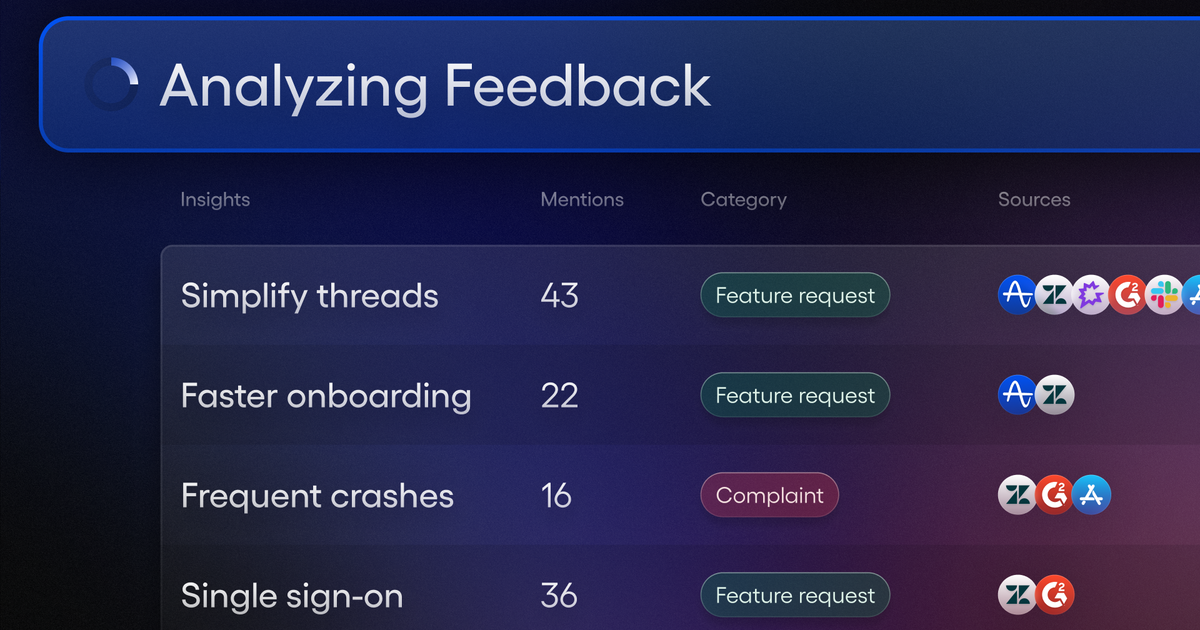
    Learn how Amplitude AI Feedback leverages AI to transform massive volumes of customer feedback into actionable product insights.

    In practice, this means I can synthesize input from support tickets, NPS responses, user interviews, sales notes, and reviews—then connect those insights to product behavior data from Amplitude analytics. The result isn’t just a list of requests; it’s a ranked problem set grounded in evidence, which makes product discovery and continuous discovery faster, clearer, and less biased.

    A recent example: we were hearing recurring complaints about onboarding friction, but it wasn’t obvious which steps truly mattered. By pairing feedback themes with activation and retention signals, I could zero in on the first-session setup tasks that correlated with drop-off. That clarity guided product roadmapping and sprint planning decisions we could stand behind, and it accelerated user activation without bloating the backlog.

    My workflow is straightforward: aggregate feedback, cluster themes, validate with behavioral metrics, and translate insight into outcomes. I look for patterns tied to user activation, retention analysis, and moments that drive product-led growth. When the evidence shows a request is both frequent and high-impact, it earns a place on the roadmap; when it’s loud but low-impact, it becomes a targeted experiment rather than a default commitment.

    What I appreciate most is the confidence this brings to stakeholder conversations. Instead of debating opinions, we review the evidence: quantified themes, clear user stories, and measurable KPIs. That turns “Finally, Signal That Tells You What to Build” from a slogan into an operating principle, and it helps empowered product teams move faster with fewer reversals.

    If you’re building your AI Strategy or exploring LLMs for product managers, this is one of the highest-leverage moves you can make: use a unified analytics platform to connect qualitative feedback with quantitative behavior. It sharpens prioritization, improves time-to-learning, and keeps the team focused on outcomes—not outputs.


    Inspired by this post on Amplitude – Best Practices.


    Book a consult png image
  • Inside My Product Playbook: How I Use the Amplitude Blog to Elevate Strategy and Growth

    Inside My Product Playbook: How I Use the Amplitude Blog to Elevate Strategy and Growth

    I build products at scale, and I write about how we make them successful. When I need a clear, evidence-based perspective on what actually drives outcomes, I turn to the Amplitude Blog. It’s a dependable source for sharpening my thinking on "digital analytics, product strategy, and product-led growth"—and it consistently helps me translate analytics into business impact.

    What keeps me coming back is the way practical, well-structured guidance meets real-world constraints. Whether I’m refining our event taxonomy in Amplitude analytics, evaluating a unified analytics platform approach, or aligning stakeholders on the right success metrics, I find concrete patterns I can apply immediately. The content connects data literacy with product management leadership, the exact combination required to navigate complex roadmaps and high-stakes decisions.

    Here’s how I apply these insights day to day. I anchor our experiments in A/B testing best practices and set a minimum detectable effect that matches our traffic realities. I guide teams to prioritize user activation and retention analysis over vanity metrics, and I frame plans with outcomes vs output OKRs so we stay focused on customer and business value. In parallel, I reinforce continuous discovery and product discovery habits—feeding learning back into product roadmapping and sprint planning without losing speed.

    The payoff shows up in the details: better funnel instrumentation, cleaner cohorts, and faster hypothesis cycles that reduce rework. When we operationalize these ideas—tying activation to onboarding flows, clarifying value moments, and aligning cross-functional owners—we see measurable lifts without bloating scope. That’s the discipline I expect from a modern, product-led growth motion: rigorous analytics paired with empowered execution.

    If you’re scaling a team or modernizing your analytics practice, make the Amplitude Blog part of your weekly ritual. Use it to pressure-test your strategy, level up experimentation, and build a shared language for data-informed decisions. The right "tips and examples" can save months of trial and error—and, more importantly, help you ship products that customers return to again and again.


    Inspired by this post on Amplitude – Best Practices.


    Book a consult png image
  • Govern Like an Enterprise, Ship Like a Startup: Scaling Data Quality, Compliance, and AI

    Govern Like an Enterprise, Ship Like a Startup: Scaling Data Quality, Compliance, and AI

    Balancing rigorous governance with relentless shipping velocity is the product leader’s paradox. When I say we must "Govern Like an Enterprise, Ship Like a Startup," I’m describing a culture where controls are hardwired into how we build—without slowing down how fast we learn and deliver value.

    Learn how to scale data quality, automate compliance, and build AI-ready data foundations with Amplitude’s latest enterprise governance features.

    In practice, governing like an enterprise starts with uncompromising data governance, privacy-by-design, and regulatory compliance. I expect standardized tracking plans, clear ownership, and role-based access to be non-negotiable. Auditability matters as much as usability, and our analytics stack must enable trustworthy insights while protecting sensitive data and reducing operational risk.

    Shipping like a startup means we align governance with product velocity. My teams use CI/CD principles for analytics (think automated schema checks and data contracts), pair tracking changes with code reviews, and treat approval workflows as guardrails—not gates. We work as product trios, run continuous discovery, and keep event taxonomies lightweight and evolvable so iteration never stalls.

    Compliance cannot be an afterthought; it has to be automated. Embedding least-privilege access, consent metadata, and policy-as-code into everyday workflows turns regulatory compliance and cybersecurity from projects into practices. The result is fewer surprises during audits and more confidence during releases.

    Building AI-ready data foundations raises the bar further. Clean, consistent, and well-labeled event data; documented lineage; and explicit handling of PII give our models the context they need while honoring privacy commitments. This is how an AI Strategy moves beyond experimentation to measurable impact.

    Amplitude analytics plays a pivotal role as part of a unified analytics platform strategy: it helps us codify standards, democratize insights safely, and maintain a single source of truth for product decisions. With the right governance features in place, teams can self-serve with confidence while leaders get the assurance that quality and compliance scale with growth.

    If your organization is pushing for product-led growth while raising the bar on data governance, it’s time to operationalize both sides of the equation. The payoff is tangible: faster iteration cycles, stronger signal quality, lower risk, and a foundation that’s truly ready for AI-driven innovation.


    Inspired by this post on Amplitude – Best Practices.


    Book a consult png image
  • Why Pristine Data Wins: Accelerate AI Success with Governance, Structure, and Discipline

    Why Pristine Data Wins: Accelerate AI Success with Governance, Structure, and Discipline

    Every successful AI initiative I’ve led or advised has shared the same foundation: we treat data as a product. Models will improve, infrastructure will evolve, and use cases will expand—but only high-quality, well-governed, and well-structured data compounds value over time.

    “Companies that prioritize data quality, governance, and structure will accelerate their AI initiatives the fastest.” That line has become a non-negotiable principle in my playbook because it consistently separates prototypes that stall from platforms that scale.

    When I say data quality, I mean trustworthy signals: clear definitions, deduplication, lineage, and timely freshness. Governance adds accountability and safety: ownership, access controls, auditability, and privacy-by-design aligned with regulatory compliance. Structure makes it all usable: consistent schemas, event taxonomies, and feature stores that let product teams ship faster without reinventing pipelines.

    In practice, this looks like aligning an AI Strategy with a unified analytics platform so every team works from the same truth. It means instrumenting feedback loops, labeling outcomes, and building a retrieval-first pipeline that brings the right context to LLMs at the right time. It also means thoughtful context window management so models remain grounded, relevant, and cost-efficient.

    I’ve seen the difference firsthand. Early gen ai prototypes built on messy, conflicting data looked promising in demos but failed in the wild—hallucinations spiked, confidence scores dipped, and user trust eroded. Once we tightened governance, standardized schemas, and implemented human-in-the-loop evaluation, accuracy climbed, risk dropped, and feature velocity increased without sacrificing safety.

    For product managers, the mandate is clear: treat data work as core product work. Define quality SLAs, make data contracts explicit, and give empowered product teams the tools to observe, debug, and improve signals continuously. Pair AI risk management with measurable product outcomes, and you’ll turn experimentation into a durable advantage.

    The payoff is more than model performance; it’s organizational clarity and speed. With the right data foundation, LLMs for product managers become easier to deploy, customer experiences feel coherent, and roadmaps shift from firefighting to compounding wins. Invest in data quality, governance, and structure now, and your AI initiatives won’t just move faster—they’ll sustain momentum.


    Inspired by this post on Amplitude – Best Practices.


    Book a consult png image
  • Master Data Governance in the AI Era: Build Trust, Move Faster, and Eliminate Black Boxes

    Master Data Governance in the AI Era: Build Trust, Move Faster, and Eliminate Black Boxes

    Every time I ship a new generative AI capability with my product teams, I’m reminded that governance isn’t a compliance afterthought—it’s a strategic advantage. In today’s landscape, the way we govern data determines how quickly we can innovate, how confidently we can scale, and how credibly we can talk about risk with customers, regulators, and our own board.

    New AI pressures are redefining what good governance takes. Learn how to build better frameworks, move fast with confidence, and keep your data from being a black box.

    My north star for AI Strategy is simple: align business outcomes with responsible practices that are auditable, repeatable, and fast. Practically, that means codifying AI risk management, privacy-by-design, and regulatory compliance into the product lifecycle—requirements, design, build, deploy, and operate. When those guardrails live inside our workflows (not just in policy docs), we accelerate delivery without increasing exposure.

    Visibility breaks the “black box.” I start by establishing a unified analytics platform and a living data catalog with lineage, classification, and stewardship. When we pair that with a retrieval-first pipeline for LLMs, we can trace exactly which sources informed a response, who had access, and whether consent and retention rules were honored. Provenance, RBAC/ABAC, encryption, and deterministic masking stop sensitive data from leaking into training sets while keeping our teams productive.

    Speed with safety comes from engineering the right controls into CI/CD. Before any AI feature hits production, we run automated checks for PII exposure, policy violations, adversarial prompts, and data drift; then we add human-in-the-loop review where stakes are high. Continuous monitoring, audit logs, and playbooks for incident management and threat detection and response turn governance into an everyday habit rather than a once-a-quarter ritual.

    In the first 30 days, I inventory systems, map data flows, and assign clear ownership. We define data quality SLAs, document lawful bases for processing, and publish a concise policy that product managers and engineers can actually use. This anchors stakeholder management and sets expectations for trade-offs.

    By day 60, we implement fine-grained access controls, consent-aware tracking, and consistent metadata standards across sources. We wire dashboards for high-signal metrics—access attempts, data minimization, model input/output risk flags—so leaders can see governance health at a glance and course-correct quickly.

    By day 90, we close the loop with outcomes vs output OKRs, tying governance to business impact: faster cycle times, fewer incidents, and higher customer trust. Training for LLMs for product managers and communities of practice ensure empowered product teams can make judgment calls confidently, not wait for gatekeepers.

    If you’ve felt the friction between innovation and oversight, you’re not alone. The good news is that the right framework lets us do both: move fast with confidence, demonstrate responsible AI, and earn the trust that compounds into product-led growth. That’s the real promise of modern data governance—and it’s how we make sure our AI is powerful, reliable, and never a black box.


    Inspired by this post on Amplitude – Best Practices.


    Book a consult png image
  • Add Data to Cart: My Playbook to End Data Bottlenecks with Amplitude and Unlock Growth

    Add Data to Cart: My Playbook to End Data Bottlenecks with Amplitude and Unlock Growth

    I’ve felt the drag of data bottlenecks firsthand—PMs waiting on a reporting queue, engineers guessing at success metrics, and stakeholders making decisions with partial context. The “Add Data to Cart” mindset changed the game for me: make high-quality data as easy to request, enrich, and consume as dropping an item into a shopping cart.

    Learn how Ankorstore’s teams make autonomous decisions, leveraging enriched data from Amplitude to accelerate feature delivery and drive topline growth.

    Here’s what resonates with me and how I apply it in practice. When teams get self-serve access to a unified analytics platform like Amplitude analytics, decision autonomy becomes the default. Product trios operate with clarity, discovery cycles tighten, and we ship with confidence because the evidence is visible to everyone, not buried in a backlog.

    The foundation is a clean, shared event taxonomy. I prioritize naming conventions, consistent properties, and governance so we can enrich events once and reuse them across A/B testing, retention analysis, and user activation dashboards. This lets product managers answer critical questions—Who’s activating? Which cohorts retain? Which journeys convert?—without waiting on an analyst, while still preserving data quality.

    In my teams, “Add Data to Cart” means we treat data like a product. If a feature team needs a new event or property, they can request it with clear definitions, privacy requirements, and owners. We standardize the instrumentation pattern, ship it through CI/CD, document the event, and surface it in curated Amplitude reports. The result is faster feature delivery and fewer ad-hoc asks.

    The payoff shows up in everyday decisions. Product managers run A/B tests with a minimum detectable effect (MDE) they can justify, analysts focus on deeper insights instead of ad-hoc tickets, and engineers get immediate feedback loops post-release. It’s a blueprint for product-led growth: know what moves activation, double down on the paths that retain, and sunset the work that doesn’t move outcomes.

    Governance matters as much as speed. I pair data governance with privacy-by-design so teams can move quickly without risking compliance or eroding trust. That means documented event definitions, role-based access, and well-labeled dashboards that steer people to the right sources of truth.

    If you’re starting from scratch, begin small: instrument a single critical flow end to end, publish three core dashboards everyone can find, and hold weekly readouts where teams share what changed because of the data. Within a few sprints, the habit forms—questions get sharper, hypotheses improve, and the roadmap shifts from output to outcomes.

    “Add Data to Cart” isn’t just a catchy phrase; it’s a practical way to empower product teams. With enriched data in Amplitude, autonomous decisions become the norm, discovery accelerates, and growth compounds because every iteration is informed by what customers actually do.


    Inspired by this post on Amplitude – Best Practices.


    Book a consult png image
  • Marketing Analytics 2026: Bold Predictions to Win with AI, Experiments, and First‑Party Data

    Marketing Analytics 2026: Bold Predictions to Win with AI, Experiments, and First‑Party Data

    I’ve spent the last year pressure-testing where marketing analytics is really headed, not just in slide decks but in the messy reality of product roadmaps, stakeholder management, and revenue targets. From my seat leading product teams and partnering closely with CMOs and growth leaders, I see 2026 as the year analytics stops being a rearview mirror and becomes a real-time operating system for growth.

    Start 2026 off with a bang with exclusive insights and predictions from some of marketing analytics’ most influential voices. See what they have to say.

    Prediction 1: The unified analytics platform becomes non-negotiable. Fragmented dashboards and manual spreadsheet reconciliation will give way to an integrated, privacy-by-design measurement layer that stitches product, marketing, and revenue data. Expect tighter CRM integration (think HubSpot), product analytics (Amplitude analytics, Pendo), and revenue systems in one source of truth. The practical upside: faster decision cycles, cleaner attribution, and a shared language for product-led growth.

    Prediction 2: Gen ai and agentic AI move from novelty to necessity. Analysts and product managers will deploy AI Strategy playbooks that pair retrieval-first pipeline patterns with governance to answer open-ended questions and trigger actions safely. “Agent Analytics” will summarize trends, generate experiments, and draft stakeholder updates, while LLMs for product managers become standard tooling. The bar is explainability: every AI-assisted insight must show its lineage and assumptions.

    Prediction 3: Experiments scale, rigor deepens. We’ll treat A/B testing as a system, not an event—standardizing guardrails like minimum detectable effect (MDE), pre-registration, and sequential testing where appropriate. As teams embrace continuous discovery, we’ll graduate from single-page tests to multi-surface learning agendas spanning pricing, onboarding, and lifecycle activation. The goal isn’t more tests; it’s faster time-to-learning with lower decision risk.

    Prediction 4: Causality beats correlation in measurement. Last-click and naive attribution will yield to incrementality testing, holdouts, and lightweight MMM for channels that don’t click. Retention analysis gains prominence as the north star for sustainable growth, linking value proposition clarity to user activation and downstream LTV. Outcomes vs output OKRs will force teams to track what truly moves customer behavior.

    Prediction 5: Activation loops go real-time. Unified analytics will trigger in-product nudges, product tours, and contextual in-app guides the moment a signal crosses a threshold. This closes the loop between insight and action, shrinking the distance from analysis to impact. Teams that instrument these loops well will win on speed and compounding effects.

    Prediction 6: Governance becomes a growth enabler. Data governance and privacy-by-design aren’t just compliance—they’re a competitive advantage. Clear definitions, consent-aware pipelines, and transparent AI risk management will increase trust in insights, accelerate deployment, and reduce rework. When stakeholders trust the data, they make bolder, faster decisions.

    Prediction 7: Go-to-market precision improves. With cleaner signal and shared context, we’ll price with confidence (SaaS pricing and, in many cases, consumption SaaS pricing), sharpen product positioning, and focus spend where incrementality is provable. Expect fewer vanity metrics, more revenue-linked scorecards, and tighter integration between product roadmapping and sprint planning and growth experiments.

    What to do now: 1) Audit your stack for a unified analytics platform and eliminate redundant tools. 2) Invest in first-party instrumentation and CRM integration to future-proof measurement. 3) Operationalize experimentation: document MDE, power, and decision rules. 4) Deploy gen ai responsibly with clear governance and retrieval-first context. 5) Build activation loops that turn insights into targeted in-app actions. Teams that execute on these fundamentals in 2025 will set the pace in 2026.


    Inspired by this post on Amplitude – Best Practices.


    Book a consult png image
  • Why Betting on Amplitude Paid Off: My Take on Dan Grainger’s High-Impact Migration

    Why Betting on Amplitude Paid Off: My Take on Dan Grainger’s High-Impact Migration

    I love when a bold platform bet translates into tangible product impact. Watching a team commit to a unified analytics platform and then operationalize it across the business is a master class in strategic focus and change management. That’s exactly what this story captures—and why it resonates with my own experience leading complex analytics migrations.

    Learn how Dan Grainger led Haven's migration to Amplitude, focusing on user-friendly analytics and data governance for non-technical teams.

    That single sentence distills what matters most: if analytics aren’t accessible to non-technical teams, you won’t get the adoption needed to drive outcomes. “User-friendly analytics” isn’t window dressing; it’s the linchpin for empowered product teams and true product-led growth. When teams can ask and answer their own questions—without waiting on analysts—velocity and quality of decision-making improve immediately.

    From a product management lens, two elements stand out. First, the choice of Amplitude analytics as the central system of insight—consolidating scattered tools into a unified analytics platform—creates one source of truth for activation, adoption, and retention analysis. Second, a rigorous approach to data governance ensures that trust in the data scales alongside usage, especially for non-technical stakeholders who need clarity, not caveats.

    Execution matters. In my playbook, these transformations succeed when you treat them as product initiatives, not IT projects. I partner early with stakeholder management champions, form product trios to define the measurement plan, and use in-app guides, product tours, and targeted onboarding to drive behavior change. The goal is simple: shorten time-to-insight for frontline teams while keeping the instrumentation robust and consistent.

    Data governance is the quiet force multiplier. Clear tracking plans, consistent event taxonomies, role-based access, and privacy-by-design guardrails prevent entropy. When everyone speaks the same analytics language, you avoid “metric du jour” debates and keep the focus on outcomes vs output OKRs. That’s where scalable impact comes from.

    Measurement closes the loop. I’ve found that when non-technical teams can self-serve retention analysis, funnel drop-off, and user activation patterns, they start running continuous discovery by default—asking better questions, testing smarter hypotheses, and accelerating learning cycles. Amplitude’s strength is not just visualizing what happened, but making it easy to connect behavior to outcomes teams care about.

    The broader leadership lesson is straightforward: choose a platform that your broadest set of contributors can and will use daily, invest early in governance, and build enablement into your rollout plan. That’s how a migration becomes a multiplier. When the right platform meets the right operating model, the win is less about a tool and more about a learning culture that compounding value over time.

    If your analytics stack feels fragmented or underused, this is your nudge. Align on a unified analytics platform, meet teams where they are with user-friendly analytics, and let governance do the heavy lifting behind the scenes. The payoff—in speed, alignment, and smarter bets—comes faster than most teams expect.


    Inspired by this post on Amplitude – Best Practices.


    Book a consult png image