Experience quality compounds just like code quality. To align teams and accelerate outcomes, I rely on a clear, five-stage software experience maturity model to assess where we are, why we’re there, and how to advance. It turns fuzzy debates into concrete product strategy and reinforces a product-led growth mindset.
Find out where you stand—and what to fix first—with this maturity framework.
Why a five-stage model? It gives product, design, engineering, and go-to-market a shared language for trade-offs, helps us move from opinions to evidence, and ties day-to-day improvements to outcomes vs output OKRs. Instead of spreading effort thin, we sequence the right bets at the right time and build momentum with measurable wins.
Here’s how I apply it in practice. I start with a brief, honest self-assessment across the customer journey: onboarding clarity, user activation moments, in-app guides and product tours, UX writing, support loops, reliability, and analytics coverage. Then I layer in learnings from continuous discovery and product discovery—interviews, usage patterns, and support transcripts—so we see the experience as customers do, not just as we intended.
When it comes to what to fix first, I prioritize prerequisites over polish. If the value proposition isn’t clear, onboarding is confusing, or activation is inconsistent, we address those before adding new features. I instrument the funnel end-to-end, establish a minimum detectable effect (MDE) for A/B testing, and ensure we can answer basic questions about who activates, who retains, and why.
Measurement is non-negotiable. I pair retention analysis and activation metrics with qualitative signals to avoid local maxima. Amplitude analytics helps reveal behavioral patterns, while Pendo and in-app guides close gaps in comprehension and guidance. Intercom and CRM integration with HubSpot connect product signals to account health, so we can see how experience maturity drives revenue and retention.
Operationally, I anchor the roadmap to a small set of experience outcomes, link them to product strategy, and review progress in cadence with leadership. This approach builds product management leadership muscle: sharper stakeholder management, clearer trade-offs, and faster feedback loops. Most importantly, the team sees how each improvement ladders up to a better, more durable user experience.
If you’re mapping your own path across the five stages, start by sizing the gaps that block activation and retention, commit to a few high-leverage fixes, and measure relentlessly. With a shared maturity model, your team gains focus, your customers feel the difference, and your product compounds value with every release.
When I map the customer lifecycle, I look for the precise moments where guidance, context, and timing can transform a casual click into a committed relationship. That’s exactly why I rely on Pendo Orchestrate—to turn intent into a systematic, repeatable product strategy that scales across every stage of the journey.
From first click to lifelong retention, you’ll deliver the right message at the exact right time, every step of the way. With Pendo Orchestrate, you can design those kinds of moments with intention. And in this blog, we’ll show you how.
In practice, I translate that promise into four lifecycle journeys every product team should be running with Pendo Orchestrate: new user onboarding, activation to the aha moment, expansion and upsell, and renewal and retention. These journeys power product-led growth and keep the roadmap aligned to measurable business outcomes.
Onboarding: I use in-app guides and product tours to welcome new users, set expectations, and reduce time-to-value. Contextual tooltips and gentle checklists keep users moving, while clear, concise UX writing removes friction. The goal is simple: accelerate early wins so onboarding naturally flows into user activation.
Activation: To help users reach the aha moment, I pair behavioral insights with targeted in-app guides. When a user approaches a key milestone, Pendo Orchestrate triggers just-in-time prompts that reinforce the value proposition. I keep these nudges focused, specific, and measurable so activation improves without overwhelming the experience.
Expansion: Once users adopt core workflows, I introduce advanced capabilities through tailored tours and contextual education. These cues appear where they’re most relevant—in the flow of work—so cross-sell and upsell moments feel helpful, not salesy. The intent is to deepen adoption by connecting features to outcomes users already care about.
Renewal and retention: I watch for patterns that suggest risk (stalled usage, incomplete workflows) and offer supportive interventions. Lightweight guides, quick tips, and feedback loops help resolve issues before they become churn. Combined with retention analysis, these orchestrations keep customers engaged and set the stage for long-term value.
When these four journeys run in concert, your product becomes the primary engine of growth. Pendo Orchestrate ensures the right in-app guidance shows up at the right moment—so your product strategy, product discovery, and day-to-day execution stay tightly aligned. That’s how you move beyond one-off campaigns and build a durable, product-led growth system.
INDUSTRY 2025: The Product Conference is circled on my calendar for good reason. In my role leading product management at HighLevel, I look for events that sharpen strategy, accelerate learning, and connect me with operators who ship. This one consistently delivers on all three, and 2025 promises to raise the bar for product management leadership.
Join Pendo at INDUSTRY in Cleveland, Ohio.
First, I expect deeply actionable product strategy insights—beyond platitudes. I’m prioritizing conversations on outcomes vs output OKRs, product roadmapping and sprint planning, and how great teams articulate a crisp value proposition while maintaining points of parity that matter. I’m going in with specific questions on product-market fit lessons and how to systematize strategic bets without stifling discovery.
Second, the surge of AI in product work is too important to observe from the sidelines. I’m comparing approaches across AI Strategy, LLMs for product managers, prompt engineering, and eval-driven development—especially in retrieval-first pipeline patterns. My focus: where AI genuinely improves product discovery, in-app guides, and customer support ai strategy, and where it risks adding complexity without outcomes.
Third, the community is unmatched for conference networking and pragmatic learning. I’m intentional about meeting product trios who run continuous discovery at scale, as well as leaders who’ve cracked stakeholder management under pressure. These are the moments where competitive differentiation is born—through candid stories of what didn’t work and why.
Fourth, I’m eager to stress-test data practices that power product-led growth. I’ll be exchanging notes on retention analysis, unified analytics platform decisions, user activation, and how teams integrate qualitative feedback with event data to inform roadmaps. I’m also interested in how practitioners leverage platforms like Pendo, Amplitude analytics, Intercom, and HubSpot to reduce time-to-insight and craft effective product tours and in-app guides.
Fifth, I treat INDUSTRY as a checkpoint for leadership growth. I’m looking for fresh takes on empowering product teams, first principles decision making, organizational development, and the IC to manager transition. The best sessions don’t just inspire; they give me two moves I can apply with my team on Monday.
To make the most of the week, I’m applying a continuous discovery mindset: arrive with clear learning goals, capture portable frameworks, and translate at least two insights into experiments before wheels-up. If you’re focused on product strategy, product discovery, and product-led growth, we’ll have plenty to compare and build on together.
I’ll be in Cleveland ready to learn, share, and connect with peers who care about craft and outcomes. If you’re attending, let’s compare notes on what’s working, what’s stalled, and how we can raise the bar for product management leadership in 2025 and beyond.
I’ve led and learned from dozens of launches, and one truth holds: a sharp go-to-market strategy is the difference between shipping features and creating value. In this piece, I share the playbook I use with my product marketing teams to align product, sales, success, and growth around a single, measurable plan.
Step-by-step go-to-market strategy for product marketing: Define ICPs, positioning, pricing, channels, launch plan, and metrics to drive adoption and revenue.
I start by defining our ideal customer profiles (ICPs) with continuous discovery: blending qualitative interviews with quantitative signal from retention analysis and usage. We map jobs-to-be-done, pains, and buying triggers, then size segments and select the entry ICP that maximizes product-market fit odds. From there, we articulate points of parity and competitive differentiation to clarify where we must match the market and where we will win.
With ICPs locked, I craft positioning and messaging that ladder to a clear value proposition. I test headlines and narratives via A/B testing across ads, email, and in-app guides, and I tighten UX writing inside product tours to reinforce the promise. The goal: consistent, resonant language that sales can champion and self-serve users can understand in seconds.
Next, I align pricing and packaging to the value metric customers actually care about—keeping SaaS pricing simple to start, with room for advanced consumption SaaS pricing when usage scales. I pair pricing with onboarding that speeds user activation, removes friction with thoughtful tooltip design, and sets customers up for early wins.
Channel strategy is a focus decision. Depending on motion, I mix product-led growth, targeted outbound, partner co-marketing, and community. I ensure CRM integration and enablement content are ready on day one so marketing, sales, and success can execute in lockstep.
I translate the strategy into a concrete launch plan tied to product roadmapping and sprint planning: milestones, assets, demos, and a clear owner for every dependency. We rehearse the narrative, pressure-test objections, and equip field teams with competitive battlecards and objection handling.
From the outset, we define success metrics that ladder to revenue: awareness, activation, conversion, expansion, and retention. Leading indicators beat lagging ones, so I instrument a unified analytics platform to monitor activation rate, time-to-value, and feature adoption in near real time, then feed insights back into the roadmap.
After launch, we run tight feedback loops—win/loss analysis, in-product surveys, and cohort-based retention analysis—to refine messaging, re-bundle packaging, or adjust channels. The team owns outcomes, not output: we iterate until we see durable signals of product-market fit and efficient growth.
If you need a simple way to operationalize this, print the one-liner above, share it with your cross-functional partners, and commit to weekly reviews. When everyone can state the ICP, the promise, the price, the channel plan, and the metrics, execution accelerates and the market responds.
Quantitative metrics tell the story in numbers; qualitative ones whisper why it matters. Both shape how products grow. Here’s what you need to know.
In my day-to-day, I rely on quantitative metrics to surface what’s changing in the business and where we need to focus. Activation rate, conversion through the onboarding funnel, feature adoption, retention analysis, and LTV/CAC give me a precise read on performance. I also keep an eye on DORA metrics to understand delivery health and deployment frequency, but I never mistake those for customer outcomes. Numbers spotlight signal—but they rarely explain causality on their own.
That’s where qualitative analysis earns its keep. Customer interviews, usability studies, win/loss debriefs, support transcripts, and community feedback give me the context behind the charts. Tools like Pendo help me layer in in-app guides and micro-surveys to capture intent and friction in the flow. This combination turns raw data into decisions that actually move the product strategy forward.
My operating cadence is simple: weekly dashboards to monitor quantitative metrics, ongoing continuous discovery to collect qualitative insight, and a monthly synthesis to reconcile both with our outcomes vs output OKRs. The aim is to move from opinions to evidence, and from anecdotes to patterns. When quant and qual agree, we execute confidently; when they diverge, we design the smallest experiment to learn fast.
I use a three-question decision tree to choose the method. First, are we exploring or validating? Exploration leans qualitative; validation leans quantitative. Second, do we have enough volume for statistical power? If yes, I’ll run A/B testing with a clear minimum detectable effect (MDE) to avoid false positives. If not, I’ll rely on targeted qualitative discovery until we can instrument a meaningful test. Third, will this decision meaningfully impact our product-led growth or user activation goals? If it will, we invest in both measurement and discovery to reduce decision risk.
Here’s a concrete example. We once saw a sudden drop in user activation. The quantitative dashboard flagged a step-function change at onboarding step three, but it couldn’t explain why. A quick round of qualitative interviews revealed that our tooltip design buried a critical permission request. We shipped a Pendo-powered in-app guide variant and ran an A/B test to validate the fix. Activation rebounded within a week, and 30-day retention followed suit.
There are common pitfalls I actively avoid. Chasing vanity metrics that don’t ladder up to outcomes. Conflating shipping speed with customer value by over-indexing on DORA metrics. Overfitting with A/B testing when the MDE is unrealistic for our traffic. And on the qualitative side, mistaking a compelling anecdote for a representative sample without triangulating evidence.
If you’re looking to tighten your practice, start with a lightweight playbook: instrument core events in Amplitude analytics; define a small set of outcomes vs output OKRs; schedule recurring customer conversations as part of continuous discovery; tag qualitative insights so patterns surface over time; and pair every material UX change with either a well-powered experiment or a clear qualitative learning goal. This creates a unified analytics and discovery loop that compounds.
Ultimately, quantitative metrics help me prioritize with clarity, while qualitative analysis helps me decide with confidence. When you weave them together, you not only ship faster—you ship the right thing, for the right reason, at the right time.
I rely on product benchmarks to align teams, sharpen strategy, and accelerate outcomes—especially in healthcare, where stakes are high and complexity is real. Over the years, I’ve learned that the right metrics create clarity across product, engineering, compliance, and go-to-market, enabling faster, safer decisions that translate into measurable impact.
Discover exclusive data and strategies from our Product Benchmark Report. Compare the healthcare technology industry’s performance across key product metrics.
When I evaluate a healthcare product’s health, I focus on a few essentials: activation rate and time-to-value for new users, weekly active usage and feature adoption for clinicians and admins, and cohort-based retention analysis to understand whether value compounds over time. I also look at funnel friction (onboarding drop-off, failed setup steps), support load per account, and reliability signals that influence trust—because in healthcare, trust fuels growth.
Benchmarks turn those metrics into context. They help me answer, “Are we good, or just lucky?” By comparing our numbers to industry peers, I can prioritize the few bets that matter, set outcomes vs output OKRs, and guide empowered product teams to focus on the highest-leverage improvements.
Operationally, I instrument products with a unified analytics platform and tools like Amplitude analytics and Pendo to track user activation, feature adoption, and in-product journeys. Pairing that with continuous discovery keeps insights fresh, while A/B testing and clear minimum detectable effect (MDE) thresholds ensure we ship with statistical confidence.
In practice, my playbook for healthcare product-led growth is straightforward: simplify onboarding with targeted product tours and in-app guides, tighten the first-win loop to reduce time-to-value, and eliminate blockers surfaced by behavioral analytics. Then, reinforce the loop with lifecycle messaging, role-specific education, and clear value propositions for clinicians, operations teams, and executives.
Of course, none of this works without strong governance. Data governance and regulatory compliance aren’t just guardrails; they’re growth enablers. Clear audit trails, privacy-by-design, and reliable incident management build the trust that keeps adoption high and churn low.
If you’re ready to benchmark your roadmap against the market, this report gives you the clarity to spot gaps, the language to align stakeholders, and the metrics to execute with precision. Use it to calibrate your product strategy, guide your next set of experiments, and confidently scale what works across the healthcare technology ecosystem.
Inspired by this post on Amplitude – Perspectives.
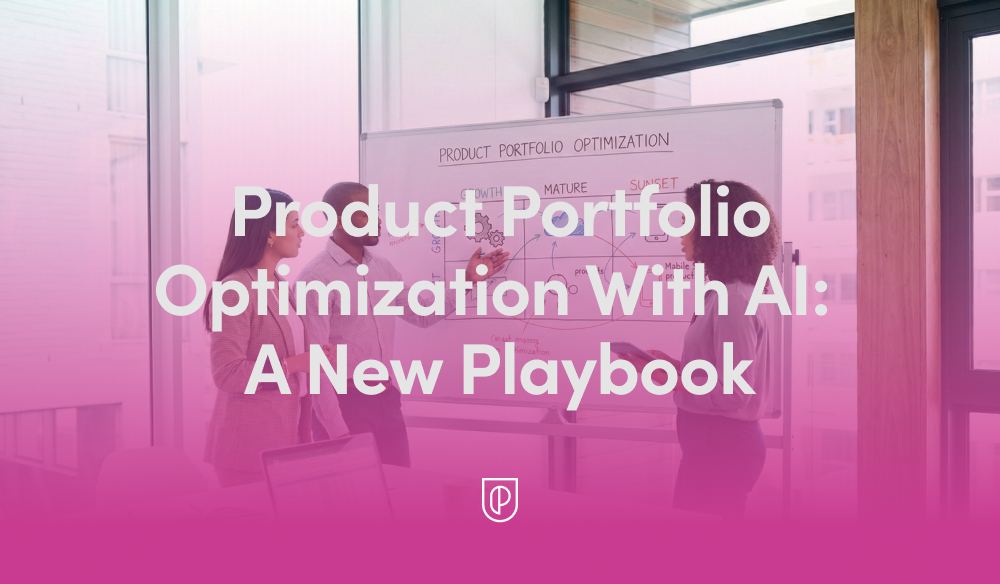
The most valuable lesson I’ve learned leading product organizations is that portfolio choices make or break outcomes. In an era of infinite requests and finite teams, the question isn’t what we could build—it’s what we must build next. That’s why I’m codifying a pragmatic, AI-driven playbook to optimize the product portfolio while staying true to outcomes, not output.
AI-powered product portfolio optimization is here. Explore strategies and tools helping product leaders manage complexity and boost ROI.
My starting point is a data backbone that connects strategy to reality. I aggregate product usage, revenue by segment, cost-to-serve, retention cohorts, and support signals into a unified analytics platform, then layer a retrieval-first pipeline so LLMs can reason over clean context. Instrumentation matters: Amplitude analytics, Pendo, and in-app guides provide the behavioral and activation signals that make prioritization measurable.
From there, I translate strategy into an objective decision system. I express outcomes vs output OKRs, align initiatives to value proposition and competitive differentiation, and classify opportunities with the Kano Model. LLMs for product managers help cluster voice-of-customer at scale; with thoughtful prompt engineering and AI workflows, I can map themes to jobs-to-be-done, quantify demand, and de-duplicate asks across stakeholders.
Execution hinges on evidence. I run A/B testing with a clear minimum detectable effect (MDE), pair it with eval-driven development for AI features, and ship through CI/CD while tracking DORA metrics. This closes the loop between product roadmapping and sprint planning and real-world performance—activation, retention analysis, and Web Vitals inform the next set of portfolio bets.
Trust is a feature, so governance is built-in. Privacy-by-design, data governance, and AI risk management guide how we store, prompt, and evaluate models. I apply guardrails to sensitive workflows and define success metrics that balance short-term ROI with long-term resilience and regulatory compliance.
The operating model matters as much as the models themselves. Product trios and empowered product teams run continuous discovery, pressure-test assumptions in QBRs vs OKRs, and make trade-offs visible. Stakeholder management becomes easier when the portfolio narrative is anchored in transparent scenarios and shared metrics.
If you’re getting started, here’s my flow: unify data, define outcomes, segment opportunities, simulate scenarios, and test fast. Use LLMs to synthesize signals you’d never humanly read, then make one focused bet per team that moves a measurable KPI. Rinse, learn, and reallocate—portfolio optimization is a living system, not an annual meeting.
Ultimately, the promise of this new playbook is simple: less noise, sharper focus, and compounding ROI. By pairing AI Strategy with disciplined product management leadership, we can manage complexity with clarity—and consistently build what matters most.
I’ve spent the past few product cycles re-architecting roadmaps around one simple reality: AI is no longer just a feature—it’s a business model. The companies winning market share are those that treat models, data, and workflows as monetizable assets with defensible moats, not science projects.
AI business models are rewriting value creation. Learn how smart teams turn algorithms into profit engines, reshaping entire industries.
From my seat in product leadership, I evaluate AI bets through three lenses: durable value (moat and differentiation), measurable outcomes (clear ROI), and unit economics (gross margins under real-world load). With that frame, here are ten AI business models I see performing now—and how I decide when to invest.
1) API-first Model-as-a-Service. I monetize foundation or specialized models via an API, priced by tokens, requests, or time-in-context. Success hinges on latency, accuracy, and “context window management” that balances quality with cost. This is where “consumption SaaS pricing” shines and where disciplined rate-limiting, observability, and SLAs build trust.
2) Vertical AI copilots. I package domain-specific expertise (legal, healthcare, finance, field service) into workflow-native assistants that surface next-best actions. Because these copilots live where work happens, I price on outcomes—time saved, revenue recovered, or risk reduced—aligning value with customer metrics and accelerating product adoption.
3) Agentic AI automation. When autonomous agents handle multi-step tasks across tools, I lean toward per-outcome or per-job pricing. Reliability is the moat, so I invest early in eval-driven development, robust guardrails, and human-in-the-loop QA. This model compounds fast once agents can execute end-to-end workflows with transparent audit trails.
4) Copilot add-ons inside existing SaaS. I’ve seen “AI Assist” tiers deliver immediate ARPU lift and retention gains. The playbook: start with high-frequency, high-friction jobs (drafts, summaries, enrichment), then expand to proactive suggestions. This aligns tightly with product strategy and lets me stage value without overhauling the core experience.
5) Insights-as-a-Service via data network effects. I transform exhaust data into benchmarking, predictions, and prescriptive recommendations—while honoring privacy-by-design and data governance. The more customers I onboard, the stronger the patterns, and the higher the switching costs. Pricing ties to seats plus an outcomes or value metric.
6) Retrieval-first pipeline for enterprise knowledge. I land with high-accuracy answers over customer data (search, summarize, cite), then expand into workflow automations. This “retrieval-first pipeline” reduces hallucinations, boosts trust, and creates defensibility through connectors, semantic indexing, and continuous relevance tuning—an ideal fit for LLMs for product managers prioritizing reliability.
7) Open source monetization. When I bet on openness, I monetize hosting, support, enterprise controls, and compliance features. The advantage is developer love and rapid iteration; the moat is operational excellence at scale, plus integrations customers rely on. This model converts community momentum into predictable revenue.
8) Marketplaces for prompts, skills, and agents. I create a platform for third-party extensions and charge a take rate on usage. The flywheel spins when developers see distribution, customers see breadth, and I enforce strong quality bars. The roadmap focuses on governance, discovery, and safe execution policies.
9) Solutions with forward deployed engineers. For complex rollouts, I pair product with specialized implementation to guarantee outcomes. Revenue blends software plus services, accelerating time-to-value and informing the roadmap with real-world constraints. Over time, learnings fold back into scalable, self-serve capabilities.
10) AI risk, security, and compliance tooling. As AI scales, so does the need for policy enforcement, monitoring, and auditability. I monetize via platform subscriptions that address model provenance, data leakage prevention, red teaming, and reporting. Strong “AI risk management” is now a purchasing requirement, not a nice-to-have.
How do I choose among these models? I start with the customer’s biggest workflow pain, map it to the fastest path to measurable outcomes, and align pricing with value creation. Then I build defensibility through data advantage, distribution, and governance. If a model deepens trust, improves margins, and compounds learning, it earns a place on the roadmap.
Benchmarks are my reality check. In the fast-moving media and entertainment space, I rely on concrete product metrics to align strategy, prioritize roadmaps, and drive product-led growth with confidence. When my team and I calibrate against industry benchmarks, we turn opinions into outcomes and ensure our bets are tied to measurable impact.
Discover exclusive data and strategies from our Product Benchmark Report. Compare the media and entertainment industry’s performance across key product metrics.
Here’s how I think about what matters most in this report: user activation and time-to-value to understand onboarding effectiveness, retention analysis to quantify staying power, feature adoption to validate value delivery, and engagement depth to see whether we’re building habit loops—not just generating clicks. I also look at experimentation maturity (A/B testing volume and velocity), release cadence, and how we structure outcomes vs output OKRs to keep teams accountable to real customer impact.
Benchmarks aren’t scorecards—they’re decision accelerators. I use them to run a gap analysis, set clear targets, and focus the roadmap on the few bets most likely to move our leading indicators. For example, if activation lags, we invest in clearer in-app guides, product tours, and progressive onboarding; if retention stalls, we refine the value proposition and instrument cohorts to isolate which segments respond best.
Operationally, I instrument a unified analytics platform with Amplitude analytics for cohorting and funnel analysis, and Pendo for in-app guidance and feature adoption insight. Weekly product health reviews keep the team oriented around activation, retention, and engagement. When we A/B test, we set a minimum detectable effect (MDE) up front and tie experiments to specific OKRs, so decisions aren’t swayed by noise. This discipline helps empowered product teams ship faster without sacrificing rigor.
If you’re building in media and entertainment, use these benchmarks to define what “good” looks like for your model, then localize targets to your audience and content format. Start by instrumenting the essentials, align leaders on the few metrics that matter, and iterate with high-velocity experiments. The right benchmarks will sharpen your product strategy, improve stakeholder confidence, and turn your roadmap into a reliable engine for growth.
Inspired by this post on Amplitude – Perspectives.
I’ve learned the hard way that shipping an impressive AI demo is not the same as creating a durable revenue engine. In my role leading product strategy, I focus on one goal: connect AI capabilities to measurable customer outcomes, then price and package them so both value and margins are visible and defensible.
Monetizing AI features into profit isn’t trivial. Here are some clear strategies for capturing and pricing AI products and how to monetize with returns.
First, I clarify the business model. Add-on AI packs work when the value is concentrated in a specific workflow (for example, automated summarization or AI copilot assistance). Tiered packaging helps when AI elevates the overall experience across many features. Usage-based or consumption SaaS pricing is ideal when value scales with volume—tokens, documents processed, calls handled, or agents invoked—because it aligns price to realized outcomes.
Next, I align pricing mechanics with the customer’s value story. I anchor price against the baseline they know: hours saved, conversions gained, cases deflected, or risk reduced. Then I set floors based on unit economics—model inference, vector storage, and orchestration costs—so gross margins remain healthy as usage grows. Clear guardrails (quotas, rate limits, and context window management) prevent surprise bills and keep cost-to-serve predictable.
Packaging is where monetization becomes intuitive. I gate high-cadence, high-compute features behind premium tiers, and I expose quick wins (like smart suggestions) in core tiers to accelerate activation. For enterprise, I bundle governance, audit logs, data controls, and “privacy-by-design” features to justify step-up pricing and reduce procurement friction.
To sustain ROI, I run an eval-driven development loop. I define quality metrics (accuracy, helpfulness, latency, safety) and instrument the retrieval-first pipeline so I can isolate where value is created or lost. This lets me right-size models, tune prompts, and swap components without compromising outcomes or margins—critical for LLMs for product managers who must balance experience and cost.
Measurement is non-negotiable. I track activation, time-to-first-value, weekly engaged AI users, and feature-level retention. For revenue impact, I attribute uplift through A/B testing and minimum detectable effect thresholds, measuring conversion lift, ticket deflection, and cycle-time reductions. When customers see these numbers in their own dashboards, procurement turns into partnership.
Risk and compliance are part of the product, not an afterthought. I build in AI risk management, data governance, and red-teaming from day one. Clear data boundaries, human-in-the-loop controls, and transparent disclosures protect end users and make enterprise legal teams our allies rather than blockers.
Go-to-market matters as much as the model. I use product-led growth tactics—free AI credits, transparent meters, and in-app guides—to let users feel the value before the paywall. Sales enablement centers on the value proposition: faster outcomes, higher quality, and lower total cost of ownership, not just “gen ai” for its own sake. Pricing pages should showcase tiers, usage bands, and outcomes, eliminating guesswork.
Here’s the simple playbook I follow: validate the problem with continuous discovery, instrument the workflow, pilot with generous caps, and collect willingness-to-pay signals early. Then iterate the price meter, refine units of value (documents, messages, or actions), and align SKUs to buyer personas. Over time, I introduce agentic AI capabilities as premium modules when they demonstrably reduce steps or automate entire objectives.
When AI monetization works, it feels effortless to customers because the price mirrors the outcome. When it doesn’t, it’s usually because packaging hides value, pricing ignores unit economics, or ROI isn’t visible. By grounding strategy in value metrics, consumption-aware pricing, and rigorous evaluation, I’ve found we can scale AI revenue with confidence—and keep both customers and margins happy.
I’ve been systematically exploring how the product model shows up inside iconic companies. After studying “The Product Model at Spotify” and “The Product Model at Amazon,” I’m turning my lens to Google—specifically, how the product operating model, product culture, and product strategy manifest in practice and what we can pragmatically take back to our own organizations.
When I talk about the product model, I’m looking at the machinery that connects strategy to outcomes: empowered product teams, clear decision rights, tight product trios, continuous discovery, data-informed bets, and an operating cadence that enables learning at speed. My goal here is to unpack how those elements come together at Google and translate them into repeatable patterns you can adopt.
At a high level, I focus on how teams are empowered to solve problems rather than ship outputs, how outcomes vs output OKRs clarify what matters, and how experimentation (from rapid prototyping to A/B testing) de-risks decisions before they scale. I also examine how engineering and product partner to balance platform scalability with customer value, and how stakeholder management reinforces alignment without slowing teams down.
Why does this matter? Because the product model is a lever for resilience and speed. When product strategy is explicit and the operating model is built for learning, organizations multiply the impact of talented people. That’s how small, focused teams repeatedly deliver outsized results—even in complex, regulated, or high-scale environments like Google.
In the sections that follow, I’ll synthesize what I see as the core patterns behind Google’s approach and distill them into actionable guidance: how to structure product trios, how to run continuous discovery alongside delivery, how to set and calibrate OKRs for outcomes, and how to evolve your product culture so empowered product teams can do their best work. My aim is not to idolize a model, but to extract what’s portable and help you adapt it to your context.
Your 2026 conference budget should not begin with a list of famous events. It should begin with a decision your product organization is struggling to make: where AI belongs in the roadmap, why discovery is not changing priorities, how product operations should reduce friction, or which growth problem deserves executive attention.
That shift turns conference planning from a travel exercise into a portfolio of strategic bets. You can choose events for the decisions, relationships, and operating changes they can support – and decline the ones that offer interesting content without a credible path to action.
Decide what each conference must change
There is no universally best product conference. The right choice depends on the uncertainty you need to reduce and what you are prepared to do with the answer.
The real cost is larger than registration and travel. It includes the attendee’s attention, the decisions someone else must cover, the interruption to active work, and the follow-through required after the event. An inexpensive ticket can therefore be a poor investment, while a more demanding trip can be defensible when it helps unblock a consequential product decision.
Before approving a booking, require a short conference thesis with these fields:
Decision: What active product, AI, growth, hiring, or operating-model decision should improve?
Uncertainty: What does the team not know well enough to decide confidently?
External value: Which practitioners, perspectives, or examples are difficult to access inside the company?
Action: What will the attendee recommend if the current hypothesis becomes stronger, weaker, or more conditional?
Owner: Who has the authority to act on what is learned?
For an AI product leader, a useful thesis might be: I need operator evidence that helps us decide whether the next investment belongs in a customer-facing capability, an internal workflow, or the evaluation and governance layer beneath both. That is specific enough to shape session choices and conversations. Learn more about AI is not.
The same standard applies to networking. Meet product leaders is too vague to guide behavior. Compare how product executives assign decision rights between a central AI platform group and embedded product teams gives the attendee a real question, a relevant peer profile, and a reason to follow up.
Key takeaways
Choose a conference for an active decision, not for its reputation alone.
Build a portfolio across strategic priorities instead of sending everyone to similar general-interest events.
Use date collisions to force explicit tradeoffs about content, peer access, and geography.
Send the person closest to the uncertainty, provided that person has enough authority to apply what they learn.
Measure changed decisions and operating behavior, not notes collected or badges scanned.
Build a portfolio around strategic priorities
Conference names are useful screening signals, but they are not proof of agenda quality. Start by matching event themes to company priorities. Then inspect the organizer’s current agenda, speakers, attendee profile, format, and location before committing money or executive time. Verify the date and venue directly before purchasing because event details can change.
The following map helps narrow the field. It is a planning tool, not a ranking.
Does the team need a new method, stronger leadership practice, or better integration of research into product decisions?
A balanced portfolio can contain different kinds of bets. An anchor event can provide a broad external scan and senior relationships. A specialist event can address a narrow operating problem. A virtual event can provide targeted content without travel. A regional event can deepen a market-specific network. You do not need every type; use only the ones connected to current priorities.
This matters because superficially similar conferences can serve different jobs. A product-led growth event may be useful when the team is redesigning activation or commercial ownership. It is probably redundant when the same attendee recently explored the same questions and no resulting work has reached implementation. Repetition is valuable only when the audience, market, or decision has changed.
AI-themed events deserve an especially strict filter. A prominent AI label does not tell you whether the agenda will help with real product work. Look for evidence that sessions address evaluation, data readiness, workflow adoption, reliability, governance, product economics, and organizational change – not only model demonstrations. If AI hiring is the objective, confirm that the likely participants include the builders or leaders you need to understand, rather than assuming a large technology audience will produce relevant candidate relationships.
Keep some conference capacity uncommitted. Later announcements, agenda changes, and newly urgent company problems can make an event that looked optional more relevant than one selected during annual budgeting. A complete calendar created too early can leave no room for better information.
Use calendar collisions to make sharper choices
The 2026 schedule contains several useful collisions. They are not merely logistical problems. They reveal whether your selection criteria are strong enough to distinguish one event from another.
On March 26 in New York, the Chief Product Officer Summit, Product Operations Summit, and Product-Led Summit occur on the same day, with the latter two continuing through March 27. One attendee cannot meaningfully cover all three. A product executive working through organizational design may favor the leadership audience. A product operations owner rebuilding planning and decision infrastructure has a different reason to be there. A growth leader should not choose either merely because colleagues are attending.
Amsterdam creates a similar choice on May 28-29, when the Chief Product Officer Summit and Product-Led Summit run on the same dates. If both themes matter, split coverage only when each attendee has a distinct brief and a real route to implementation. Dividing the team without separate objectives simply doubles the expense and produces overlapping summaries.
For a same-city overlap, choose by problem. Split coverage only when the briefs are materially different and both attendees can act afterward.
For a nearby-city cluster, calculate absence as well as travel. Add transfers, working days between events, and recovery time to the decision.
For a cross-region collision, protect the portfolio. Select the event serving the more important company priority, not the one creating more fear of missing out.
For a virtual alternative, distinguish content from access. Choose virtual participation when learning is the main objective; protect in-person travel for relationships or interactions that genuinely require presence.
Also block the attendee’s return capacity before approving the trip. If the calendar is packed with internal meetings immediately after the event, synthesis and follow-up will be displaced by routine work. That turns an expensive learning opportunity into a folder of notes no one uses.
Send the right attendee with an operating brief
The most senior available person is not automatically the right attendee. Neither is the person most eager to travel. Match the attendee to the decision, the conversations required, and the authority needed afterward.
Conference objective
Best-positioned attendee
Authority or support required afterward
Reframe AI product strategy
The product or AI leader accountable for the portfolio decision
Ability to change priorities, commission validation work, or define a new investment thesis
Improve product operations
The leader or operator who owns planning, decision flow, tooling, or product rituals
A sponsor willing to change responsibilities, forums, or operating mechanisms
Strengthen continuous discovery
A product, design, or engineering representative close to active customer and delivery work
A real product area in which to apply the method and partners prepared to participate
Calibrate executive leadership
The product executive who owns the relevant organizational or stakeholder decision
Access to the executive forum where the operating change will be decided
Inform AI hiring
The person accountable for role design, assessment quality, or the hiring decision
Permission to update the role scorecard, sourcing thesis, or interview process
A practitioner sent to an executive event may hear useful ideas but lack access to the people or forums needed to apply them. An executive sent to a method-heavy event may return with broad principles while missing the implementation detail. When the objective spans levels, assign a primary attendee and an internal sponsor instead of assuming one person can represent every perspective.
The operating brief should travel with the attendee. Include:
Outcome statement: The decision or operating change this event should inform.
Question set: The questions that sessions and conversations must help answer.
Current hypothesis: What the team presently believes, including the conditions that might make it wrong.
Conversation map: Relevant peer operators, complementary functions, speakers, customers, partners, or prospective hires to look for.
Agenda rules: Sessions that directly answer the brief, useful alternatives, and content that can be skipped without regret.
Capture format: Claim, evidence, context, transferability, open question, and follow-up.
Coverage plan: Decisions delegated during the attendee’s absence and the escalation path for anything that cannot wait.
Return forum: The operating meeting where recommendations will be considered, not merely presented.
Networking becomes easier when the attendee has a real problem to discuss. A useful introduction contains four things: your role, the situation you are working through, the precise question, and a modest request to compare approaches. That gives the other person something concrete to respond to. A generic request to connect transfers all the work to them.
Do not optimize for the number of conversations. Optimize for relevance and continuity. A smaller set of exchanges tied to active work is more useful than a long contact list with no reason for another interaction. Before leaving the event, record why each follow-up matters and what question should move forward.
Measure return through decisions and behavior
Conference return is often reduced to attendance, notes, leads, or an internal presentation because those outputs are easy to count. None proves that the company made a better decision or changed how it operates.
Use a decision ledger instead. Before the event, record the active decision, current hypothesis, unresolved evidence, owner, and forum where action can be authorized. After the event, update the same record with the strongest signal, its origin, the context in which it appeared to work, the resulting confidence change, and the next action.
Evidence quality matters. A vendor claim, a conference-stage success story, a private conversation with an operator, and a pattern repeated across unrelated practitioners should not receive equal weight. The attendee should label which kind of signal they captured and identify what still needs internal validation. Conference learning can shape a test or decision; it should not bypass product judgment.
Return channel
Evidence that counts
Weak proxy
Decision quality
A documented product, AI, growth, or operating decision was changed, accelerated, narrowed, or deliberately held pending better evidence
A polished event summary
Execution
An experiment, discovery activity, hiring change, or operating practice has an owner and a checkpoint
General enthusiasm about trying new ideas
Network
A relevant relationship continues around an active problem, with a clear reason for follow-up
Contacts or badge scans collected
Talent
The team improves a role thesis, evaluation approach, market map, or ongoing candidate relationship
A stack of resumes without fit assessment
Knowledge transfer
Colleagues can apply the insight to current work and understand the conditions under which it may fail
Slides placed in a shared folder
Not every conference needs direct revenue attribution. Executive calibration, hiring insight, and discovery capability can create value indirectly. Forcing a speculative revenue number onto those outcomes creates false precision. It is still reasonable to demand a visible chain from attendance to evidence, from evidence to a decision, and from the decision to owned work.
Cancel or reassign attendance when that chain is missing. A booked event should be reconsidered if the final agenda no longer matches the priority, the attendee cannot articulate a decision thesis, the same questions were recently explored elsewhere, or no one has capacity to act on the result. Sunk planning effort is not a reason to spend more time and money.
Open your planning calendar with one real company priority, then review the published 2026 product conference dates. Shortlist the event whose audience and agenda best match the unresolved decision. Assign the decision owner, write the operating brief, protect the return forum, and only then approve the booking. If an event cannot survive that sequence, decline it and preserve the capacity for one that can.