Setbacks are the tax we pay for doing meaningful product work. As a VP of Product Management, I’ve learned that what separates resilient teams from the rest isn’t a lack of failures—it’s how we metabolize them. This episode of All Things Product with Teresa Torres and Petra Wille is a powerful reminder that recovery, reflection, and rigorous product discovery are as essential as speed and execution.
Listen to this episode on: Spotify https://open.spotify.com/episode/10LYRya7boYJBHTYBnE79E?ref=producttalk.org | Apple Podcasts https://podcasts.apple.com/kh/podcast/dealing-with-setbacks/id1794203808?i=1000737190520&ref=producttalk.org
What struck me most is how Teresa shares a deeply personal story about her long recovery from an injury—and how that journey mirrors the nonlinear reality of product development. In product, just like in healing, progress is rarely a straight line. We have surges, stalls, and moments that feel like reversals. Yet with the right mindset and rituals, we still move forward.
Professionally, we all face moments when your product fails to move a single KPI, when a launch falls flat, or when you just feel stuck. I’ve been there—in quarterly reviews, post-launch standups, and board prep. The instinct is to sprint straight into solutions. The wiser move is to respond with curiosity, emotional honesty, and resilience, then re-engage our discovery habits with intention.
If you’re a PM, designer, or researcher, consider this an invitation to rebalance. Recovery and reflection are just as important as velocity and success. That’s not soft talk—it’s how empowered product teams build durable performance without burning out.
On the emotional reality of setbacks, I’ve learned to normalize naming the loss. We put immense pressure on ourselves, and it’s okay (and necessary) to grieve product failures. When we acknowledge the disappointment, we regain the ability to observe clearly—and to learn.
Leaders play a crucial role here. I create space for teams to recover before jumping into post-mortems. We don’t whiteboard over feelings; we schedule time for decompression, then conduct a crisp, blameless review. That sequencing transforms the quality of insights and strengthens psychological safety.
Another lesson that resonates is the danger of tying performance too tightly to outcomes. Outcomes matter, but they are lagging indicators influenced by many externalities. I evaluate performance on behaviors: clarity of problem framing, rigor in discovery, quality of decision-making, and stakeholder alignment. This aligns with outcomes vs output OKRs and keeps us focused on controllable excellence.
How do we build resilience? Continuous discovery builds resilience by normalizing failure. When we test assumptions routinely with customers and data, we turn large, risky bets into a series of small, learnable steps. Teams recover faster because failure becomes feedback—frequent, cheap, and informative.
For perspective, I often use the 10–10–10 framework (from Decisive by Chip & Dan Heath). I ask: How will this setback feel in 10 minutes, 10 months, and 10 years? The answers de-escalate urgency, expand our time horizon, and produce better, calmer decisions.
Here are the key takeaways I’m carrying forward. Setbacks are not just inevitable—they’re part of doing meaningful product work. Giving teams time and space to process failure builds long-term resilience. Mourning losses is just as important as celebrating wins.
Healthy discovery cultures embrace reflection, psychological safety, and emotional honesty. And most importantly, staying consistent with discovery habits helps teams recover faster and learn more deeply.
Notable moments that stood out for me include: [00:02:00] Teresa shares the story of her injury and what it’s taught her about patience and setbacks. The parallel to product cadence is both humbling and motivating.
[00:10:00] Petra talks about a team whose carefully planned launch didn’t move a single KPI. I’ve led similar debriefs; when we anchor on customer insight gaps rather than blame, the next iteration improves dramatically.
[00:20:00] Discussion on allowing space for grief and frustration after failure. In my teams, we time-box “emotional processing” before we enter analysis mode—it humanizes the work and sharpens the learning.
[00:30:00] Why organizations must decouple performance reviews from short-term outcomes. I align evaluations to strategy execution quality, hypothesis discipline, and cross-functional collaboration.
[00:40:00] How continuous discovery can help teams normalize—and even learn to appreciate—setbacks. When discovery is weekly, momentum becomes self-healing.
If you want to dig deeper, here are useful links from the episode. Follow Teresa Torres: https://ProductTalk.org
Follow Petra Wille: https://Petra-Wille.com
Mentioned in the episode: Decisive by Chip & Dan Heath — The 10–10–10 framework for perspective in decision-making https://heathbrothers.com/books/decisive/?ref=producttalk.org
Teresa Torres’ Continuous Discovery Habits — Building resilience through ongoing discovery practices. https://www.amazon.com/Continuous-Discovery-Habits-Discover-Products/dp/1736633309?dchild=1&keywords=continuous+discovery+habits&qid=1621385051&sr=8-2&linkCode=sl1&tag=teresatorres-20&linkId=34bc439ac78da06e1398f7bf069b219e&language=en_US&ref_=as_li_ss_tl&ref=producttalk.org
Join the Conversation: Have thoughts on this episode? Leave a comment below. I’d love to hear how you create space for recovery while sustaining product velocity.
Full Transcript: Full transcripts are only available for paid subscribers.
If your CEO asks why an AI answer names a competitor but leaves out your brand, the tempting response is to publish more pages or look for a ChatGPT optimization trick. That treats the symptom. The real question is whether the answer engine can confidently connect your brand to the user’s decision, verify the connection, and explain it accurately.
Treat AI visibility as a product system. You can improve its inputs, test its outputs, and assign owners to its failure modes. You cannot guarantee a mention, but you can increase the probability of an accurate inclusion by building a clear public identity, credible evidence, reliable retrieval, and useful actions.
Define the decision you want to be present for
Brand visibility is too vague to manage. Visibility for what? A category definition, a shortlist, an integration question, a troubleshooting task, and a product comparison are different jobs. Each requires different evidence.
Start with an intent map. Use the customer journey, support conversations, sales objections, onboarding friction, and product analytics to identify the decisions that matter. Then connect each decision to the artifact an answer engine would need.
User job
Typical question
Artifact to publish
Desired answer behavior
Understand the category
What problem does this category solve?
Category explainer and glossary
Recognize the brand’s category and relevant use cases
Evaluate options
Which product fits this workflow or constraint?
Use-case page, comparison, and evidence
Include the brand when it genuinely fits and state the tradeoffs
Get started
How do I reach the first useful outcome?
Quick-start documentation
Return accurate prerequisites and steps
Integrate
Does this product connect to another system?
Integration page and API documentation
Describe compatibility, setup, and limitations correctly
Resolve a problem
Why is this workflow failing?
Troubleshooting documentation
Retrieve a grounded diagnosis and resolution path
Check current status
Is this feature available, and what changed?
Changelog and release notes
Use current product facts instead of stale descriptions
For each row, define when your brand is actually eligible. A weak objective says, ‘The brand should appear.’ A useful objective says, ‘The brand is relevant when the user needs this capability, works under these constraints, and can verify these claims.’
That distinction protects the program from vanity metrics. Your product should not appear in every answer. It should appear in the answers where it can help, in the correct category, with an honest account of its strengths and limits. My rule is simple: a mention that misclassifies the product is a failure, even if the brand name is present.
Prioritize prompt families using product judgment. Start where a better answer could affect a meaningful buying, activation, integration, or support decision. Within that set, look for the largest evidence gap: an important question for which your current public material is missing, contradictory, gated, or stale. That gives you a defensible backlog rather than an open-ended demand for more content.
Build a canonical brand record before producing more content
An answer engine has a harder job when your homepage describes one category, your documentation uses another product name, a partner directory lists an old capability, and a comparison page makes a broader claim than the evidence supports. Publishing another page adds volume without resolving the identity problem.
Create an internal brand fact record that becomes the contract for every public property. It should contain:
The official organization, product, and feature names, including approved abbreviations.
The primary category and a plain-language description of what the product does.
The users, jobs, and constraints for which the product is relevant.
The capabilities and integrations that can be stated publicly.
The limitations or eligibility conditions that materially change a recommendation.
The evidence behind important claims, such as documentation, case studies, API references, or release notes.
An owner and review trigger for every fact that can change.
Use this record to audit the homepage, product pages, documentation, API references, GitHub repositories, partner listings, review profiles, and conference descriptions. Do not force identical prose everywhere. Do keep the underlying identity, category, capability, and product status consistent.
Your site architecture should make that identity easy to follow. Connect category explainers to use-case pages, use-case pages to product documentation, documentation to integrations and troubleshooting, and changing capabilities to release notes. The links should reflect a real path from understanding to evaluation to action.
Then inspect the technical path an unauthenticated visitor can use. The essentials are concrete:
Put foundational product facts in semantic HTML rather than only inside images, videos, or interfaces that require a login.
Keep robots.txt and XML sitemaps friendly to public product and documentation pages.
Use canonical tags to concentrate signals when similar pages exist.
Apply schema.org types such as Organization, Product, HowTo, and FAQPage only where the visible content supports them.
Use descriptive headings and rich alt text so page meaning is not dependent on presentation.
Keep public pages fast enough to retrieve reliably.
Leave foundational documentation open when there is no business, privacy, or security reason to gate it.
Do not loosen access controls in the name of visibility. Public product facts, help content, and approved evidence belong in the retrievable footprint. Customer data, internal plans, private support records, and administrative documentation do not. The right fix for a gated public fact is a safe public page, not broader access to a private system.
Write pages that answer prompts without requiring guesswork
Traditional marketing pages often ask the visitor to infer the product’s category, audience, and value from slogans. An answer engine needs explicit relationships. It should be able to identify what the product is, who it is for, what task it performs, what conditions apply, and where the supporting evidence lives.
Use a predictable page contract
Write as if you are teaching a capable assistant that lacks your internal context. A useful page contract contains:
A short opening that directly answers the page’s primary question.
A clear definition of the product, feature, workflow, or integration.
Prerequisites and eligibility conditions before the instructions begin.
Steps or decision criteria in the order the user needs them.
Limitations, tradeoffs, and unsupported cases near the claim they qualify.
Links to evidence and deeper documentation.
A visible path to the next task, such as setup, troubleshooting, or an API operation.
Define acronyms where they first appear. Use descriptive headings rather than clever labels. Add concise question-and-answer sections when they match real prompts. Repeat canonical facts consistently, but do not bury the useful answer under repeated positioning language.
Match the artifact to the intent
A single generic landing page cannot cover the full journey. Build the artifact that makes the intended answer defensible:
Category explainers should define the problem, the common workflow, the relevant buyer, and the boundaries of the category.
Use-case pages should connect a specific user job to product capabilities and show the conditions under which the fit holds.
Comparison pages should state points of parity, meaningful differences, user fit, limitations, and migration considerations without turning every dimension into a victory claim.
Quick starts should identify prerequisites, the setup sequence, the first observable success, and common failure paths.
Integration pages should state supported objects or workflows, authentication requirements, data direction, limitations, and links to the relevant API or setup instructions.
Troubleshooting pages should connect symptoms to likely causes, corrective steps, and a way to verify that the fix worked.
Release notes and changelogs should make changing availability, behavior, and terminology explicit.
Comparison content deserves particular care because it directly affects product positioning. Do not hide obvious points of parity or invent distinctions that a buyer cannot verify. Explain where the alternatives differ, who benefits from each difference, and when the distinction should change the decision. Honest limits make the rest of the page more credible.
Maintain a claim ledger behind these pages. Record the exact claim, its evidence, the public locations where it appears, its owner, and the event that should trigger review. A product rename, integration change, policy update, or feature release should update the ledger and the affected pages together. This is how content operations become part of product operations.
Layer authority, live retrieval, and useful actions
AI visibility can happen at different layers. Treating them as one channel makes diagnosis difficult:
Public-footprint visibility comes from a clear, consistent body of information that helps an engine recognize the brand and its category.
Retrieval visibility happens when the engine or an attached workflow fetches current material during the conversation.
Action visibility happens when a connector or tool lets the user complete a task through the assistant.
The public footprint needs distribution as well as first-party content. Keep product facts consistent across documentation, API references, GitHub repositories, partner directories, reputable media, conference material, and legitimate third-party reviews. Pursue inclusion in structured knowledge bases such as Wikidata only when the brand meets the relevant eligibility requirements.
Do not manufacture authority through fabricated claims, fake reviews, or spammy link schemes. Those tactics create contradictions and reputational risk. The durable strategy is to be verifiably useful on the surfaces where practitioners already look for answers.
Live retrieval becomes important when an answer depends on current documentation, account context, or a changing product state. A retrieval-first pipeline should fetch the relevant material before the response is generated. Its quality depends on more than adding documents to an index.
Chunk documentation around a coherent task or concept rather than breaking related instructions apart.
Carry the heading and parent context with each chunk so a retrieved paragraph retains its meaning.
Add metadata for product, feature, version or status, intent, update state, and access permissions.
Prefer canonical documentation when duplicate explanations compete.
Return citations or document identifiers that allow the answer to be checked.
Test retrieval against the same prompt families used for visibility measurement.
A ChatGPT connector or CustomGPT workflow adds the action layer. Publish a high-quality OpenAPI specification, keep each action narrowly scoped, and describe its inputs, permissions, output, and failure conditions clearly. The assistant should be able to choose the correct operation without guessing between overlapping tools.
Privacy-by-design belongs in the architecture, not in a warning added after launch. Enforce the user’s permissions before retrieval, preserve tenant boundaries, minimize the data passed into the model context, and keep secrets out of indexed content. If an action changes data or creates an external consequence, use clear confirmation and guardrails appropriate to that action.
A connector does not replace the public footprint. It improves accuracy and task completion for users who can access it. Public explanations still establish category relevance, authority, and discoverability before the user invokes a tool.
Measure visibility as a product system, not a screenshot
A favorable answer copied into a presentation is not a measurement system. Answer behavior can vary with wording, context, model configuration, accessible material, and tool availability. Build a stable panel of priority prompts and track its outputs over time.
Each prompt in the panel should have an intent identifier, target user, task, wording, expected eligibility condition, claims that must be correct, and an artifact owner. Include natural variants across category discovery, evaluation, setup, integration, and troubleshooting. Preserve the panel long enough to compare changes instead of rewriting it after every result.
Score more than whether the name appeared:
Eligible mention rate: how often the brand appears when the predefined fit conditions are present.
Grounded citation rate: how often the answer points to appropriate first-party or credible third-party evidence.
Factual accuracy: whether the answer passes a predefined set of product facts.
Positioning accuracy: whether the brand is placed in the right category, use case, and competitive context.
Freshness: whether changing capabilities and product status match the canonical record.
Retrieval success: whether the workflow returns the document needed for the task.
Action completion: whether an enabled connector completes the intended task under the correct permissions.
Share of voice can help, but only within eligible prompts. A rising mention rate paired with falling accuracy is not progress. Nor is a citation useful when it points to an outdated page.
Use the failure pattern to choose the next intervention:
If the brand is absent across an entire intent family, inspect coverage, category clarity, and external authority.
If it appears under the wrong category, reconcile names and definitions across the canonical record and public properties.
If it appears without evidence, strengthen the relevant artifact and its links to documentation or proof.
If the facts are stale, repair canonical pages, release notes, metadata, and duplicate content.
If retrieval returns the wrong page, adjust chunking, metadata, canonical preference, and evaluation queries.
If the answer is correct but the action fails, inspect the OpenAPI description, authentication, permissions, inputs, and error handling.
Test changes with the same discipline used for a product experiment. State the hypothesis before shipping. Freeze the evaluation rubric. Capture a baseline, compare the candidate under the same conditions, and use repeated samples rather than interpreting one convenient response. Use an A/B design only where exposure can be isolated; otherwise label the result as a before-and-after observation and avoid claiming causality.
Set the minimum detectable effect before reviewing the outcome. In this context, it is the smallest improvement large enough to justify a decision. That prevents a tiny movement in a noisy prompt panel from becoming a success story merely because the team wants the release to work.
Assign ownership by failure class. Product marketing can own canonical positioning, documentation can own instructional accuracy, the web team can own crawlability and structured markup, engineering can own retrieval and connectors, and product or analytics can own the evaluation panel. A shared dashboard is useful only when each red metric has a named route to action.
Key takeaways
Optimize for eligibility in a real user decision, not for raw brand-name frequency.
Establish one canonical brand fact record before adding more public content.
Publish answer-shaped artifacts for category, comparison, setup, integration, troubleshooting, and product-change intents.
Combine a trustworthy public footprint with live retrieval and carefully scoped actions.
Measure mentions, citations, accuracy, freshness, retrieval, and task completion separately.
Tie every content or technical change to a hypothesis, a stable prompt panel, and a minimum detectable effect.
Start with the prompt family closest to a real buying, activation, integration, or support decision. Capture the baseline answer, identify the smallest missing or unreliable artifact, fix it, and rerun the same evaluation. Expand to adjacent intents only after the first one produces consistently accurate, well-grounded answers.
The goal is not to make an assistant say your name. It is to make your brand a defensible inclusion for the right question, supported by current evidence and a working next step.
Your campaign can beat its click target and still fail. If the message attracts people who never reach value, the dashboard is reporting distribution, not evidence that the promise worked.
The practical fix is to connect each important product marketing claim to an expected customer response, an observable product behavior, and a business decision. That chain gives you something stronger than a collection of campaign metrics: it tells you what to scale, what to revise, and what to stop.
Start with the decision, not the dashboard
Evidence-based product marketing does not mean attaching a metric to every asset. It means deciding what must be true for a claim to deserve more investment, then collecting evidence capable of answering that question.
Begin by naming the decision in plain language. Most product marketing work needs to answer one of four questions:
Clarify: Do the intended customers recognize themselves, understand the problem, and repeat the outcome accurately?
Launch: Does the message motivate the right people to take the next meaningful step?
Scale: Does the campaign create incremental activation or qualified demand without damaging the customer experience?
Standardize: Does the promise continue to hold after acquisition, through early value, retention, and commercial outcomes?
Those decisions require different evidence. Customer interviews can reveal whether the language is clear. Funnel data can show whether exposed customers behave differently. A controlled experiment can isolate the effect of a headline or narrative. Retention and revenue can show whether the acquired behavior was durable. No single metric answers all four questions.
I find it useful to write the evidence chain before discussing creative execution:
Claim: What outcome are you promising?
Interpretation: What should the intended customer understand or believe?
Immediate action: What is the next meaningful behavior if the message resonates?
Product consequence: Which first-value or activation milestone should improve?
Durable consequence: What should happen to early engagement, retention, or revenue?
Decision: What will you do if the evidence supports, weakens, or contradicts the claim?
Consider a hypothetical claim that customers can reach first value with less setup. The predicted consequence is not merely a higher click-through rate. Eligible customers should complete the relevant onboarding milestone more often or reach it sooner. If more people start but activation does not improve, the message may be generating curiosity, setting the wrong expectation, or attracting the wrong audience. The evidence should lead you to revise the claim or targeting, not celebrate the larger top of funnel.
For category education or an unfamiliar product, immediate purchase may be the wrong primary outcome. You still need a defined next behavior, such as exploring the relevant use case, beginning an evaluation, or returning for deeper consideration. The point is not to force every campaign into a purchase funnel. It is to stop treating attention as self-validating.
Put those elements into a one-page claim card. This is the contract between product marketing, product management, analytics, sales, and the product experience:
Claim-card field
Question it must answer
What to record
Audience and context
Exactly who should recognize this problem?
The narrowest viable segment, situation, and trigger
Problem
What costly or frustrating job needs to be solved?
Customer language, not an internal feature description
Category
What familiar frame helps the buyer understand the product?
The recognized category and likely comparison set
Outcome claim
What changes for the customer?
One outcome stated without feature soup
Points of parity
Which table-stakes expectations must be met?
The capabilities buyers reasonably assume
Differentiation
Why choose this over the primary alternative?
Two or three defensible distinctions, not a feature inventory
Current proof
Why should the buyer believe the promise?
Relevant results, usage, social proof, or integrations that actually exist
Behavioral prediction
What should a persuaded customer do next?
A named event, milestone, or qualified sales action
Disconfirming signal
What result would force a revision?
A failure condition decided before launch
The last two rows change positioning from an assertion into a hypothesis. They also expose weak claims early. If nobody can name the behavior that should change, the claim is probably too abstract. If nobody can describe a result that would disconfirm it, the team is preparing to rationalize any outcome.
For a hypothetical workflow product, a claim card might predict that a simpler setup promise will increase completion of the first workflow and shorten time to activation. The test should also protect early feature engagement and retention. If trial starts rise while first-workflow completion stays flat, the message has increased acquisition without delivering better customer progress. That is evidence against scaling the current version, even if the campaign dashboard looks healthy.
You can produce a first claim card in a focused 30-minute working session: spend five minutes on the target and problem, five on the category, ten on the outcome plus parity and differentiation, five on available proof, and five defining a customer-language check and a controlled message test. Keep the result to one page. Its job is to drive a decision, not become another positioning deck.
Do not merge language evidence with performance evidence. When customers repeat your value proposition accurately, you have evidence of comprehension. When their behavior changes, you have evidence of consequence. When a controlled comparison isolates the message as the cause, you have causal evidence. Each answers a different question.
Instrument the path from exposure to durable value
A claim cannot be evaluated if campaign exposure and product behavior live in disconnected systems. Before launch, define the path you need to observe and make sure the identifiers survive every handoff.
At minimum, campaign and product events need stable properties that identify the message and its context. Useful fields include campaign_id, creative_theme, entry_channel, audience_mood, and landing_variant. Use only properties your team can define and populate reliably. A sophisticated taxonomy filled with ambiguous or missing values creates false precision.
Map the journey in the order the customer experiences it:
Qualified exposure: The intended message and variant were actually delivered to an eligible person.
Meaningful entry: The person took the next action implied by the campaign rather than producing a passive page view.
First value: The person reached the earliest product moment that demonstrates the promised outcome.
Activation: The person completed the behavior or set of behaviors associated with becoming a viable user.
Early depth: The activated person used the relevant capability beyond the minimum milestone.
Retention: The person returned and repeated a valuable behavior in the time window appropriate to the product.
Commercial outcome: The journey produced qualified pipeline, conversion, revenue, or expansion where those outcomes apply.
Your activation definition must belong to the product, not the campaign. A landing-page scroll is not activation simply because it is easy to measure. Choose a milestone that represents real progress toward value, document its event logic, and use the same definition in the campaign analysis, product dashboard, and decision log.
Audit the measurement path before spending heavily on distribution:
Confirm that event names and triggers have one documented meaning.
Verify that the assigned creative and landing variants are preserved after the first session.
Test the transition from an anonymous visitor to a known account or user.
Check that campaign and product timestamps use a consistent interpretation.
Make sure CRM integration carries the identifiers needed to connect marketing exposure with qualified sales outcomes.
Document exclusions such as employees, test accounts, bots, duplicate events, and ineligible users.
Inspect missing-property rates and unexpected values before trusting segment comparisons.
Do this with test records that you can trace from the first campaign event to the final system. A dashboard rendering successfully does not prove that identity resolution, variant assignment, or CRM handoffs are correct.
Once the data is trustworthy, cohort customers by creative theme, channel, audience, or landing variant. That analysis can reveal whether one narrative is associated with faster activation or stronger retention. It does not, by itself, establish that the narrative caused the difference. Channels often reach different people, and audiences can arrive with different levels of intent. Use cohort analysis to find patterns and controlled experiments to test causal claims.
Match the strength of the evidence to the claim
Evidence is not a binary label. A customer interview, a funnel comparison, and a randomized experiment can all be useful, but they support different statements. The language in your readout should reflect that difference.
Customer-language evidence supports statements about relevance, comprehension, vocabulary, and objections. It helps you learn why a claim makes sense or fails to land.
Observed behavioral evidence supports statements about association. It can show that a campaign cohort activated or retained differently, but other differences between the cohorts may explain the result.
Experimental evidence supports an incremental claim when assignment, exposure, measurement, and analysis are sound. It helps isolate the effect of a narrative, headline, or creative treatment.
Durability evidence supports the commercial importance of a result. It tests whether an early lift reaches activation, retention, and revenue instead of ending with a shallow conversion.
That distinction prevents a common reporting error: using a strong verb with weak evidence. Say that a theme was associated with higher activation when you observed cohorts. Say that it caused an incremental change only when the design supports that conclusion. If the evidence is directional, label it directional.
Write the test brief before launching the variant
A useful A/B test brief should fit on one page and contain the following:
Hypothesis: For a named audience, changing one defined message should change one expected behavior because of a stated reason.
Eligibility and exposure: Specify who enters the test and what counts as seeing the treatment.
Assignment unit: Decide whether assignment happens at the user, account, or another appropriate level, then keep that assignment stable.
Primary metric: Choose the single outcome that answers the decision question. Supporting metrics can diagnose the mechanism, but they should not compete for the verdict.
Business threshold: State the smallest improvement that would justify implementation or further investment.
Guardrails: Protect the experience with relevant checks such as activation, retention, or NPS. Match the guardrail to the test horizon; some retention and sentiment outcomes need a later read.
Segments: Predefine any audience cuts that could change the decision. Treat unplanned segment findings as hypotheses for another test.
Decision rule: Write what you will do if the primary metric improves, remains unresolved, or moves against the claim.
The business threshold and MDE are related, but they are not automatically the same. The first asks which effect is worth acting on. The second describes which effect the planned test is equipped to detect. If the design can detect only effects much larger than the improvement you care about, the test cannot settle the decision. Change the design, gather more eligible traffic, or narrow the claim instead of treating an inconclusive result as proof of no effect.
Low-volume teams still need discipline. When a well-powered test is not practical, use session quality, content depth, return visits, and other directional signals to understand the path, then combine them with customer language and sales objections. Keep the conclusion modest. Directional evidence can justify another iteration; it should not be rewritten as causal proof.
Also look beyond a positive average. A message may improve trial starts while reducing activation, attract one segment while confusing another, or pull forward behavior that would have happened anyway. The primary metric gives you a verdict on the declared hypothesis. Guardrails and predefined segments tell you whether acting on that verdict is responsible.
Make the evidence change what the team does
Measurement creates value only when it changes positioning, distribution, onboarding, the roadmap, or sales execution. That requires one operating cadence and one record of the decision.
Carry the same promise through the surfaces that customers encounter. The category and value proposition should remain coherent across campaigns, pricing, product tours, onboarding guidance, CRM notes, and sales collateral. Consistency does not mean repeating identical copy. It means the product experience delivers the outcome that marketing introduced.
Use a shared dashboard or notebook, annotate launches and instrumentation changes, and review the evidence with product and go-to-market partners on a weekly cadence. A useful review answers six questions:
Which claim and audience are under review?
Was exposure delivered as intended, and is the measurement path healthy?
What happened to the declared primary metric?
What happened to activation, retention, experience, and commercial guardrails that are mature enough to read?
Which result is causal, associated, directional, or still unresolved?
What decision follows, who owns it, and when will the next evidence arrive?
Record the answer in an evidence ledger rather than leaving it in a meeting. For every important claim, capture its audience, product version or context, evidence type, primary result, guardrails, known limitations, status, decision, owner, and review date. Useful statuses include untested, directional, supported in a defined context, contradicted, and stale.
The context matters. A message supported for one audience, channel, or product experience has not been validated everywhere. Product changes can also make old proof stale. Reopen the claim when the promised workflow changes, the target segment expands, or a new channel reaches customers with materially different intent.
This operating model also sharpens accountability. Product marketing owns the clarity and integrity of the claim. Product management connects it to value and activation. Analytics protects definitions and interpretation. Sales contributes objection patterns and qualified outcomes. Customer success contributes evidence about expectation gaps and durable value. The exact ownership can vary, but the claim, metric, and decision cannot be ownerless.
Keep campaign output separate from customer outcomes. Shipping a landing page, launching a narrative, or producing enablement is work completed. Activation, retention, qualified demand, and revenue are outcomes. Reviewing outcomes rather than celebrating output makes it harder for an attractive campaign to survive after the customer evidence turns against it.
Key takeaways
Start with the product marketing decision, then choose the evidence capable of supporting it.
Convert positioning into a claim card with an audience, outcome, proof, behavioral prediction, and disconfirming signal.
Instrument the complete path from qualified exposure through first value, activation, retention, and commercial outcomes.
Treat customer language, observed behavior, experiments, and durability as different forms of evidence.
Define the primary metric, MDE, guardrails, segments, and decision rule before reading test results.
Keep an evidence ledger so supported claims are reused, contradicted claims are retired, and old proof does not quietly become permanent truth.
Before your next campaign, take its strongest claim and complete one claim card. Confirm that the campaign identifier reaches the activation event, name one primary metric and one guardrail, and write the decision rule before launch. If you cannot trace the promise to customer value, fix that measurement path before buying more attention.
AI search is quickly becoming the new homepage for startups. When a buyer asks a model for the best tools, they often take the short list at face value. I treat this moment as a product surface I can influence with strategy, content, structure, and distribution—much like any other go-to-market channel.
Early on, I set a simple objective for my team and me: "Learn how LLMs like ChatGPT and Perplexity decide which startups to recommend and what signals help a brand get discovered in AI search." That sentence became our north star for experiments, instrumentation, and content architecture.
Here is the mental model that consistently holds up in practice. Large language models synthesize answers from a knowledge graph built from crawled content, citations, and high-signal sources. They weight consensus, clarity, recency, authority, and machine-readability. I don’t pretend to know the internals, but across hundreds of tests, the same patterns correlate with being surfaced and cited.
First, I make our entity unambiguous. I standardize the company name, product names, and leadership bios across the site and external profiles. I implement Organization and Product markup with schema.org and link out with sameAs to authoritative profiles like LinkedIn, Crunchbase, GitHub, and key directory listings. The goal is to collapse ambiguity so AI search knows exactly who we are and which claims are attributable to us.
Next, I publish definitive, answer-first pages. For every core query—what we do, who it’s for, outcomes, differentiators, pricing, comparisons, and integrations—I ship a page that leads with a crisp summary, then supports it with evidence, examples, and plain language. I include Q&A sections, realistic use cases, and named case studies so models can quote and ground responses in verifiable facts.
I then make the site maximally machine-readable. I add schema.org for SoftwareApplication, Product, FAQPage, and HowTo where relevant. I keep titles, H1/H2 structure, internal links, and metadata descriptive and consistent. I expose last-modified dates, maintain an XML sitemap, and keep a visible changelog and release notes. Freshness matters—Perplexity, in particular, tends to privilege recent, well-cited material when answering time-sensitive questions.
Citations are non-negotiable. I earn credible mentions on third-party properties, analyst lists, comparison pages, and customer reviews. I prioritize authoritative placements over volume, then make sure our site references those sources to reinforce the signal. When Perplexity cites our page alongside a respected third-party review, our inclusion rate in answers rises noticeably.
I also design for developers, buyers, and machines at once. That means clean docs, integration pages, and transparent security and trust content. Clear API references, integration guides, and reliability notes give models concrete artifacts to summarize. Pricing, privacy, and support policies reduce uncertainty and increase the likelihood that an answer will include us.
Measurement turns this from a hunch into a system. I run controlled content experiments, track minimum detectable effect on discovery and mentions, and instrument referral patterns from AI assistants when citations appear. I monitor which prompts surface our brand, which sources are cited, and which pages are repeatedly used as references. When we move a KPI, we codify the pattern into our playbook and scale it.
Trust is the compounding advantage. I maintain a transparent trust center, privacy-by-design posture, and clear data governance practices. I remove vague claims, back up benefits with evidence, and keep all performance or security statements auditable. Models tend to lift brands that feel low-risk, well-documented, and widely corroborated.
If you want a fast start, here’s the checklist I rely on. Standardize your entity and ship schema.org. Publish answer-first pages for core jobs-to-be-done, comparisons, and integrations. Earn authoritative third-party citations and reference them. Keep release notes, changelogs, and dates current. Instrument AI discovery and iterate based on what gets cited. Do this consistently, and your startup earns a fair shot at being recommended when buyers ask AI for the best options.
Inspired by this post on Amplitude – Best Practices.
I’ve spent my career building products and teams that I intend to steward for the long haul, and I’m drawn to founders who treat company-building as a craft you can practice forever. In this analysis, I break down a journey that crystallizes what it takes: going from a teenage wholesale hustle to an API-first healthcare clearinghouse, and in the process, learning why execution isn’t a moat, why venture capital is “going pro,” and how “eating glass” can become a durable advantage.
Here’s the arc that anchored my thinking: a founder who, at 16, turned $2,500 into a wholesale empire; later bootstrapped a wildly profitable auto-parts business; then sold it to tackle “the most complicated problem” he’d ever encountered: business-to-business transaction exchange. He spent years building EDI infrastructure, threw away the entire codebase eight times, and found extraordinary traction in healthcare. The company recently raised a $70M Series B co-led by Stripe and Addition. The throughline is a consistent, high-agency approach to product management and go-to-market strategy, guided by first principles decision making.
The first customer is often the trickiest—not because demand doesn’t exist, but because the product’s value proposition, points of parity, and competitive differentiation are still coalescing. I push teams to do founder-led GTM early, speak in the user’s language, and orchestrate high-signal conversations that expose real switching costs. That’s how we avoid mistaking polite interest for product-market fit.
Bootstrapping forces rigor, but it also means being “constrained by capital.” There’s a ceiling to the speed at which you can iterate, validate, and scale. Venture capital, in the right context, is like “going pro”: you trade a bit of optionality for time, talent density, and a faster feedback loop. I often see confusion between ownership vs. control; structurally, you can design for alignment while still moving with the urgency a competitive market demands.
One theme I return to with my own teams: execution is never actually a moat. Processes can be copied. Culture can be mimicked superficially. What can’t be easily replicated is the willingness to do the unglamorous, compounding work—what the founder here called “eating glass.” It’s the daily discipline of simplifying the system, instrumenting the edge cases, and standing up operational excellence that compounds into true competitive differentiation.
When product-market fit hits in enterprise infrastructure, it can feel like “the snake swallowing a deer.” Capacity, process, and architecture are stretched to their limits all at once. I’ve experienced the same pattern: everything slows down so the organization can re-architect for scale. The trick is to make those constraints visible—measure service levels, queuing, and error budgets like you would in a production system—so you’re not flying blind.
Some of the strongest product-management instincts I’ve seen borrow from discount retail and Toyota. From discount retail, we learn to obsess over unit economics, operational throughput, and ruthless simplification. From the Toyota production system, we adopt Kanban / TPS (Toyota), continuous improvement, and respect for constraints. In software terms, this becomes fast deployment frequency, small batch sizes, and defect prevention at the source—because “All software is a cascade of miracles.”
Scaling decision-making is where most teams stall. I favor clear ownership, lightweight written narratives, and a bias for first principles decision making over committee compromise. That structure lets high-agency individuals move quickly while keeping cross-functional stakeholders aligned on outcomes vs output OKRs. It’s how you build empowered product teams without sacrificing focus.
Hiring is where philosophy becomes practice. I resonate with the onboarding mantra “everything’s your fault now”—not as blame, but as an invitation to own outcomes end to end. I look for high-agency people who demonstrate systems thinking and the capacity to simplify. Manager hiring should lag role clarity; bring in managers when coordination overhead is the limiting factor, not when it merely feels uncomfortable.
Longevity comes from founder-approach fit as much as product-market fit. Build a company you don’t want to leave by aligning operating cadence, decision rights, and cultural norms with how you actually work best. Maintain conviction in unconventional practice when the evidence supports it, while remembering that “Reality has a surprising amount of detail.” The more I zoom in on the real work—interfaces, edge cases, workflows—the more the right design emerges.
In healthcare EDI, that realism matters. HIPAA overview (HHS) sets the compliance baseline. Payer integrations with Aetna, Blue Cross Blue Shield, and Cigna demand reliability and deep domain fidelity. Cloud and back-office ecosystems—from AWS and NetSuite to Slack, Microsoft Teams, Zapier, and Clay—shape the surrounding workflow. Lessons from Amazon, Target, Walmart, and Costco inform operational rigor; supply chain analogies from Ford Motor Company and GM clarify interface contracts. Porter’s five forces helps frame market structure; perspectives from Jeff Bezos and Peter Thiel sharpen strategic posture.
If you’re building for the long run, here’s the blueprint I use with product leaders: validate painfully specific jobs-to-be-done before you scale; prefer founder-led GTM until messaging closes the intent-to-adoption gap; instrument throughput and quality like a production system; invest in people who treat ambiguity as a chance to lead; and don’t confuse speed with hurry. When the “snake swallowing a deer” moment arrives, re-architect deliberately, protect your margins, and let operational excellence carry you from product discovery to durable product-led growth.
References and resources: Aetna: https://www.aetna.com/, Amazon: https://www.amazon.com/, AWS: https://aws.amazon.com/, Blue Cross Blue Shield: https://www.bcbs.com/, Change Healthcare: https://www.changehealthcare.com/, Cigna: https://www.cigna.com/, Clay: https://www.clay.com/, Costco: https://www.costco.com/, Ford Motor Company: https://www.ford.com/, GM: https://www.gm.com/, HIPAA overview (HHS): https://www.hhs.gov/hipaa/index.html, Jeff Bezos: https://x.com/JeffBezos, Kanban / TPS (Toyota): https://global.toyota/en/company/vision-and-philosophy/production-system, Microsoft Teams: https://www.microsoft.com/microsoft-teams, NetSuite: https://www.netsuite.com/, O’Reilly Auto Parts: https://www.oreillyauto.com/, Peter Thiel: https://x.com/peterthiel, Porter’s five forces: https://www.isc.hbs.edu/strategy/pages/the-five-forces.aspx, “Reality has a surprising amount of detail”: https://johnsalvatier.org/blog/2017/reality-has-a-surprising-amount-of-detail, Slack: https://slack.com/, Stedi: https://www.stedi.com/, Summit Racing: https://www.summitracing.com/, Target: https://www.target.com/, Walmart: https://www.walmart.com/, Zapier: https://zapier.com/
Your homepage promises an all-in-one platform. The sales deck leads with automation. The product demo focuses on analytics. Each claim may be true, but together they force the buyer to work out what you are, whom you serve, and why you matter. That is a positioning failure, not a copy problem.
The way out is to separate the strategic choice from its expression. First decide which customer and buying situation you intend to win. Then build a messaging system that carries that decision from the first impression through sales, onboarding, and product use. The method below gives you the artifacts, tests, and operating rules to do both.
Separate the strategic decision from the words
Positioning, messaging, and copy are related, but they solve different problems:
Positioning decides the target segment, urgent customer job, category, primary alternative, promised outcome, meaningful difference, and proof.
Messaging decides which parts of that position to emphasize, in what order, for each audience and stage of the buying journey.
Copy turns the message into a headline, sales talk track, pricing-page explanation, onboarding prompt, or product-tour step.
This distinction tells you where to intervene. If leaders disagree about the customer or alternative, a headline workshop will only conceal the disagreement. If the position is clear but buyers do not understand it, the messaging hierarchy needs work. If the hierarchy is sound but one page underperforms, you may have a copy or execution problem.
I use a simple diagnostic: ask the product, marketing, sales, and customer-success owners to complete the following prompts independently. Do not let them discuss wording first.
The customer I most want to win is…
They look for a solution when…
The progress they need is…
They would otherwise use, assemble, or tolerate…
They should choose this product because…
The evidence that makes that claim credible is…
Compare the nouns and decisions in the answers, not their polish. If one person names agencies, another names sales teams, and another says any growing business, you do not have a shared target. If the alternatives range from a direct competitor to spreadsheets and doing nothing, the team is framing different buying decisions. Resolve those differences before approving new copy.
The output of this diagnosis should be a short list of strategic questions, each with an owner and an evidence gap. That is far more useful than a document full of compromise language.
Build the position from evidence, not ambition
Choose a segment that behaves like a good customer
A broad market description is not a target segment. Modern teams, small businesses, and enterprises are labels, not choices. A usable segment combines a buyer or user, an operating context, a trigger, and a need that is unusually important in that context.
Start with behavioral evidence from activation, retention, and expansion. Look for cohorts that reach meaningful value, continue using the product, and deepen their commitment. Then investigate why. A large cohort that requires heavy persuasion and struggles to retain may be a less attractive positioning target than a smaller cohort that recognizes the problem immediately.
Write a segment brief with four fields:
Who: the buying role, user, or accountable leader.
Context: the company type, workflow, maturity, or constraint that changes the value of the product.
Trigger: the event that turns a background inconvenience into a priority.
Exclusion: a plausible customer for whom the product is not the best fit.
The exclusion is important. If you cannot say who should not buy, the segment is probably still too broad. Specificity does not make the total market disappear. It gives your message a place to land.
Name the progress, not the product output
Customers do not wake up wanting a dashboard, an AI assistant, or another system of record. They want to make a decision sooner, remove a risky handoff, create predictable pipeline, reduce manual work, or gain control over an outcome they already own.
Complete this sentence using the customer’s language: After adopting this product, the customer can do what they could not do reliably before? The answer should describe progress in the customer’s world. A capability belongs in the explanation of how the result happens, not in the result itself.
Tie the promise to a business result the customer already tracks, but do not add a number merely to make the claim sound concrete. A quantified promise requires evidence that supports the same segment, use case, and conditions. Until you have that evidence, state the direction of value plainly and use verified proof lower in the message.
Define the category, alternative, difference, and proof
The buyer needs a familiar frame before your differentiation can matter. A category tells them what kind of decision they are making. Points of parity tell them you meet the minimum conditions for consideration. Differentiation tells them why you should win after you qualify.
Decision
Question to answer
Common failure
Category
What familiar kind of solution is this?
Inventing a label the buyer must decode before understanding the product.
Points of parity
What must be true for the product to make the shortlist?
Leading with table stakes as if they were differentiation.
Alternative
What would the customer use, assemble, or tolerate without this product?
Assuming the only alternative is a named competitor.
Differentiation
Which valuable outcome or mechanism is meaningfully better?
Using adjectives that any competitor could copy.
Proof
What evidence supports the exact claim?
Offering confidence, popularity, or technical detail that does not prove the promise.
The primary alternative may be a competitor, a generic platform, a manual workflow, a collection of tools, or the decision to do nothing. Name the one that appears in the buying situation you are targeting. Your differentiation is meaningful only in relation to that alternative.
Proof can take several forms: measured customer outcomes, time-to-value evidence, product behavior, implementation evidence, data-governance controls, privacy-by-design, or cybersecurity commitments. Match the proof to the anxiety created by the claim. If you promise speed, prove speed. If you promise control, prove governance. A list of impressive but unrelated facts will not close the credibility gap.
For [specific customer in a defined context] who needs [urgent progress], [product] is a [familiar category] that delivers [customer outcome]. Compared with [primary alternative], it [meaningful difference], supported by [relevant proof].
Positioning statement template
Treat every bracket as a decision, not a place for the most flattering phrase. Mark each clause as evidence, assumption, or aspiration. Evidence can enter the approved statement. An assumption becomes a test. An aspiration belongs in product strategy until the product and proof can support it.
Before moving on, apply six checks:
Does the segment exclude anyone you could plausibly sell to?
Would the target customer recognize the triggering problem?
Does the category reduce the explanation burden?
Is the alternative one customers actually consider?
Would the difference still matter if a competitor copied the wording?
Does the proof establish the claim rather than merely decorate it?
If a competitor can paste your statement onto its homepage without changing the meaning, you have described the market, not your position.
Turn one position into a messaging system
A positioning statement is an internal decision tool. It is rarely the exact sentence that should appear on every customer-facing surface. Buyers need the same strategic story expressed at different levels of depth.
Build the message in this order:
Category cue: help the buyer place the product on a familiar mental shelf.
Core outcome: state the progress that makes the product worth considering.
Mechanism: explain how the product creates that outcome differently from the alternative.
Proof: supply evidence for the claim and mechanism.
Objection response: address the trade-off, risk, or missing parity point most likely to stop the decision.
Next step: ask for an action that fits the buyer’s current level of intent.
This order prevents two common errors. Leading with features makes the buyer infer the value. Leading with a grand outcome and no mechanism makes the claim sound ungrounded. The combination of outcome, mechanism, and proof gives the message both relevance and credibility.
For an intent-data product, a message unit could work like this:
Claim: Act on buying intent while it is still useful.
Mechanism: Translate live product-usage signals into prioritized opportunities and the appropriate next action.
Proof: Insert only verified evidence, such as observed time to value, measured conversion results, documented governance, or customer validation.
The example does not need faster, smarter, seamless, or revolutionary. Those words add no information unless a mechanism and evidence give them a precise meaning.
Next, create a message map for each audience that participates in the decision. Use the same position, but change emphasis:
Economic buyer: business consequence, strategic fit, financial logic, and adoption risk.
Operational user: workflow improvement, usability, time to value, and what changes in the working day.
Technical or trust evaluator: integration, data handling, governance, privacy, security, and operational control.
For each audience, record the trigger, desired outcome, current alternative, core claim, supporting mechanism, accepted proof, likely objection, and appropriate call to action. That becomes the brief for a landing page, demo, campaign, or onboarding flow.
Do not create a new position for every persona. If an executive hears an efficiency story, an operator hears a feature story, and a technical evaluator hears an infrastructure story with no common outcome, the account receives three products. Keep the strategic claim stable and translate the consequence, mechanism, and proof for the listener.
Consistency does not mean identical copy. It means every message helps the customer reach the same conclusion about whom the product is for, what it changes, and why it is the better choice.
Test for customer movement, not internal applause
A message that wins a leadership vote has passed a preference test. It has not passed a market test. Validation should show whether the intended customer understands the position, believes it, and takes a more valuable next step.
Write the hypothesis before changing the asset:
For [target segment] at [journey stage], emphasizing [message decision] instead of [current framing] will improve [customer behavior] because [expected change in understanding or motivation].
Messaging experiment hypothesis
Then run the test with the following controls:
Capture the current baseline and the audience definition.
Change one meaningful message decision, not the message, design, offer, and traffic source at the same time.
Choose a primary metric that reflects progress at that stage of the journey.
Add guardrails for downstream quality, retention, or unwanted customer mix.
Set the decision rule before reviewing the result.
Record what changed, what happened, for whom it happened, and what the result does not establish.
The metric must match the surface:
Acquisition page: qualified conversion is more useful than raw visits or attention.
Sales conversation: look for clearer problem recognition, fewer category misunderstandings, relevant objections, and progression to the agreed next step.
Onboarding: measure activation and completion of the behavior tied to the promised value.
In-product message: measure the meaningful action after the prompt, not merely a tooltip click.
Expansion motion: look for adoption and commercial movement in the segment the message was intended to reach.
A higher click-through rate with weaker qualified conversion is not a positioning win. It may mean the new wording creates curiosity but attracts the wrong expectation. Follow the behavior far enough to see whether the message improves customer fit rather than only top-of-funnel volume.
If traffic is too limited for a reliable A/B test, use customer interviews, comprehension checks, sales-call analysis, and structured message reviews to learn why language works or fails. Treat that evidence as directional. Interview feedback can reveal confusion, relevance, and objection mechanisms, but it should not be relabeled as causal conversion lift.
Keep a decision log. For every experiment, store the segment, surface, control, variant, hypothesis, primary metric, guardrails, result, interpretation, and next decision. Without that record, teams repeatedly test synonyms while forgetting the strategic assumption underneath them.
Read results diagnostically. A message that improves acquisition but not activation may be setting an expectation the product does not fulfill. A message that works for one retained cohort but fails for another may reveal that the target segment is too broad. A claim that repeatedly requires explanation may indicate a poor category choice. The purpose of testing is not to defend the original language; it is to improve the decision system.
Make positioning part of the product operating system
Positioning decays when it lives only in a launch deck. Sales adapts the story to objections, marketing optimizes individual campaigns, product ships capabilities, and onboarding inherits old promises. Each local choice can seem reasonable while the overall narrative drifts.
Create one canonical positioning brief with:
An accountable owner, version, approval date, and current validation status.
The target segment, trigger, and explicit exclusions.
The urgent job and customer outcome.
The category and required points of parity.
The primary alternative and competitive difference.
Approved proof for each claim, including any conditions or limits.
The message hierarchy and audience-specific message maps.
Known objections, prohibited unsupported claims, and open assumptions.
Links to experiment results and the decisions they changed.
The brief should govern product decisions as well as communication. When reviewing roadmap work, ask whether the item strengthens the promised outcome, closes a parity gap that blocks consideration, compounds the reason to choose the product, or creates proof for a claim customers already value. Work that does none of these may still be necessary, but it needs a different strategic justification.
This prevents differentiation from becoming a slogan unsupported by investment. If the product claims a uniquely fast path to value while roadmap decisions add setup complexity, the market will eventually believe the experience rather than the headline.
Roll the position through the connected customer journey. Update the homepage, pricing explanation, sales discovery, demo narrative, onboarding, product tours, in-app guidance, customer-success materials, and nurture sequences that rely on the old framing. Prioritize the surfaces where the intended segment makes or validates its decision. A new promise on the homepage paired with an old demo and unrelated onboarding creates more confusion than a controlled, coherent rollout.
Give one owner authority to maintain the canonical brief, while making product, marketing, sales, and customer success responsible for contributing evidence. Version meaningful changes. A headline iteration does not require a new strategic version; changing the target segment, category, alternative, outcome, or differentiation does.
Review the position when evidence changes, not merely because the calendar says it is time. Useful triggers include a major product launch, entry into a new segment, a shift in the alternative customers choose, a parity gap that changes shortlist eligibility, new proof that strengthens the promise, or a persistent mismatch between acquisition, activation, retention, and expansion.
Do not rewrite the position after every losing copy test. A failed expression and a failed strategic premise are different diagnoses. Change the position only when the evidence shows that the customer, problem, category, alternative, promise, or reason to believe has changed.
Key takeaways
Resolve disagreements about the customer, buying trigger, category, and alternative before debating headlines.
Choose a segment using activation, retention, and expansion behavior, then document whom the position excludes.
Build every major message from an outcome, a distinctive mechanism, and proof that supports the exact claim.
Test messaging against meaningful customer behavior and downstream quality, not internal preference or clicks alone.
Use the approved position to guide roadmap trade-offs, go-to-market assets, onboarding, and future experiments.
Take your current positioning statement and label every clause as evidence, assumption, or aspiration. Pick the assumption that would most change the strategy if it proved false, and design the next customer or behavioral test around it. Validate the decision before rewriting every surface. Once it holds, carry the same position all the way into the product experience.
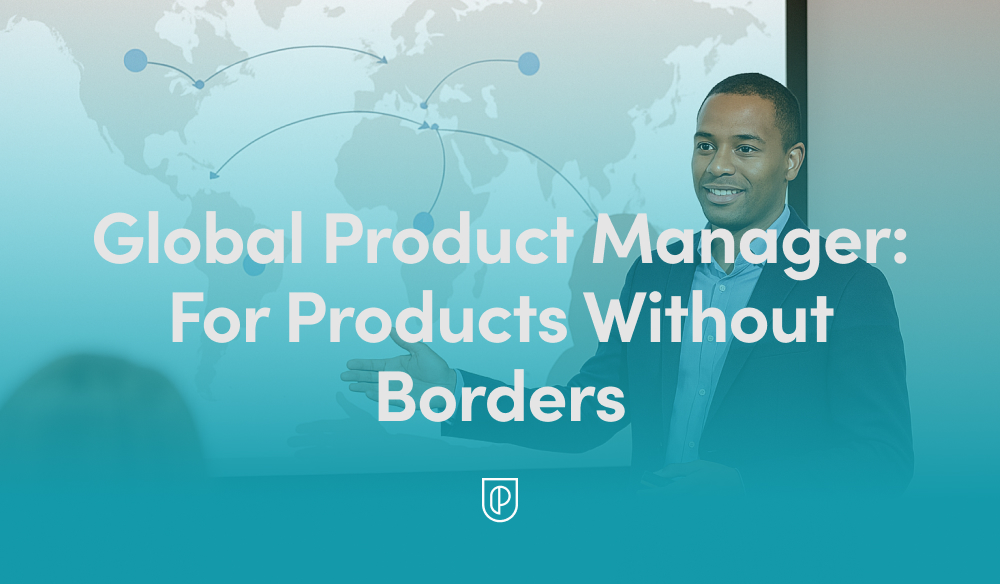
Products without borders are exhilarating—and unforgiving. In my role leading product strategy, I’ve learned that “global” isn’t a launch plan; it’s a system. It’s the discipline of creating one product vision that flexes to many markets without breaking the core experience, the roadmap, or the business.
Here’s what a Global Product Manager does, key skills, tools, challenges, and how to grow into this high-impact role.
At its heart, the Global Product Manager role orchestrates product-market fit in multiple regions simultaneously. I translate a unified value proposition into localized realities—aligning product positioning, go-to-market strategy, pricing and packaging, and compliance—while keeping the platform cohesive. That means partnering closely with product trios, regional leaders, sales, customer success, and marketing to drive outcomes vs output OKRs that actually move the business.
Operationally, I start with deep product discovery across segments and geographies: what pains are universal, and where do we need regional nuance? From there, I map points of parity we must maintain globally and the differentiators we’ll localize—copy, workflows, payments, support models, and integrations. The art is delivering a consistent core with flexible edges so we can scale without fragmenting the codebase or the customer experience.
Trust is the non-negotiable. I build privacy-by-design into the product and roadmap, and I collaborate early with legal and security on data governance, data residency, and evolving regulations like GDPR. The right guardrails reduce rework later and enable faster regional launches—because compliance is a feature customers feel, even when they don’t see it.
On the commercial side, I partner on consumption SaaS pricing, product-led growth motions, and country-level market entry. Some markets need lighter onboarding and in-app guides; others demand concierge support or partner-led distribution. I use retention analysis to identify fit and inform sequencing, then adjust messaging and activation flows to shorten time-to-value and improve user activation by region.
My analytics and enablement stack is intentionally boring—and ruthlessly consistent. A unified analytics platform with Amplitude analytics gives us comparable funnels across countries. For experimentation, I run A/B testing with a clear minimum detectable effect (MDE) and disciplined rollout plans. Pendo powers product tours and in-app guides tailored by locale, while Intercom and CRM integration with HubSpot help me close the loop with GTM and support teams. The outcome is a learning system, not just a dashboard.
The hardest part isn’t translation—it’s alignment. Time zones, competing priorities, and matrixed ownership test even strong cultures. I rely on stakeholder management, crisp decision records, and product roadmapping and sprint planning rituals that respect regional input without derailing the global plan. When tension rises, I return to first principles decision making and the try do consider framework to make trade-offs transparent and repeatable.
If you’re growing into this role, start by owning a multi-region initiative end to end: lead localization for a critical workflow, run market-specific A/B testing with clear MDE, and publish a country launch plan that ties discovery insights to OKRs and resourcing. Build your credibility by shipping outcomes, not artifacts—then scale your impact by mentoring peers and creating shared templates for pricing, positioning, and experimentation. That’s how you shift from capable PM to trusted global operator.
Ultimately, a Global Product Manager is a force multiplier. We reduce complexity for the organization while increasing resonance for customers. If “products without borders” is your mandate, build the systems—analytics, governance, enablement, and decision-making—that make borderless execution reliable, repeatable, and fast.
I just finished reviewing new findings on Japan’s marketing landscape, and the signal is clear: AI isn’t just a shiny tool—it’s a force multiplier for outcomes and careers. The headline that caught my attention, "Amplitude Releases New Research in Japan: Marketers are Unlocking Efficiency, Results, and Career Growth," aligns with what I’m seeing on the ground: teams that blend disciplined analytics with pragmatic AI adoption are pulling ahead.
Amplitude released a new survey of 500 Japanese marketers, which reveals how teams are benefiting from AI. Get the insights from the data
Here’s how I interpret the shift. AI accelerates the cycle from insight to action when it’s grounded in a unified analytics platform. With Amplitude analytics stitched into campaign and product signals, marketers can move beyond vanity metrics to diagnose true drivers of activation, engagement, and retention. That’s where efficiency compounds: fewer blind spots, faster iteration, and clearer attribution of what actually drives results.
On the strategy side, I’m seeing two dominant patterns. First, gen ai is speeding up creative workflows—audience research, message testing, and content generation—without sacrificing brand rigor. Second, agentic AI is emerging in operational loops: routing leads, prioritizing segments, and suggesting next-best actions based on behavioral data. The common denominator is data governance; without clean event schemas and consent-aware pipelines, AI amplifies noise instead of signal.
For product-led growth motions, this research validates what empowered product teams have practiced for years: instrument the customer journey, frame outcomes vs output OKRs, and experiment in short, learnable cycles. When marketing, product, and data join forces as true product trios, teams can run in-app guides and product tours, tune onboarding, and perform rigorous retention analysis that ties growth to product value rather than spend.
My playbook in this environment is simple but disciplined. Start with first principles decision making: define the problem, the decision, and the evidence required. Use a unified analytics platform to connect lifecycle events across acquisition, activation, and expansion. Align go-to-market strategy with product roadmapping and sprint planning, so insights move directly into experiments—not slide decks. Then close the loop with clear outcome metrics and QBRs that reward learning velocity, not activity volume.
There’s also a career arc embedded in this shift. Marketers who cultivate analytical fluency and AI literacy are becoming indispensable partners to product management leadership. They can articulate a differentiated value proposition, shape product positioning with live behavioral data, and influence board-level narratives with credible, causal evidence. That combination—story plus signal—unlocks both performance and professional growth.
My commitment going forward is to operationalize these lessons: tighter event taxonomy, sharper outcomes framing, and more systematic experimentation across channels and in-product touchpoints. With the right data foundation and a pragmatic AI strategy, we can convert curiosity into capability—and capability into repeatable growth.
Inspired by this post on Amplitude – Perspectives.
I’m fascinated by how the most credible legal-tech platforms operationalize AI in the enterprise, where risk tolerance is near zero and trust is the product. When I evaluate solutions in this space, I look for rigor in model design, governance, and go-to-market execution—not just raw model performance.
Discover how Luminance CEO Eleanor Lightbody builds Legal-Grade™ AI for enterprise. See how their specialized, agentic AI models lawyers trust at scale.
That framing resonates with me. “Legal-Grade™” isn’t a slogan; it’s a product requirement that implies auditable decisions, explainable outputs, robust data governance, and demonstrable accuracy under real-world legal workflows. “Agentic AI” adds another layer: autonomous orchestration of tasks with explicit guardrails, role definitions, and escalation paths to humans-in-the-loop.
From a product management perspective, I start with outcomes. For legal teams, the jobs-to-be-done are concrete: contract analysis and redlining, due diligence, compliance reviews, investigations, and eDiscovery. The success criteria are equally concrete: precision and recall on domain-specific clauses, latency under load, traceability of sources, and the ability to scale across matter types, jurisdictions, and languages without degrading trust.
Building that foundation requires deliberate AI strategy. I look for domain-specialized models, retrieval-augmented generation tuned to legal corpora, evaluation harnesses with gold-standard datasets, and continuous red-teaming. Just as important are deployment choices—on-prem or VPC isolation, encryption in transit and at rest, strict PII handling, and granular access controls—to satisfy the security posture of enterprise legal and compliance teams.
Governance is where “legal-grade” is won or lost. Robust audit trails, versioned prompts and policies, model cards, clear data lineage, and event logs that support defensibility are table stakes. Human review workflows, explainability tooling, and remediation paths ensure the system remains trustworthy when edge cases arise.
On product process, I favor empowered product teams and forward-deployed engineers partnering directly with attorneys and legal ops. Co-designing workflows with subject-matter experts surfaces the right constraints early: how redlines are presented, what confidence thresholds trigger review, and where to anchor the user experience in familiar legal tools and document structures.
Competitive differentiation and product positioning hinge on clarity: what specific legal outcomes are delivered faster, safer, or more accurately than alternatives? I prioritize transparent benchmarking against baselines, proof-of-value pilots that mirror production data conditions, and pricing that aligns to measurable outcomes (e.g., time-to-first-draft, review throughput, or risk reduction) rather than abstract usage metrics.
Go-to-market strategy in enterprise legal is a discipline in itself. Expect rigorous InfoSec reviews, stakeholder alignment across legal, IT, and procurement, and the need for customer references that demonstrate “trust at scale.” Clear messaging around value proposition, safety posture, and operational readiness shortens cycles and builds confidence among risk-averse buyers.
The big takeaway for product leaders: Legal-Grade™ AI isn’t about novel models; it’s about orchestrating specialization, safeguards, and enterprise-grade delivery into a coherent system that lawyers can rely on daily. When agentic AI is harnessed with the right guardrails and domain depth, it becomes a force multiplier for legal teams—accelerating work without compromising standards.
Inspired by this post on Amplitude – Perspectives.
Your SaaS demo earns attention, the buyer sees the value, and then the deal stalls on SSO, audit logs, an expected integration, or an unclear uptime commitment. That is not the buyer missing your vision. It is the buyer deciding whether your product is credible enough for the vision to matter.
The answer is not to copy every competitor. It is to manage points of parity as admission criteria: close the gaps that disqualify you, build each baseline capability to a credible standard, and preserve most of your investment for the value that makes customers choose you.
Parity is set by the buying situation, not the feature list
A point of parity is a capability, assurance, or experience a buyer assumes a viable product will provide. Its presence rarely wins the deal by itself. Its absence can remove you from consideration before your differentiation receives a fair hearing.
This makes parity different from sameness. You do not need an identical product, interface, or implementation. You need to satisfy the underlying condition that lets the buyer proceed.
In SaaS, parity usually appears in three forms:
Functional eligibility: The product supports the workflow the customer considers essential. Depending on the market, that could include role-based permissions, granular event tracking, standard dashboards, self-serve onboarding, or integrations with systems such as Salesforce, HubSpot, and Slack.
Risk assurance: The buyer can establish that adopting the product will not introduce unacceptable security, privacy, reliability, or governance risk. Examples include SOC 2, SSO, two-factor authentication, audit logs, encryption standards, privacy controls, and clear service commitments.
Commercial and operational confidence: The customer can understand the price, predict the bill, get help when something fails, administer users, and verify what the product promises. Clear packaging, responsive support, documentation, and reliability communication belong here.
There is no universal SaaS parity checklist. The required set changes with the customer segment, use case, buying process, and risk profile. A small team may accept manual user administration. A larger organization may treat centralized access control as a condition of purchase. A native integration might differentiate you in an emerging category and become expected once enough credible alternatives provide it.
You have a developer tool with real adoption, and the pressure to call it a platform is starting to build. Customers want collaboration. Executives want a larger market. Sales wants enterprise controls. The roadmap begins filling with adjacent features.
The dangerous response is to make the product broader before you understand why developers chose it. A platform is not a large collection of features. It is a product in which related work, artifacts, integrations, and people accumulate around a trusted core. Your growth plan should make every expansion decision protect that core.
Win one developer job before building the platform
Developer-first growth usually begins with a small, immediate job. Sentry emerged from a code snippet that solved error monitoring. Postman began as a Chrome extension that made API work easier. Neither starting point needed a platform narrative. Each gave a developer a direct way to remove friction from work already in progress.
That sequence matters. The narrow utility creates the repeated behavior on which a platform can later build. If the initial product does not become part of a real workflow, adding dashboards, marketplaces, administration, or collaboration merely distributes the weakness across a larger surface.
Write the wedge as an operational statement:
When [specific trigger occurs], a developer uses [the product] to complete [a specific job] and knows it worked when [an observable result appears].
The observable result is your core value event. It might be an error identified with enough context to investigate, an API request completed, a deployment verified, or another result native to your product. Account creation, an SDK installation, an API key, and a project configuration are usually setup events. Do not label them activation unless setup itself is the job the developer came to complete.
Instrument the path to that result before increasing acquisition:
Entry: What problem, integration, search, or recommendation brought the developer in?
Setup: Which dependencies, permissions, configuration choices, and concepts stand between entry and useful output?
First value: Did the developer receive an observable result, and how long did it take?
Repeat value: Did the developer return and complete the job again at the natural cadence of the workflow?
Depth: Which additional projects, environments, integrations, or use cases appeared after the core job worked?
Look at the sequence as a funnel, but diagnose it as a workflow. A developer who leaves after installing a dependency may have encountered an authentication problem, an unclear concept, a missing integration, or output that did not justify the effort. A larger top of funnel will not tell you which one.
The wedge is ready to support expansion when developers reach value without extensive assistance, repeat the behavior, and start creating their own workarounds for adjacent needs. If users still require a sales explanation or a live onboarding session before experiencing the core result, keep improving the utility.
Treat time-to-value and trust as growth infrastructure
A developer evaluates a product while trying to finish another task. Every new concept, required field, dependency, and context switch competes with that task. This makes cognitive overhead a growth cost, not merely a user-experience concern.
Run an activation teardown from a clean environment. Do not rely on an employee account with saved credentials, existing projects, and internal knowledge.
Begin at the page, package, repository, extension, or integration a new developer would actually discover.
Choose a common task and define the result that proves it has been completed.
Record every decision the developer must make before seeing that result.
Classify each interruption as identity, permissions, configuration, dependency, product concept, documentation, or product failure.
Remove unnecessary decisions. Supply safe defaults for the rest, and delay advanced choices until they become relevant.
Confirm that telemetry distinguishes a successful result from a completed setup step.
The best onboarding asset is often executable rather than explanatory: a sample request, a working project, a copyable configuration, a template, or a collection that produces visible output. Documentation should still explain the underlying model, but the developer should not have to understand the entire product architecture before completing the first useful task.
Progressive complexity is the governing design principle. Keep the initial path narrow and opinionated. Reveal environments, automation, permissions, collaboration, and administration as the user’s work requires them. Hiding essential functionality is not simplicity; sequencing complexity is.
Open source or a frictionless free entry can strengthen this motion when it lets developers inspect, try, and advocate for the product without waiting for organizational approval. It is an adoption wedge, not a substitute for product quality. The installed experience, upgrade path, hosted experience, and documentation still have to feel coherent.
Community belongs inside this system. Templates, collections, examples, shared workspaces, integration recipes, and reusable configurations do more than create awareness. They shorten the path to a result and preserve knowledge that would otherwise remain in private messages or individual machines. Measure which community artifacts lead to successful activation and repeated use. Page views alone cannot tell you whether an example worked.
Brand also becomes concrete in a developer product. Accurate documentation, useful error messages, predictable releases, reliable behavior, and a clear explanation of tradeoffs all signal competence. Promotion can bring a developer to the door, but it cannot compensate for a brittle setup or an untrustworthy result.
Expand through observed adjacency, not feature ambition
You earn the right to expand when the core workflow produces adjacent work. Developers begin sharing artifacts manually. Teammates ask for access. Other roles need the same underlying information presented differently. Customers request integrations, permissions, security controls, or reusable standards. These behaviors are stronger platform signals than a broad market map.
Look for pull in product usage and customer conversations:
Users export, copy, or screenshot product output so another person can act on it.
Teams recreate the same configuration, request, workflow, or rule across projects.
Several roles work around the same underlying object but lack a shared context.
Customers build repeated custom integrations around the same extension point.
Adoption stalls after individual success because access, governance, or collaboration is missing.
Enterprise requirements emerge in accounts where developers already receive clear product value.
A strong platform layer reuses the product’s core objects, context, identity, and workflow. Collaboration should make the existing artifact easier to share. Governance should control the activity already taking place. An integration should extend an established workflow. If a proposed feature introduces a separate data model, unrelated onboarding, a new buyer, and little reuse of the core product, it may be a separate product rather than platform leverage.
A practical expansion sequence is:
Reliable individual utility: A developer can complete and repeat the core job alone.
Reusable artifacts: The output, configuration, or workflow can be saved and applied again.
Collaboration: Other people can discover, share, review, and improve those artifacts in context.
Extensibility: APIs, integrations, or extension points connect the core workflow to the surrounding toolchain.
Governance: Organizations can manage access, security, compliance, and standards without breaking the developer experience.
Adjacent perspectives: Product, security, operations, or business stakeholders can participate through views suited to their decisions while working from the same underlying system.
This is a sequencing model, not a requirement to ship every layer. Stop where customer behavior stops supporting the next one.
Before committing to an expansion, require a short platform-bet memo. It should name the current behavior, the workaround, the existing product object being extended, the user or role that benefits, the expected behavioral change, and the activation risk. It should also identify the evidence that would cause you to narrow or stop the bet.
Validate the end-to-end developer path, not just the attractiveness of the concept. A presentation can confirm that a customer likes the idea of an integration. It cannot show whether authentication, configuration, failure handling, and debugging make the integration usable. Build the thinnest functioning path that can replace the workaround, then observe whether people return to it.
Monetize coordination and control without taxing discovery
Monetization becomes dangerous when the paywall appears before the developer has enough evidence to trust the product. The product then asks for organizational commitment before proving individual value.
A healthier packaging model follows the way value expands:
Adoption stage
User need
Product capability
Packaging guardrail
Individual
Complete a painful technical job
Core utility and useful output
Preserve a credible path to first value
Team
Reuse work and coordinate decisions
Shared artifacts, workspaces, roles, and collaboration
Charge around compounding team value without damaging individual adoption
Organization
Standardize and manage risk
Administration, security, governance, and compliance
Align the package with organizational requirements already visible in active accounts
Ecosystem
Connect and extend workflows
Integrations, APIs, and extension points
Keep the core interfaces useful enough to encourage participation
The commercial unit should follow the value mechanism. Usage can fit when customer value and product cost grow with activity. Seats can fit when collaboration among people is the primary benefit. Organization-level packaging can fit when governance, security, and standardization drive the purchase. Do not select a value metric merely because it is easy to meter.
Treat pricing and packaging as product hypotheses. State what behavior the boundary is meant to monetize. Then watch its effect on first value, repeated use, team expansion, conversion, downgrades, and support demand. A package that improves short-term conversion while weakening developer adoption can reduce the very account growth on which the business depends.
Open-source monetization requires the same clarity. Decide what promise the open product makes, which capabilities belong in the hosted or commercial experience, and why the boundary is durable. If developers interpret the free or open product as temporary bait, the company spends trust faster than it creates revenue.
Sales becomes valuable when it removes buying friction around a product that already proves its utility. Bring sales into accounts showing multi-person adoption, standardization needs, security review, procurement complexity, or demand for administration. Sales can coordinate stakeholders and translate enterprise requirements. It cannot manufacture developer retention.
This division of labor protects both motions: the product helps a developer succeed before a meeting is required, and the commercial team helps an organization adopt the product without asking developers to abandon the experience that created demand.
Key takeaways for your next platform review
Define one core value event. Use an observable developer result, not account creation or configuration completion.
Trace the complete activation path. Inspect time-to-value, failed steps, and repeat behavior at the workflow’s natural cadence.
Make community artifacts executable. Connect templates, examples, collections, and documentation to successful product outcomes.
Demand evidence of adjacency. Prioritize recurring workarounds, sharing behavior, repeated integrations, and organizational requirements arising after individual success.
Reuse the product’s core objects. Platform layers should compound existing context rather than create disconnected feature families.
Sequence complexity. Keep individual utility direct, then reveal collaboration, extensibility, governance, and additional stakeholder views as needed.
Place commercial boundaries around expanding value. Protect discovery and first value while monetizing collaboration, usage, security, and organizational control where they become meaningful.
Use sales to navigate organizational adoption. Do not use it to conceal weak activation or retention.
Protect trust as a growth input. Reliability, documentation, error handling, and transparent product boundaries deserve roadmap capacity.
At each product review, bring the largest break in the activation path, the strongest evidence of adjacent pull, and the most consequential trust gap. For every proposed platform bet, name the behavior it should change and the evidence that would stop it. This turns platform strategy from an expansion wish list into a sequence of testable decisions.
Your next roadmap does not need a generic platform workstream. It needs a clear core value event, a visible activation trace, a recurring workaround worth absorbing, and a commercial boundary tied to value customers already experience. If those are not clear, improve the utility. If they are, build the narrowest adjacent layer that makes the existing workflow more valuable.
The product earns platform status when each new participant, artifact, and integration strengthens the reason developers adopted it in the first place. Let that compounding behavior, rather than the label, guide what you build next.
References
Shivam.Consulting Blog — Defy Conventional Wisdom: Product Playbook from Sentry’s $3B Rise with David Cramer
Shivam.Consulting Blog — From Chrome Extension to Global Platform: Product Lessons from Postman’s Breakout Journey
Your self-service motion is working, but growth keeps stalling at the same transitions. A buyer needs an integration before committing. A larger account needs implementation help. A new market requires local credibility. A promising customer reaches value, then discovers that your product sits outside the rest of its workflow.
A partnership can remove those constraints. It can also add negotiation, engineering work, launch coordination, and support obligations without changing customer behavior. The useful question is not whether you should choose product-led growth or partnership-led growth. It is which job each motion should perform, where they should hand off, and how you will know that the combination is compounding.
Give each growth motion a distinct job
Product-led growth should own the repeatable parts of adoption: evaluation, onboarding, first value, habitual use, and product-driven expansion. Partnership-led growth should remove a constraint that your product cannot efficiently remove by itself: access to a market, a missing workflow, trusted implementation, complementary technology, or credibility with a particular buyer.
That distinction matters because both teams can appear to be pursuing growth while optimizing incompatible outcomes. Product may be reducing friction for individual users while a partner asks for a custom enterprise path. Partnerships may be generating referrals while the product team measures activation from a self-service journey those referrals never follow. If the handoff is undefined, each motion can look busy while the customer experiences the seams.
Atlassian’s model showed how self-service, a global channel network, and enterprise upselling can form one system. Self-service handled natural adoption. Partners extended reach and localized value. An assisted motion entered when account complexity justified it. The important lesson is the sequencing, not the absence or presence of a sales team.
Growth job
Motion in the lead
Evidence it is working
Misleading proxy
Help a qualified user reach initial value
Product
The user completes the activation behavior and returns to the valuable workflow
Registrations or trial starts
Close a capability or workflow gap
Product and technology partner
Connected customers use the intended cross-product workflow
Published integrations or installations
Reach a market you cannot efficiently reach alone
Distribution or channel partner
Partner-sourced accounts activate and continue using the product
Introductions, referrals, or raw leads
Handle deployment complexity
Services, channel, or enterprise motion
Customers deploy successfully, adopt the core workflow, and expand when value grows
Contract size at signing
Before adding a partner, write a short growth contract for the motions involved:
The product helps a defined customer reach a defined outcome without a named friction.
The partner adds a specific capability, route to market, implementation layer, or trust advantage at a specific point in that journey.
An assisted sales or success motion enters only when an observable customer condition makes self-service insufficient.
If you can fill those sentences only with phrases such as broader awareness, more reach, or strategic synergy, the partnership thesis is not ready. Name the customer behavior that should change.
Earn the right to scale through partners
A partnership amplifies the system it connects to. If onboarding reliably creates value, a partner can bring more suitable customers into that path. If onboarding depends on heroic intervention, a partner will import more exceptions, escalate more support cases, and make the underlying leak harder to diagnose.
I would use the following readiness gates before treating partnerships as a scalable growth motion:
Activation is observable. You can identify the behavior that indicates a customer has experienced meaningful value. Account creation is rarely enough.
The core journey is repeatable. The intended segment can move from evaluation to value without improvised help at every stage. Documented exceptions are acceptable; an undocumented service dependency is not.
Packaging follows adoption. Customers can buy, connect, and expand in a way that matches how value appears. A low-friction product wrapped in a high-friction buying process will weaken both self-service and partner conversion.
The integration boundary is clear. The team knows which product owns each part of the customer workflow, how failures will be surfaced, and who handles support when the boundary breaks.
Attribution survives the handoff. You can distinguish partner-sourced acquisition, partner-assisted deployment, product activation, integration usage, retention, and expansion.
Ownership extends beyond launch. Named owners exist for integration quality, enablement, co-marketing, customer support, and the operating review after release.
A failed readiness gate does not always mean you should wait. It changes the appropriate scope. Use a prospective partner as a design partner around a narrow customer, use case, and workflow. Learn where the handoff fails before recruiting a wider channel or making a broad market promise.
Keep partner-specific product work contained during that learning phase. A custom branch can feel like progress because a recognizable partner is attached to it. Unless the requirement represents repeatable demand from your target market, you may be trading product leverage for a bespoke delivery obligation.
Choose partners against a named growth constraint
Do not begin with a list of companies you would like to announce. Begin with a constraint log. Pull recurring friction from customer interviews, onboarding data, lost opportunities, support conversations, implementation work, and expansion blockers. Then classify each constraint by what would remove it.
A workflow gap may require a technology or platform partner.
Weak access to a relevant audience may require a distribution partner.
A trust or implementation gap may require a services or channel partner.
Regional complexity may require a partner with local delivery capability.
Enterprise buying friction may require an assisted commercial motion rather than a new partnership.
A partner is appropriate only when it controls an asset that is relevant to the constraint. A large audience is not useful if it contains few customers with your problem. A popular integration is not useful if connecting the products does not improve an important workflow. A reseller is not useful if the product still requires your team to deliver every implementation.
Turn the constraint into a falsifiable partner thesis: For a defined customer experiencing a defined friction, combining your capability with the partner’s specific asset should improve a named behavior because of a clear mechanism. Both companies benefit when an explicit customer outcome occurs.
Evaluate prospective partners against that thesis:
Customer overlap: Does the partner reach the segment and use case you actually serve, not merely a large adjacent audience?
Unique leverage: What can this partner make easier, faster, more trusted, or more complete than your direct motion can?
Mutual value: Which customer outcome benefits both sides, and does each side have a reason to keep investing after launch?
Activation path: Where will customers encounter the partnership, what will they do next, and which side owns that transition?
Execution fit: Can both teams support the required product work, enablement, launch, and ongoing operations?
Reusable learning: Will this relationship teach you something that improves the product or partner program beyond the initial deal?
Downside control: What happens if priorities change, the partner underperforms, or too much acquisition becomes concentrated in one channel?
The logo trap is especially dangerous here. A recognizable name can create internal momentum before anyone has demonstrated a customer journey. The team then bends the roadmap around the announcement, treats the contract as evidence of demand, and discovers after launch that neither side owns activation.
Define your non-negotiables and your best alternative before negotiations begin. Your alternative might be building the missing capability, integrating with another provider, serving the workflow manually while learning, or continuing to sell directly. High-leverage agreements depend on a clear mutual value narrative, explicit boundaries, and a shared activation plan. A larger concession cannot repair weak customer value or asymmetric incentives.
Your first lighthouse partner should maximize learning and repeatability, not prestige. Prefer a partner whose customers expose the target use case clearly, whose team will participate in the operating work, and whose requirements are likely to represent a broader market. The goal is to build a motion you can repeat, not an exception you can publicize.
Build one flywheel and instrument every handoff
Product-led and partnership-led growth compound only when the output of one motion improves the input to another. Treating them as separate funnels hides that dependency.
The product gives a relevant customer a low-friction way to evaluate and experience value.
The partner introduces the product inside a trusted channel or a workflow where the need is already visible.
The combined experience removes a capability, implementation, or buying constraint.
Observable usage creates evidence that the customer is receiving value.
Accounts that develop greater complexity move into the appropriate channel, success, or enterprise path.
Customer outcomes give the partner a reason to promote, implement, or extend the relationship again.
Instrument the transitions, not just the endpoints. Revenue is important, but it arrives too late to explain why the system is working or failing. A practical measurement tree should cover:
Acquisition quality: qualified visits, sign-ups, or opportunities associated with the partner, separated from undifferentiated traffic.
Activation: completion of the value-bearing behavior and the time required to reach it.
Connected adoption: integration attachment, successful setup, and recurring use of the cross-product workflow.
Retention: continued product and integration use by the relevant cohort rather than aggregate retention across unrelated customers.
Expansion: broader usage, added capabilities, or movement into an assisted plan when customer value and complexity justify it.
Partner health: active enablement, qualified pipeline, implementation capacity, fulfilled launch commitments, and recurring participation in the motion.
Agree on attribution rules before reporting results. Partner-sourced should identify an account whose attributable entry originated through the partner mechanism. Partner-assisted should identify a material role in evaluation, implementation, or expansion. Product-sourced should preserve the self-service origin even if a partner becomes involved later. Your definitions may differ, but they must be stable enough to prevent two teams from claiming the same outcome as independent growth.
Pricing and packaging also sit inside the flywheel. Customers should be able to buy in a way that resembles how they adopt. If individual users discover value first, packaging should not force an enterprise process before that value appears. If a partner performs real implementation or distribution work, its economics should reward the customer outcome you want rather than merely the initial transaction.
The pattern of the metrics tells you what to fix:
If partner traffic rises while activation stays weak, the audience, promise, or handoff is mismatched. More promotion will amplify the mismatch.
If activation is healthy but retention weakens, the partnership may be helping customers complete setup without creating durable value.
If integrations are installed but the connected workflow is rarely used, discoverability, configuration, or the underlying use case is the likely problem.
If qualified partner demand exists but launches repeatedly stall, ownership or integration capacity is the constraint.
If self-service adoption is healthy but larger accounts stop at deployment, inspect administration, security, procurement, support, and implementation requirements before changing acquisition.
If results depend heavily on one partner, treat concentration as a strategic risk even while the channel is growing.
This diagnostic view prevents a common mistake: responding to every weak metric with more top-of-funnel activity. A handoff problem should be repaired at the handoff.
Operate the partnership like a product
A signed agreement is an input. The operating system around it determines whether customer value appears. The deal memo and mutual success plan should be clear enough to survive the handoff from executives and negotiators to the people building, launching, supporting, and measuring the experience.
At minimum, capture:
The target customer, use case, constraint, and intended outcome.
The value exchange for the customer, your company, and the partner.
The journey from partner exposure through activation, adoption, support, and expansion.
Product, engineering, enablement, marketing, support, and commercial deliverables with a directly responsible owner for each.
Launch gates based on experience readiness, instrumentation, documentation, support coverage, and frontline enablement.
Shared success metrics, attribution definitions, and access to the data needed for decisions.
Decision rights for roadmap changes, positioning, customer escalation, and launch timing.
Non-negotiables, dependencies, the best alternative, and conditions for pausing or ending the relationship.
Signals that justify expanding the integration, audience, commercial commitment, or partner program.
Keep ownership unambiguous. Product should own the customer problem, experience, integration priority, and product trade-offs. Partnerships should own the mutual value model, negotiation, executive alignment, and relationship health. Engineering should own technical quality and operational reliability. Marketing should own a launch promise that matches the actual journey. Sales, success, support, and operations should know when the account changes hands and how the resulting behavior will be recorded.
Launch readiness should be a joint decision. Do not release because the announcement date has become politically expensive to move. Confirm that the intended workflow works, the product promise matches what was built, tracking is visible, documentation is usable, support escalation has an owner, and both sides know the next action expected from the customer.
After launch, review cohorts and handoffs rather than presenting a list of completed activities. A useful operating review decides whether to expand, repair, or stop. Expansion is justified when the target customer activates, continues using the combined workflow, and the partner can repeat its contribution. Repair is appropriate when the use case is sound but a specific transition loses customers. Stopping is appropriate when the relationship lacks unique leverage, incentives remain asymmetric, or partner-specific obligations consistently exceed the reusable value being created.
A quarterly business review cannot compensate for missing weekly ownership. Use regular working sessions to remove delivery and activation blockers. Reserve the broader review for trend decisions, roadmap alignment, economics, and changes in commitment. That keeps the partnership connected to outcomes instead of turning governance into a recital of launches, meetings, and leads.
Key takeaways
Let product-led growth own repeatable adoption. Use partnerships to remove a named constraint involving reach, workflow, trust, capability, or implementation.
Do not scale a partner motion until activation, packaging, attribution, integration boundaries, and post-launch ownership are clear enough to survive added volume.
Select partners for relevant leverage and mutual incentives, not audience size or logo value.
Measure every handoff from partner exposure to activation, connected usage, retention, and expansion. An integration launch is not a customer outcome.
Define ownership, non-negotiables, your best alternative, attribution rules, and expand-or-stop conditions before the relationship becomes difficult to unwind.
At your next planning review, do not add a generic partnership initiative. Choose a stalled transition in the customer journey. Write the growth contract, test the readiness gates, and create a partner thesis tied to an observable behavior. If you cannot name what should change for the customer, do not begin the negotiation.
Once the behavior is visible, start with a narrow, repeatable path. Let the product earn adoption and let the partner remove a constraint it is structurally equipped to solve. The compounding advantage comes from that clean handoff, not from the size of the announcement.