If someone has put SpaceX’s AI numbers into your strategy deck, pause before debating whether data centers belong in orbit. The first question is simpler: which claim would actually change your decision, and what evidence would make that claim reliable enough to use?
The current narrative compresses revenue, customers, computing capacity, hardware choices, orbital operations, and a 2027 target into one impressive story. Those are separate propositions. A product or AI leader should evaluate them separately before changing a vendor plan, capacity forecast, product architecture, or investment thesis.
One narrative contains five claims with different proof requirements
SpaceX is claimed to have generated 2.6 billion in Q2 AI revenue, 247% more than a year earlier, and roughly three times its rocket revenue. The same account places 1.4 gigawatts of compute in operation, identifies Google and Anthropic as customers for part of that capacity, describes an orbital system called Starmind AI, and gives SpaceX a target of 10 to 20 gigawatts by 2027.
| Claim | What it would mean | Evidence required before you rely on it |
|---|---|---|
| 2.6 billion of Q2 AI revenue | SpaceX already has a material commercial AI business | A primary financial disclosure, a definition of AI revenue, the reporting entity, the recognition period, and a reconciliation to contracts or invoices |
| 247% year-over-year growth and AI revenue at roughly three times rocket revenue | AI has become a faster-growing and possibly larger business line | Comparable prior-period figures, consistent segment definitions, and an exact denominator for the rocket comparison |
| 1.4 gigawatts of live compute, partly leased to Google and Anthropic | Substantial capacity is already commissioned and commercially allocated | A definition of live, metered deliverable capacity, locations, utilization, contract status, and customer confirmation |
| Starmind AI using Nvidia Vera Rubin hardware in orbit | Space-based computing has moved from concept toward an operating system | Mission status, payload specifications, power and thermal budgets, networking performance, workload results, and operational telemetry |
| 10 to 20 gigawatts by 2027 | SpaceX expects an unusually rapid infrastructure expansion | Financed capacity, power availability, hardware supply, launch or site schedules, commissioning milestones, and contracted demand |
None of these claims validates the others. Ground-based AI revenue would not prove that orbital compute is economical. A working satellite payload would not validate billions in recognized revenue. A customer reservation would not establish actual utilization. A long-range capacity target would not establish that power, chips, launches, or customers are committed.
The scale claim also deserves its own treatment. Moving from 1.4 gigawatts to 10 to 20 gigawatts means expanding reported capacity by approximately seven to fourteen times. That calculation is straightforward; proving that the expansion can be financed, supplied, deployed, cooled, connected, and sold is not.
Interrogate the revenue before using it as a market signal
A precise number can still describe the wrong metric. Before the 2.6 billion figure enters a market model, ask six questions.
- What does revenue mean? Determine whether the figure represents revenue recognized during Q2, signed contract value, bookings, backlog, capacity reservations, or an annualized run rate. These measures answer different questions and cannot be substituted for one another.
- What counts as AI? The category could include GPU rental, managed infrastructure, networking, satellite services, data processing, or another bundled offering. You cannot compare it with a cloud provider’s compute business until the segment boundary is clear.
- Which entity earned it? Establish whether the number applies to SpaceX as a whole, a subsidiary, a partnership, or infrastructure operated for another party. Also separate third-party customer revenue from transfers between related entities.
- How concentrated is it? The reported involvement of Google and Anthropic does not reveal the amount each contracted, the amount consumed, the contract term, renewal rights, pricing, or whether commitments are take-or-pay.
- What produced the growth rate? A 247% year-over-year increase needs a consistent base period and classification. A small prior-year base, an acquisition, or a change in what qualifies as AI revenue can make growth appear stronger without demonstrating repeatable demand.
- What are the economics behind the revenue? Revenue alone does not show gross margin, power cost, hardware depreciation, financing requirements, customer acquisition cost, or the capital needed to deliver another unit of capacity.
The rocket comparison needs equal care. The phrase “three times more” is often used imprecisely; establish whether the intended ratio is three to one. Then check whether both sides cover the same period, entity, and accounting treatment. Launch revenue can also be recognized at different milestones from infrastructure revenue, so a quarterly ratio is not automatically evidence that one business has permanently overtaken the other.
For a decision memo, reduce the financial claim to five fields: metric, definition, period, scope, and evidence. If any field is missing, label the number unverified. Do not use it as a pricing benchmark, market-size input, or proof of product-market fit.
Orbital compute must close the entire operating loop
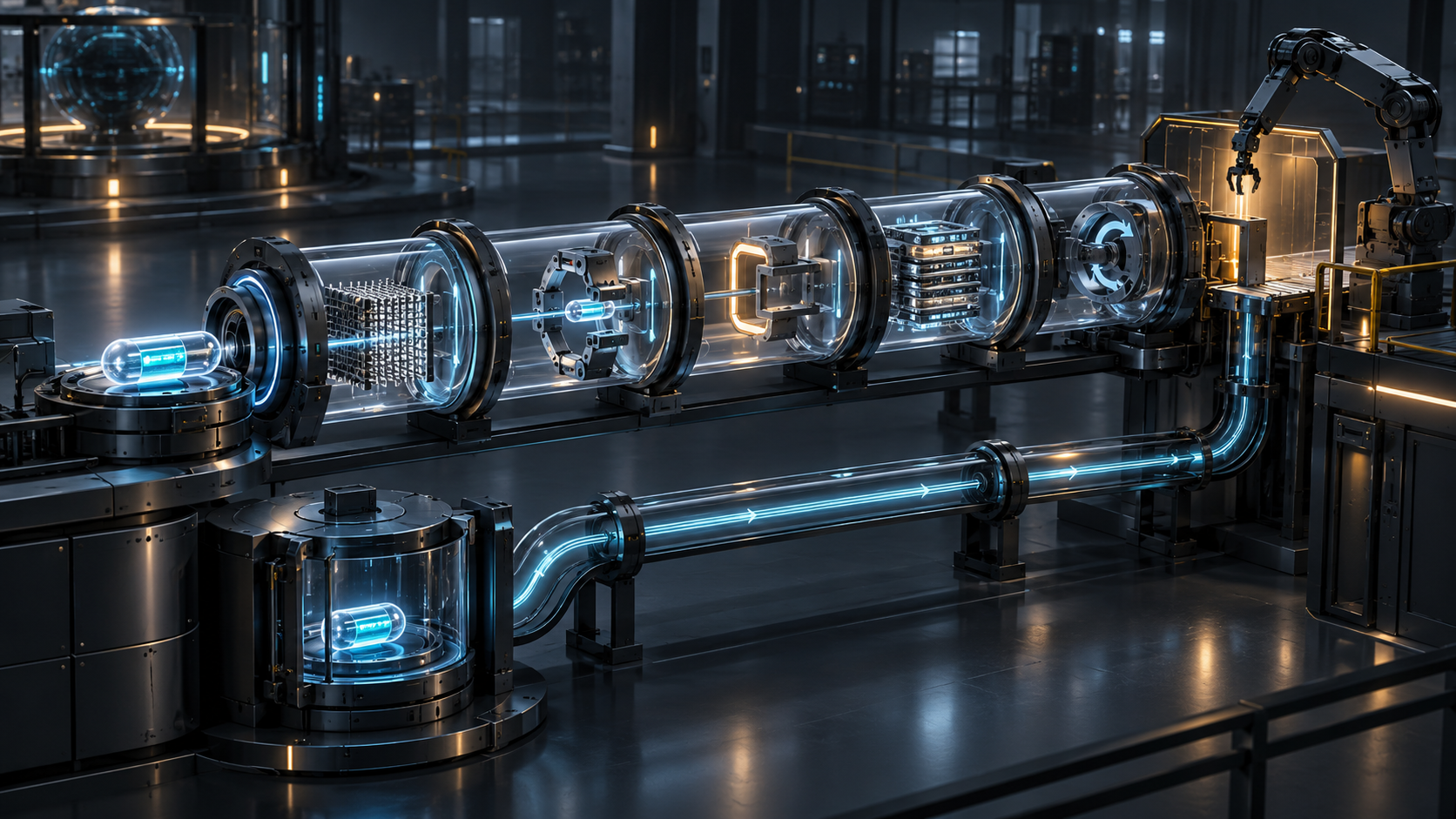
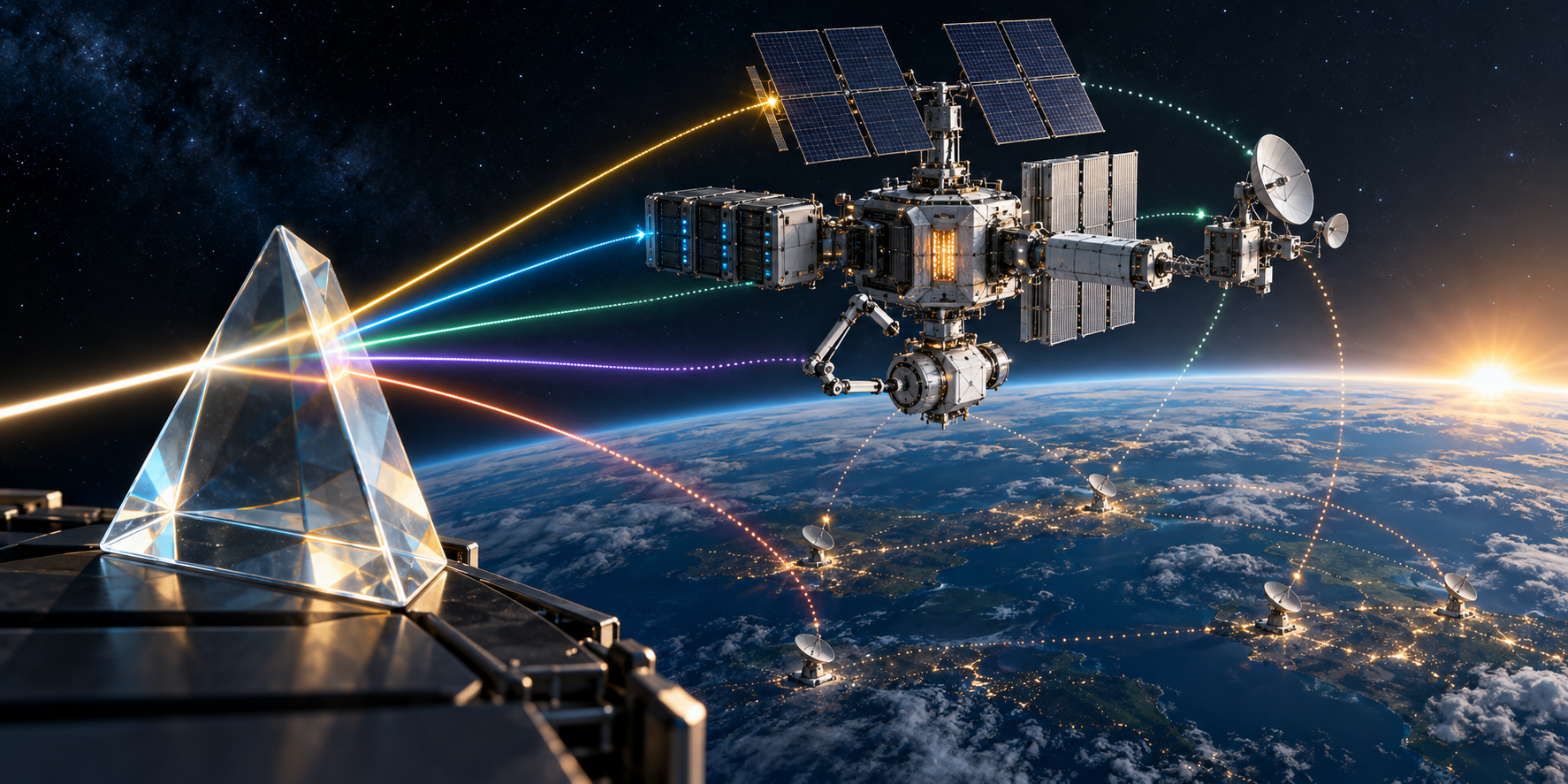
The Starmind AI claim combines an orbital satellite, Nvidia Vera Rubin hardware, and data-center workloads. That is technically interesting, but naming a chip and a destination does not define a viable computing service. Six linked systems have to work at the same time.
- Power generation and delivery: Ask how much electrical power reaches the accelerators after conversion losses and the needs of communications, storage, control systems, and thermal management. Also determine whether a quoted gigawatt figure means contracted power, facility power, or actual IT load.
- Heat rejection: Servers turn electrical power into heat. On Earth, facilities move that heat through air and liquid systems. In vacuum, waste heat ultimately has to be radiated. A credible design therefore needs radiator area, operating-temperature assumptions, mass, orientation constraints, and performance across the full workload profile.
- Radiation tolerance and reliability: Accelerators, memory, storage, and networking equipment must continue operating in a radiation environment that can cause errors and degrade components. Shielding, redundancy, error correction, and recovery mechanisms add mass or consume capacity. A short demonstration is not the same as sustained service.
- Data movement: The business case depends on where the input data originates and where the output is consumed. Uplinking a large Earth-based training set and downlinking frequent checkpoints creates a different network burden from processing sensor data already generated in orbit.
- Remote operations: There is no routine technician visit to reseat hardware, replace a failed component, or repair a cooling loop. Software recovery, hardware redundancy, spare capacity, fault isolation, and replenishment cadence are part of the product, not secondary operating details.
- Full lifecycle economics: Compare cost per useful, completed compute job after launch, power, thermal hardware, communications, ground infrastructure, failures, insurance, replacement, and idle capacity. Nameplate accelerator performance or total gigawatts will not tell you what a customer actually pays for reliable work.
Workload selection may matter more than raw chip performance. The strongest initial candidate is likely to be data created in orbit that can be filtered, compressed, classified, or summarized before downlink. Delay-tolerant jobs with small inputs and outputs may also be plausible if the lifecycle economics work. Large training jobs built around Earth-resident datasets face a heavier data-movement requirement, while interactive inference has to meet end-to-end latency, availability, and recovery expectations.
This gives you a practical test: require the orbital proposal to name one workload, its data origin, input and output volumes, latency requirement, failure tolerance, security boundary, and terrestrial baseline. If the proposal only describes generic “data-center workloads,” it is not yet specific enough for product or procurement planning.
Musk’s reported position that SpaceX runs exclusively on Nvidia hardware in space and on the ground also raises a separate strategic question. Standardizing one hardware stack can simplify tooling and workload portability, but it concentrates supply, pricing, and roadmap dependency. Ask whether exclusivity describes deployed systems, new purchases, a temporary architecture choice, or a binding commercial arrangement.
Turn uncertainty into evidence gates, not a prediction contest
You do not need to decide whether orbital computing will ultimately succeed. You need to decide what to do at each evidence level.
- Assertion: A revenue number, capacity figure, product name, or target exists, but no primary artifact is available. Keep it on a watchlist. Do not change architecture, forecasts, or vendor commitments.
- Primary disclosure: SpaceX publishes a financial definition, technical specification, mission record, or capacity methodology. Update the claim register, but continue separating stated performance from demonstrated performance.
- Independent corroboration: A named customer confirms its commercial relationship, or operational evidence confirms that hardware was deployed. At this point, evaluate a small and reversible experiment if the offering is relevant to your workloads.
- Operational proof: The system publishes measured power, thermal, network, uptime, error, and workload results over a meaningful operating period. Compare those results with your terrestrial baseline.
- Economic proof: Repeatable delivery, customer renewals, service-level commitments, recognized revenue, and lifecycle unit economics are visible. Only then should the claim materially influence long-range capacity procurement or product architecture.
Build a simple claim register with one row for each proposition. Record the exact wording, evidence level, decision it could affect, cost of reversing that decision, and the next observable milestone. This prevents a technical demonstration from silently becoming a revenue assumption or a capacity target from becoming available supply in your plan.
For 2027 planning, classify your own AI workloads now by data origin, data volume, latency, resilience, privacy, and egress needs. Benchmark current cost per successful job, not just accelerator-hour pricing. Preserve vendor and infrastructure optionality where switching costs are high. If orbital capacity becomes real and competitive, that preparation lets you evaluate it quickly without designing today’s roadmap around an unproven dependency.
A concise board-level position would be: the claims are strategically relevant but not yet interchangeable with decision-grade financial, customer, and operating evidence. The team is monitoring defined validation milestones and has not made an irreversible commitment based on them.
Key takeaways
- Treat the revenue, growth, customer, capacity, orbital, and 2027 statements as separate claims.
- Do not confuse revenue with bookings, reservations, backlog, or annualized run rate.
- Do not treat terrestrial AI revenue as proof that orbital computing works economically.
- Evaluate orbital compute through power, heat rejection, radiation, networking, remote operations, and lifecycle cost.
- Start with workloads whose data is already in orbit or whose input and output requirements are small.
- Map each evidence level to a reversible action; reserve major commitments for operational and economic proof.
At your next planning review, put the five claims into an evidence register and assign each one a decision threshold. Until primary financial definitions and measured operating results clear those thresholds, keep SpaceX’s orbital-compute ambition in your strategic watchlist and out of your committed roadmap.
References