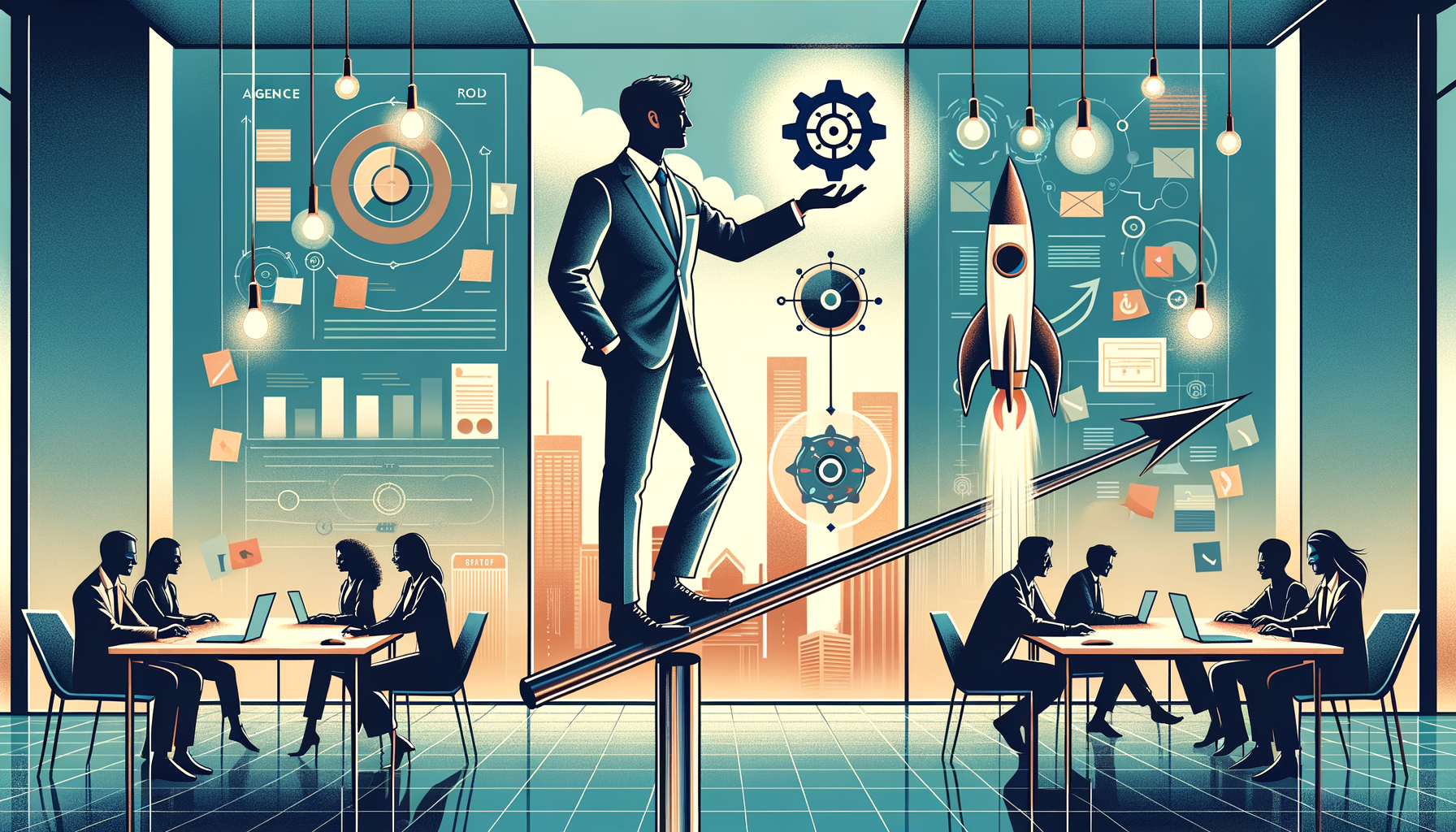
Tag: product creator

  • The AI Support Blueprint: From Zero Playbook to 75% Resolution and a Reimagined Team

    The AI Support Blueprint: From Zero Playbook to 75% Resolution and a Reimagined Team

    Rolling out an AI Agent doesn’t just change how your team works – it changes who your team is.

    I learned that in the crucible of a fast-moving launch. Before we launched Fin publicly, our Support team became its first alpha/beta tester and we had to move fast. No roadmap. No step-by-step guide. Just a powerful new technology, and a steep learning curve.

    That experience is exactly what led us to create The AI Agent Blueprint – a resource we wish we’d had when we were starting out, and one we hope will give other support teams a clearer path forward.

    Looking back, I won’t lie and say I was cool, calm, and confident about how to do this – I was nervous as hell. I had no idea how to implement an AI Agent and ensure it resulted in huge cost savings and stellar customer experiences.

    We had older machine learning technology available to us (shout out to our first-gen chatbot, Resolution Bot), but as a complex software business, we really only used it for basic FAQs. In all honesty, we still had a way to go – both in using automation more effectively and in making the chatbot experience actually enjoyable for our customers.

    So why the urgency?

    When ChatGPT burst onto the scene nearly three (!!) years ago, Intercom’s Machine Learning team immediately spotted the opportunity and dived into building the world’s first (and objectively best) AI Customer Service Agent.

    Suddenly, we were being asked to pilot this brand new technology with real customers and go all in ASAP. Because we were selling this powerful new functionality, we had to use it ourselves and show it off in the best possible light so customers would want to use it too. #nopressure

    There was no playbook, just a lot to figure out. As a product management leader, I had to switch into rigorous product discovery while staying execution-minded.

    Line chart titled 'Involvement and Resolution Rates' for Feb–Jul, showing involvement steady around 87–93 while resolution climbs from 65 to 82, visualizing monthly customer support performance metrics.
    Steady involvement, rising resolutions. From February to July, teams maintain a high 87–93 involvement range as resolution rates climb from 65 to 82—signaling how AI-driven workflows can boost support efficiency and outcomes.

    How do we do a phased rollout, but scale very quickly?

    How do we QA Fin’s responses and make continuous improvements?

    How will we produce and manage all the content Fin needs?

    What will we do about all the outdated content we already have?

    What are the success metrics now? Should they be different to original Support KPIs?

    Who’s responsible for the success metrics? Who manages this newcomer to our team?

    It was daunting. We had to take a brand new technology, figure out how to use it, build a team around it, and move at breakneck speed to implement every new feature that rolled out. It was ambiguous, fast-moving, and a massive lift.

    But we got there and the results speak for themselves: Fin is now resolving over 75% of our inbound support volume.

    Blueprint-style illustration of an AI customer support system with chat bubbles, workflow nodes, and connectors on a grid, representing automation, routing, knowledge retrieval, guardrails, and human handoff.
    An isometric blueprint reveals how an AI agent powers modern support—from triage to resolution—linking chat, knowledge, and workflows so teams scale service without losing accuracy, context, or the human touch.

    That outcome didn’t happen by accident. We embedded forward deployed engineers with Support, treated our AI Agent like a product creator in its own right, and used gen ai for product prototyping to tighten our iteration loops. We prioritized a customer support AI strategy that balanced containment with quality: containment rate, CSAT on AI-resolved conversations, first-response latency, and recontact rates became our core scorecard.

    That success led to real change for me and my team: new roles, new responsibilities, and new career paths. I now run a whole new function that didn’t exist before: AI Support. We’ve created new and elevated roles like Conversation Designers and Knowledge Managers. Fin hasn’t just changed how we support customers – it’s transformed the structure of our team and the trajectory of our careers.

    And now, we’re helping our customers do the same.

    In all transparency, if I hadn’t been this close to the work, I might have waited to see how generative AI played out before committing. I might have waited for a blueprint for how to deploy and scale an AI Agent. I wish I had something like that when we got started, or even later when we had a solid foundation but needed to scale our AI strategy.

    How much less scary would it be to implement an AI Agent if something like that existed?

    Whether you’re just getting started or already using AI in some way, you’re not early anymore—and you shouldn’t have to figure it all out alone. Strong product management leadership, a clear change plan, and tight feedback loops are what separate experiments from outcomes.

    That’s why we created The AI Agent Blueprint – a practical map for launching and scaling AI in support. It brings together everything we’ve learned from our own journey, and from working closely with our customers who are doing the same.

    If you’re ready to operationalize gen ai in support, align on the right metrics, and redesign roles for the future, this blueprint will help you move from pilots to pervasive impact with confidence.


    Inspired by this post on The Intercom Blog.


    Book a consult png image
  • From Backlog Admin to Product Creator: How I Build Impactful Products with GenAI and Discovery

    From Backlog Admin to Product Creator: How I Build Impactful Products with GenAI and Discovery

    I have been emphasizing that the heart of the product manager job is product creation.

    The job is not about being a facilitator or cheerleader, it’s not about being a project manager, and it’s definitely not about being a backlog administrator.

    Rather, the necessary role of a product manager is a product creator, working alongside…

    In practice, that means I pair closely with engineering, design, data, and go-to-market partners to explore, prototype, and validate solutions during product discovery. I set a clear problem statement, define success metrics, and align on the smallest coherent release so we can learn quickly and de-risk the path to value.

    When the problem demands deep context, I embed forward deployed engineers with customers so we can observe workflows, capture constraints, and iterate on generative AI prototypes in days, not months. Those in-the-field insights shorten feedback loops and expose edge cases that never surface in a conference room or a ticketing system.

    GenAI lets me reduce the cost of learning: with lightweight agents, synthetic data, and prompt-driven scaffolding, I can run multiple experiments in parallel and converge on what truly delivers value. This approach turns ambiguity into testable hypotheses and transforms discovery from a meeting cadence into a hands-on, evidence-driven practice.

    This is product management leadership in action—setting outcomes, defining success metrics, and aligning a cross-functional team on the smallest coherent release—instead of shuffling tickets in a backlog. The difference is night and day: we move from output to outcomes, from activity to impact.

    My weekly cadence is simple: articulate the customer problem, frame hypotheses, build the thinnest possible prototype, put it in front of real users, and measure behavior against leading indicators. That loop creates momentum, builds credibility with engineering, and keeps us honest about whether we’re creating something customers will adopt and pay for.

    If you’re feeling stuck in coordination mode, reclaim your time for discovery and creation: carve out maker hours, ship prototypes, invite engineers to customer calls, and let evidence—not opinions—steer the roadmap. The more you build, the more you learn; the more you learn, the better you lead.

    The fastest teams I’ve led are the ones that treat product management as a hands-on craft, embrace generative AI for product prototyping, and maintain a relentless focus on learning, not merely launching. That is how we earn trust, create enduring products, and make product creator more than a title—it becomes our daily practice.


    Inspired by this post on SVPG.
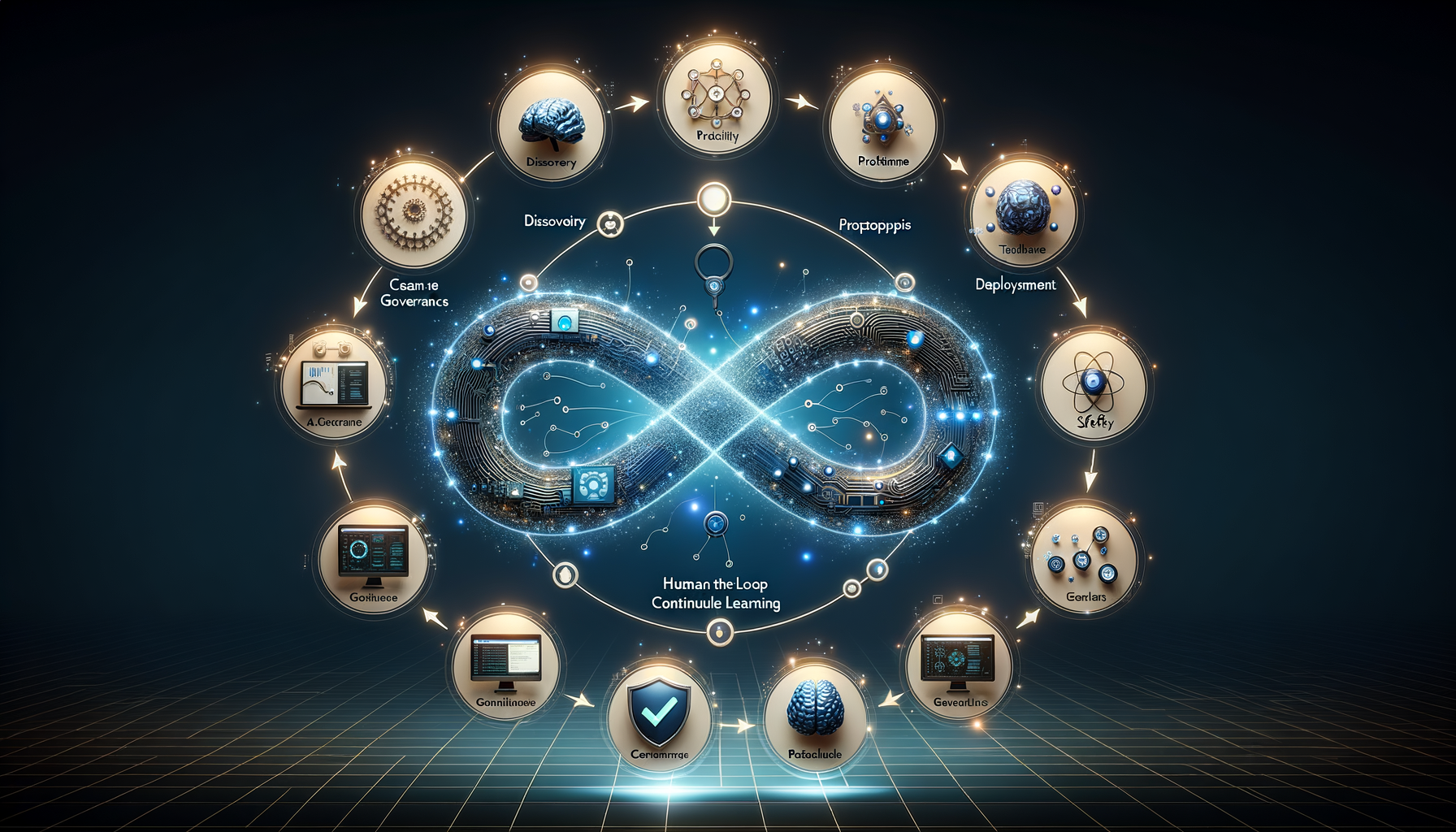
  • Mastering Intelligent Products: Proven Strategies to Transform Product Development with Gen AI

    Mastering Intelligent Products: Proven Strategies to Transform Product Development with Gen AI

    I’m focused on the future of the products we’ll build—and how we’ll build them. To see where we’re headed, I find it essential to reflect on the past four decades of product development, from on-prem software to cloud-native platforms, from waterfall delivery to agile and DevOps, and now to Generative AI reshaping how we imagine, design, and ship value.

    Those cycles taught us a consistent lesson: when technology shifts, our product practices must evolve with it. We learned to ship smaller, measure better, and iterate faster. Today, we’re at another inflection point where the very process of product discovery, prototyping, and delivery is being augmented by intelligence.

    Consider this quote: “Applying AI to the software development process is a major research topic.  There is tremendous…”

    That unfinished thought captures exactly where we are right now—on the cusp of tremendous potential. I see AI accelerating the full lifecycle: transforming ambiguous problems into testable hypotheses, turning research signals into prototypes within hours, and translating product intent into working code and test suites. Gen AI is becoming a collaborator in product discovery, a catalyst for engineering velocity, and a force multiplier for product management leadership.

    When I talk about creating intelligent products, I don’t mean bolting on a chatbot. I mean systems that learn from real usage, adapt to context, and continuously improve outcomes. Intelligent products are instrumented end-to-end: they observe, predict, and personalize—while giving users clear control and transparency. They reduce cognitive load, anticipate needs, and create compounding value over time.

    How we create these products must change too. In discovery, I pair structured customer interviews with gen AI summaries to surface patterns quickly. I use gen AI for product prototyping to explore solution spaces before we commit code. Forward deployed engineers work alongside PMs and designers to ship high-signal experiments into real environments, shortening the feedback loop from weeks to days.

    Operationally, the playbook includes four foundations. First, a robust data strategy: clean pipelines, privacy by design, and event models that map to user value. Second, a model lifecycle: from prompt engineering and fine-tuning to continuous evaluation and rollback plans. Third, a product discovery cadence that treats experiments as first-class artifacts. Fourth, a design system that includes AI interaction patterns—confidence indicators, explainability, and safe defaults—so experiences feel trustworthy and consistent.

    Intelligent products demand responsible guardrails. I define clear acceptance criteria for safety, bias, privacy, and reliability, and I use evaluation harnesses with real-world scenarios to test them. Human-in-the-loop checkpoints remain essential for sensitive decisions. Governance is not a blocker; it’s a quality system that protects users and the business while allowing teams to move fast with confidence.

    If you’re getting started, focus your next 90 days on three moves. Identify one high-friction workflow where intelligence can remove toil or accelerate time-to-value. Stand up a lightweight experimentation pipeline that logs outcomes and quality signals by default. And empower a small cross-functional squad—PM, designer, forward deployed engineer—to ship a measurable improvement, not a demo.

    The destination is clear: product creators who master intelligent capabilities will deliver outsized impact. The path is practical: blend rigorous product discovery with gen AI acceleration, build trust through transparency and safety, and keep users at the center of every decision. That’s how we’ll create intelligent products that compound value—and why I’m optimistic about what we’ll build next.


    Inspired by this post on SVPG.

  • Mastering the Balance: Proven Ways to Elevate Agency and Ambition in Product Teams

    Mastering the Balance: Proven Ways to Elevate Agency and Ambition in Product Teams

    I want to believe that all product people are both ambitious and have high agency. But recently I’ve come to realize that this is not always the case. It pains me to admit that, and my first instinct was that these are not people that I can help. But I’m not quite ready to give up.

    Over the years in product management leadership, I’ve learned that ambition and agency are related but distinct. Ambition is the drive for impact, scope, and growth. Agency is the willingness and ability to take ownership, make decisions, and move without waiting for permission. High-performing product cultures cultivate both; when one is missing, impact stalls.

    I often see four patterns. High ambition and high agency PMs compound value—they run robust product discovery, shape strategy, and ship meaningful outcomes. High ambition but low agency PMs talk big but stall on execution. High agency but low ambition PMs deliver steadily but rarely move the needle. Low on both signals a deeper mismatch with the product creator mindset.

    When I coach for agency, I remove ambiguity and increase ownership. I align the team on clear, outcome-based goals, define decision rights, and increase proximity to customers. I expect PMs to run weekly product discovery—interviews, prototypes, and experiments—so they can act decisively from evidence rather than wait for direction.

    When I coach for ambition, I connect work to a compelling mission and measurable business impact. I set expectations for strategic thinking, encourage bigger bets alongside incremental wins, and recognize impact—not just activity. I find that ambition grows when PMs see a direct line from their choices to customer and business outcomes.

    A practical routine that works: every week, PMs identify one “agency rep” (a decision they will make without escalation, within agreed guardrails) and one “ambition rep” (a scope-expanding action, like validating a bolder hypothesis or challenging a constraint). These reps build confidence and consistency.

    For hiring and development, I look for evidence of both. In interviews, I probe for moments where candidates created momentum from ambiguity (agency) and where they set or raised the bar for impact (ambition). Inside the team, I measure both with simple narratives: how did you reduce uncertainty this week, and how did you expand potential impact? The answers reveal whether we are trending toward a healthier product culture.

    If you recognize a gap in yourself or your team, don’t label it as fixed. Treat it as a capability to build. Start small, ship learning weekly, and let those compounding “reps” shift the default from hesitation to action. Ambition focuses our aim; agency pulls the trigger.

    I haven’t given up—far from it. With deliberate practice and the right environment, we can nurture product people who dream big and act boldly. That’s the standard I hold for myself, my team, and every product creator committed to meaningful outcomes.


    Inspired by this post on SVPG.

  • Discover and Master Product Leadership Archetypes: Proven Lessons I Apply Every Day

    Discover and Master Product Leadership Archetypes: Proven Lessons I Apply Every Day

    As a VP of Product Management at HighLevel, Inc., I’m constantly refining how I lead product teams to deliver better outcomes and build healthier product cultures. Just recently SVPG Partner Christian Idiodi hosted Shreyas Doshi on his Product Therapy podcast, where they discussed the role of product leadership. That conversation landed squarely on themes I live every day—how we show up as product leaders influences everything from product discovery quality to execution speed.

    If you haven’t yet listened to this interview, I would strongly encourage it, as I loved hearing Shreyas’ thoughts on this critically important topic. You can find the full episode here. Shreyas described… Rather than recap, I want to share how I translate leadership archetypes into day-to-day practices that help teams ship meaningful value faster.

    In my experience, effective product leadership is situational. I flex between discovery facilitation, outcome-driven decision making, and talent development depending on the problem space, team maturity, and risk profile. This balance is at the heart of product leadership and product management leadership—holding a high bar for product outcomes while creating the conditions for PMs, design, and engineering to do their best work.

    Practically, I anchor on a few habits. First, I make outcomes explicit—clear customer value, success metrics, and non-negotiable constraints—so product discovery has guardrails without being micromanaged. Second, I coach PMs to be true product creators: own the problem, test assumptions early, and communicate trade-offs crisply. Third, I ensure cross-functional alignment by pairing product discovery with lightweight decision cadences that keep momentum without sacrificing learning.

    There are predictable traps I try to avoid. Over-indexing on process can stall product discovery; over-indexing on vision can create ambiguity that erodes execution. Another common trap is conflating management with leadership—staffing and status updates are necessary, but modeling product judgment and customer obsession is what actually shifts outcomes.

    A quick illustration: when we’re pursuing a high-ambiguity 0→1 opportunity, I lean heavily into discovery-led facilitation—focus the team on hypotheses, fast signals, and qualitative insight. When the problem is well-characterized and the risk is primarily execution, I switch to crisp decision-making, scope control, and sequencing. The art of product leadership is knowing when to change posture and communicating that shift so the team stays confident and aligned.

    If product leadership is on your mind, this conversation is worth your time and reflection. It reaffirmed practices I rely on and challenged me to sharpen a few edges of my own approach. I encourage you to listen, take notes, and then translate one nugget into a concrete ritual with your team this week.


    Inspired by this post on SVPG.

  • Forward Deployed Engineers: My Proven Playbook to Transform Product Discovery and Outcomes

    Forward Deployed Engineers: My Proven Playbook to Transform Product Discovery and Outcomes

    As VP of Product Management at HighLevel, Inc., I’ve seen firsthand how forward deployed engineers can transform product discovery, speed up learning, and deliver outcomes that matter. When engineers sit with customers, observe real workflows, and prototype in the moment, we turn assumptions into evidence and reduce the time from insight to impact.

    “Note: This is part of the product creator series of articles, based on the overview article, The Era of the Product Creator.  This series is intended for anyone that wants to create a successful product, whether or not the person has had professional training or experience in product management, product design, or engineering. In the…”

    When I talk about Forward Deployed Engineers, I’m describing highly capable product engineers embedded directly with customers and the product discovery team. They partner closely with product management and design to run focused, time-boxed experiments, build rapid prototypes, and validate riskiest assumptions early. This approach is especially powerful in product discovery and gen ai initiatives where fast iteration and tight feedback loops are essential.

    In practice, I’ve found that a forward deployed engineer becomes the bridge between what customers say and what the team can test today. For example, while exploring a gen ai workflow concept with a key customer, we co-created an interactive prototype in a single working session. That prototype turned abstract requirements into something concrete the customer could react to, which gave us high-quality signal and accelerated our decision-making without overcommitting to a full build.

    My playbook is simple and disciplined: pair the forward deployed engineer with a product manager and designer, define the learning objective for each discovery sprint, and instrument prototypes to collect actionable data. We keep the scope small, the cycles short, and the bar high for code hygiene so that successful experiments can graduate into production safely. Most importantly, we measure learning velocity—how quickly we answer the critical questions that de-risk value, usability, feasibility, and viability.

    There are guardrails. Forward deployed engineers are not on-call firefighters or ad hoc professional services. They are discovery accelerators. To avoid thrash, I time-box engagements, maintain a clear discovery backlog, and capture decisions and learnings so the broader team benefits. Rotating engineers through these assignments also builds stronger product instincts across engineering, which pays dividends well beyond a single initiative.

    Ultimately, this is the product creator mindset in action: empowering cross-functional teams to discover what works before scaling what doesn’t. Forward deployed engineers help us validate real customer value quickly, particularly in fast-moving spaces like gen ai, and they elevate the entire product discovery practice.

    The post Forward Deployed Engineers appeared first on Silicon Valley Product Group.


    Inspired by this post on SVPG.