Category: Leadership

  • Why I Bet on First-Time Executives: Inside Figma’s Playbook for AI, IPO Readiness, and Scale

    Founders should bet on first-time executives. I’ve seen it pay off repeatedly, and a recent deep dive with Praveer Melwani, CFO at Figma, reinforced exactly why. Praveer joined Figma in 2017 as the company’s first business operations and finance hire—when the team was around 30 people and not yet charging for the product—and stepped into the CFO seat in 2022, helping to lead the company’s IPO in 2025. His journey from IC to CFO isn’t just a career arc; it’s a blueprint for scaling leadership capacity in high-velocity environments.

    What struck me first was the clarity of the step functions that took him from operator to “whole-company” leader. Early on, he optimized for doing the work—building driver trees, stress-testing go-to-market assumptions, and putting the basics of board management in place. As the business matured, he shifted from answering questions to defining them, owning capital allocation, and shaping the operating cadence. That evolution—from execution to orchestration—is exactly the arc I look for when I’m hiring first-time VPs.

    Another takeaway: Figma started acting like a public company three years before its IPO. That wasn’t optics; it was operating discipline. Quarterly rhythms, tight controls, an audit-proof close, and forward-looking narrative management helped the company move faster, not slower. In my experience, this kind of public-company readiness clarifies trade-offs, compresses decision cycles, and strengthens cross-functional trust—especially between product, finance, and go-to-market leadership.

    We also unpacked what separates world-class finance leaders from a traffic-cop CFO. The latter enforces rules and guards budgets; the former uses first principles decision making to direct resources toward asymmetric upside. World-class CFOs help the company understand risk in a post-ChatGPT world, design SaaS pricing that matches product reality, and build reliable instrumentation for outcomes—not just outputs. They’re partners in product strategy as much as stewards of the balance sheet.

    On pricing, I appreciated the courage behind selling the exec team on AI consumption pricing. Consumption SaaS pricing introduces variance, but it also aligns value with usage and accelerates time-to-value—especially for AI-driven features whose unit economics evolve rapidly. It requires tight stakeholder management, robust telemetry, and a crisp value proposition, but when executed well it can unlock both growth and discipline.

    One of the boldest moves: Figma intentionally cut its 90% gross margin to invest in AI. That’s a masterclass in capital allocation. The reflex to protect margins is strong, but durable advantage often comes from compounding learning loops, not short-term optics. Framed correctly, AI Strategy isn’t a cost center—it’s an option on multiple future S-curves. The key is to define decision guardrails, instrument usage, and keep a living risk register for AI risk management.

    I was also intrigued by how AI is changing the CFO craft itself. Tools like Claude Code are now part of the financial leader’s toolbox—useful for scenario modeling, policy drafting, and exploring new domains without slowing down the team. Paired with strong data governance and controls, this is where FinOps meets executive leverage: faster cycles, tighter experiments, and better communication with product and engineering.

    Leadership transitions can catalyze phase shifts. When a COO leaves or a company re-architects its operating model, great executives don’t just fill gaps—they redesign the system. That’s when clarity about swimlanes, escalation paths, and decision rights matters most. The lesson for founders: hire for adaptability, not just pedigree, and look for people who can turn ambiguity into momentum.

    Hiring leaders in functions you don’t deeply understand is a common founder challenge. The best antidote is a first-principles test for hiring VPs: can the candidate map the business model, define success metrics, and explain trade-offs in plain language? Do they show how they’d build the team, not just run it? Can they teach you something new in 30 minutes? I use this pattern across executive hiring because it scales better than relying on domain buzzwords.

    Another practice I recommend: build an internal board of peer CFOs and operators. Regular, no-agenda check-ins create a community of practice that shortens feedback loops and surfaces non-obvious risks. It’s one of the most efficient ways to de-risk capital allocation and sharpen strategic narratives ahead of real board meetings.

    We talked about scope versus depth: how deeply in the details should a CFO be? My view aligns with what I heard here—be in the details often enough to validate the model and coach the team, but not so deep that you become the bottleneck. The executive job is to raise the quality of decisions at scale, not to personally make every decision.

    There were personal lessons, too—from the nine-year working relationship with Dylan Field to foundational team-building insights from time at Dropbox. Strong teams are built on crisp roles, tight feedback loops, and a bias for writing things down. That muscle—organizational development through clarity—is what separates resilient companies from merely lucky ones.

    If you’re a founder weighing whether to back a rising operator or recruit a “proven” exec, this story tips the scale toward the former. Bet on slope, not just intercept. Create the scaffolding—public-company behaviors early, transparent metrics, and a culture that rewards learning—and your first-time executives will scale with the business. Done right, it’s the highest-LEVERAGE people decision you can make.


    Book a consult png image
  • How a Digital Analytics Visionary Shapes My Product Strategy for Growth, Retention & Monetization

    How a Digital Analytics Visionary Shapes My Product Strategy for Growth, Retention & Monetization

    Data has always been my compass for building products that customers love and businesses depend on. Few sentences distill that imperative as crisply as the one below—and it continues to inform how I prioritize, experiment, and scale outcomes across the roadmap.

    Krista is a digital analytics leader, product strategist, and industry evangelist. She helps businesses use data to drive growth, retention, and monetization.

    That mandate mirrors how I run product: leverage behavioral analytics to uncover patterns, translate those insights into hypotheses, and validate them through rigorous A/B testing. I start by instrumenting the user journey end to end, then use cohort analysis, funnel diagnostics, and retention analysis to pinpoint where activation, engagement, or monetization is stalling. From there, I map driver trees to connect inputs (feature adoption, time-to-value, onboarding friction) to outputs (retention, conversion, revenue), so every experiment has a clear line of sight to business impact.

    On experimentation, I hold the bar high: define the minimum detectable effect (MDE) up front, ensure clean experiment design, and size samples to reduce noise. I combine Amplitude analytics with qualitative signals from continuous discovery to prioritize tests that move the needle, not just the vanity metrics. When a variant wins, I don’t stop at the lift—I track downstream effects on user activation, long-term retention, and monetization, ensuring we’re compounding gains rather than optimizing in silos.

    For product-led growth, I focus on the moments that matter most: first-value, aha, and habit formation. Journey mapping helps me identify the shortest, clearest path to value, while targeted in-app experiences and contextual nudges accelerate activation without adding friction. Every iteration feeds a learning loop—measure, learn, and ship—so we can pursue step-change outcomes, not incremental tweaks.

    Ultimately, the craft is in translating analytics into action. When teams can trace a feature idea to a specific behavioral pattern, test it with a well-powered A/B experiment, and observe durable improvements in retention and revenue, momentum takes care of itself. That’s how I operationalize data to deliver growth, retention, and monetization at scale.


    Inspired by this post on Amplitude – Best Practices.


    Book a consult png image
  • Jumpstart Your Analytics Mastery: The Amplitude Quickstart Series for Faster, Smarter Insights

    Jumpstart Your Analytics Mastery: The Amplitude Quickstart Series for Faster, Smarter Insights

    I’m excited to share a resource I recommend to every product and growth team I mentor: the Amplitude Quickstart Series. It’s a concise, approachable way to build confidence in “Amplitude analytics” and turn behavioral data into decisions that actually move the needle.

    Discover user-friendly videos that walk you through Amplitude’s most essential products and features.

    In my role leading product teams, I’ve seen how a clear, opinionated path through a “unified analytics platform” reduces time-to-insight from weeks to days. The Quickstart format makes it easy for product managers, analysts, and marketers to align on a common language for “behavioral analytics,” so we spend less time debating definitions and more time shipping value.

    What I appreciate most is how quickly these lessons translate into outcomes: crisper instrumentation practices, cleaner dashboards, and sharper questions that drive “product-led growth.” That foundation accelerates “user activation,” improves “retention analysis,” and ultimately leads to better prioritization and stronger roadmap bets.

    My recommended workflow: watch the entire series once to map the mental model, then revisit each segment as you operationalize it. Pair the guidance with a lightweight tracking plan, establish clear event naming conventions, and document your first key use cases (e.g., activation funnel, onboarding drop-off, core feature adoption). This cadence helps teams institutionalize good habits without over-engineering.

    For cross-functional leaders, the series is also a powerful alignment tool. Ask product, data, design, and customer success to watch the same modules, then run a joint working session to define success metrics and accountability. When everyone sees the same “north-star” dashboards, decision-making speeds up and the quality of trade-offs improves.

    As your practice matures, amplify the impact by pairing insights with action: connect findings to experiments, “feature flags,” and iterative product tours; complement quantitative patterns with “session replay” for richer context. This closed-loop approach helps you move from reporting to repeatable, insight-to-execution cycles.

    If you’re new to Amplitude or scaling a growing practice, this Quickstart Series is the shortest path I know from curiosity to competence. Watch it, implement one improvement per week, and share progress broadly—momentum compounds.


    Inspired by this post on Amplitude – Best Practices.


    Book a consult png image
  • Mastering Product Marketing with Amplitude Analytics: Proven Playbooks for Sustainable Growth

    Mastering Product Marketing with Amplitude Analytics: Proven Playbooks for Sustainable Growth

    I’m continually refining how we use analytics to elevate product marketing, and this collection brings together my most effective playbooks for driving measurable growth with Amplitude Analytics. If you’re focused on product-led growth, you’ll find pragmatic guidance on translating behavioral analytics into sharper positioning, stronger activation, and durable retention.

    In my day-to-day work, I connect product strategy with go-to-market strategy by grounding every narrative in real user behavior. That means using event data to validate our value proposition, mapping journeys to uncover friction, and aligning product positioning with the moments that actually matter in-app. The outcome is a marketing engine that mirrors how customers discover, adopt, and expand within the product.

    Activation and retention are where outcomes are won or lost. I detail how to set leading indicators for user activation, instrument key behaviors, and run retention analysis that distinguishes healthy engagement from noisy usage. You’ll see how I turn cohort insights into precise messaging, targeted onboarding, and experiments that compound over time.

    Cross-functional execution is essential, so I share ways to operationalize a unified analytics platform across product, marketing, and customer success. With shared metrics, product trios can move faster from product discovery to launch, and marketing can scale campaigns that reflect what’s truly driving adoption. This tight loop reduces guesswork and increases our hit rate on both features and narratives.

    If you’re building a modern product marketing function, these essays and guides will help you move from intuition-led storytelling to evidence-backed strategy. Dive in to learn how I connect behavioral analytics to positioning, packaging, and roadmap choices—so every campaign and release ladders up to meaningful customer outcomes and sustainable growth.


    Inspired by this post on Amplitude – Perspectives.


    Book a consult png image
  • Master Opportunity Mapping with Continuous Discovery Habits — Join the May 2026 Book Club

    Master Opportunity Mapping with Continuous Discovery Habits — Join the May 2026 Book Club

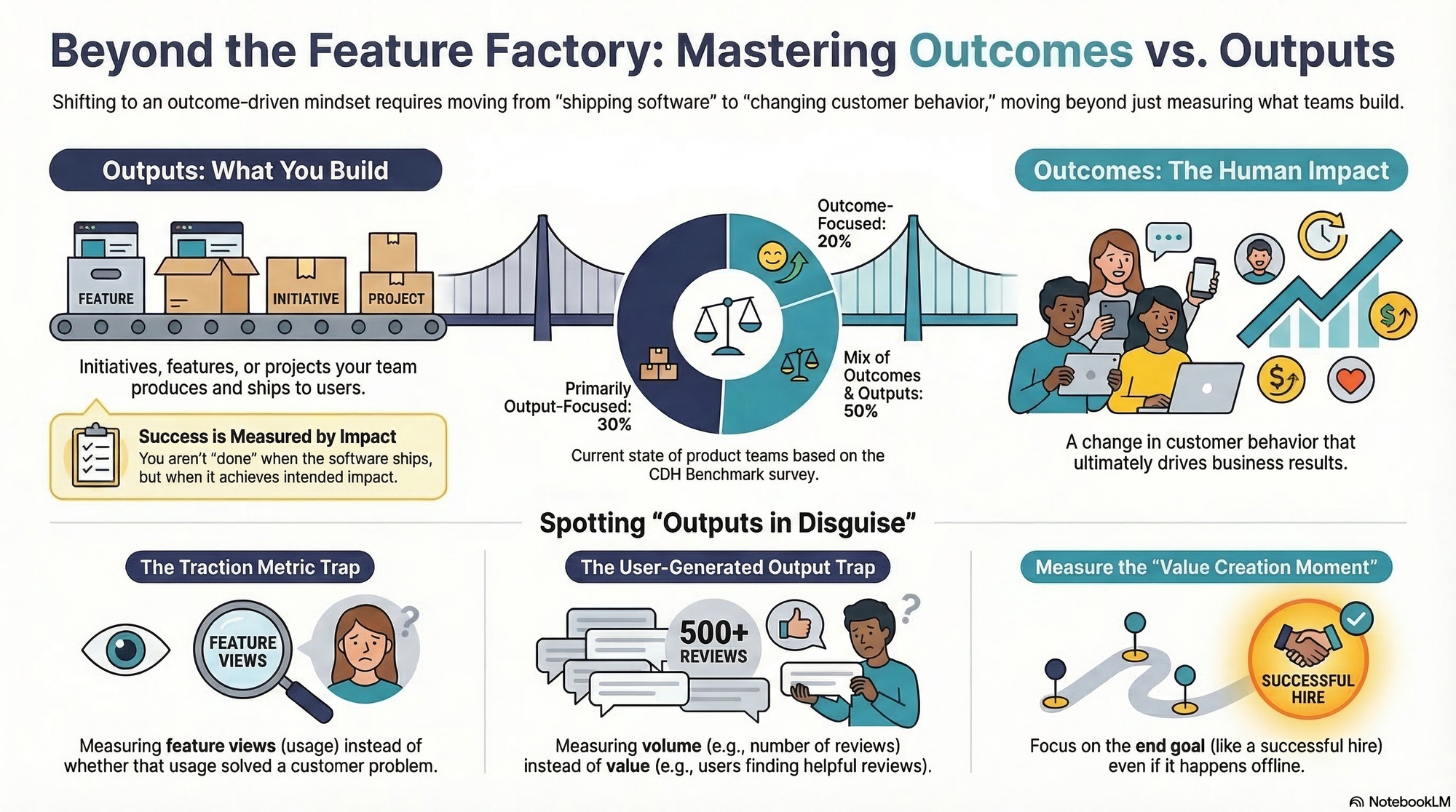
    Five years in, Continuous Discovery Habits continues to be one of the most practical frameworks I use to align empowered product teams, sharpen product strategy, and convert customer interviews into outcomes. To celebrate its impact, I’m hosting a community read-along and inviting you to dig in with me this May.

    Each month, I’m releasing an in-depth reading guide to make learning stick. You’ll find the chapters we’ll be reading, a preview of the essential concepts, short videos to help you spread the ideas across your organization, individual and team discussion prompts, team exercises to put the concepts into practice, and additional reading if you want to go deeper. My goal is simple: help you turn product discovery into a steady habit, not a once-a-quarter activity.

    We’ll discuss each month’s reading in the comments, and we’ll gather quarterly on a live call to compare notes and share what’s working. Joining late is absolutely fine—I monitor the conversation throughout the year. Start with the current month or rewind to January; you can ask for help, share wins and roadblocks, and connect with other readers anytime.

    If you want to participate, grab a copy of the book (or dust off your old one), share the "Spread the Love" videos with your team, block focused time for the exercises, and register for the community sessions. Let’s do this together.

    This Month’s Reading

    Chapter: Chapter 6: Mapping the Opportunity Space

    Estimated reading time: ~23 minutes

    This month’s chapter will introduce you to why opportunity mapping is critical for structuring the ill-structured problem of reaching your desired outcome; how to move from overwhelming opportunity backlogs to well-structured opportunity spaces; the power of tree structures for depicting parent-child and sibling relationships between opportunities; how to identify distinct branches in your opportunity space using key moments in time; common anti-patterns to avoid when building your first opportunity solution tree; and why structure "gets done, undone, and redone" as you continue to learn.

    Need a copy? Grab the book.

    Share the Love with Friends and Colleagues

    We learn best in community. Use these short videos to spread the core concepts from this chapter—then invite your team to join the book club with you.

    The need for opportunity mapping – You will never fully satisfy your customers' desires

    Understanding the structure of an opportunity solution tree – Depicting two types of relationships

    Turn big intractable problems into smaller, more solvable problems – The power of decomposition

    How to map an opportunity space – Getting started with opportunity solution trees

    A well-structured opportunity space has distinct branches – Identify key moments in time

    Reflect & Discuss What You Read

    Reflection turns reading into capability. This chapter asks us to shift from reacting to every request to deliberately structuring the opportunity space. If you’ve ever felt overwhelmed by a never-ending backlog or pressure to ship output over outcomes, this is where the fog starts to lift. As you read, focus on how your team currently organizes (or doesn’t organize) what you hear from customers.

    Individual Reflection

    1) Think about your current product backlog or opportunity list. Is it a flat list, or do you have some structure to it? If you were to group similar opportunities together, what patterns would emerge?

    2) When was the last time you heard a customer need and immediately jumped to a solution without exploring whether there were related opportunities? What would change if you took the time to map how that opportunity connects to others?

    3) Review the anti-patterns from the chapter (opportunities framed from your company's perspective, vertical opportunities, opportunities with multiple parents, etc.). Which of these do you recognize in how your team currently talks about opportunities?

    Team Discussion

    1) As a team, pick a top-level opportunity you're currently working on. Try breaking it down into sub-opportunities together. Where do you struggle? Where do you disagree about how to frame or group opportunities? What does that tell you about gaps in your shared understanding?

    2) Look at your experience map (from Chapter 4) and identify 3-5 distinct moments in time during your customer's experience. Could these become the top-level branches of your opportunity solution tree? Where do you see overlap, and where are there clear distinctions?

    3) Discuss the quote from Barbara Tversky: "Structure gets done, undone, and redone." How does your team currently respond when you discover new information that changes how you understand the opportunity space? Do you treat your opportunity map as fixed or as something that evolves?

    Put It Into Practice

    Reading is step one; building your first opportunity solution tree is where the real learning happens. The exercises below are exactly how I coach product trios to transform ambiguous problems into aligned action.

    Exercise: Build Your First Opportunity Solution Tree

    Time: 60 minutes. Do this: With your product trio.

    Start by reviewing your interview snapshots from the past few weeks. For each opportunity you captured, ask the three questions from the chapter:

    Is this opportunity framed as a customer need, pain point, or desire (not a solution)?

    Is this opportunity unique to one customer, or have we seen it in more than one interview?

    If we address this opportunity, will it drive our desired outcome?

    Then, using your experience map, identify 3-5 distinct moments in time to serve as your top-level opportunities. Group the opportunities from your interviews under these top-level branches.

    Look for opportunities to add structure to each branch. Group similar opportunities together and identify a parent opportunity. Look for vertical stacks (one parent, one child) and fill in missing siblings. Reframe opportunities that are too broad or that could live in multiple branches.

    Don’t aim for perfection. Get something on paper (or a digital canvas) and iterate the tree with every new interview.

    Exercise: Practice Framing Opportunities from Your Customer’s Perspective

    Time: 30-45 minutes. Do this: With your product trio.

    Take 10-15 opportunities from your current backlog or list. For each one, ask: "Can I imagine a customer saying this?" If the answer is no, reframe it from your customer’s perspective. For example:

    "Increase subscription conversions" becomes "I want to know if this product is worth paying for"

    "Reduce support tickets" becomes "I can't figure out how to do X"

    "Improve onboarding completion" becomes "I'm not sure what to do next"

    This exercise helps you spot business-centric opportunities disguised as customer opportunities. It also trains your team to listen for opportunities in interviews that are framed from the customer’s point of view.

    Go Deeper: Additional Reading

    If you prefer an audio summary of this month’s reading, including the book chapters and the following resources, I’ve included an audio version for paid subscribers at the bottom of this post.

    Related In-Depth Guides

    Opportunity Solution Trees: Visualize Your Discovery to Stay Aligned and Drive Outcomes

    Customer Interviews: Uncover Hidden Insights from Every Conversation

    Supplementary Reading

    Prioritize Opportunities, Not Solutions

    Product in Practice: Opportunity Mapping at Grailed

    Product in Practice: Opportunity Mapping at trivago

    7 Key Benefits of Using Opportunity Solution Trees

    Getting Started with Opportunity Solution Trees at SuperAwesome

    Bringing Order to Chaos: Using Opportunity Solution Trees in Everyday Life

    Other Voices

    Why Groups Struggle to Solve Problems Together by Al Pittampalli

    More PM Problem Areas by Marty Cagan

    Five Superpowers of Diagrams by Abby Covert

    Critical Thinking is Product Management by This Is Product Management

    Our Live Discussion Schedule

    Our live discussion sessions are for paid subscribers. Sessions are not recorded. Invitations will go out to Supporting Members and CDH Members two weeks before the scheduled event. But reserve the time on your calendar now.

    Tuesday, June 16, 2026: 9am-10am PDT

    Thursday, September 17, 2026: 9am-10am PDT

    Wednesday, December 16, 2026: 9am-10am PST

    Audio Summary

    This summary was produced by NotebookLM. The sources supplied were the book chapters as well as all of the additional reading.


    Inspired by this post on Product Talk.


    Book a consult png image
  • Making (Great) Data Flow Effortless in Amplitude to Unlock Faster Activation and Product-Led Growth

    Making (Great) Data Flow Effortless in Amplitude to Unlock Faster Activation and Product-Led Growth

    On the Amplitude growth team, the mission is clear: make it easier than ever to get (great) data flowing in Amplitude. That focus resonates deeply with me because, in my experience leading product organizations, nothing accelerates value creation faster than clean, trustworthy behavioral data reaching the right people at the right moment.

    When Amplitude analytics is fueled by high-quality event streams, product teams can move from guesswork to precision. With consistent, enriched signals, behavioral analytics becomes a daily superpower—shortening time-to-first-insight, sharpening user activation strategies, and aligning everyone on outcomes. This is the foundation of a unified analytics platform that actually drives product-led growth.

    “Great” data isn’t accidental; it’s designed. It starts with a clear tracking plan, human-readable event names, and strict schema validation. It continues with robust data governance, CI/CD-friendly instrumentation, and docs-as-code so analytics definitions don’t drift. When teams instrument once and trust forever, they reduce thrash, avoid rework, and build a durable decision-making muscle across product, engineering, and customer success.

    The payoff shows up where it matters: onboarding becomes clearer, user activation improves, and experiments become more conclusive. With in-app guides and thoughtful product tours reinforced by reliable event data, I can see where users hesitate, why they drop, and which nudges actually help them succeed. That makes it easier to prioritize the highest-leverage changes and to communicate impact credibly to stakeholders.

    I’ve repeatedly seen teams cut weeks of analysis down to days once they standardize event taxonomies, automate QA for instrumentation, and establish lightweight governance. The result is a smoother path to retention analysis, faster iteration on activation milestones, and a culture that treats data as a first-class product—not an afterthought.

    Ultimately, making it effortless to get (great) data flowing in Amplitude is about dignity for the end user and leverage for the business. It’s how we turn curiosity into clarity, align teams around measurable outcomes, and scale product-led growth with confidence.


    Inspired by this post on Amplitude – Best Practices.


    Book a consult png image
  • Principal Product Manager Playbook: Strategy, Leadership, and Execution That Scales

    Principal Product Manager Playbook: Strategy, Leadership, and Execution That Scales

    I’ve learned that the Principal Product Manager role is the crucible where strategy, execution, and leadership meet. It’s less about owning a backlog and more about owning an outcome—aligning a portfolio of bets to a clear vision, then guiding empowered product teams to deliver measurable impact at pace.

    Unlike a Senior PM who may anchor a single area or a Group PM who often has direct people management, I operate as a force multiplier. I set product strategy, shape cross-functional operating rhythms, mentor PMs and product trios, and influence executives and partners—without relying on formal authority. The bar is outcomes over output, clarity over activity, and learning over certainty.

    My first move is to define a crisp North Star and the driver tree beneath it. I translate company goals into outcomes using outcomes vs output OKRs, ensuring every roadmap item ties to a measurable lever (conversion, retention, activation, expansion). This structure prevents feature factory drift and creates a shared language for prioritization and trade-offs.

    Discovery is continuous, not a phase. I run weekly customer interviews, synthesize insights with journey mapping, and map opportunities with an opportunity solution tree so teams solve the right problems before building the right solutions. I use the Kano Model to calibrate expectations on “delighters” versus “must-haves,” and I document assumptions so we can invalidate them early instead of discovering them late.

    Data sharpens judgment. I rely on Amplitude analytics for behavioral analytics, retention analysis, and funnel diagnostics, pairing this with A/B testing to validate causal impact. I size experiments with minimum detectable effect (MDE) to reduce false negatives, and I instrument leading indicators to shorten feedback loops—so we can pivot weeks earlier, not quarters later.

    Execution is where strategy earns its keep. I plan in outcomes-based quarters and deliver in two-week sprints, keeping a living roadmap that reflects new learning. Product trios (PM, design, engineering) co-own problem framing and solution shaping, while I maintain stakeholder management with transparent trade-offs and crisp decision records. This balance preserves autonomy while ensuring alignment.

    High standards spread through coaching. I mentor PMs on writing testable bets, crafting compelling problem statements, and telling a metrics-first narrative. I champion empowered product teams because autonomy plus accountability consistently outperforms mandate-driven delivery—and because it attracts and retains top talent.

    As scope scales, so does storytelling. I align leaders through a brief, repeatable operating cadence: monthly business reviews tied to driver trees, quarterly OKRs grounded in outcomes, and QBRs vs OKRs alignment to keep customer-facing teams in lockstep. I choose first principles decision making for high-ambiguity calls, and I make risks explicit early.

    Go-to-market is part of product, not an afterthought. I partner with marketing and customer success to craft value propositions, then validate them in-product with in-app guides and product tours. We define user activation precisely, instrument it, and iterate messaging and onboarding until time-to-value collapses. This is how product-led growth compounds.

    Technical excellence reduces product risk. I advocate for feature flags to decouple release from launch, CI/CD to increase deployment frequency, and observability to catch regressions fast. These practices make experimentation cheaper and safer, which in turn makes bold bets possible.

    My 30-60-90 framework is simple. In 30 days, clarify outcomes, baselines, and constraints; in 60, run discovery sprints and ship the first experiments; in 90, land two to three measurable wins, prune low-signal bets, and scale the operating cadence. The goal is momentum with meaning—evidence, not theater.

    At HighLevel, I’ve seen that the Principal Product Manager unlocks leverage by combining strategic clarity with disciplined learning and empathetic leadership. When we align on outcomes, instrument for truth, and empower teams, we don’t just ship features—we shift the trajectory of the business.


    Inspired by this post on Amplitude – Best Practices.


    Book a consult png image
  • Beyond Command and Control: How I Build Trust, Speed, and Autonomy in Product Teams

    Beyond Command and Control: How I Build Trust, Speed, and Autonomy in Product Teams

    When uncertainty spikes, I notice many organizations snap back to "Command and control." It feels fast, safe, and decisive—especially when the stakes are high. But in product management leadership, speed without shared context is often an illusion, and control without trust rarely scales. I’ve learned that what looks like strength from the top can quietly create bottlenecks, missed signals, and disengaged teams.

    Why do smart companies revert in tough times? Familiarity. Centralizing decisions can reduce short-term cognitive load and signal clarity. Yet the cost shows up quickly: leaders become single-threaded on context they cannot possibly hold, and teams spend cycles asking for permission rather than creating value. The result is slower learning and weaker product strategy just when continuous discovery and iteration matter most.

    Here’s the hard truth: no single leader can hold all the context required to make every decision in a modern, cross-functional environment. The hidden complexity of customer segments, technical debt, data signals, and go-to-market constraints outstrips any one person’s bandwidth. That’s why empowered product teams, staffed with domain experts, outperform command centers—provided they’re aligned on outcomes and guardrails.

    I like the burning house analogy: in a true emergency, crisp direction helps—"take the stairs, not the elevator"—because the problem is clear, the time horizon is short, and the action is obvious. But most product work is not a single burning house; it’s a city with evolving fire codes, shifting weather, and neighborhoods that look different block to block. In that environment, distributed action scales better than centralized control.

    Strong leadership is not the same as command-and-control. In practice, it means setting a compelling direction, defining guardrails, and running tight feedback loops. I aim for what I call the "Flotilla of kayaks": we’re all headed to the same lighthouse, but each kayak navigates its own currents based on local information. That’s aligned autonomy—fast, resilient, and deeply accountable.

    People often ask why some command-and-control companies still succeed. My view: beneath the surface, there’s usually more trust and unofficial autonomy than their org charts suggest. Teams earn freedom by shipping reliably, sharing decision rationales, and showing outcomes. Leaders tolerate—and even quietly endorse—those pockets of autonomy because they see the results.

    It’s a spectrum, not a binary. I flex my style based on risk, reversibility, and time horizon—what I’d call spectrum thinking. Early in a bet, or when risks are existential, I raise the altitude and tighten the cadence. As confidence builds, I widen autonomy and shift the team to outcomes over outputs. Beware "Founder mode" when it drifts from vision-setting into day-to-day decision vetoes; it’s intoxicating early and suffocating at scale.

    On decision-making, I prefer a simple principle: let the person with the most relevant expertise decide, while incorporating the right input. That’s "Consultative decision-making" in practice. In some regions, you’ll hear it called "Konsultativer Einzelentscheid." The point is to seek counsel without defaulting to consensus that bogs down speed. One person owns the call, and everyone commits to the decision once it’s made.

    Practically, here’s what works for my teams: we clarify decision rights up front, draft pre-reads with clear options and risks, involve the smallest set of stakeholders required, and document the decision and expected signals ahead of time. Product trios keep discovery tight with design and engineering, while stakeholder management focuses on context, not sign-offs. We track outcomes vs output OKRs and hold regular decision reviews so we can reverse or double down fast.

    My key takeaways are consistent: "Command and control" can feel efficient, but it doesn’t scale in complex environments. No leader can hold all the context. Strong leadership is about direction, guardrails, and feedback loops—not control. High-performing teams balance autonomy with alignment. Decision-making should sit with the person closest to the problem, supported by the right input and transparent reasoning. Trust is built and earned over time—and it changes how teams operate.

    Reflection prompts I use with my leads: Where does your team sit on the command-and-control ↔ autonomy spectrum? Are the highest-context people truly making the decisions? What would it take to increase trust and autonomy—better instrumentation, clearer guardrails, or tighter cadences? Which calls require consensus, and which deserve a decisive, single-threaded owner?

    If you’re wrestling with speed, alignment, and autonomy in your organization, start small: pilot "Consultative decision-making" on one consequential decision, set explicit guardrails, and measure the outcome. You may be surprised how quickly aligned autonomy compounds into better product discovery, sharper product strategy, and stronger execution.


    Inspired by this post on Product Talk.


    Book a consult png image
  • Pretotyping vs. Prototyping: How I Validate Ideas Fast and Build Products Customers Love

    Pretotyping vs. Prototyping: How I Validate Ideas Fast and Build Products Customers Love

    I learned early in my career that beautiful prototypes don’t save you when you’re solving the wrong problem. What does save you is separating market risk from solution risk and choosing the fastest, lowest-cost way to get evidence. That’s why I rely on pretotyping to test demand in days and prototyping to refine usability and feasibility once I see a strong signal. The result: faster cycles, fewer wasted sprints, and products customers genuinely want.

    Pretotyping vs. prototyping explained: differences, benefits, examples, and when to use each approach to validate ideas before you build.

    Here’s how I define the two in practice. Pretotyping answers, “Should we build this at all?” Its goal is to validate real user intent and behavior with the lightest-weight artifact possible—often before any code. Think painted-door (fake door) experiments, Wizard-of-Oz flows powered by humans behind the scenes, concierge tests, landing-page smoke tests with waitlists or preorders, and simple A/B testing to gauge click-through intent. It optimizes for time-to-signal and cost-to-learn.

    Prototyping answers, “Can we build this well?” and “How should it work?” Once demand is evidenced, I prototype to de-risk solution details: usability, architecture, performance, and integration. This might include interactive UI models, high-fidelity flows, technical spikes, or service stubs. Here, I optimize for learning about user experience and technical feasibility without fully committing to production.

    When should you use each? If your biggest unknown is market risk—whether customers care at all—start with pretotyping. If your biggest unknown is solution risk—how to deliver an experience that’s usable, reliable, and scalable—move to prototyping. In other words, validate the “right thing” before you perfect the “thing right.”

    My decision rule is simple: identify the dominant risk, then pick the smallest experiment that can credibly invalidate it. For market risk, I look for evidence of behavior, not opinions: clicks on a painted door, signups on a landing page, willingness to pay (deposits, preorders), or sustained repeat usage in a Wizard-of-Oz flow. For solution risk, I look for task completion, time-on-task, error rates, and qualitative friction from usability sessions with a realistic prototype.

    Concrete examples from recent work help illustrate the difference. When exploring a new analytics insight, I shipped a fake door inside our product nav; a simple tooltip explained the concept and captured interest. Click-through rate, conversion to a short explainer, and waitlist signups told me whether the value proposition resonated before building anything. For a complex AI-assisted workflow, I ran a Wizard-of-Oz experiment: users experienced the end-to-end flow while our team manually handled the “AI” behind the curtain. That gave us real engagement data and edge cases to inform the prototype and later the MVP.

    Metrics matter. I set a clear hypothesis with a guardrail on sample size and a minimum detectable effect I’d consider actionable. For pretotyping, I focus on time-to-first-signal, intent conversion (CTR to interest, interest to signup), cost-per-qualified-lead, and evidence of willingness to pay. For prototyping, I prioritize task success rates, usability severity findings, and qualitative insights that materially change the design or technical approach. Above all, I avoid vanity metrics and anchor decisions to outcomes, not output.

    My repeatable playbook looks like this: (1) Frame the problem and value proposition in one crisp sentence. (2) Choose the leanest pretotyping method that can reveal real behavior. (3) Define success metrics and a decision rule before you run the test. (4) Launch quickly, instrument well, and let the data run long enough to be credible. (5) If demand is strong, promote to a prototype to refine UX and de-risk technicals; if not, iterate the proposition or stop. This keeps product discovery continuous and ensures roadmapping and sprint planning are guided by evidence.

    There are ethical guardrails I never skip. Painted doors must set correct expectations once clicked; waitlists or learn-more pages are honest and respectful. For Wizard-of-Oz and concierge tests, I’m explicit about data handling and provide timely follow-up. Trust compounds when experiments are transparent and user time is valued.

    Tooling can accelerate the cycle without diluting rigor. I often use lightweight design systems and no-code automations to stitch together realistic flows, and I’ll leverage gen AI for product prototyping to generate copy, microinteractions, or data scaffolding. But the principle remains: don’t over-invest until evidence earns the investment. Empowered product teams thrive when they optimize for learning velocity, not feature velocity.

    If you’ve ever felt the tension between shipping fast and shipping right, this approach resolves it. Pretotype to prove the market; prototype to perfect the solution. Do that consistently and you’ll spend more time delivering outcomes customers value—and far less time debating outputs.


    Inspired by this post on Product School.


    Book a consult png image
  • From 70 Employees to Dominance: My Playbook for Hypergrowth, Focus, and Top-Down Goals

    From 70 Employees to Dominance: My Playbook for Hypergrowth, Focus, and Top-Down Goals

    Scaling a real-world marketplace from scrappy to dominant takes a different kind of product leadership. Reflecting on Christopher Payne’s decade leading DoorDash as President and COO — growing from roughly 70 employees to the dominant food delivery platform in the US — I’m struck by how much of that success hinged on mastering an atoms-based business while still operating with software-level rigor. As a VP of Product Management, I see the same patterns in my own work: relentless clarity on inputs, a bias for builder-executives, and a cadence that keeps leaders close to product details without becoming bottlenecks.

    Running an atoms-based business versus a pure software company forces you to obsess over operational physics: unit economics, quality control, on-time reliability, and dense local liquidity. It’s precisely where traditional “bits” executives can stumble. What’s worked for me is a simple “plate spinning” framework for executive attention: identify the five or six plates that must never stop — customer experience, marketplace health, quality and safety, product velocity, platform reliability, and P&L — then schedule recurring deep dives to keep those plates spinning. If a plate wobbles, I drop in, fix the root cause, re-instrument the inputs, and zoom back out.

    Hiring at hypergrowth speed only works when you bias toward a “builder mentality.” I look for executives who run toward fuzzy problems, write clearly, and can prove they’ve shipped value with incomplete information. Prior industry experience can be a liability when you’re reinventing the market; first-principles thinkers outlearn domain experts who try to port yesterday’s playbooks. In executive hiring, I’ve found structured work samples and narrative memos far more predictive than marathon interview loops — companies routinely spend too much time on job interviews and too little time evaluating how candidates think and execute.

    Great executives never outgrow the details. Staying close doesn’t mean micromanaging — it means sampling the customer journey and instrumenting the system so you can feel where it hurts. In my own practice, I rotate through frontline touchpoints weekly: support transcripts, NPS verbatims, failed checkout sessions, and reliability dashboards. Small signals often reveal systemic issues. A single ciabatta bread moment — the kind of edge-case substitution that seems trivial — can expose broken handoffs, unclear policies, and misaligned incentives across the marketplace.

    Top-down goal setting beats bottom-up when you’re aiming for category leadership. Bottom-up targets tend to regress to comfort; they calibrate to today’s constraints, not tomorrow’s possibilities. I set ambitious, top-down outcomes (not output), frame the non-negotiables, and map driver trees to clarify the input metrics that matter. Then I ask empowered product teams to pressure-test the plan, propose approaches, and own the how. This preserves ambition while unlocking creativity — a practical balance of clarity and autonomy that outcomes vs output OKRs were designed to achieve.

    One-size-fits-all management is a myth. Early-stage teams need hands-on coaching and fast decisions; later-stage teams need mechanisms that scale: crisp PRDs, pre-mortems, and operating cadences that separate strategy, planning, and execution. The mark of a high-functioning executive team is not uniform style — it’s high candor, fast escalation paths, and visible commitment after debate. In tough moments, a little charisma goes a long way; in practice, that’s not theatrics, it’s steady optimism, simple language, and consistent follow-through that keeps people moving forward.

    The hypergrowth skill stack for executives is surprisingly learnable: ruthless prioritization under uncertainty, narrative writing that aligns cross-functionally, structured delegation with clear “inspection points,” and a weekly rhythm that protects maker time. I leverage a cadence of business reviews (inputs > outputs), customer-scent checks, and decision logs so we can move fast without losing the thread. CEO and executive time management is the ultimate forcing function — if we can’t show where our attention maps to goals, the team won’t either.

    Some of my enduring lessons echo the best of Amazon and eBay: customer obsession beats competitor obsession, input metrics beat lagging vanity metrics, and simple mechanisms beat heroics. From Jeff Bezos’s playbook I borrow the insistence on written narratives, single-threaded ownership, and clarity on what will not change. Those principles remain the backbone of platform scalability and resilient product strategy, especially when markets get noisy.

    AI is about to flatten organizations. With agentic AI, retrieval-first pipelines, and AI workflows embedded into product development, managers can widen their span without losing fidelity. I see LLMs for product managers accelerating discovery, PRD drafting, and experiment analysis — while raising the bar on decision quality. The implication for leadership: fewer layers, more transparency, and even greater pressure to define sharp, top-down outcomes that teams can autonomously pursue.

    If I had to compress this into a playbook, it’s this: set audacious, top-down goals; keep your “plate spinning” calendar sacred; write more than you talk; hire builders, not resume archetypes; sample the customer journey every week; and build mechanisms that make the right thing easier than the heroic thing. That’s how you scale product management leadership from dozens to thousands — in atoms, in bits, and in the messy, exhilarating space where they meet.


    Book a consult png image
  • Net Recurring Revenue Mastery: How Elite CS Teams Drive Expansion, Retention, and Growth

    Net Recurring Revenue Mastery: How Elite CS Teams Drive Expansion, Retention, and Growth

    Net Recurring Revenue (NRR) is the clearest signal of whether our product, pricing, and customer success motions are compounding value or quietly leaking it. When I review our dashboard, NRR tells me—in one number—how well we retain, expand, and engage customers. It’s the difference between linear progress and durable, compounding growth.

    At its core, NRR answers a simple question: did revenue from our existing customers grow or shrink this period? The standard way I frame it is: NRR = (Starting MRR + Expansion – Contraction – Churn) / Starting MRR. Expansion reflects upsells, cross-sells, and increased usage; contraction and churn capture downgrades and departures. Great teams don’t just watch this number—they engineer it.

    The teams that consistently outperform treat NRR as an outcome of intentional design across the entire customer journey. They align product-led growth with customer success, weaving onboarding, user activation, in-app guides, and lifecycle messaging into one coherent system. They make adoption the star of the show, not an afterthought tucked beneath quarterly targets.

    To scale that system efficiently, I lean on platforms that streamline in-app guidance and rich behavioral analytics. The promise is crisp and concrete: “Increase revenue, cut costs, and reduce risk with Pendo’s Software Experience Management platform. Optimize the entire software experience to drive adoption and improve engagement.” When the experience is instrumented end to end, expansion opportunities show up as patterns, not surprises.

    Retention analysis is where the signal gets sharp. I segment cohorts by plan, size, and use case; map their journey; and run driver trees that connect leading indicators (activation depth, feature breadth, time-to-value) to the lagging outcome (NRR). This turns hunches into hypotheses and gives customer success managers a prioritized playbook, not a long wish list.

    Onboarding is the first and most powerful NRR lever. The faster a customer experiences their first win, the more likely they are to adopt core features, invite teammates, and expand. I use in-app guides, product tours, and contextual tooltips to pave the path to value—always grounded in clear jobs-to-be-done, not generic walkthroughs. The goal is simple: remove friction, celebrate progress, and make the next best action obvious.

    Operating cadence matters as much as tooling. I separate the rhythms: QBRs for strategic alignment and expansion planning; OKRs for cross-functional execution and accountability. QBRs anchor the conversation in outcomes and value realized; OKRs ensure product, marketing, and CS move in lockstep to close the gaps those QBRs reveal.

    Pricing and packaging complete the loop. When the value proposition is clear and plans are aligned to outcomes customers care about, expansion feels natural—more capability for more value. Usage insights guide which features to gate, which to bundle, and where to price to maximize retention while unlocking healthy upsell paths.

    None of this works without tight product–CS collaboration. My teams practice continuous discovery—customer interviews, win/loss insights, and in-product feedback—so we improve the experience where it truly matters. Journey mapping turns those insights into experiments, and experiments turn into polished features once the data speaks.

    I build an NRR driver tree into our weekly reviews. Each branch (activation, adoption, multi-seat expansion, downgrade prevention, reactivation) has a clear owner, a measurable hypothesis, and a time-bound experiment. A/B testing guides what we ship broadly, and we define success upfront to avoid moving goalposts after the fact.

    I’ve seen NRR climb meaningfully in a single quarter when we pair rigorous retention analysis with targeted onboarding improvements and value-based packaging. The lift rarely comes from one big bet; it’s the compounding effect of many small, well-instrumented decisions.

    Here’s the 90-day play I return to: first, baseline NRR by segment and identify the top three drivers of expansion and the top three causes of contraction. Next, streamline onboarding with in-app guides and product tours that accelerate time-to-value and drive user activation. Then, craft expansion plays aligned to real outcomes (additional seats, advanced workflows, new use cases), and operationalize them via QBRs. Finally, preempt downgrades with early-warning alerts, targeted education, and a clear path from “stuck” to “successful.”

    NRR is a team sport. When product, customer success, and go-to-market align around adoption and outcomes, growth compounds, risk declines, and every customer interaction becomes a chance to create more value—today and in every renewal to come.


    Inspired by this post on Pendo – Perspectives.


    Book a consult png image
  • Inside the Most Politically Dangerous C‑Suite Role: Hard Truths on Culture, Layoffs, and Leadership

    Inside the Most Politically Dangerous C‑Suite Role: Hard Truths on Culture, Layoffs, and Leadership

    I’ve long believed the people function is a strategic engine, not a support lane. That conviction was only reinforced in a recent deep dive with Katie Burke, now COO at Harvey after joining as Chief People Officer. Before Harvey, she spent 11 years in HR leadership at HubSpot, helping build one of tech’s most distinctive cultures. In this piece, I unpack what resonated most for me as a product leader: a marketing-minded approach to HR, deliberate hiring from hospitality, and the non-negotiable case for culture as a core business strategy.

    The first principle is simple and often overlooked: HR leaders should think like marketers. Employer brand is a product; your candidate and employee journeys are funnels; and your programs deserve the same rigor we bring to product—segmentation, positioning, channels, and continuous A/B testing. When we treat onboarding, performance, and manager enablement like iterative product launches—complete with activation metrics, retention curves, and NPS—we stop guessing and start compounding results.

    One line has become a north star for how I approach executive leadership: “Don’t ask for a seat at the table. Build the table.” In practice, that means codifying the operating system—decision rights, principles, cadences, and accountability—so the organization isn’t improvising strategy in every meeting. Product, People, and Finance should co-own this OS; that’s how you scale clarity faster than headcount.

    Transparency is the tax we pay for alignment, and it compounds trust. After an IPO, the impulse can be to close ranks. The better move is radical transparency with context: what changed, why it matters, and how decisions get made now. On my teams, that looks like publishing decision records, sharing tradeoffs explicitly, and using written docs to reduce rumor velocity—core muscles in stakeholder management as complexity grows.

    I also loved the counterintuitive hiring bet: prioritize hospitality backgrounds alongside traditional corporate pedigrees. People who’ve thrived in service environments bring customer empathy, operational resilience, and a bias for proactive care—traits that elevate everything from onboarding to incident response. In product terms, they’re culturally accretive hires with high signal on service quality and consistency.

    The trickiest part of the Chief People Officer role isn’t process—it’s politics. You are the executive team’s own HR business partner, which requires coaching, candor, and conflict mediation at the highest stakes. The goal is to “Be the Michael Jordan of your exec team”—the teammate who elevates standards, makes others better, and chooses the hard right over the easy familiar.

    Layoffs create a culture debt that accrues interest. Expect a “2.5-year cultural hangover after a layoff”—in many companies, an inevitable two-year layoff hangover—unless you actively repay it. That repayment plan includes narrating the why with specificity, rebuilding trust through manager enablement, and re-anchoring on performance and values. Measure leading indicators (manager effectiveness, time-to-decision, psychological safety) alongside lagging ones (regretted attrition) to track the true recovery arc.

    People leaders also need to create “graceful exits.” Doing this well preserves dignity for the person, protects the team’s morale, and safeguards the company’s brand. The bar is straightforward: clear rationale, fair process, useful feedback, generous support, and alumni pathways. A graceful exit signals that even when business realities bite, respect is non-negotiable.

    Expectation-setting matters. Two truths cut through the noise: “The workplace shouldn’t be Disneyland” and “Our job is not to make you happy every day.” The promise is not perpetual happiness; it’s meaningful work, fair standards, growth opportunities, and leaders who tell the truth. When we set that contract clearly, engagement becomes an outcome of purpose and progress—not perks.

    On feedback, I use the protein vs. sugar rule for employee feedback. Sugar feedback is pleasant and perishable; protein feedback is specific, sometimes uncomfortable, and growth-driving. Great cultures build a taste for protein—clear role expectations, crisp examples, and written follow-ups. Mechanically, that looks like structured 1:1s, decision retros, skip-levels, and manager training that demystifies “what good looks like.”

    Being a Chief People Officer isn’t for the faint of heart. The role must be demanding by design—on executive hiring quality, performance management courage, and values enforcement. Moments like “Berry-Gate” are reminders that small symbolic issues can balloon when feedback loops are unclear. Close the loop fast, publish the rationale, and ensure there’s a predictable path for concerns to be heard and resolved.

    When hiring, beware patterns that predict friction. That’s why “frequent flyers” are a new-hire red flag. Movement can signal adaptability—but weather-vein pivots and blame-shifting often repeat. Probe for ownership, learning moments, and sustained impact; you want people who compound value, not just sample it.

    Clarity on scope prevents leadership whiplash. Which company decisions fall to the Chief People Officer? Think leveling frameworks, compensation philosophy and bands, performance calibration, manager standards, ER policies, and org design guardrails—always in lockstep with Finance and the CEO. Escalate when there are values collisions or systemic risks; otherwise, push decisions to the right altitude and owner.

    Scaling exposes the same few failure modes on repeat: fuzzy decision rights, a thin manager bench, brittle processes that don’t flex, and inconsistent leveling that erodes trust. The antidote is an operating model that pairs clear principles with lightweight mechanisms—documented roles, regular calibration, and reviews that audit for both outcomes and operating behaviors.

    Comparing a scaled SaaS like HubSpot with an AI-native company like Harvey surfaces important differences. The former optimizes for durable systems, predictable cadences, and governance; the latter optimizes for rapid learning loops, emergent org design, and a higher tolerance for ambiguity. The art is porting the right controls at the right time without crushing velocity.

    AI is already changing the people function. GenAI can draft job descriptions, summarize performance notes, classify themes from engagement surveys, and power AI workflows that resolve common HR tickets. The human-in-the-loop remains essential for judgment, context, and ethics—especially around data governance and privacy-by-design. A pragmatic AI Strategy here frees HRBPs for higher-order coaching and organizational development work.

    One practice I recommend widely: share your own performance reviews. Modeling openness normalizes growth and turns feedback into a shared craft, not a secret ritual. It also builds trust when you later ask the organization to lean into sharper, protein-rich feedback.

    Finally, disagreements with the CEO are inevitable—and healthy. Handle them with pre-briefs, crisp written proposals, explicit tradeoffs, and a shared decision record. Argue like scientists, not politicians; once a call is made, disagree and commit. That combination of candor and alignment is what keeps executive teams high-trust and high-velocity.

    The people leader’s chair may be the most politically dangerous role in the C-suite—but it’s also one of the most leveraged. Build the table, tell the truth, design for standards and dignity, and treat culture like the product that powers everything else.


    Book a consult png image